Single Wall vs Double Wall Stove Pipe: Which One Should You Buy?
Single-wall vs double-wall stove pipe: one layer with 18-inch clearance for the room connector, double wall for passes through structure, with gauge figures from the listings.

On this page
Top picks at a glance
As an Amazon Associate we earn from qualifying purchases.
- 1
 Midwest Hearth Magnetic Stove Pipe & Chimney Thermometer9.6/10View on Amazon
- 2
 Midwest Hearth Wood Stove Probe Thermometer for Double Wall9.7/10View on Amazon
- 3
 Fire Beauty Fireplace Ash Shovel9.7/10View on Amazon
- 4
 Duravent DuraBlack Stainless Steel Single-Wall StovepipeView on Amazon
- 5
 6in x 18in Single Wall Black Stove PipeView on Amazon
- 6
 Yaocom 1 Pcs 8" Single Wall Stove Pipe 38" to 70" TelescopingView on Amazon
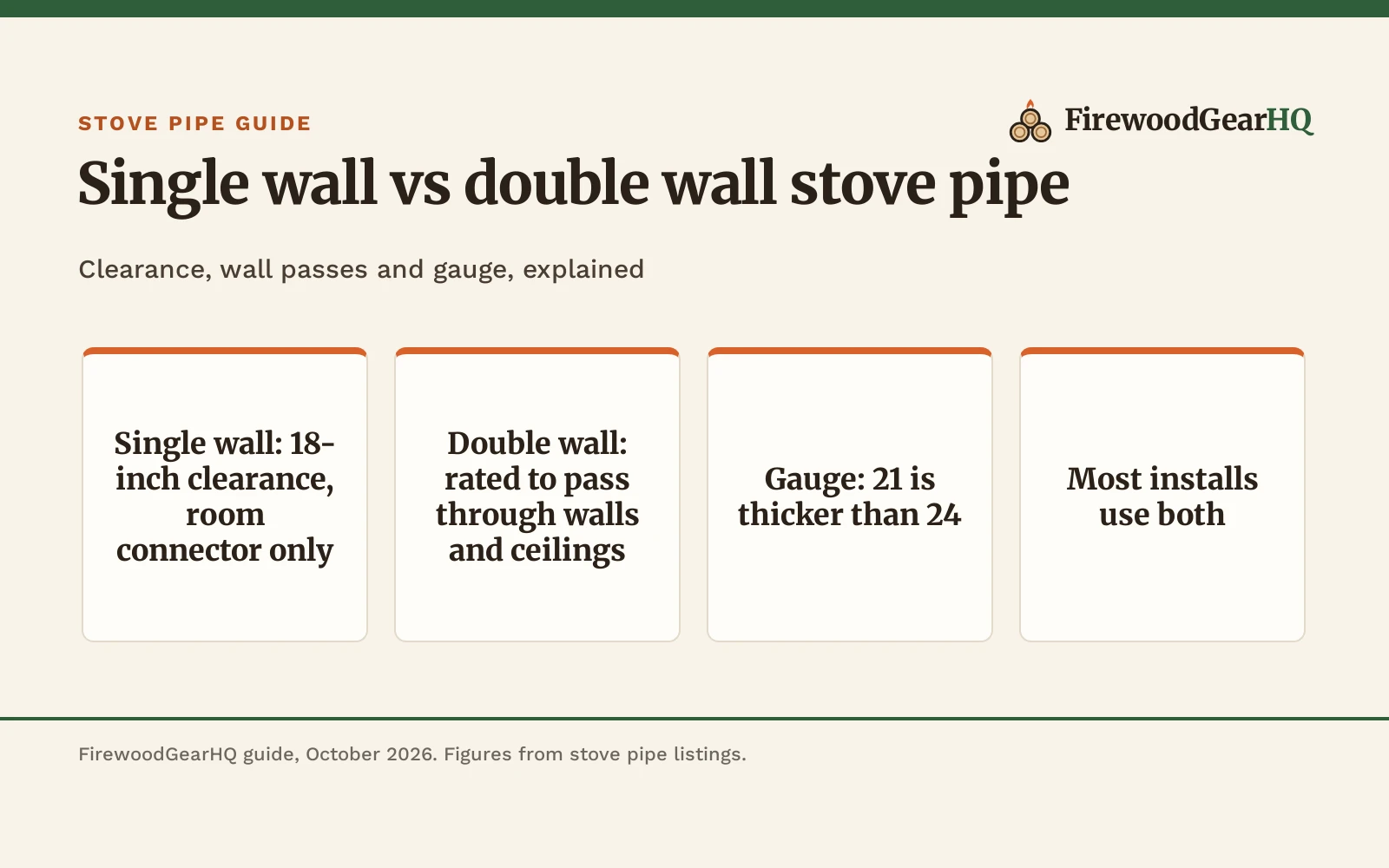
Single wall vs double wall stove pipe comes down to clearance and where the pipe runs. Single-wall pipe is one layer of steel: it needs a strict 18-inch clearance to combustibles and stays inside the room as the visible connector between the stove and the chimney. Double-wall pipe has an inner and outer wall with insulation or an air gap between them, so its outer surface runs cooler and it is allowed to pass through walls, ceilings and roofs. Most installs use both: single wall in the room, double wall where the flue passes through structure.
More options to compare
 Duravent DuraBlack Stainless Steel Single-Wall StovepipeCheck price on Amazon
 6in x 18in Single Wall Black Stove PipeCheck price on Amazon
 Yaocom 1 Pcs 8" Single Wall Stove Pipe 38" to 70" TelescopingCheck price on Amazon
FirewoodGearHQ may earn a small commission if you buy through links on this page. The price you pay stays the same. Read our affiliate disclosure.
single wall vs double wall stove pipe: the quick answer
| Single-wall stove pipe | Double-wall stove pipe | |
|---|---|---|
| Construction | One layer of steel | Inner and outer walls with insulation or an air gap |
| Clearance to combustibles | 18 inches, per the listings | Lower than single wall, set by the maker |
| Through walls and ceilings | No, except with a proper pass-through kit (DuraBlack listing) | Yes, with the proper pass-through kit |
| Outdoor use | Not for exposed outdoor runs | Designed for the chimney run outside the room |
| Cost and looks | Cheaper, basic black finish | More layers, more cost |
What single-wall stove pipe is
Single-wall stove pipe is the connector between a wood stove and the chimney system. It is one layer of steel, usually painted black steel or stainless steel, running from the stove collar to the point where the flue enters a chimney or a rated pass-through. The reference listings show 6-inch and 8-inch diameters in lengths from 12 inches to 48 inches, and every single-wall listing states the same rule: keep 18 inches of clearance to any combustible material, including walls, ceilings, wood mantles and furniture.
The listings are strict about where single wall goes. DuraVent’s DuraBlack single-wall stovepipe says it is for interior, visible connector use only, and must never be used as a chimney or run through a wall, ceiling or roof without a proper pass-through kit. The AllFuel and Yaocom listings repeat the point: single wall cannot be run through walls or ceilings and should not be used outside where it is exposed to the elements. It is connector pipe, not chimney pipe.
What double-wall stove pipe is
Double-wall stove pipe is two walls: an inner flue and an outer wall with insulation or an air gap between them. The gap keeps the outer surface cooler than single wall, so the pipe needs less clearance and is rated to pass through walls, ceilings and roofs with the maker’s pass-through parts. That is the pipe you use for the part of the run that leaves the room. The DuraVent DuraPlus through-the-wall kit in the listings shows how the chimney side of an install looks: a triple-wall design rated to support up to 40 feet of chimney pipe, with a wall thimble, tee and wall straps in the kit.
Because the inner flue stays hotter inside an insulated wall, double wall also keeps exhaust gases moving upward with less cooling along the way. That is a practical advantage on the chimney run, where cooling exhaust forms creosote.
Clearance and where each can go
The 18-inch clearance rule is the headline number for single wall. It comes straight from the listings: DuraVent, AllFuel, Yaocom and Rockford all state 18 inches to combustibles. Anything closer than that, and single wall is the wrong pick; move the stove or switch the run to double wall. Double-wall pipe’s clearance is lower and is set by the maker, so read that listing before you plan the run.
The wall rule is just as firm. Single-wall pipe cannot pass through a wall, ceiling or roof on its own: AllFuel and Yaocom state their pipes can not be run through walls or ceilings, while DuraBlack allows it only with a proper pass-through kit. Nor should it run outside exposed to the elements. Any run that goes through structure needs the maker’s pass-through parts, or double-wall or Class-A insulated chimney pipe with the thimble and supports. The AllFuel telescoping pipe, for example, notes that it can connect to any brand of Class-A insulated chimney pipe, which is exactly the hand-off point: single-wall connector in the room, insulated chimney where it leaves.
Gauge and material
Single-wall pipe is sold in gauges, and the numbers run backwards: a lower gauge number means thicker steel. The listings give a clean comparison. AllFuel’s 21-gauge pipe is stated 9 percent thicker than 22-gauge pipe and 27 percent thicker than 24-gauge pipe. Note AllFuel’s pipe can not be cut down, so a telescoping length is required. Rockford sells 22-gauge steel at .030 and calls it 60 percent thicker than most brands. The thinner 24-gauge options, like the Imperial and store-brand 6-inch pipes, are the basic picks; Yaocom credits its heavier 21-gauge steel with helping maintain a round shape during fitting.
Materials are painted steel or stainless steel. The Imperial BM0102 is 24-gauge pre-painted black steel, while the DuraBlack and LEIFIDE pipes are stainless steel in black paint. Stainless resists rust where a painted pipe can chip and rust; the Yaocom and LEIFIDE listings both mention scratch- and chip-resistant coatings as a selling point. Either way, each connection gets at least 3 sheet-metal screws, per the Imperial and LEIFIDE listings.
Which one should you buy
Buy single wall for the visible connector run inside the room: from the stove to the point where the flue leaves. It is the cheaper pipe, it looks the part in black, and 18 inches of clearance is easy to give in an open stove room. Use the heavier gauges if the budget allows: 21 or 22 gauge holds its shape better than 24 gauge.
Buy double wall for anything that passes through a wall, ceiling or roof, and for the chimney run itself. That is the run the building needs to be protected from, and single wall is not allowed there. If the stove sits close to a wall and you cannot keep 18 inches clear, double wall is the answer there too.
A typical install uses both: a short single-wall connector from the stove collar to a telescoping section, then double-wall or Class-A chimney pipe through the structure to the cap. Check how to choose a wood stove for stove sizing, and keep the chimney swept with our chimney cleaning log guide.
Wear eye protection and gloves for cutting, splitting and handling, follow every tool's manual, install stoves to code, and have the chimney inspected and cleaned every year. See EPA Burn Wise and NFPA heating safety. Read our Safety Disclaimer.
Frequently Asked Questions
Can single-wall stove pipe go through a wall or ceiling?
Not on its own. AllFuel and Yaocom state their single-wall pipes can not be run through walls or ceilings; DuraBlack allows a pass-through only with a proper pass-through kit. For any run through structure, use the maker’s pass-through parts, or double-wall or Class-A insulated chimney pipe.
What clearance does single-wall stove pipe need?
18 inches to any combustible material: walls, ceilings, wood mantles and furniture. DuraVent, AllFuel, Yaocom and Rockford all state this figure. Double-wall pipe needs less, per its maker.
Which gauge of stove pipe is thicker: 21, 22 or 24?
21 gauge is the thickest of the three. AllFuel states its 21-gauge pipe is 9 percent thicker than 22 gauge and 27 percent thicker than 24 gauge. Rockford’s 22-gauge pipe is stated at .030 and called 60 percent thicker than most brands. Thicker pipe holds its round shape and resists dents.
Can I connect single-wall pipe to a chimney pipe?
Yes, that is exactly its job: single-wall pipe connects the stove to the chimney system. The AllFuel listing notes its single-wall pipe can connect to any brand of Class-A insulated chimney pipe. Secure each connection with at least 3 sheet-metal screws, per the listings.
Does the paint on new pipe smoke on the first fire?
The Yaocom and store-brand listings mention scratch- and chip-resistant paint coatings that produce less smoke while the new pipe finish settles in. Vent the room well on the first burns.
Related guides
See the wood stoves hub, how to choose a wood stove, wood burning stove problems and solutions and the wood stove safety checklist. Also see do chimney cleaning logs work, the best stove thermometer and stove fan vs blower.