Do Chimney Cleaning Logs Work? What Creosote Logs Do and When to Sweep
How chimney cleaning logs work, how chemical minerals alter creosote, what flue buildup they cannot remove and when manual chimney sweeping is necessary.

On this page
Top picks at a glance
As an Amazon Associate we earn from qualifying purchases.
- 1
 KABIN Kathite Chimney Sweep Cleaner 2LB9.2/10View on Amazon
- 2
 SootEater Rotary Chimney Cleaning System9.6/10View on Amazon
- 3
 Sealegend 30FT Chimney Sweep Kit Rotary Flexible Cleaning9.6/10View on Amazon
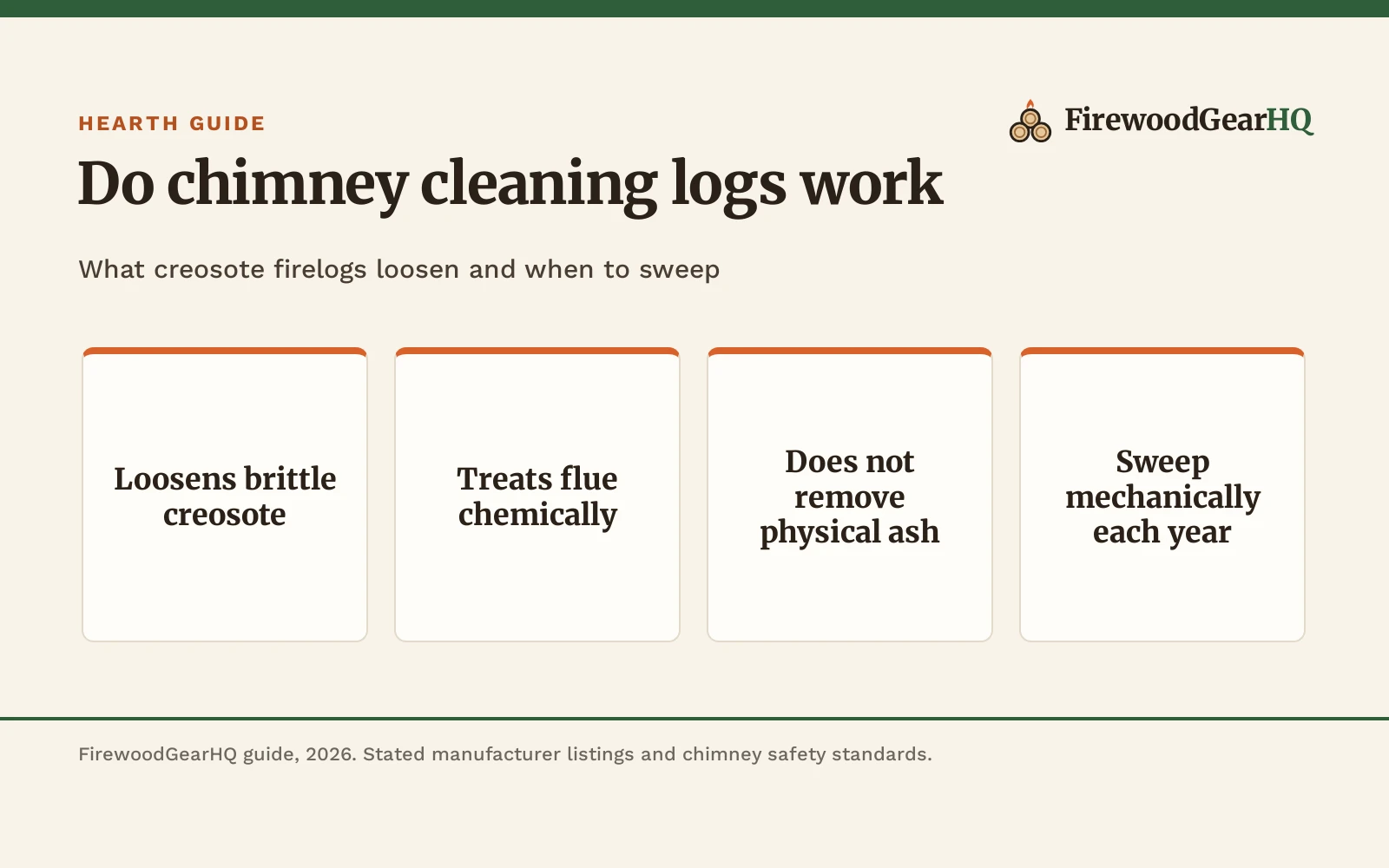
When winter sets in and you feed your wood stove or fireplace daily, keeping flue pipes free from dangerous buildup is a regular concern. If you are asking whether do chimney cleaning logs work, the direct answer is yes, but only for part of the maintenance job. A chimney cleaning fire log releases chemical vapors that alter sticky, tar-like creosote deposits, converting them into dry, brittle, brushable ash. However, the log does not remove the ash from your flue, clear bird nests or soot blockages, or replace an annual mechanical inspection and cleaning by a certified professional chimney sweep.
FirewoodGearHQ may earn a small commission if you buy through links on this page. The price you pay stays the same. Read our affiliate disclosure.
The quick answer: do chimney cleaning logs work?
Chimney cleaning logs do work to alter creosote chemically, but they do not sweep a flue clean on their own. During combustion, additives inside the firelog vaporize and rise through the chimney, breaking down binders in sticky creosote so the deposits dry and loosen. Over subsequent fires, portions of this brittle crust flake off into the firebox or smoke shelf, while remaining buildup becomes far easier to remove with a brush.
However, a chemical log cannot scrub flue tiles, vacuum fallen ash, or inspect for cracked liners. Organizations like the National Fire Protection Association (NFPA) and the Chimney Safety Institute of America (CSIA) emphasize that chemical treatments are an auxiliary aid, never a substitute for an annual physical chimney sweep.
Chimney cleaning log specifications compared
Application schedules and burn times vary by brand. Verify that the product matches your heating appliance. Stated specifications from major manufacturers are outlined below.
| Product | Stated weight or package | Stated burn or treatment time | Manufacturer recommended frequency |
|---|---|---|---|
| Pine Mountain Creosote Buster | 3.5 lb firelog | Not stated | Once per season (or every 40 fires) |
| Creosote Sweeping Log (CSL) | 1 Count | Burns approximately 90 minutes (treats over 1 to 2 weeks) | Every 60 fires |
| Rutland Creosote Antidote | 2.5 lb each (2-Pack) | Not stated | Not stated |
Always follow label instructions. Some logs burn alone, while others require placement directly onto an established bed of hot coals.
How do chimney cleaning logs work step by step
When firewood burns incompletely, unburned hydrocarbons and moisture condense against cooler flue walls, forming creosote. Chemical firelogs intervene through progressive reactions.
Chemical vapor release during combustion
Manufactured from compressed wood materials and catalytic additives, the log releases active mineral vapors as it burns. Formulations differ: some logs use wax binders, while Rutland explicitly uses no wax additives. The rising vapor coats all flue surfaces reached by combustion gases.
Penetrating and breaking down creosote compounds
The catalytic vapors penetrate porous creosote clinging to flue tiles, stainless liners, or stove pipes. The minerals attack binder compounds, neutralizing acids and drying out sticky tar oils.
Converting sticky creosote into brushable ash
The chemical reaction transforms tar into expanded, brittle flakes. Rutland notes that its treatment converts creosote buildup into a brushable ash to help prevent chimney fires. In this dry state, the deposit loses adhesion to liner walls.
Ongoing action over subsequent weeks
Minerals remain active after the log burns out. Creosote Sweeping Log states that its treatment continues working over 1 to 2 weeks as subsequent wood fires warm the chimney, causing loosened deposits to flake into the firebox or smoke shelf.
What chimney cleaning logs cannot clear
Logs do not remove physical material from the chimney. Flaked ash that falls onto smoke shelves or into stove pipe elbows must be manually cleaned out. Logs also cannot clear bird nests, leaves, or heavy soot blockages.
Creosote types and when a cleaning log helps
Creosote forms in different physical states depending on flue temperatures and cordwood moisture:
- Flaky soot: Light gray powder that brushes away easily during routine sweeping. A chemical log is rarely needed for light soot.
- Sticky tar: Porous, dark accumulation caused by unseasoned wood or restricted airflow. A cleaning log is most effective on this sticky deposit, drying the oily binder into manageable ash.
- Hardened glaze: Dense, glassy asphalt baked onto flue walls. While cleaning logs create minor surface fissures, heavy glaze resists standard brushing and firelogs. Severe glaze requires specialized mechanical scraping by a certified chimney sweep before lighting fires.
Why a cleaning log cannot replace a professional chimney sweep
Chemical logs are maintenance supplements, not replacements for manual brushing and safety inspections.
A manual sweeping using a quality chimney sweep kit for wood stoves physically scrapes deposits from liner walls, while a dedicated ash vacuum for wood stoves removes loose soot from the firebox and pipe elbows so draft remains clear. Burning a log beforehand makes brushing easier because brittle ash detaches readily.
Crucially, a firelog cannot inspect your chimney. The CSIA and NFPA urge an annual inspection by a certified professional to verify liner integrity, check clearances from combustibles per manufacturer specifications and local building codes, and ensure clear airflow. Additionally, maintain working smoke and carbon monoxide (CO) alarms on every level per CPSC recommendations. Burn seasoned firewood verified with a firewood moisture meter, and monitor flue heat with a wood stove thermometer to maintain clean combustion under EPA Burn Wise guidelines.
Do chimney cleaning logs work reddit discussions and wood burner experience
In online hearth communities and do chimney cleaning logs work reddit discussions, experienced wood burners view chemical logs as pre-treatment aids rather than standalone cleaners.
Forum contributors recommend burning a cleaning log ahead of an annual mechanical sweep to dry stubborn tar, reducing the brush passes needed to clean the flue. However, wood burners consistently warn against using logs in place of physical sweeping, as dislodged ash gathers on smoke shelves and in pipe elbows, restricting draft if not manually cleaned out.
Frequently Asked Questions
How do chimney cleaning logs work?
Combustion releases catalytic mineral vapors into rising flue gases. These minerals bond with creosote, drying sticky oils and converting stubborn tar into brittle ash that flakes off or brushes away easily.
Do chimney cleaning logs really work on glazed creosote?
They offer minimal help on dense glaze. While vapors may cause surface micro-fissures, heavy glazed creosote will not disappear with a log and requires professional mechanical removal.
Do chimney cleaning logs replace a professional chimney sweep?
No. Logs cannot scrub flue walls, vacuum fallen ash, or inspect for cracked liners and structural damage. The CSIA and NFPA advise annual professional inspections regardless of chemical log use.
Does chimney cleaning logs work in both wood stoves and fireplaces?
Not all products work in both appliances. Rutland and Creosote Sweeping Log state compatibility with wood stoves and fireplaces, whereas Pine Mountain Creosote Buster is labeled only for fireplaces. Furthermore, catalytic stoves often forbid chemical logs to protect combustor catalysts.
How often should you burn a chimney cleaning log?
Frequency depends on the brand and usage. Pine Mountain Creosote Buster recommends burning a log once per season or every 40 fires, while Creosote Sweeping Log suggests every 60 fires. Seasoned cordwood reduces the need for frequent use.
Can a chimney cleaning log cause a chimney fire?
The log burns at a controlled rate and does not cause fires under normal operation. However, loosened creosote can collect on smoke shelves or in pipe elbows, creating a hazard if not cleared before subsequent hot fires.
Related guides
Explore our stove accessories hub for hearth equipment. For manual maintenance, read how often should you clean your chimney with a wood stove and our best chimney sweep kit for wood stoves review. Clean fallen soot with a best ash vacuum for wood stoves and learn how to dispose of wood stove ashes safely. Understand flue buildup in what is creosote and how to prevent it, monitor operating heat with a best wood stove thermometer, check cordwood moisture with a best firewood moisture meter, and follow our wood stove safety checklist.