Mini Chainsaw Problems: Common Causes and How to Fix Them
Common mini chainsaw problems from loose chains and oiling failures to motor stalls, with step-by-step field fixes and maintenance checks to keep your saw cutting clean.

On this page
Top picks at a glance
As an Amazon Associate we earn from qualifying purchases.
- 1
 SEESII 6-Inch Mini Chainsaw Cordless with Oiler System9.7/10View on Amazon
- 2
 SEESII 2-in-1 Mini Chainsaw & Pruning Shears9.7/10View on Amazon
- 3
 SEESII Mini Chainsaw 6 Inch Brushless9.7/10View on Amazon
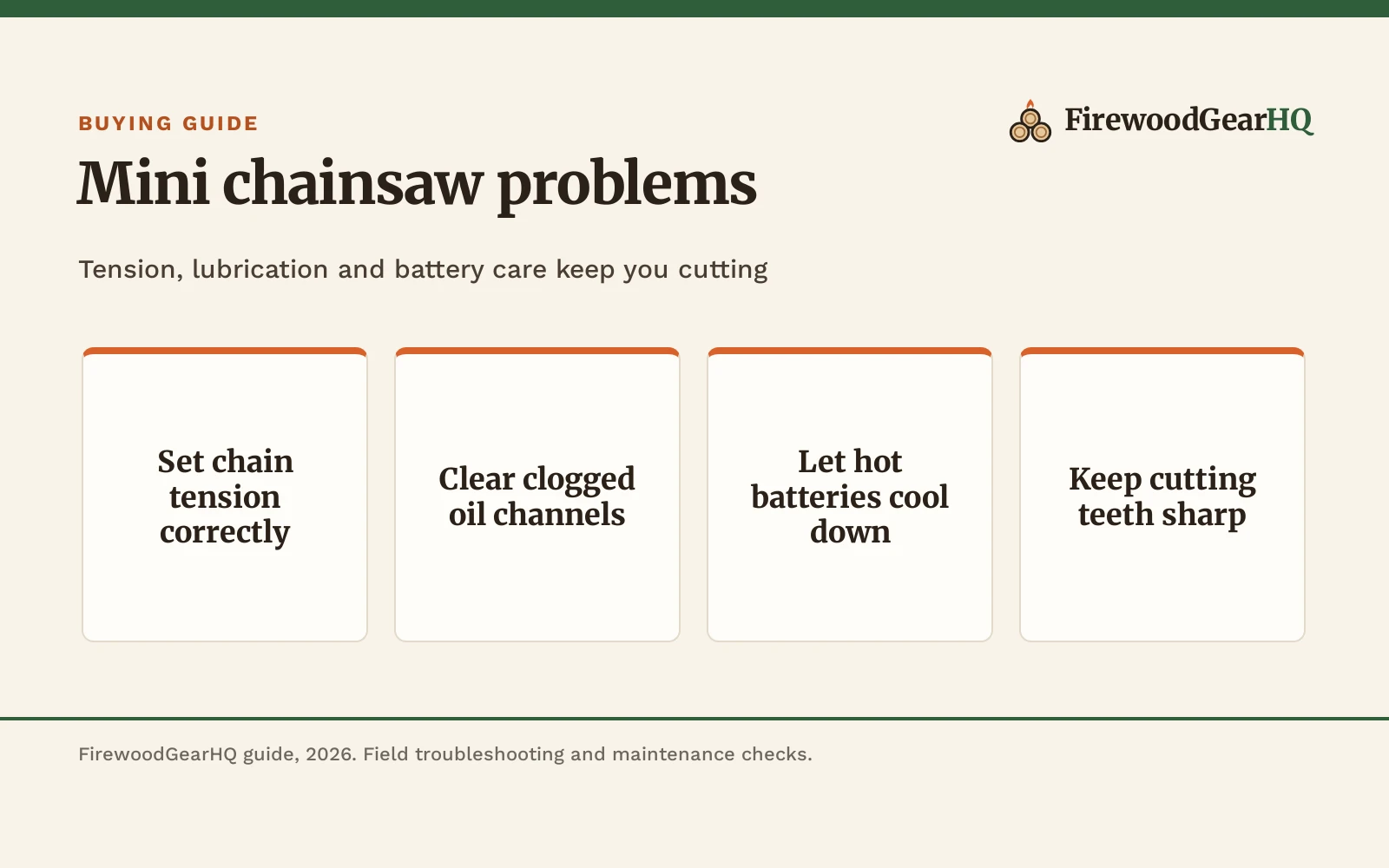
When clearing storm blowdown or trimming kindling for the winter stack, dealing with mini chainsaw problems can halt yard work quickly. Common issues include chains slipping off the guide bar from loose tension, motors stalling under heavy cutting pressure, dry chains caused by clogged oil ports, and battery packs shutting down from thermal overload. Resolving these faults involves setting proper chain tension, clearing the bar oil channel, easing cutting pressure, and letting warm battery cells cool before recharging.
FirewoodGearHQ may earn a small commission if you buy through links on this page. The price you pay stays the same. Read our affiliate disclosure.
The quick answer
Many mini chainsaw cutting problems stem from loose chain tension, clogged oil passages, or battery overheating rather than mechanical failure. Retension the chain until the drive links seat in the groove without bottom sag, clear sawdust from the oil port, and let hot batteries cool in shade. For broader issues across larger equipment, consult our guide to chainsaw problems and solutions.
Common mini chainsaw problems
Compact handheld saws offer great convenience for limb trimming, but small motors and lightweight bars demand regular care. The table below outlines frequent cutting symptoms and straightforward field solutions.
| Symptom | Likely cause | Field solution |
|---|---|---|
| Chain throwing or sagging | Loose tension dial or packed debris | Clear housing debris and retension chain in groove without bottom sag |
| Dry chain or hot guide bar | Clogged oil delivery hole | Clear bar oil port with wire and check lubricant flow |
| Motor stalls during cut | Excessive downward pressure | Ease cutting pressure and let cutters clear the kerf |
| Battery shuts down prematurely | Cell overheating or dirty contacts | Allow pack to cool in shade and clean battery contacts |
| Saw cuts crooked or binds | Unevenly dulled cutters or worn rails | Sharpen teeth to equal angles or install replacement chain |
Step-by-step troubleshooting for mini chainsaws
Chain slipping off the guide bar
A chain popping off the guide bar is a frequent complaint with handheld saws. Cutting friction warms metal links, causing the chain to expand and sag away from the rail. Cutting vibration also gradually loosens the side cover retention knob, allowing loose drive links to jump out of the bar track.
To correct tension, loosen the cover lock knob slightly, turn the tensioning screw or dial until the drive links seat in the bar groove without bottom sag, then retighten the lock knob securely. When pulled with gloved fingers, the chain should snap back cleanly against the rail while moving smoothly by hand. If your saw continuously sheds its chain, check our guide on why chainsaw chains keep coming off for bar track inspections.
Lack of lubrication and dry bar rails
Mini chainsaws use various lubrication setups, ranging from manual thumb bulbs to gravity feeds and internal pumps. Wood dust and sap cake over the oil discharge hole behind the bar mount. When oil stops flowing, friction rapidly overheats the bar and chain, dulling cutters and straining the motor.
Remove the side cover and guide bar, then scrape chips from the bar pad. Inspect the oil delivery hole on the saw body and the matching inlet on the bar. Clear clogged channels with a stiff wire. Always fill the reservoir with dedicated lubricant from our bar and chain oil guide rather than used motor oil, which lacks tacky additives and gums up ports.
Motor bogging down and sudden stalls
Because mini chainsaws feature compact electric motors, forcing the bar into wood quickly overloads them. Heavy downward force pinches cutters in the kerf, driving motor amperage upward until overload circuitry trips to protect the windings. Brushless designs manage current efficiently, but still shut down when overloaded.
Let sharp cutters pull through the wood without aggressive pushing. Keep motor speed high before touching branches, and ease off if the motor slows. For more on motor designs, read our guide on brushless chainsaws.
Battery runtime issues and thermal cutoffs
Lithium-ion battery packs include protection circuits monitoring cell temperature and discharge. Continuous cutting on warm afternoons drives internal temperatures past safe limits, shutting down the saw even with charge remaining. Placing a hot pack onto a charger triggers a fault light, as chargers refuse overheated cells.
When a battery shuts down, remove it and let it cool in shaded air before recharging. Keep battery terminals clean by wiping away dust and sap with a dry cloth. Keeping extra packs allows smooth rotation across a cutting session.
Crooked cuts and bar binding
When a saw curves off line, the guide bar binds in the kerf and halts cutting. Crooked cuts frequently result from uneven cutter sharpness or worn guide rails. When cutters on one side dull from hitting dirt while opposite teeth stay keen, the chain cuts unevenly and drifts off line.
Inspect cutters under good light. Sharpen teeth to uniform angles using tools from our chainsaw sharpener review. If cutters suffered severe rock damage, replace the loop using our chain for mini chainsaw guide. Flip the bar regularly to balance rail wear. For more diagnostic tips, see our advice on why chainsaws cut crooked.
Hardware specs and sizing considerations
Published manufacturer specifications show how bar sizes, motor ratings and weights differ across models:
- Bar length: Stated bar lengths include the 6-inch bar on the Skil PR0600B-11, the 6-inch bar on the VOTLEMI model, the 6-inch bar on the WIRIK saw, and the 12-inch bar on the Generic model. For replacement guidance, see our guide on what chainsaw chain you need.
- Motor output: Stated motor ratings include 700W on the Hguptgw saw, 1000W on the VOTLEMI, and 1000W on the Generic saw. The WIRIK listing specifies 0.47 hp, while the Skil PR0600B-11 lists 0.73 horsepower.
- Battery voltage and capacity: Stated voltages include 20V on the Skil PR0600B-11 and 20V on the MAXLANDER, with 21V on the VOTLEMI, 21V on the Hguptgw and 21V on the WIRIK. Listed capacities include 2.0Ah on the Skil PR0600B-11 and MAXLANDER, and 2000mAh on the VOTLEMI and Hguptgw packs.
- Tool weight: Listed weights include 1.5 pounds for the Generic saw, 2.54 pounds for the VOTLEMI, 2.6 pounds for the Hguptgw, 3.65 lbs for the WIRIK, and 4.2 pounds for the Skil PR0600B-11.
Safety precautions around the woodlot
Even small pruning saws demand serious respect. High-speed cutting chains cause severe injury in an instant. Follow these essential safety practices whenever working around the woodpile or trimming trees:
- Protective apparel: Always wear heavy-duty chainsaw chaps to protect your legs against chain contact. Sturdy work boots with traction keep your footing solid. Learn more in our guide on chainsaw chaps and review how chainsaw chaps work.
- Head, eye, and hearing gear: Wear a protective helmet with face screen and hearing protection to shield your head and block flying chips. If using a separate hard hat, see the best chainsaw helmet for small heads or a chainsaw helmet with chin strap. Review our chainsaw safety gear checklist before cutting.
- Hand protection: Thick leather gloves protect hands from sharp teeth and cushion vibration. Check our guide to the best chainsaw gloves.
- Kickback awareness: Kickback occurs when the moving chain around the upper nose or tip of the guide bar contacts an obstruction, driving the bar upward toward the operator. Never cut with the bar tip, maintain a secure grip, and keep your body clear of the cutting plane.
- Safe work habits: Never cut alone on remote acreage. Keep a clear retreat path, secure your footing before cutting, and store tools safely in a dedicated carrier like the options in our chainsaw case guide. Also verify tool safety histories using our resource on how to check if your chainsaw is recalled.
Wear cut-resistant chaps, a helmet with face screen and hearing protection, gloves and sturdy boots. Know where the kickback zone is (the upper tip of the bar), keep the chain brake working and the chain sharp, and never cut alone in the woods. Felling trees is hazardous work: hire a professional for large, leaning or storm-damaged trees, especially near buildings or power lines. See OSHA logging safety for chain saw operators. Read our Safety Disclaimer.
Frequently Asked Questions
Why does a mini chainsaw chain keep coming off?
A chain throws off the bar when tension loosens during cutting, when rails become worn, or when wood chips pack inside the housing. Clear packed debris from the sprocket cover and retension the chain so drive links seat in the groove without bottom sag.
Why is my mini chainsaw not oiling the chain?
Mini chainsaws fail to lubricate when the small oil discharge port clogs with sawdust and sap, or when the manual bulb loses suction. Wipe the bar mount, clear the oil inlet hole with a wire, and verify clean oil flows before cutting.
Why does my mini chainsaw stop cutting suddenly?
Sudden shutdowns happen when motor overload circuitry trips from forcing the blade into wood, or when the battery reaches thermal cutoff. Back the saw out of the cut to recover. If the battery feels hot, let it cool before resuming work.
Why does my mini chainsaw cut crooked?
A saw drifts to one side when cutting teeth on one side dull from contacting soil, or when bar rails wear unevenly. File cutters to equal angles, mount a fresh chain if teeth are damaged, and flip the bar periodically to balance rail wear.
Can you cut firewood with a mini chainsaw?
Mini chainsaws excel at limbing, clearing small branches and cutting kindling around the woodpile. While larger logs require a dedicated firewood saw, a compact battery saw handles brush and kindling without the weight or exhaust of gas engines.
Related guides
Explore more cutting resources across our site. Start at the chainsaws hub and browse dedicated battery models in our battery chainsaws section. For protective apparel, visit our chainsaw gear hub. If comparing equipment, see the best mini chainsaw cordless options, evaluate picks for older operators in the best mini chainsaw for seniors guide, or browse yard tools in our best battery chainsaw for homeowners roundup. For high limbs, compare the best cordless chainsaw with extension pole picks. After severe weather, see the best chainsaw for storm cleanup. Learn cutting techniques in our guide on how to buck firewood safely with a chainsaw, compare motor types in gas vs battery chainsaw, and learn how often to sharpen a chainsaw chain. For cutting full cords, see our best chainsaw for firewood guide.