Firewood Shed Dimensions: Width, Depth and Height Sizing Guide
Firewood shed dimensions explained, covering depth, width, height, airflow spacing, roof overhangs and foundation sizing for seasoned wood storage.

On this page
Top picks at a glance
As an Amazon Associate we earn from qualifying purchases.
- 1
 Patiowell 5x3 FT Outdoor Storage Shed9.6/10View on Amazon
- 2
 MCombo Outdoor Storage Cabinet with Shelves9.6/10View on Amazon
- 3
 vidaXL Garden Log Storage Shed Galvanized Steel9.5/10View on Amazon
As autumn chill sets in and splitting rounds turns to stacking split logs, getting firewood off damp ground and under a protective roof becomes the main chore on the woodlot. Choosing the right firewood shed dimensions means matching depth to cut log length, expanding width for your winter fuel supply, and planning height to maintain airflow above the stack. A properly sized shed shields wood from rain and snow while open sides allow breezes to season every rank thoroughly.
FirewoodGearHQ may earn a small commission if you buy through links on this page. The price you pay stays the same. Read our affiliate disclosure.
The quick answer
Firewood shed depth generally matches cut log length for an individual stack, or provides clearance between parallel rows when storing multiple ranks. Shed height should provide comfortable access while leaving open space under the roof deck for rising moisture to vent. Width expands to fit your seasonal storage volume. Commercial designs range from compact patio stands like the 4 ft wide VEVOR rack with a 1/4 cord capacity up to extended yard frames like the LANTRO JS spanning 129.9″ across, while sheds like the TBMLC list a full cord capacity. Elevating the floor and pitching the roof ensures firewood seasons cleanly without ground moisture.
Firewood shed dimensions comparison
Manufacturer listings provide concrete benchmarks for how dimensions, weight capacities, and roof coverage scale across different frame sizes:
| Brand and shelter style | Stated dimensions or footprint | Capacity rating | Structural specifications |
|---|---|---|---|
| VEVOR 4 ft firewood rack | 4 ft width | 1/4 cord (660 lb capacity) | 43 lbs frame weight, sloped polycarbonate roof |
| AECOJOY storage shed | 5×2 footprint | 38 cu.ft volume | 60 mph wind resistance, galvanized steel |
| TBMLC round roof shed | 32-inch diameter roof | Full cord stated | 0.8mm thick wave-pattern galvanized steel |
| LANTRO JS storage rack | 129.9″ frame length | Not stated | Sloped roof drainage, raised floor slats |
Use these reference figures to see how depth, width, and height interact across commercial storage frames.
Planning key firewood shed dimensions
Depth: matching your cut firewood length
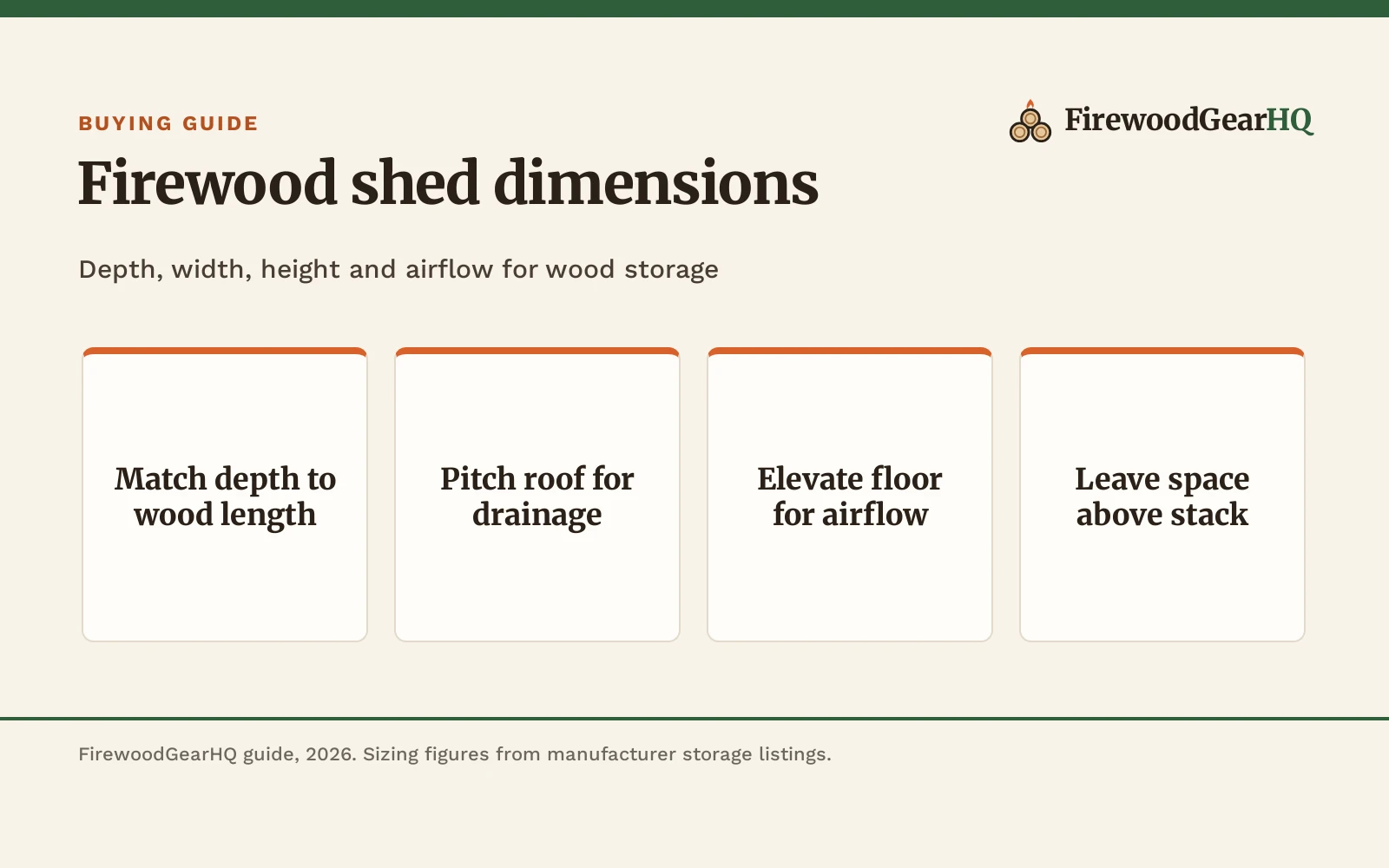
Shed depth must be planned around the length of your split wood so logs rest securely without tipping. If depth is too narrow, log ends stick out past the roof eaves where rainfall drips directly onto the wood. If depth is too deep for an individual stack, reaching rear logs becomes awkward. When planning a deeper shed for multiple rows, leave open space between ranks. Stacking rows flush against each other blocks air movement, trapping moisture in the center of the woodpile. Uniform log lengths cut with a splitting maul make stacking within your planned depth clean and stable.
Height: headroom and airflow clearance
Shed height controls storage capacity and working comfort. The access opening requires sufficient height so you can stack and pull splits without striking rafters. Inside, avoid stacking firewood flush against the roof deck. Moisture evaporating from seasoning wood rises toward the ceiling. Leaving open space between the top logs and the roof lets warm, humid air escape through open eaves. Height must also incorporate adequate roof pitch: freestanding sheds often slope downward from front to back to direct runoff away from the loading area, while lean-to structures attached to outbuildings pitch forward or sideways to match yard drainage.
Width: scaling across your storage space
Width sets overall firewood storage volume. A compact stand fits neatly on a deck or patio, while a wide multi-bay shed accommodates a full winter supply across an open yard. Long spans require intermediate upright posts and bottom rails to prevent the frame from bowing under heavy firewood. Dividing a wide shed into separate bays helps you organize wood by cutting season, keeping seasoned fuel separate from green wood. Commercial models illustrate this range, from compact options like the VEVOR frame at 4 ft wide up to large shelters like the LANTRO JS spanning 129.9″ across.
Roof overhang: shedding rain and snow
A shed roof must extend beyond the frame perimeter. A generous front overhang shields stacked firewood from wind-driven rain and snow. Side and rear overhangs direct runoff away from structural posts and foundation footings. Protective canopies, such as the 32-inch diameter metal roof on the TBMLC shed or the sloped canopy on the VEVOR rack, shield wood while maintaining open perimeter airflow.
Floor elevation: ground clearance for drying
Never stack firewood on bare ground or damp grass. Wet soil transfers moisture into bottom logs, causing rot and attracting insects. The floor must sit elevated above dirt on runners, concrete blocks, or steel framing. Raised floor slats create a natural draft: cool air enters beneath the bottom tier, moves upward between split logs, and vents out under the roof. Many metal shelters include raised floor slats or steel floor frames to maintain this vital separation from damp ground.
Sizing considerations for your woodpile
When deciding on overall shed dimensions, balance your seasonal burning needs against site constraints:
- Heating demand: A primary wood stove consumes far more fuel than an occasional fireplace. Size your shed footprint to house your complete cold-weather heating needs before winter arrives.
- Stack stability: Avoid building narrow stacks too tall. A broad, stable base prevents dangerous woodpile collapses, making winter wood retrieval safer.
- Multi-bay rotation: Wood cut during spring needs months to season. A wide shed with separate bays lets you keep dry fuel accessible while greener rounds season in an adjoining section.
- Frame load limits: Dense hardwoods exert heavy weight. Ensure your frame supports heavy loads, such as the 660 lb capacity rated for the 4 ft VEVOR stand.
- Site placement: Position the shed where air moves freely through the stacks, but shield the open front from prevailing storm directions so driving rain does not saturate seasoned wood.
The U.S. EPA Burn Wise program advises burning seasoned firewood rather than wet wood to reduce chimney creosote, minimize smoke, and improve heating efficiency.
What happens when firewood shed dimensions are wrong
Incorrect shed dimensions lead directly to wet firewood, moldy logs, and wasted woodlot labor. If depth is too narrow, driving rain soaks exposed log faces, causing wood to smolder and smoke in your stove. If depth is too deep without ventilation gaps between ranks, moisture remains trapped inside the pile, causing decay. An undersized roof without overhang lets water drip down stack sides. When fuel retains excess moisture, checking splits with a firewood moisture meter confirms whether wood has dried properly. For alternative storage options, explore our guide on firewood shed vs rack and browse the best outdoor firewood rack guide.
Prefabricated storage sheds vs building your own
Deciding between a prefabricated firewood shed and building a custom wooden structure depends on your carpentry skills, available tools, and yard space. Prefabricated metal units, such as the AECOJOY 5×2 storage shed providing 38 cu.ft of capacity with 60 mph wind resistance for winter firewood storage, or open galvanized shelters like the TBMLC unit with 0.8mm thick steel, assemble quickly and provide durable weather resistance. Building a wooden shed from dimensional lumber lets you tailor exact depth, width, and height to an uneven woodlot slope. When building your own base, review our guide to the best floor for firewood shed, and consider options in our guide on the firewood shed outdoor with roof.
Turn a stack's length, height and depth into full and face cords, and estimate how much wood a winter takes.
Frequently Asked Questions
What depth should a firewood shed be?
A firewood shed depth should match cut log length so pieces rest squarely on the frame without sticking out past the roof. When stacking multiple parallel rows, leave clear space between ranks so air circulates around every log.
How high should a firewood shed be?
A firewood shed should provide comfortable standing height at the front opening. Inside, leave open clearance between the upper logs and the roof rafters so warm, humid air can vent upward and escape.
Why does a firewood shed roof require a slope?
A sloped roof directs rain runoff and melting snow away from stacked logs. Angling the roof pitch prevents standing water from pooling on the roof deck and keeps runoff from dripping directly onto exposed firewood or pooling around the foundation.
Should a firewood shed have solid or slatted walls?
A firewood shed should have slatted or open walls rather than solid siding. Fully enclosing a seasoning wood shed traps evaporating moisture, encouraging mold and rot. Open sides allow prevailing winds to blow through and season the wood.
How high should firewood shed flooring be elevated?
Firewood shed flooring should sit elevated above damp earth on solid runners, concrete blocks, or steel tubing. Raising the floor allows cross ventilation beneath the stack and prevents ground moisture from wicking into bottom logs.
Can a firewood shed hold a full cord of firewood?
Yes. Firewood sheds range from compact patio stands holding a 1/4 cord up to full-scale shelters rated to hold a full cord. Commercial options like the TBMLC shed state a full cord capacity, while long multi-tier racks like the 129.9″ LANTRO JS frame offer extended linear storage for organizing your woodpile.
Related guides
Explore our complete firewood storage hub, compare large racks with the best firewood rack for a full cord, and check designs for a firewood shed outdoor with roof. To compare storage styles, read our analysis of firewood shed vs rack and find the best outdoor firewood rack for your yard. To build your own foundation, see our guide on the best floor for firewood shed and explore best firewood log rack brackets for custom builds. For keeping weather off your woodpile, see the best firewood cover, the best wood rack covers, and our review of a cover for firewood storage rack. On a budget, look at a cheap firewood rack or a firewood rack outdoor with cover. For porch setups, see the firewood rack for porch, the inside wood rack for firewood, and metal wood racks outdoor for firewood. Planning hearth storage? Review indoor firewood rack ideas, check whether can you bring firewood indoors, and find the best indoor firewood rack along with the best fireplace log holder. For woodpile preparation and seasoning technique, read how to stack firewood, learn whether should you cover firewood, and calculate cord volumes with our guides on how much is a cord of wood and face cord vs full cord. Confirm drying progress with our guides on how to tell if firewood is seasoned, how to season firewood fast, and how long does firewood take to season, and check fuel with the best firewood moisture meter. Protect your woodpile with tips on how to keep bugs out of firewood. For woodlot processing tools, see the best splitting maul, the best splitting axe, the best chainsaw for firewood, and the best chainsaw sharpener. For handling logs, check the firewood rack with carrier, the outdoor wood rack for fire pit, and the firewood rack with kindling holder.