Birch vs Elm Firewood: Which One Should You Buy?
Birch vs elm firewood compared for splitting, lighting and burn character, with kiln-dried firewood boxes for fireplaces, fire pits and stoves.

On this page
Top picks at a glance
As an Amazon Associate we earn from qualifying purchases.
- 1
 Smoak Firewood 12inch Length Premium Cooking Wood & Firewood9.6/10View on Amazon
- 2
 Smoak Firewood Cooking Wood Mini Splits9.6/10View on Amazon
- 3
 Greenworks 80V 18 in Cordless Electric Chainsaw9.5/10View on Amazon
- 4
 Wilson Birch Split FirewoodView on Amazon
- 5
 Light 'n Go All Natural Portable Birch Bonfire Log Brand:View on Amazon
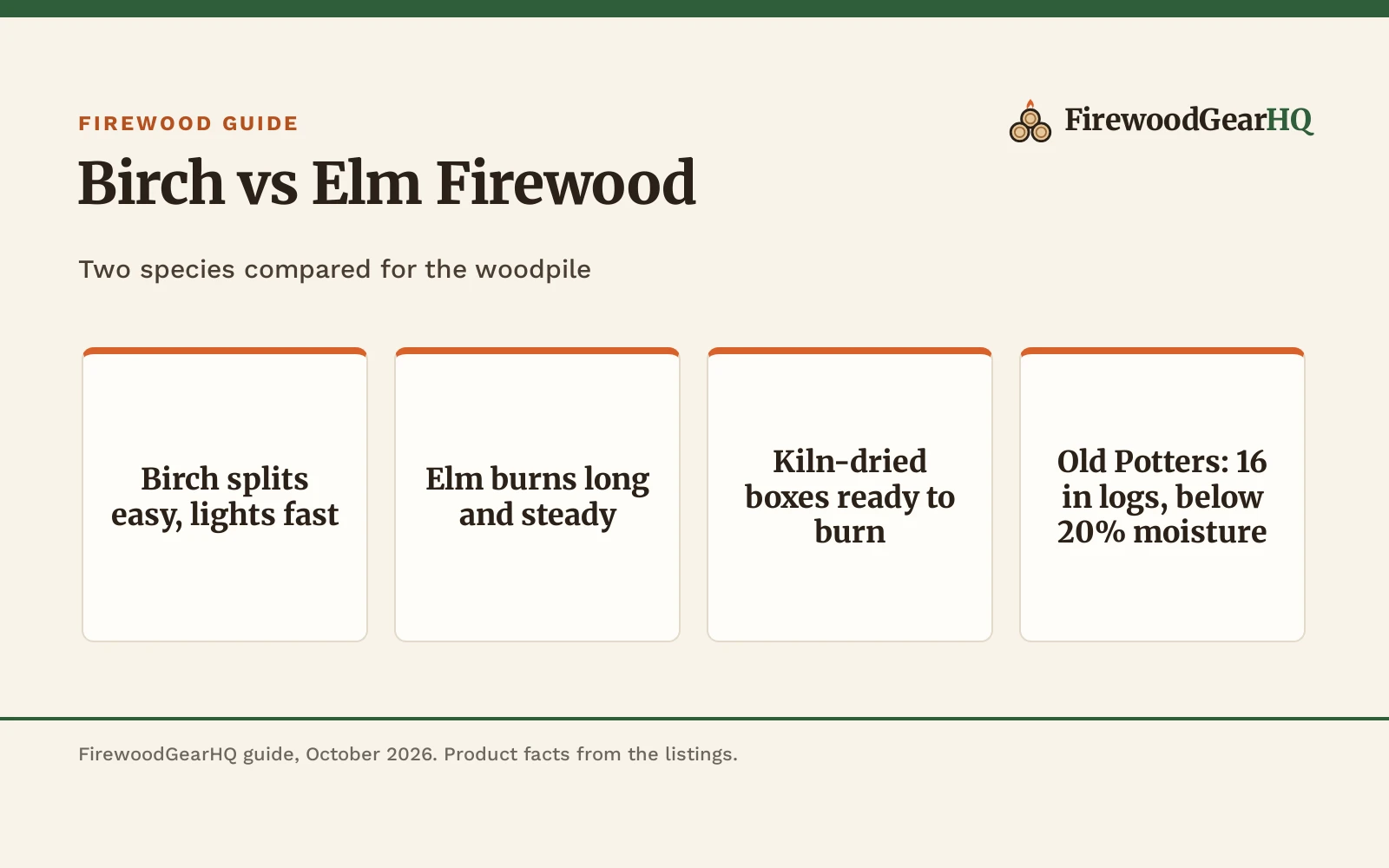
Birch vs elm firewood comes down to a trade: birch is the easy button, elm is the slow burn. Birch splits readily, lights quickly and burns bright, which makes it a favorite for fire pits and quick evening fires. Elm has stringy, interlocking grain that fights the maul, but once it is dry it burns long and steady, which suits a stove loaded for the night. If you buy rather than cut, kiln-dried boxes take the whole seasoning question off the table.
More options to compare
 Wilson Birch Split FirewoodCheck price on Amazon
 Light 'n Go All Natural Portable Birch Bonfire Log Brand:Check price on Amazon
FirewoodGearHQ may earn a small commission if you buy through links on this page. The price you pay stays the same. Read our affiliate disclosure.
The quick answer
Choose birch if you want wood that splits easy, lights fast and burns bright for fire pits and shoulder-season fires. Choose elm if you have access to it and want long, steady heat in a stove, and you are prepared for tougher splitting. Either way, burn it dry: the Old Potters box states USDA certified kiln drying to below 20 percent moisture, and both Wilson boxes state kiln drying. Dry wood lights fast and burns clean; green wood smolders.
Birch firewood
Birch is one of the friendliest firewoods to process. The grain runs straight, so rounds split with modest effort, and the papery bark catches quickly, which is why birch has a reputation as easy firewood from splitting to lighting. The fire it makes is bright and lively rather than marathon-long, so it shines in fire pits, backyard chimineas and quick evening fires where you want flames fast. See our aspen vs birch firewood comparison for how birch stacks against another easy-splitting species.
Birch bark deserves its own mention: the thin papery strips light readily and make fine natural kindling for getting any fire going. That same bark sheds water well on the standing tree, but once split and stacked, birch still wants the usual treatment: stacked off the ground, top covered, given time and air. Buy it kiln-dried and none of that waiting applies.
Elm firewood
Elm is the species people warn you about at the woodpile, and the warning is about splitting, not burning. The grain interlocks in stringy layers that absorb maul blows instead of popping apart, which makes elm genuinely tough to split by hand. A hydraulic splitter or a patient approach with wedges changes the equation, and many burners simply buy elm already split. For keeping the chain sharp through stringy wood, see our chainsaw chain for elm firewood picks.
The payoff comes at the stove. Once elm is dry, it burns long and steady with a deep bed of coals, the kind of fire that carries a stove through the night. It does not light as eagerly as birch, so pair it with easy-lighting kindling or a bed of faster wood to get it going. Dryness matters more than species here: elm that is still wet will smolder and sulk like any green wood.
Birch vs elm firewood: head to head
| Trait | Birch | Elm |
|---|---|---|
| Splitting | Straight grain, splits readily | Stringy, interlocking grain resists splitting |
| Lighting | Lights quickly, papery bark helps | Takes longer to catch |
| The fire | Bright and lively, shorter-lived | Long and steady, deep coals |
| Best use | Fire pits, quick evening fires | Stove loads, overnight burns |
Firewood boxes worth knowing
Cutting your own is not the only way to burn. These kiln-dried boxes arrive ready to burn, ranked with the birch box first since it matches this guide’s topic.
Wilson Birch Split Firewood
The topical pick: a box of natural split birch firewood, kiln dried per the title, in a 16 by 12 by 8 inch box with splits ranging from 1 to 3 inches in diameter. The bullets describe it as natural split and seasoned firewood, so the listing uses both seasoned and kiln-dried wording; either way it is sold as split firewood ready to burn. For a fireplace or fire pit where you want birch without cutting or seasoning it yourself, this is the direct answer.
Old Potters Kiln Dried Firewood
This box holds hickory, not birch or elm, but it is the most completely described firewood listing of the three. The maker states USDA certified kiln drying to below 20 percent moisture, logs cut to 16 inches for fireplaces, wood stoves, fire pits and chimineas, and a 1.5 cubic foot strapped box weighing about 40 lb, ready to burn on arrival. The maker calls hickory the hottest, longest-burning wood it sells, with a strong, smoky aroma: reported as the maker’s claim. Storage guidance is stated too: keep the box off the ground in a dry, ventilated spot.
Wilson Split Firewood, Oak
The Wilson line comes in birch, maple, oak or cherry, and this variant is the oak box: natural kiln-dried splits in a 16 by 12 by 8 inch box, ranging from 1 to 3 inches in diameter, at 8.7 kg. The listing states the wood is sustainably harvested in the upper peninsula of Michigan and that kiln drying wicks away moisture for a hotter burn with less smoke. It also notes the box works as a decorative filler for firewood racks before burning. A solid oak option when the birch box is not what the evening calls for.
Frequently Asked Questions
Which burns hotter, birch or elm?
Birch is known for a bright, lively fire that gets going fast; elm is known for a long, steady burn once it catches. The listings here state no heat-output figures, so treat species reputation as guidance rather than measurement, and remember that dryness affects heat more than species does.
Is elm hard to split?
Yes, that is elm’s whole reputation. The interlocking, stringy grain absorbs splitting force instead of popping apart, so hand splitting elm is genuinely tough work. A hydraulic splitter, wedges, or simply buying it already split are the usual answers.
Can I burn birch in a wood stove?
Yes. Dry birch burns cleanly and lights easily, which makes it good for starting the stove or for shorter burns. The Old Potters box states logs cut to 16 inches, sized for indoor fireplaces and wood stoves.
Should I buy kiln-dried firewood?
Kiln-dried boxes remove the seasoning wait entirely. The Old Potters box states USDA certified kiln drying to below 20 percent moisture and arrives ready to burn, and both Wilson boxes state kiln drying as well. If you have no dry wood stacked, a kiln-dried box is the quickest route to a clean fire.
How should I store boxed firewood?
The Old Potters listing states it plainly: store the box off the ground in a dry, ventilated spot. That keeps the kiln-dried moisture level you paid for instead of letting the logs reabsorb damp from the ground.
Related guides
Also see our aspen vs birch firewood. Also see our poplar vs birch firewood. Also see our birch vs maple firewood. Also see our oak vs hickory firewood. Also see our ash vs oak firewood. Also see our chainsaw chain for elm firewood.