Hatchet Types: Head Styles, Blade Grinds and Firewood Uses
A complete guide to hatchet types, covering camp hatchets, splitting hatchets, carving axes and carpenter tools, head grinds, handles and safe firewood prep.

On this page
Top picks at a glance
As an Amazon Associate we earn from qualifying purchases.
- 1
 14.4" Camping Hatchet with Full Tang Forged Construction &9.8/10View on Amazon
- 2
 Fiskars X7 Small Hatchet Axe 14"9.7/10View on Amazon
- 3
 Edward Tools Wood Splitting Maul 17”9.7/10View on Amazon
As autumn evenings turn chilly and wood stoves take the chill off the house, preparing kindling is a daily hearth chore. A heavy splitting maul splits big rounds at the woodpile, but processing smaller sticks for starting a fire requires a nimble, one-handed tool. Understanding different hatchet types ensures you pick the right head shape, weight, and handle length for your woodlot, hearth, or campsite. The main hatchet types are camp hatchets for general chores, splitting hatchets for kindling, carving or broad hatchets with single-bevel bits, carpenter hatchets with flat striking polls, and tactical axes built with full-tang steel. Each type balances head geometry, overall length, and handle material to match a specific task.
FirewoodGearHQ may earn a small commission if you buy through links on this page. The price you pay stays the same. Read our affiliate disclosure.
The quick answer
For most firewood cutters, a dedicated camp hatchet or splitting hatchet is the right tool. Camp hatchets feature a balanced, slightly rounded bit that chops kindling, limbs branches, and carves shavings with ease. Splitting hatchets carry wider cheeks that burst straight-grained wood apart without binding. Specialty designs like carpenter hatchets, broad carving axes, and tactical hatchets solve specific trade or pack-carry demands. Choosing among them depends on whether your primary chore is splitting kindling, shaping timber, or packing light in the backcountry.
Common hatchet types and their uses
While every hatchet shares the basic anatomy of a forged steel head hung on a short handle, differences in head profile, bit geometry, and poll design dictate how the tool behaves in wood.
Camp hatchets
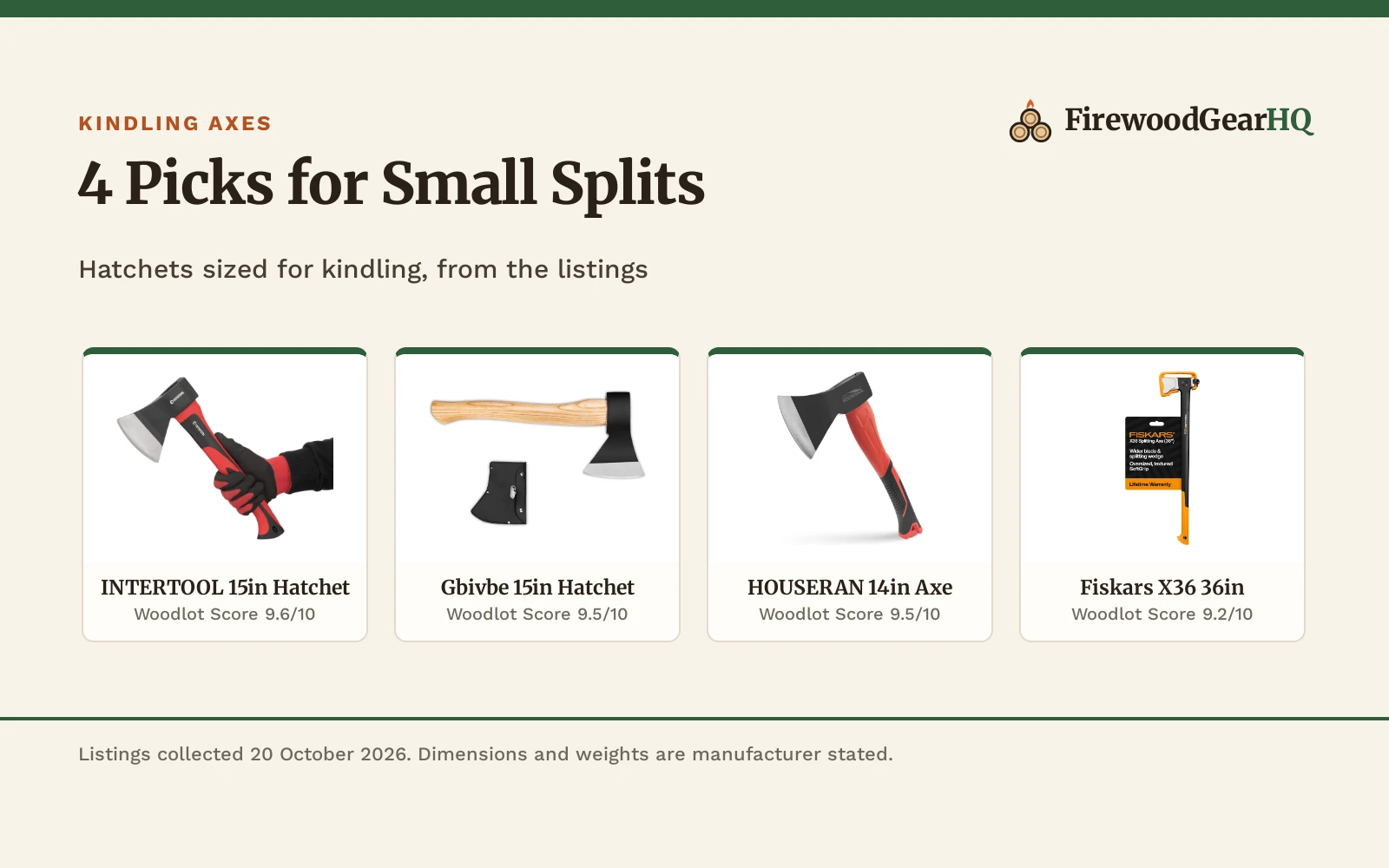
The camp hatchet is the classic all-around woodlot tool, designed for one-handed chopping, bucking limbs, and splitting kindling. The cheeks are profiled behind the bit to bite cleanly into green or seasoned wood. For compact packing, WORKPRO lists an 11-inch camp axe built from 3CR13 stainless steel with a 4 mm thick full-tang blade and a 15-ounce head weight. For ultralight carry, BOPOTI lists a 13-inch camping hatchet weighing 1 pound with a high carbon steel blade. See our guide to the best hatchet for kindling and explore options in our hatchet with cover roundup.
Splitting hatchets
A splitting hatchet is engineered for kindling prep. Wide cheeks act as a mechanical wedge, forcing wood fibers apart before the cutting edge can bind. For firewood splitting, VETOMIRO lists a 1.1-pound head on a 15.7-inch overall length, with a convex blade edge, a 4-inch blade length, and a total weight of 1.8 pounds. For kindling prep, DESHIL lists a 14-inch chopping hatchet with a 720g head weight and 980g total weight. See our guide to the best hatchet for splitting wood and learn proper technique in how to split wood with an axe.
Carpenters hatchets
A carpenter hatchet features a straight cutting edge that produces flat surfaces when trimming or notching timber. The poll opposite the bit is hardened and flat, allowing it to drive wooden stakes, tent pegs, or framing nails. For homestead utility, BIG HORN lists a 12-inch hickory handle paired with a drop-forged solid steel head weighing 21-ounce (1.3 pounds), featuring a 6-inch head length and a straight 2-inch blade edge. While less efficient at splitting, it excels at squaring timber.
Carving and broad hatchets
Carving and broad hatchets are woodworking tools for hewing and shaping green wood. Traditional models feature an asymmetric single-bevel bit, where one flat face tracks parallel along a log while the opposite bevel lifts shavings. For hand-forged shaping, NedFoss lists a 15.5-inch Mammoth Hatchet with a 4.84-inch single bevel blade forged from 1065 high carbon steel, heat treated to 50-55HRC, and weighing 2.1 pounds on an S-curve beech wood handle.
Tactical and survival hatchets
Tactical hatchets prioritize ruggedness and weather resistance. Rather than a wooden handle, many feature full-tang steel construction with synthetic grips. For balanced wilderness utility, THRWCLUB lists a 14.6-inch overall length, a 3.3-inch blade forged from 1045 high carbon steel, and a total weight of 1.76 lbs. For pack carry, GRUMPY BEAR lists a 15-inch survival hatchet featuring a high carbon steel blade paired with a leather-wrapped handle.
Pack axes and boy axes
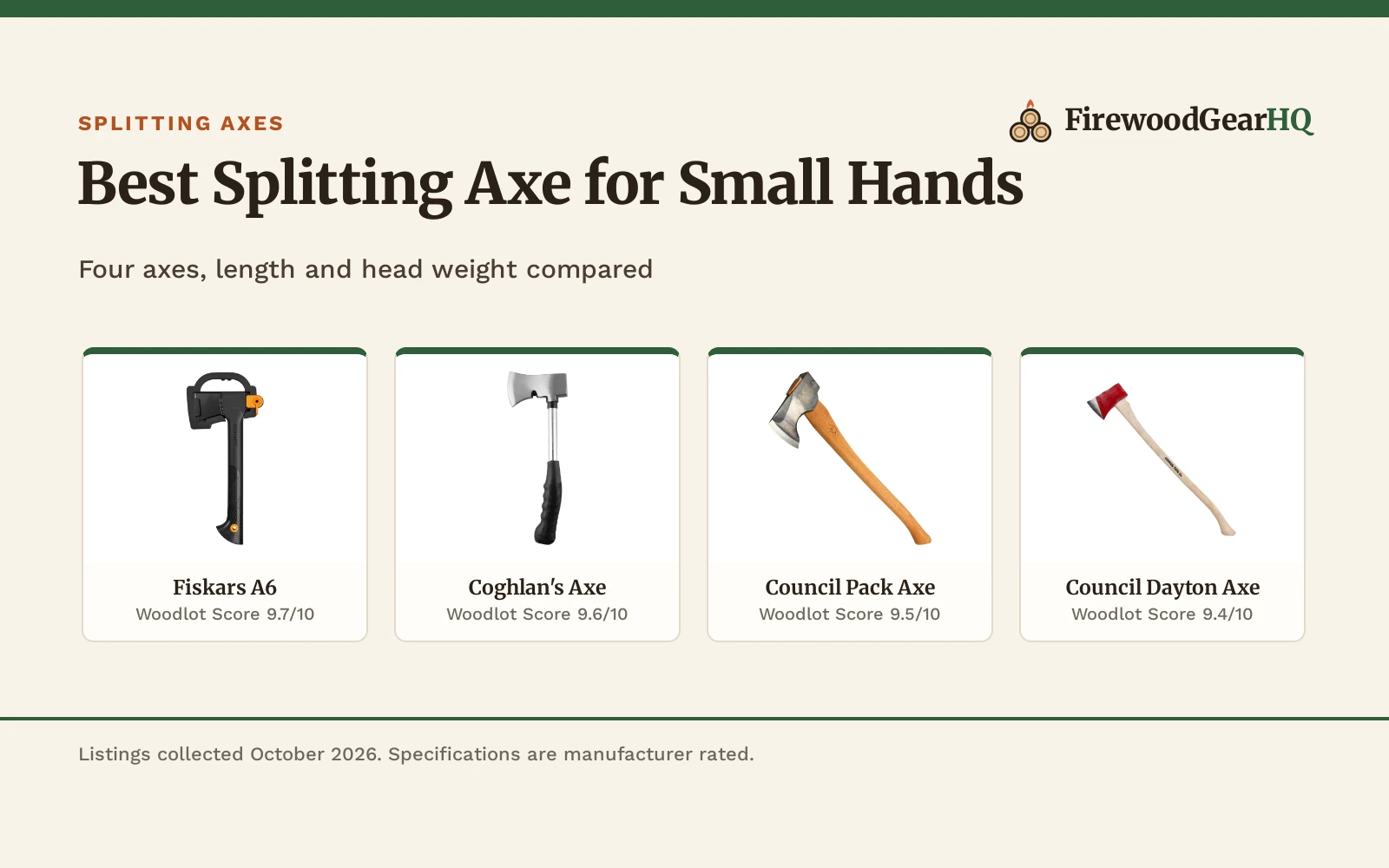
Pack axes bridge the gap between a one-handed hatchet and a felling axe. They feature a longer handle and heavier head, offering leverage for swings using both hands while remaining manageable one-handed. For heavier chores, Hults Bruk lists a 20-inch handle and a 2-pound head forged from Swedish axe steel, weighing 3 pounds overall, from a forge operating since 1697. Compare handle dynamics in hatchet vs axe and learn about larger patterns in what is a felling axe.
Hatchet types comparison
| Hatchet type | Head design | Best suited for |
|---|---|---|
| Camp hatchet | Tapered wedge, rounded bit | Splitting kindling, campsite chores, clearing trail brush |
| Splitting hatchet | Wide cheeks, convex bevel | Splitting kindling sticks, popping firewood along grain |
| Carpenters hatchet | Flat striking poll, straight cutting edge | Driving stakes, framing work, notching hearth timber |
| Carving and broad hatchet | Single-bevel bit, offset handle | Hewing flats, shaping wood, fine green-wood shaving |
| Tactical and survival hatchet | Full-tang steel, compact synthetic grip | Packing in emergency kits, light chopping, all-weather chores |
Key features that define hatchet performance
Understanding mechanical elements helps you match a tool to your woodlot needs.
Head geometry and blade grind
A thin grind penetrates deeply, ideal for limbing and shaving. A convex grind curves outward, creating a wedging effect that pushes wood apart when splitting kindling. High carbon steels like 1045 high carbon steel (cited by THRWCLUB) and 1065 high carbon steel (cited by NedFoss) take a keen edge. Stainless steels like 3CR13 (cited by WORKPRO) resist corrosion in damp weather, while carbon steel 45 (cited by DESHIL) provides dependable toughness.
Handle materials and shock absorption
American and Canadian hickory (cited by BIG HORN and THRWCLUB) remain favored for wooden handles because flexible wood fibers absorb impact shock. Beech wood (cited by NedFoss) provides a rigid grip. Synthetic handles offer distinct weather resistance: nylon handles (such as the 14-inch chopping hatchet listed by DESHIL with a 720g head weight and 980g total weight) resist moisture, while G10 fiberglass (WORKPRO) and rubber (VETOMIRO) maintain a secure hold in rain or snow.
Weight, balance and handle length
Head weights vary across models, including the 15-ounce head listed by WORKPRO, the 1.1-pound head listed by VETOMIRO, and the heavier 2-pound head listed by Hults Bruk. Lighter heads swing fast for kindling, while heavier heads drive through tough wood with less effort. Handle lengths also vary, from compact 11-inch (WORKPRO) and 12-inch (BIG HORN) handles to extended 20-inch (Hults Bruk) patterns.
Safe hatchet handling around the woodpile
Because a hatchet is swung with one hand close to the body, proper safety prevents glancing blows:
- Establish a clear swing zone: Verify that bystanders, children, and pets remain well clear. Remove branches that could catch the head mid-swing.
- Use a stable chopping block: Never chop wood directly on soil or stone, which dulls the bit and causes dangerous bounces. Use a broad hardwood stump.
- Mind your off-hand: Never hold kindling upright with your free hand while striking. Place the bit on the wood and tap both down together onto the block.
- Maintain a sharp edge: A dull blade glances, while a sharp edge bites cleanly into the grain. Touch up the edge with the best axe sharpener.
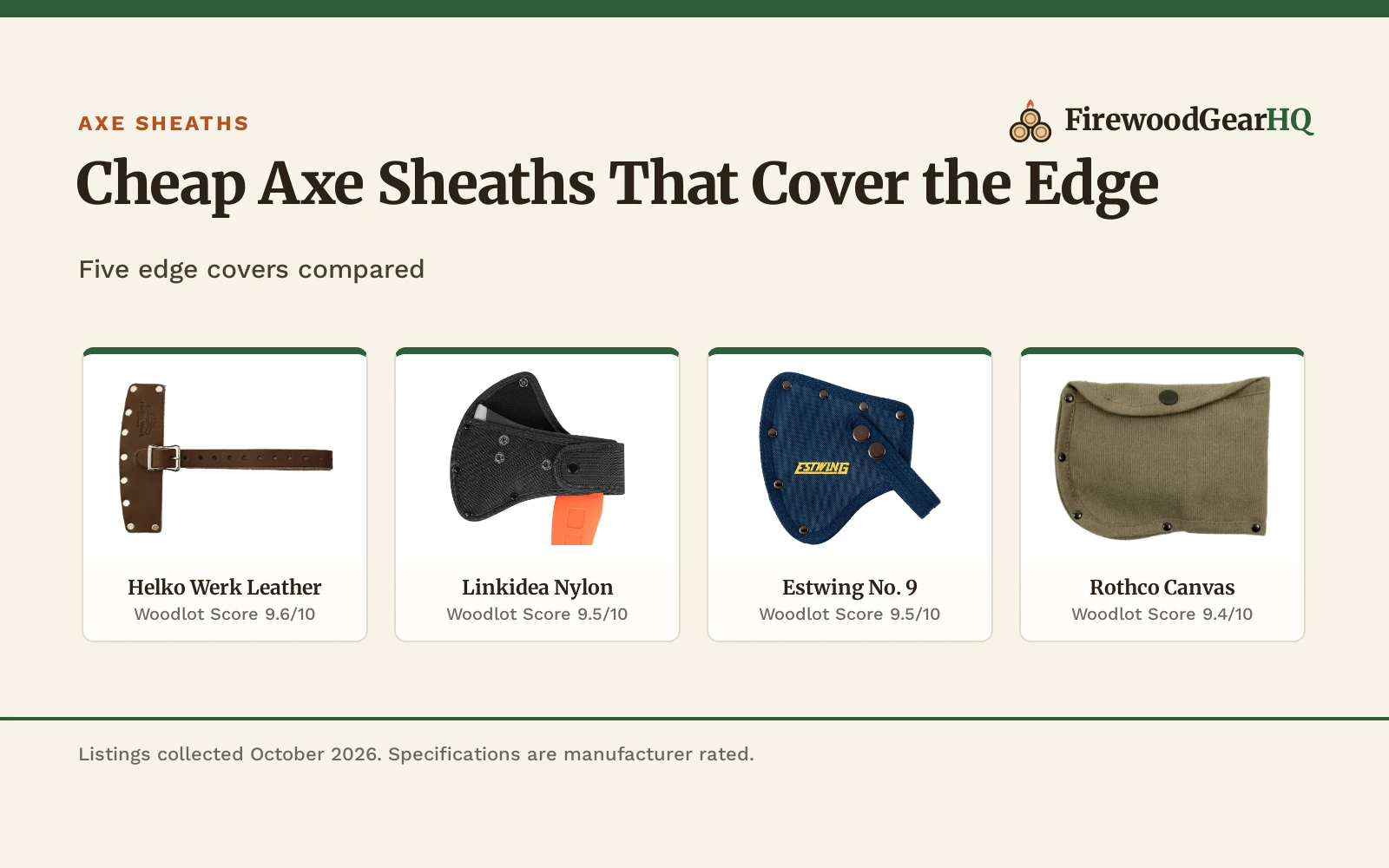
- Sheath the blade: Always secure a durable sheath over the bit when carrying or storing the tool.
Clear the swing area (overhead too), split on a solid chopping block at a comfortable height, keep your feet apart with the block in front of you, and wear eye protection and sturdy boots. Replace a cracked or loose handle before you swing again. Read our Safety Disclaimer.
Frequently Asked Questions
What is the difference between a hatchet and an axe?
A hatchet is compact and designed for one-handed cutting and kindling prep. A full-sized axe features a long handle built for two-handed swings to fell trees and split heavy rounds.
Can you split firewood rounds with a hatchet?
No. A hatchet lacks the mass and leverage to split rounds. It is designed to split small kindling from already-split wood. For rounds, use a splitting axe or splitting maul.
What is the best handle material for a woodlot hatchet?
Hickory wood is widely favored because its grain absorbs impact shock and dampens vibration. Synthetic nylon and fiberglass handles offer superior weather resistance in wet conditions.
What is a carpenter hatchet used for around the homestead?
A carpenter hatchet is designed for rough carpentry and notching logs. Its straight cutting edge flattens timber, while its hardened flat poll drives wooden stakes and nails.
Why do some hatchets have a hammer poll?
A hardened flat poll drives wooden stakes, tent pegs, and plastic splitting wedges without mushrooming the axe head. Never strike steel against a non-hardened poll.
How should you care for a hatchet blade after chopping firewood?
Wipe the steel dry after use to prevent moisture buildup. Apply mineral oil or boiled linseed oil to the head and wooden handle, and store the tool inside its sheath.
Related guides
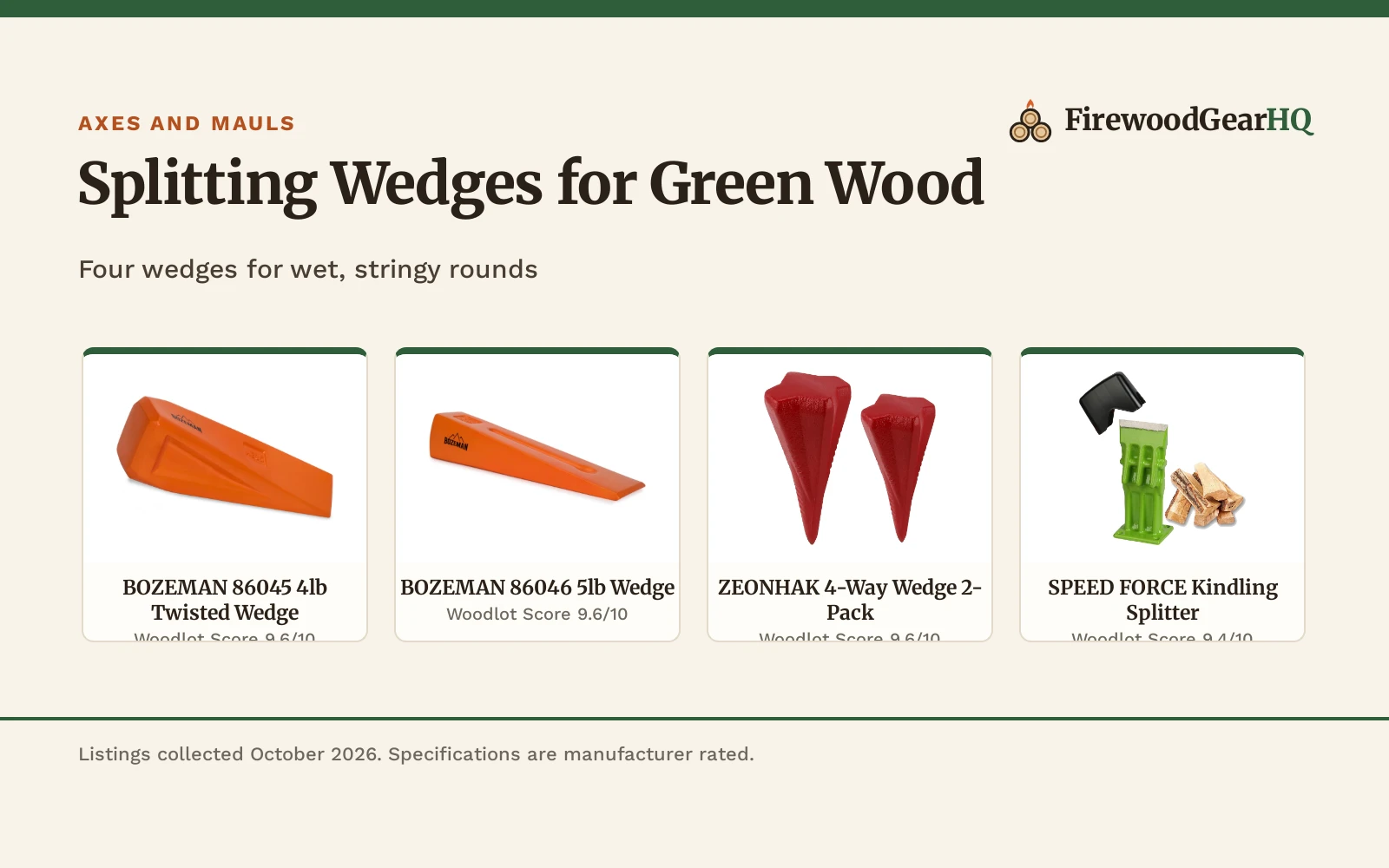
Explore our complete firewood tool coverage in the axes and mauls category. If you need dedicated tools for lighting stoves, check out the best hatchet for kindling, compare small axes in best hatchet for splitting wood, and view portable options in hatchet with cover. For beginners building a woodlot kit, read our recommendations in best axe for beginners. When moving up to larger woodlot timber, compare designs in hatchet vs axe, learn how to fell small trees in what is a felling axe, and see top picks in the best felling axe guide. For heavy firewood splitting, choose between tools in splitting axe vs maul, compare options in maul vs axe, explore the best splitting axe, and examine heavy hitters in best splitting maul. If you want a hands-free splitting station, see our review of the best kindling splitter, master proper swing mechanics in how to split wood with an axe, conquer twisted rounds with the best splitting wedge, and keep every cutting edge sharp with the best axe sharpener.