Chainsaw Chaps Size Chart: Sizing and Measurement Guide
Chainsaw chaps size chart and measurement guide explaining how to measure overall length from waist to boot top, how chaps fit and how to pick the right size.

On this page
Top picks at a glance
As an Amazon Associate we earn from qualifying purchases.
- 1
 Chainsaw Chaps 8-layer Protective Apron Wrap Adjustable9.7/10View on Amazon
- 2
 Chainsaw Chaps Apron 8-Layer Wrap for Men/Women Loggers9.7/10View on Amazon
- 3
 Chainsaw Chaps Apron 8-Layer Wrap for Men/Women Loggers9.7/10View on Amazon
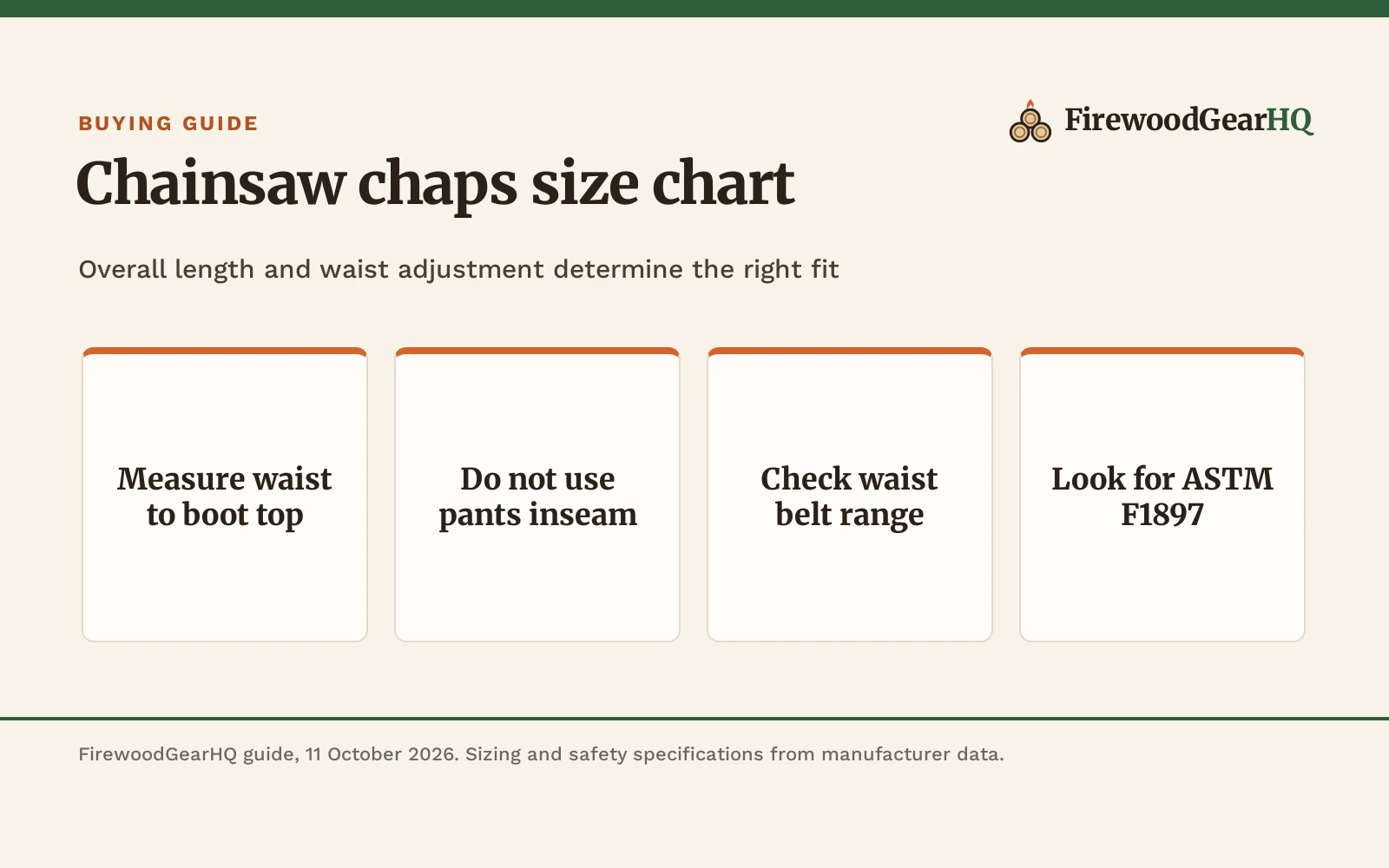
A chainsaw chaps size chart matches your overall vertical length from waist to boot instep, not your pants inseam, to protect your legs from cutting hazards. To find your chap size, measure from your belt line down to the top of your work boot instep while standing naturally. Manufacturers offer overall lengths ranging from 35 to 42 inches in published specifications, with adjustable waist belts spanning ranges such as 30 to 48 inches or 22 to 48 inches depending on the maker. Selecting the proper length ensures the cut-resistant material covers your lower shins without bunching at your feet or dragging on the ground.
FirewoodGearHQ may earn a small commission if you buy through links on this page. The price you pay stays the same. Read our affiliate disclosure.
The quick answer
Chainsaw chaps are sized by total length from the top of the waist belt down to the bottom hem, never by pants inseam. For example, Husqvarna lists its 36 to 38 inches classic chaps for an individual with a 32-inch inseam to ensure proper coverage over the boot top. Waist belts are adjustable across most apron designs, with FORESTER models fitting waists from 30 to 48 inches and VEVOR listing a 22 to 48 inches range. Before purchasing chaps from our best chainsaw chaps guide, measure your length from waist to boot while wearing your work clothing and field boots.
Chainsaw chaps size chart
The reference table below compares published sizing specifications across major protective gear brands, including overall length, waist adjustment range, protective layering and certified standards. Use these manufacturer figures to compare how different styles measure and fit.
| Brand and Model | Stated Chap Length | Waist Belt Range | Protective Build and Standards |
|---|---|---|---|
| FORESTER Apron-Style Chaps | 35 in overall length | Not stated | 100% nylon outer shell, lightweight design |
| FORESTER Apron-Style Chaps | 37 in overall length | 30 to 48 in | 100% nylon outer shell, buckle closure |
| FORESTER Apron-Style Chaps | 40 in overall length | 30 to 48 in | 100% nylon or Oxford fabric, 3 pounds weight |
| Husqvarna Classic Apron Chaps | 36 to 38 in (32-inch inseam) | Belted (Not stated) | 5-layer protective material, ASTM F1897, ANSI Z133.1, OSHA Regulation 1910-26 |
| Husqvarna Technical Apron Wrap | 40 to 42 in (42 inches hem length) | Belted (Not stated) | 1000 Denier polyester outer fabric, 4 pounds weight |
| Husqvarna Functional Apron Chaps | 40 to 42 in | Buckle closure (Not stated) | 100% polyester, 1 pocket, 1.8 pounds weight |
| Oregon Protective Chaps | 36 in overall length | One Size Fits All | 8 layers of warp knit material, 3 pounds weight |
| VEVOR Apron Style Chaps (Large) | 39.76 in (101 cm) waist to foot | 22 to 48 in (55.88 to 121.92 cm) | 8 layers (6 cut-resistant layers, 2 cushioning layers), Class C, ASTM F1897-20 |
| GeerDuo 2-in-1 Chaps Apron (Medium) | Not stated | Adjustable strap | 900D Oxford fabric, 10 pockets |
Every figure in this chart reflects the manufacturer published specification. When choosing a size, prioritize overall vertical length to make sure the protective fabric reaches the ankle and overlaps the boot instep. To learn how individual layers react during a mishap, read our guide on how chainsaw chaps work.
How to measure for chainsaw chaps
Measuring for protective leg gear requires a different technique than shopping for everyday apparel. Follow these steps with a flexible tailor tape measure before ordering.
Measure overall length instead of pants inseam
Pants inseam measures from the crotch down to the cuff. Chainsaw chaps hang from the waist or hips and must protect the belt line, groin, thighs, knees and shins. Measuring only the inseam results in chaps that sit far too short, leaving the lower shin and ankle open to cutting contact. Always measure total length from the top of your belt down to the instep of your footwear.
Anchor the tape at your natural belt line
Fasten your regular work belt at the height where you normally wear your work pants. Hold the start of the tape measure directly at the top of the waistband. Do not pull the tape above your navel or let it sag below your hip bones. The waist belt of apron chaps will rest along this exact waistline.
Extend the tape down to the boot instep
Stand straight with your feet shoulder-width apart. Let the tape measure run straight down the outside of your hip and leg to the point where your boot laces meet your instep. The lower hem of your chaps should rest on top of the boot without dragging on the dirt. The material must cover the shin when standing and walking without extending to the ground, where excess length creates a tripping hazard.
Check the manufacturer waist belt adjustment
Most apron chaps use an adjustable webbing belt with quick-release buckles. Brands like FORESTER accommodate waists from 30 to 48 in, while VEVOR lists an adjustment range from 22 to 48 in (55.88 to 121.92 cm). Confirm that your waist measurement falls comfortably within the published range, especially if you cut during colder months and wear heavy insulated layers beneath your chaps.
Measure while dressed in cutting clothes and work boots
Never take measurements while barefoot or wearing lightweight indoor clothing. Put on the heavy denim jeans or canvas work trousers you wear in the woodlot, along with your logging boots. Heavy leather work boots lift your posture and change where the bottom hem meets the instep, ensuring your measurement reflects actual field conditions.
How chainsaw chaps should fit
A proper fit balances comprehensive leg protection with comfortable field mobility. Inspect these critical fit factors before starting your saw:
- Waist fit: The waist belt must fit firmly around your hips without slipping down under the weight of the protective pads.
- Lower leg overlap: The bottom edge must overlap the top of your work boots. When you walk, crouch or step over downed logs, the chap hem should continue to shield the shin without riding up above the boot collar.
- Leg strap tension: The back leg straps should keep the protective material centered along the front and sides of your legs. Straps should feel snug without binding against your calf muscles or restricting your stride.
- No ground drag: Chaps must not touch the ground or drag beneath your boot heels. Fabric dragging underfoot creates a tripping hazard around brush piles and uneven woodlot ground.
- Mobility: You should be able to kneel, squat and climb over timber without feeling restricted at the knees or groin.
Properly adjusted chaps stay centered during operation so the protective cut-retardant fibers remain positioned between your legs and the saw chain at all times.
Chainsaw safety gear and proper protection
Chainsaw chaps serve as a vital line of defense, but leg protection alone cannot prevent every woodlot injury. Occupational safety authorities, including the OSHA logging eTool and OSHA Regulation 1910-26, emphasize that personal protective equipment functions as a complete system.
Every chainsaw operator should wear full protective gear whenever running a saw:
- Chainsaw chaps: Certified chaps that meet ASTM F1897 standards to protect the legs from waist to boot top.
- Forestry helmet system: A hard hat equipped with an integrated mesh face screen and hearing protection rated for saw noise. Explore options in our guide to the best chainsaw helmet with chin strap.
- Protective gloves: Durable gloves with cut-resistant palm grip and vibration damping, such as those compared in our best chainsaw gloves guide.
- Heavy-duty cut-resistant boots: Steel-toe or composite safety boots with deep tread that provide stable footing on wet bark and uneven terrain.
- Eye protection: Safety glasses worn beneath your helmet mesh screen to block fine sawdust and flying wood chips.
Beyond protective apparel, safe cutting habits are mandatory. Always be mindful of reactive forces like kickback, keep both hands firmly on the saw handles, maintain clear footing around the log, and never cut alone in the woods. For a thorough walkthrough of essential gear, consult our comprehensive chainsaw safety gear checklist.
Apron style versus full wrap chaps
When browsing sizing charts, you will encounter both apron style and full wrap configurations.
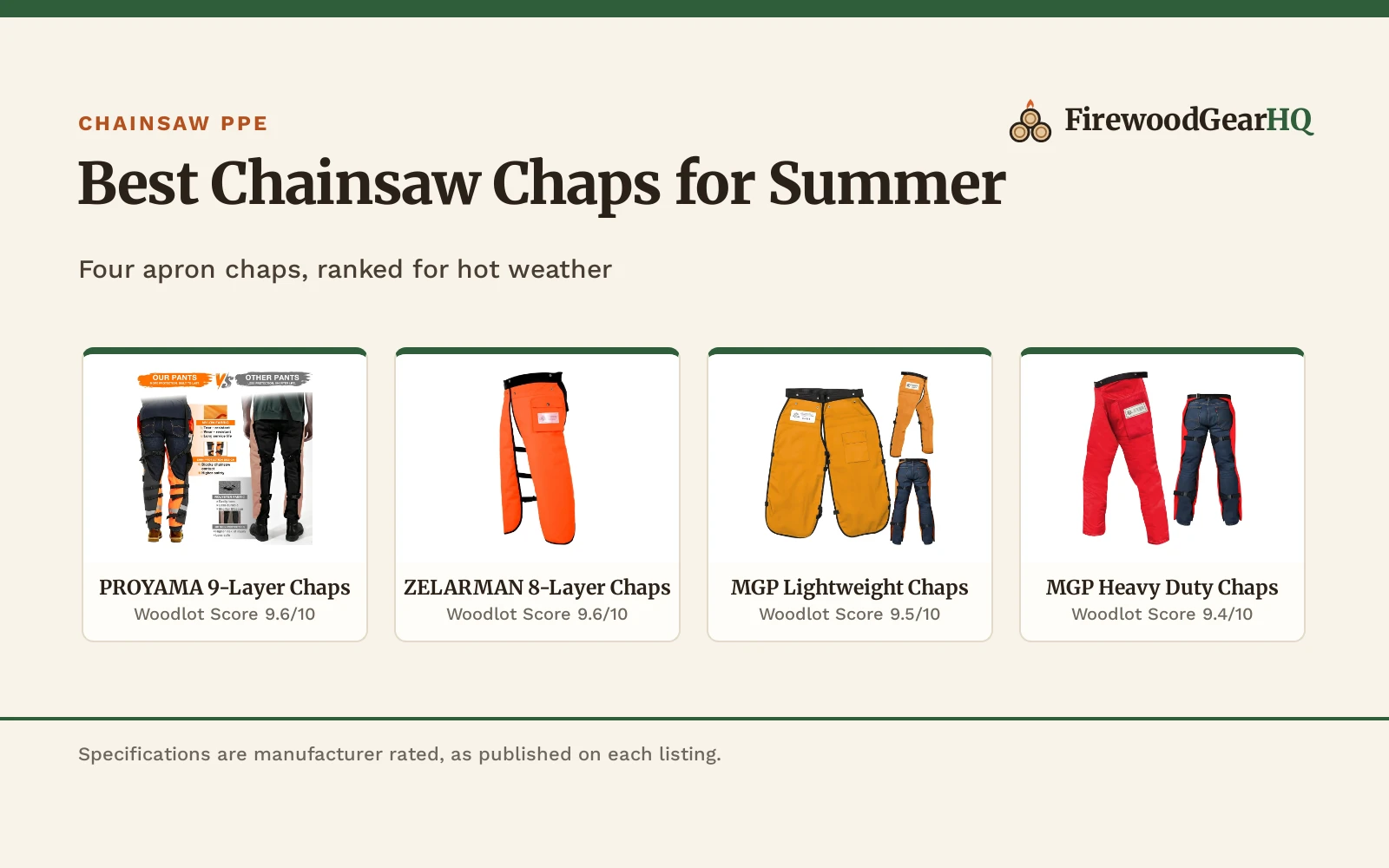
Apron-style chaps, such as the FORESTER models and the Husqvarna Functional chaps, protect the front of the legs and hips while leaving the backs of the legs open. They secure around the thighs and calves using adjustable straps and buckles. This open-back construction promotes airflow, making apron chaps cooler and more comfortable when bucking firewood in warm weather.
Full wrap chaps feature additional fabric and protective layering that wraps around the calves to shield the sides and back of the lower leg. Listings sometimes include contradictory terms; for example, VEVOR titles its product as an apron style chap while listing Class C specifications, which generally refer to all-around leg coverage. To compare coverage classifications in detail, see our guide on chainsaw chaps Class A vs Class B.
Wear eye protection and gloves for cutting, splitting and handling, follow every tool's manual, install stoves to code, and have the chimney inspected and cleaned every year. See EPA Burn Wise and NFPA heating safety. Read our Safety Disclaimer.
Frequently Asked Questions
Are chainsaw chaps sized by inseam or overall length?
Chainsaw chaps are sized by overall vertical length from the waist belt down to the bottom hem, not by pants inseam. Pants inseam measures only from the crotch down to the ankle, which is much shorter. Ordering chaps based on pants inseam will result in chaps that sit too high, leaving your lower shins and ankles exposed.
How long should chainsaw chaps be?
Chainsaw chaps should extend from your waist belt down to the top of your work boots, resting on the instep. The lower hem should overlap your boot collar so your lower leg remains covered when standing, walking or bending, without hanging so low that the fabric touches the ground.
What waist sizes do chainsaw chaps fit?
Waist fit varies by brand and model. For example, FORESTER apron chaps adjust from 30 to 48 in, while VEVOR publishes an adjustable belt range from 22 to 48 in (55.88 to 121.92 cm). Other designs, such as Oregon protective chaps, use a one size fits all adjustable waist belt.
Should chainsaw chaps touch the ground?
No. Chainsaw chaps should never touch the ground or drag beneath your boot heels. Excess length dragging underfoot creates a tripping hazard around logs and brush, and walking on the hem causes rapid fabric wear.
Can chainsaw chaps be hemmed or shortened?
No. You should never cut, hem, stitch or alter chainsaw chaps. Sewing through the protective material or trimming the ends can bind the loose internal fibers, preventing them from pulling into the drive sprocket to stop the chain during an accident.
Do chainsaw chaps stop electric and battery chainsaws?
Standard chainsaw chaps certified under ASTM F1897 are designed around gasoline chainsaw specifications. Electric and battery chainsaws deliver constant motor torque that can pull through protective fibers differently than a stalling gas engine. Always wear certified chaps and follow safe operating practices regardless of your saw power source.
Related guides
Explore our complete chainsaw gear section for more protective apparel reviews and cutting safety advice. Compare top-performing leg protection in our roundup of the best chainsaw chaps, and learn how internal fiber layers operate in our guide on how chainsaw chaps work. Review leg coverage differences in chainsaw chaps Class A vs Class B, and verify your personal protective equipment with the chainsaw safety gear checklist. For head and hand protection, see our guides to the best chainsaw helmet with chin strap and the best chainsaw gloves. If you are preparing firewood, find the right saw in our guide to the best chainsaw for firewood, review bar sizing in what size chainsaw do I need for firewood, and learn proper cutting form in how to buck firewood safely with a chainsaw. Keep your saw running cleanly with the best chainsaw sharpener, top-grade bar and chain oil, and a sturdy chainsaw case. Compare saw power types in gas vs battery chainsaws and homeowner vs professional chainsaws, and check for equipment safety notices with our guide on how to check if your chainsaw or log splitter is recalled.