How to Keep Bugs Out of Firewood: Prevention and Storage Guide
How to keep bugs out of firewood, including proper stacking off the ground, outdoor seasoning tips, common firewood pests and safe ways to prevent indoor infestations.
 By FirewoodGearHQ Editorial
Updated October 10, 2026
By FirewoodGearHQ Editorial
Updated October 10, 2026
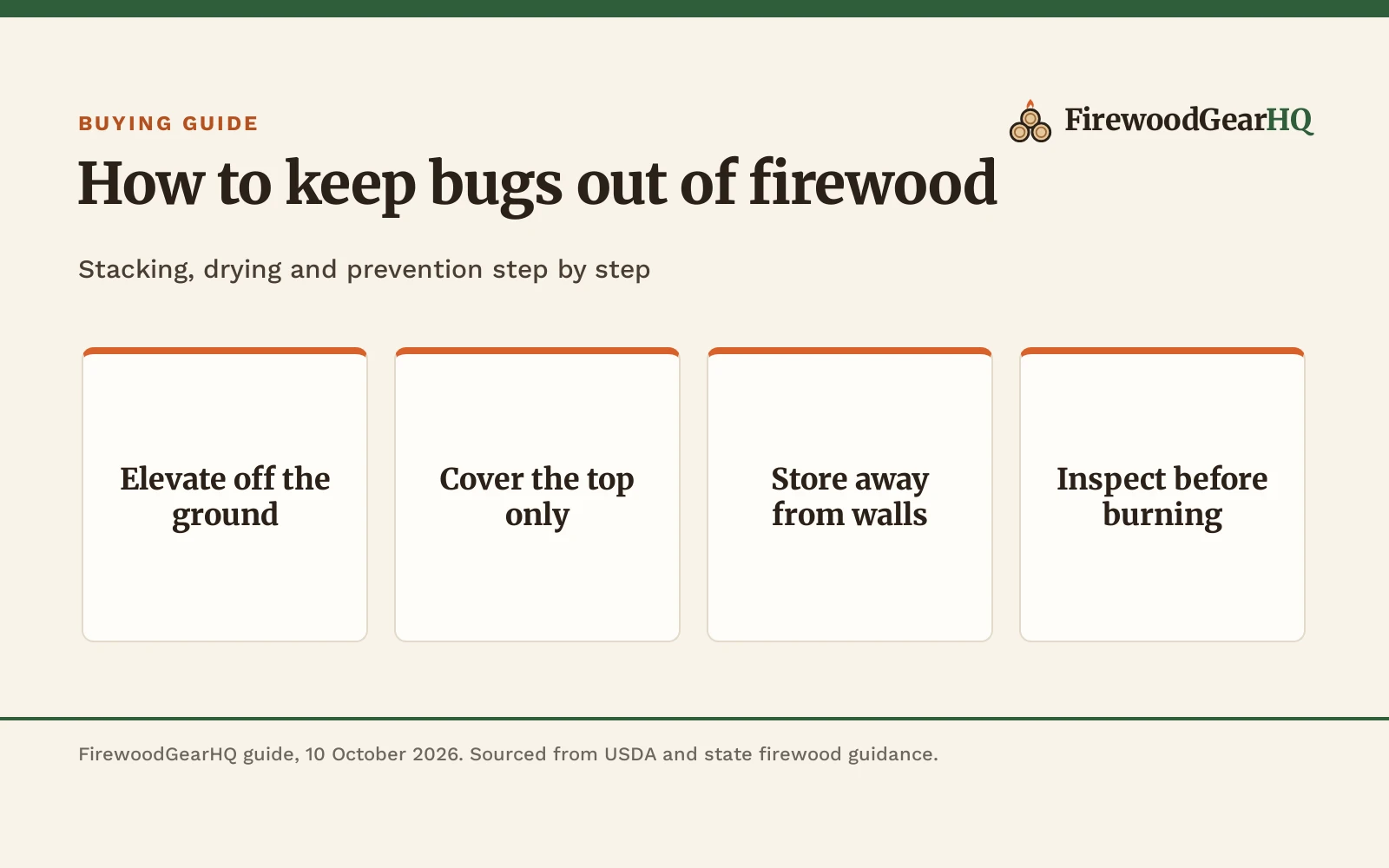
Knowing how to keep bugs out of firewood starts with elevating logs off the ground, covering the top of the stack, and keeping wood outdoors away from your house. Wood-boring insects, termites, and carpenter ants seek damp, decaying wood and dark ground contact. By stacking firewood on a raised rack in a breezy, sunny location, you strip away the moisture pests need to colonize the woodpile. Seasoning wood thoroughly until it burns clean is your best defense against firewood pests.
FirewoodGearHQ earns a commission when you buy through links on our product pages, at no extra cost to you. Read our affiliate disclosure.
The quick answer
To keep bugs out of firewood, follow essential storage rules: keep wood elevated above soil, protect the top layer from rain while leaving the sides open, locate piles well away from home foundations, and inspect logs before bringing them inside. Damp wood in direct contact with dirt creates ideal breeding conditions for subterranean termites, carpenter ants, and wood-boring beetles. Elevating your stack on an outdoor rack and allowing air to circulate keeps wood dry and uninviting to pests. For more storage strategies, explore our comprehensive firewood storage hub.
Firewood pests and risk factors
Firewood cut from dead or fallen trees often arrives with insects sheltered beneath bark or tunneling through wood grain. Fresh green firewood also holds sap and moisture that attract adult beetles looking for nesting sites. Understanding which pests target your woodpile helps you spot warning signs before carrying logs near your home.
| Pest | Where they hide | Prevention notes |
|---|---|---|
| Subterranean termites | Damp logs in direct contact with bare ground | Stack on elevated racks away from soil |
| Carpenter ants | Wet, decaying heartwood and soft bark pockets | Keep logs dry with top covers and air circulation |
| Bark beetles | Directly beneath bark of unseasoned logs | Remove loose bark and allow logs to dry fully |
| Longhorned beetles | Tunnels carved through unseasoned sapwood | Inspect logs for exit holes before indoor transport |
| Wood roaches and sowbugs | Dark crevices between damp lower pieces | Maintain bottom airflow and keep stacks clean |
Insects play a natural role in decomposing forest timber, but your woodpile should never become a breeding site. Elevating and drying firewood interrupts insect life cycles and forces moisture-dependent pests to abandon the stack.
How to keep bugs out of firewood
Preventing bug problems in firewood requires consistent stacking habits and smart placement around your yard. Follow these practical steps to protect your woodpile from infestations throughout the year.
Stack logs off the ground
Placing wood directly on bare soil allows ground moisture to wick into bottom logs. Wet wood touching earth creates an inviting environment for subterranean termites, carpenter ants, and wood roaches. Elevating the stack provides continuous airflow underneath and keeps moisture from rotting the lower tier. For example, the Artibear firewood rack keeps logs 4 inches off of the ground, which the maker notes maintains airflow and avoids bugs and wood rot. Using pallets, concrete pavers, or a dedicated rack creates a physical barrier that ground insects hesitate to cross. Learn proper row arrangements in our guide on how to stack firewood.
Cover the top, leave the sides open
Rain and melting snow soaking into stacked firewood keep logs damp enough to attract wood-boring pests. Covering the stack sheds overhead precipitation and speeds up drying. However, never wrap a tarp tightly around the entire woodpile. Fully covering the sides traps ground moisture and condensation, creating a humid environment that accelerates rot and invites insects. Keep the top covered with a solid roof or durable cover, but leave the ends and sides open so prevailing winds carry moisture away. A specialized outdoor rack, like the models compared in our review of the best firewood rack with cover, protects the top while preserving side ventilation. For additional covering guidance, read our article on should you cover firewood.
Store wood outdoors away from the house
Never stack firewood against your house, garage, or deck siding. Stacking logs against an exterior wall gives termites and carpenter ants an unobserved highway straight into sill plates, wall studs, and home framing. Stacks close to buildings also suffer from restricted airflow, which slows drying and prolongs moisture retention. Locate your main woodpile outdoors in an open, sunlit area well away from all structures. Full sunlight warms the bark and drives out heat-sensitive insects, while open breezes accelerate seasoning. To speed up drying cycles, see our recommendations on how to season firewood fast.
Bring indoors only what you burn immediately
Cold outdoor temperatures slow insect metabolism, causing beetles, spiders, and wood roaches to shelter dormant inside firewood crevices during autumn and winter. Carrying unburned firewood indoors and leaving it in warm living areas revives dormant insects quickly. Once awake, bugs crawl out of logs onto carpets, hearths, and furniture. Keep indoor storage restricted to an immediate burn supply, bringing in only what you plan to place into the stove or fireplace for that fire. If you use an indoor storage stand, learn the safety rules in our guide on can you bring firewood indoors, and consider a clean hearth stand from our review of the best indoor firewood rack.
Source local wood and follow movement rules
Transporting unseasoned firewood across regional boundaries spreads dangerous invasive forest pests, including the emerald ash borer and spongy moth. The USDA and state agricultural agencies advise homeowners and campers to buy firewood locally or choose certified heat-treated bundles. Following state Don’t Move Firewood regulations protects neighborhood trees and stops destructive insect populations from colonizing clean woodlands.
How to inspect firewood for bugs
Before bringing logs into the home, take a moment to inspect each piece outdoors. Checking firewood before loading your indoor carrier stops pests before they enter living areas. Look for these clear warning signs of insect presence:
- Exit holes: small round or oval holes in bark or end grain indicate where adult beetles emerged after maturing inside the wood.
- Frass and boring dust: fine, powdery wood shavings collecting beneath bark or spilling from holes reveal active larvae feeding inside.
- Loose bark: bark that pulls away easily often conceals spiders, sowbugs, and wood roaches sheltering in dark, damp pockets.
- Mud tubes: narrow earthen tunnels running along the surface of logs indicate subterranean termites searching for moisture.
- Punky wood: soft, spongy sections that crumble under thumb pressure indicate advanced fungal decay and moisture-loving pests.
Knock logs together firmly outside to shake loose surface spiders, ants, and debris. Checking the internal moisture of split pieces with a quality gauge also confirms whether logs are dry enough for clean burning; compare dependable models in our guide to the best firewood moisture meter, and read our advice on how to tell if firewood is seasoned.
Why chemical sprays should never be used
Homeowners troubled by woodpile insects sometimes consider spraying firewood with household bug sprays or chemical insecticides. Never apply liquid pesticides or chemical sprays to firewood. Porous wood absorbs chemical formulations, and when treated wood burns inside a stove or fireplace, those toxic chemicals vaporize into your indoor living air and chimney flue. Burning pesticide-laden logs can release harmful chemical fumes and produce irritating soot inside the home. Furthermore, surface chemical sprays fail to reach larvae burrowed deep within log heartwood, rendering treatments largely ineffective. Physical prevention, including elevating logs, promoting airflow, keeping wood dry, and inspecting individual pieces, remains the only safe method to handle woodpile bugs.
Kiln-dried and packaged firewood
For wood burners seeking dependable, pest-free firewood for indoor fireplaces and compact stoves, commercially processed firewood offers an effective alternative to air drying. Industrial kiln drying heats wood inside specialized chambers, raising core temperatures to levels that eliminate all live insects, larvae, and fungal spores. For example, Old Potters offers 16 inch logs of kiln-dried wood that are USDA certified for safety and sanitation. Green Mountain Firewood produces packaged compressed logs with less than 4% moisture that are pasteurized in process to eliminate bugs, fungus, and mold. For compact hearths and tabletop fire pits, KoleSummit supplies pre-cut 4 inch mini firewood that is kiln-dried for clean storage. While processed firewood costs more than seasoning split logs yourself, it provides clean fuel that eliminates pest worries inside the home.
Turn a stack's length, height and depth into full and face cords, and estimate how much wood a winter takes.
Frequently Asked Questions
Can I spray bug spray on firewood?
Never spray firewood with bug spray or chemical insecticides. Burning wood treated with chemicals vaporizes toxic compounds into your living space and chimney flue. Rely on proper stacking off the ground, sunlight, and air drying to discourage bugs naturally.
How far away from the house should firewood be stored?
Store firewood outdoors well away from home foundations, exterior siding, and wooden decks. Stacking wood directly against a building creates a sheltered bridge that allows termites and carpenter ants to migrate straight into wall structures.
Does kiln-dried firewood have bugs?
Commercial kiln drying heats firewood to internal temperatures that kill all insects, larvae, and eggs. As long as kiln-dried wood is stored in a clean, elevated location protected from ground dampness, pests will not reinfest the pile.
Can you keep firewood inside the house?
Keep inside only the firewood you plan to burn that day. Bringing large wood piles indoors allows cold-dormant insects to warm up and crawl into living areas. Store your main supply outside and replenish an indoor hearth rack as needed.
Why is bark falling off my firewood?
Bark loosens naturally as firewood dries and shrinks during the seasoning cycle. Moisture-loving insects often live in the damp layer between bark and sapwood, so peeling away loose bark removes sheltering spots for beetles and spiders.
Does covering firewood with a tarp cause bugs?
Wrapping a tarp down the sides of a woodpile traps ground moisture and condensation, creating a damp environment where mold and insects thrive. Cover only the top of the stack to shed rain and leave the sides open for breezes.
Related guides
Explore our complete firewood storage guide, our review of the best firewood rack with cover, and our recommendations for the best firewood moisture meter. For stacking and drying techniques, see how to stack firewood, should you cover firewood, how to season firewood fast, how to tell if firewood is seasoned, and how long does firewood take to season. For indoor hearth organization, read can you bring firewood indoors, best indoor firewood rack, best fireplace log holder, inside wood rack for firewood, and indoor firewood rack ideas. For outdoor shelter options, view our guides on firewood rack outdoor with cover, firewood shed outdoor with roof, cheap firewood rack, metal wood racks outdoor for firewood, firewood rack for porch, and cover for firewood storage rack.
About the author
The FirewoodGearHQ editorial team researches firewood and wood heating equipment from published specifications, ratings and warranty terms, and scores every pick the same way. We do not run our own product trials.