Log Splitter Maintenance: Routine Care and Seasonal Checklist
A complete seasonal checklist for log splitter maintenance, covering hydraulic fluid, engine oil, filter changes, beam lubrication and proper winter storage.

On this page
Top picks at a glance
As an Amazon Associate we earn from qualifying purchases.
- 1
 PROYAMA 7T Electric Log Splitter9.6/10View on Amazon
- 2
 KABIN Kindle Quick Log Splitter9.7/10View on Amazon
- 3
 Kindling Splitter L9.6/10View on Amazon
As autumn cool settles in and rounds pile up for splitting, reliable hydraulic power is what keeps the woodshed filling before snow flies. Proper log splitter maintenance comes down to clean hydraulic fluid, regular engine oil changes, fresh grease on the beam and checking hydraulic lines for leaks before every run. Keeping the wedge properly dressed, maintaining clean oil and storing the machine dry protects hydraulic components, cylinder seals and structural welds from unnecessary strain during years of heavy splitting.
FirewoodGearHQ may earn a small commission if you buy through links on this page. The price you pay stays the same. Read our affiliate disclosure.
The quick answer
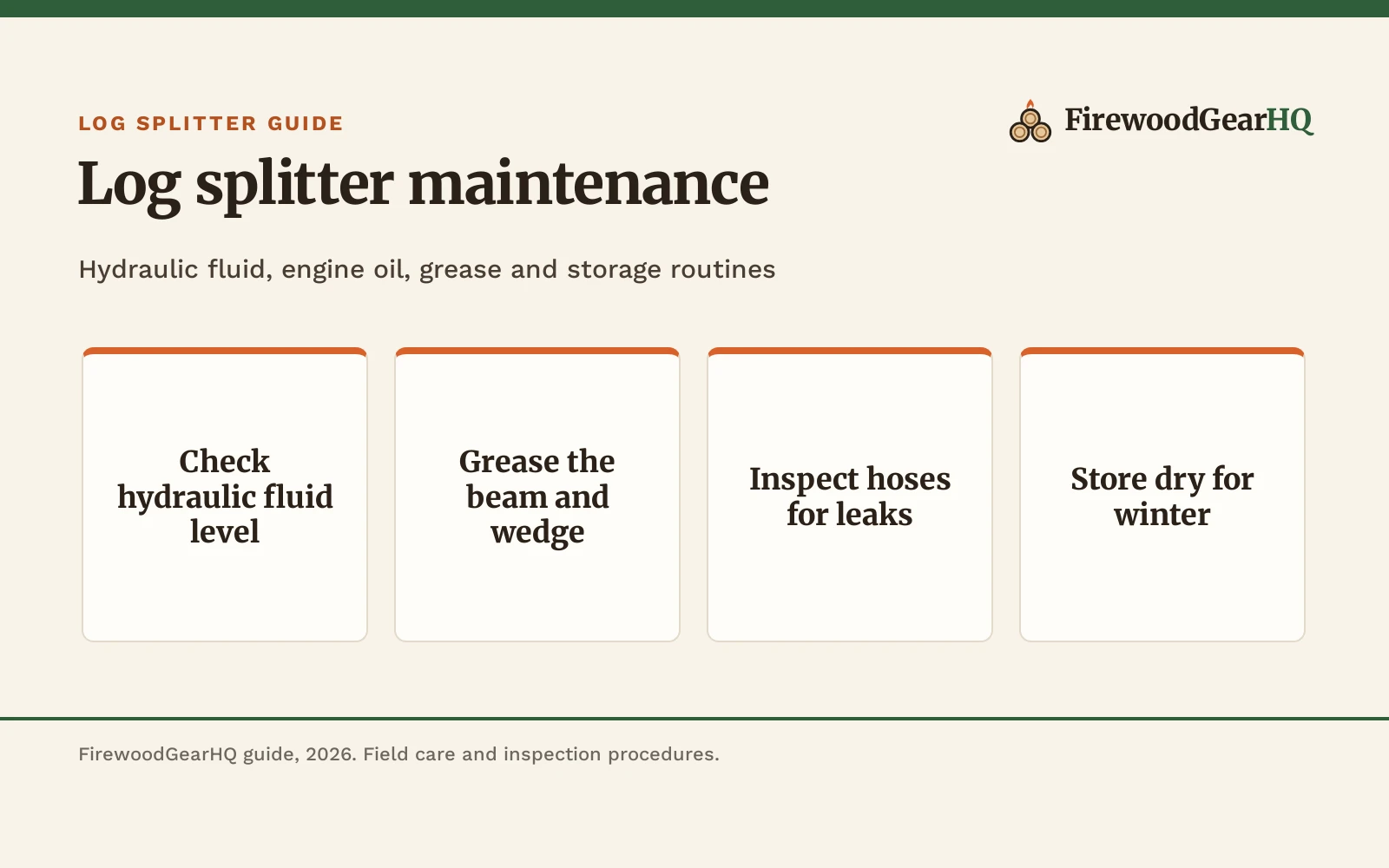
Routine care for a hydraulic wood splitter centers on fluids, lubrication and hardware checks. Inspect hydraulic and engine oil levels before each run, clean debris off the beam, and apply fresh multipurpose chassis grease to the rail. Check hoses for chafing and keep the wedge free of mushroomed metal. Before seasonal storage, stabilize or drain the fuel, retract the cylinder rod completely to prevent rust, and store the machine under a breathable shelter or dedicated cover.
Log splitter maintenance schedule
A consistent schedule prevents minor wear from turning into costly hydraulic repairs. Use this overview to guide your pre-operation walkaround, seasonal tune-up and long-term care:
| Component | Service Interval | Action Required |
|---|---|---|
| Hydraulic fluid | Before each splitting session | Inspect fluid level on dipstick; check clarity and color |
| Hydraulic return filter | Seasonal startup or when oil changes | Replace filter canister on equipped models; lubricate gasket |
| Engine oil | Seasonal startup and during heavy use | Check level; drain and refill when oil looks dark |
| Beam and slide plate | Before and after each session | Clean sawdust and apply fresh chassis grease to rails |
| Hydraulic hoses and fittings | Before each splitting session | Inspect for chafing, weeping fluid or cracked casing |
| Splitting wedge | Periodic inspection | File burrs and grind away mushroomed metal edges |
| Engine air cleaner | Periodic inspection | Clean sawdust from foam pre-filter; replace paper element |
| Towing hitch and tires | Before road travel | Inspect coupler, safety chains, tire pressure and wheel bearings on towable models |
Always refer to your manufacturer operator manual for model-specific hydraulic fluid specifications and engine oil viscosity recommendations.
Key steps for log splitter maintenance
Check and change hydraulic fluid
Hydraulic fluid transfers tonnage from the pump to the cylinder rod. Low fluid levels cause the pump to draw air and cavitate, creating a loud whining noise and reducing splitting force. Before starting work, ensure the machine sits on level ground and check the reservoir dipstick or sight glass. Fluid should look clear amber or red; cloudy or milky oil indicates water contamination requiring an immediate flush. When refilling, use the fluid type specified by the maker, as detailed in our guide on what hydraulic fluid for a log splitter requires. On equipped models, replace the spin-on return filter during fluid changes, lubricating the gasket before hand-tightening.
Inspect hydraulic hoses and cylinder fittings
Hydraulic splitters operate under extreme pressure, placing steady stress on hoses and fittings. Before each splitting session, visually check lines for cracking, exposed wire braiding, kinks or rubbing against the frame. Never search for suspected hydraulic leaks with bare hands; escaping pressurized oil can penetrate the skin. Always pass cardboard across connections to detect pinhole leaks. Never service lines while pressurized; shut down the motor and relieve hydraulic pressure before tightening connections or replacing damaged hoses. For slow ram movement, see our troubleshooting guides on why is my log splitter slow and why wont my log splitter split.
Grease the beam and slide plate
Friction between the steel beam and the moving slide plate wears down metal surfaces and wastes splitting tonnage. Wood chips and sticky sap collect on the rail during splitting. Scrape the beam clean with a putty knife and apply fresh chassis grease along the rail contact surfaces. Regular greasing ensures smooth ram cycling and prevents gouging.
Maintain the engine and spark system
Gas-powered splitters generate fine sawdust that quickly clogs engine air intakes. Inspect the air filter regularly, tapping out loose dust from paper elements and washing foam pre-cleaners. Clean carbon deposits from the spark plug and keep fresh fuel treated with stabilizer in the tank to prevent ethanol from gumming up the carburetor between splitting sessions.
Dress and maintain the splitting wedge
A log splitter wedge separates wood through hydraulic tonnage rather than slicing with a razor edge. An overly sharp edge dulls rapidly and chips against knots or stones. Keep the leading edge smooth, uniform and slightly blunt. Use a flat mill file to dress out nicks, and grind away mushroomed metal from top corners so steel fragments do not break loose.
Safety rules during maintenance and operation
According to standard woodlot precautions aligned with OSHA logging guidelines, log splitters are designed for one operator. Never allow a helper to steady rounds on the beam while another person touches the valve handle. Keep hands clear of the wedge, log cradle and moving ram at all times. Always wear wrap-around eye protection against flying bark fragments and high-pressure fluid spray, along with heavy work gloves, steel-toe boots and hearing protection. Before performing log splitter maintenance, shut off the motor, cycle the control handle to relieve residual hydraulic pressure, and allow hot surfaces to cool. Review workspace setup in log splitter safety rules.
Signs your log splitter needs immediate service
Operating with worn components risks pump and cylinder failure. Watch for these field warning signs:
- Milky hydraulic fluid: Indicates water contamination or air leaks causing pump cavitation.
- Jerky ram movement: Caused by air pockets trapped in the cylinder or low oil levels.
- Overheating reservoir: Signals restricted oil flow, a plugged filter or relief valve issues.
- Whining pump sounds: Points to fluid starvation, clogged intake screens or incorrect viscosity.
- Weeping cylinder rod: Damaged rod wiper seals allow fluid leaks and let abrasive dirt enter the barrel.
- Loose structural fasteners: Engine vibration loosens bolts; inspect beam mounts and axle hardware regularly.
For electrical hums or tripped breakers on corded models, see our guide to electric log splitter troubleshooting.
Preparing your log splitter for seasonal storage
When splitting wraps up for the year, proper storage protects hydraulic and engine seals. Fully retract the cylinder ram into the cylinder housing so the polished steel rod stays submerged in protective hydraulic oil. Treat gasoline with stabilizer and run the engine, or drain the fuel system completely. Coat unpainted steel on the beam and wedge with a light film of grease to prevent surface rust. Protect the unit with a breathable cover, such as our recommendations in best log splitter cover, and follow our step-by-step procedures in how to winterize a log splitter. If moving the unit over roads, check hitch components per can you tow a log splitter on the road.
Gas versus electric log splitter upkeep
Maintenance requirements depend heavily on the drive system. Gas-powered splitters deliver high splitting tonnage for tough hardwoods but require regular oil changes, air filter cleaning, spark plug maintenance and fuel care. Electric splitters eliminate engine maintenance, requiring only clean hydraulic fluid, clear motor cooling vents and greased beam rails. Compare both platforms in gas vs electric log splitter, or browse the best log splitter for home use and the best vertical log splitter.
One operator only, with hands well clear of the wedge and the ram. Wear eye protection and gloves, set the splitter on stable, level ground, and keep kids and pets away from the work area. Run gas splitters outdoors only, and never reach in to clear a jammed log while the ram can move. Read our Safety Disclaimer.
Frequently Asked Questions
How often should I change the hydraulic fluid in a log splitter?
Inspect fluid level before each splitting session. Under typical homeowner use, change hydraulic fluid and return filters once per season, or whenever oil turns cloudy or discolored.
Can I use regular motor oil as hydraulic fluid in my log splitter?
No. Standard motor oil lacks suitable additives for high-pressure pumps. Use dedicated tractor hydraulic fluid, anti-wear hydraulic oil or automatic transmission fluid specified by the manufacturer.
Why is my log splitter moving slowly or losing splitting force?
Slow operation usually results from low hydraulic fluid, a clogged filter, air in the cylinder or low engine throttle. Bleed air by cycling the ram, top up fluid and verify full operating engine speed.
Do I need to sharpen the wedge on a log splitter?
No. A log splitter wedge needs a smooth, slightly blunt profile rather than a razor edge. Use a flat mill file to remove burrs and file down mushroomed metal along the edges.
What kind of grease should I use on the splitter beam?
Standard automotive chassis grease or multipurpose lithium grease works well on steel splitter beams. Clean off sawdust and wood sap before applying a fresh coat along the rail.
How do I store a log splitter for the winter?
Store the unit under cover with the cylinder rod fully retracted to prevent corrosion. Stabilize or drain gasoline, and wipe a thin layer of grease over bare steel surfaces to prevent rust.
Related guides
See the log splitter hub, the best log splitter for home use and the best vertical log splitter. Learn about sizing and machine capacities in what size log splitter do I need and how many tons of log splitter do I need. Compare machine platforms in gas vs electric log splitter. Keep your machine running reliably with our guides on how to winterize a log splitter, what hydraulic fluid for a log splitter, why is my log splitter slow, why wont my log splitter split and electric log splitter troubleshooting. Protect your equipment between woodpile chores with the best log splitter cover, and review towing safety in can you tow a log splitter on the road. Working by hand? Compare tools in splitting axe vs maul, find the best splitting maul, and check firewood seasoning with the best firewood moisture meter. Cutting your own rounds? Choose the best chainsaw for firewood.