What Is a Franklin Stove? Design and Uses
A Franklin stove is a cast iron, freestanding fireplace stove with doors, and this guide explains its design, how it heats a room, and what to check before choosing a stove.

On this page
Top picks at a glance
As an Amazon Associate I earn from qualifying purchases.
- 1
 YRenZ Upgraded Tent Stove9.4/10View on Amazon
- 2
 Wood Stove Gasket9.5/10View on Amazon
- 3
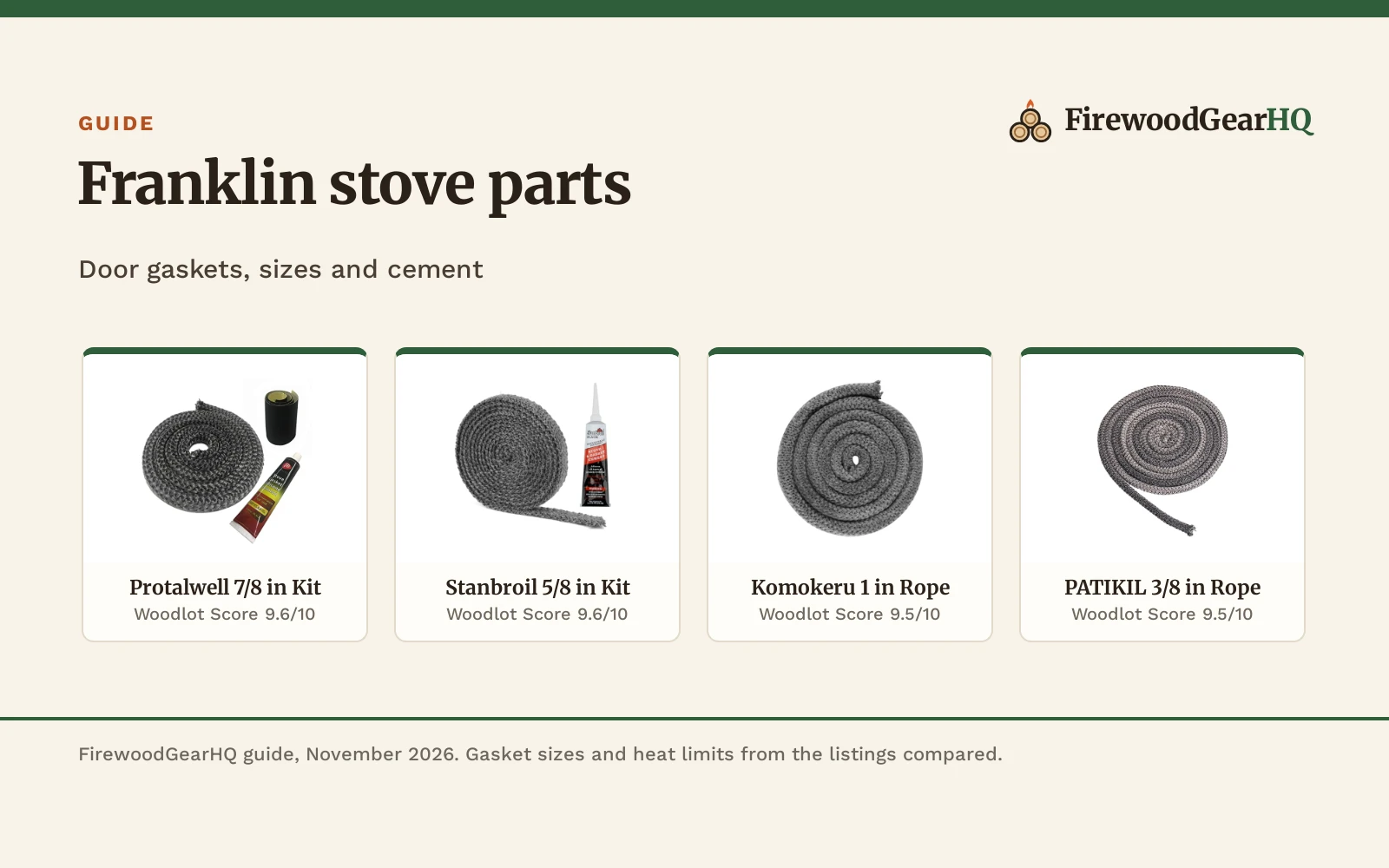
 Stanbroil 5/8" x 1/8" x 84" Wood Stove Gasket Kit with Stove9.4/10View on Amazon
When the woodpile is stacked and the cold settles in, the room where the family gathers needs heat that feels close and steady. A wood stove answers that need, and the earliest American answer to it has a name worth knowing. So what is a Franklin stove? It is a cast iron, freestanding fireplace stove, built to stand out in the room and throw heat from an open front, with doors that close to slow the fire.
FirewoodGearHQ earns a small commission if you buy through links on this page. The price you pay stays the same. Read our affiliate disclosure.
The quick answer
A Franklin stove is a cast iron stove that works as an open fireplace and a room heater in the same box. Its front opens to the room, so heat radiates straight out while the fire burns in view, and its doors close to slow the fire and hold heat longer. It was an early step toward the closed wood stove, and it still suits rooms where the open fire matters as much as the heat.
What Is a Franklin Stove?
Benjamin Franklin designed the stove in the colonial era as a better fireplace, and the shape has stayed close to his idea ever since. It is a freestanding cast iron box on short legs, with a wide front opening, doors that swing open or shut, and a flue at the back or top that carries smoke to the chimney. The flat top holds a kettle, and the cast iron body soaks up heat from the open fire and gives it back to the room for a while after the flames settle.
The clever part is the baffle inside, a plate that turns the smoke on a longer path before it leaves through the flue. That longer path gives the cast iron more time to take heat from the smoke, so more warmth stays in the room. With the doors open the stove behaves like a fireplace, bright and warm to sit beside; with the doors shut it burns slower and holds its heat.
How a Franklin stove works
Wood burns in the open firebox, air feeds the flames from the room, and heat leaves through the open front and the cast iron walls. Smoke turns at the baffle and takes the longer path before it leaves through the flue to the chimney. The doors set the pace: open them for a bright fire and quick warmth, close them to stretch the wood through the evening. A stove pipe fan can help move warm air around the room.
Modern closed stoves state their size in the same terms. The table below shows the figures the makers list for a few current stoves, to give a sense of scale.
| Stove | Area heated | Log length | Flue |
|---|---|---|---|
| Canyon Lodge Medium Wood Stove | Heats up to 2,500 sq ft | Logs up to 18 inches | 6-inch flue |
| Comfort Glow CGWS750 | Heats up to 750 sq ft | Logs up to 11 inches | 6-inch flue |
| Comfort Glow CGWS1500 | Heats up to 1,200 sq ft | Logs up to 18 inches | Not stated |
The same maker lists an 8-hour burn time for the CGWS750, which shows how a closed stove stretches a load of wood. A Franklin stove burns through wood faster with the doors open, which is part of why it suits a room used in the evening rather than a house heated around the clock.
Some modern stoves add a cooktop: a listing for a current steel stove notes a 15cm top opening that fits kettles or cookware, the same idea as the flat cast iron top of a Franklin stove.
Franklin stove vs a modern wood stove
A modern closed stove burns wood in a closed firebox with controlled air, secondary combustion, and a glass door, so it holds a fire longer and heats the room better from each load. A Franklin stove gives up some of that control for the open fire: with the doors open it warms by direct radiation and feels like a fireplace, and with the doors closed it still leaks more air than a closed stove. The trade is simple to state: the Franklin stove wins on charm and on the view of the fire, and the modern stove wins on burn time and on steady heat. See the Franklin stove vs wood stove comparison and the wood stove pros and cons guide.
Many modern stoves carry EPA certification, and the Comfort Glow stoves listed above are EPA certified. Check a reproduction Franklin stove for the same certification and for local code before buying, since the original design predates modern standards.
Where a Franklin stove fits
A Franklin stove fits a room where people gather and where the fire is part of the evening: a living room, a cabin great room, or a den with a sound chimney and a hearth that can take the heat. It suits a house with another source of heat for the coldest nights, since the open design does not hold a fire the way a closed stove does. It does not suit a small room with no chimney, a home that needs steady heat in every room, or a spot close to anything that burns.
Before choosing a size, read the wood stove sizes guide and the guide to what size wood stove a home needs, and measure the room and the hearth before ordering.
Every stove needs the same care: install it as the maker states and as local code requires, keep it clear of anything that burns, fit smoke and carbon monoxide alarms in the home, and have the chimney inspected each year. Burn seasoned wood only, and let the ashes cool in a metal container before they go out.
What to check before buying
Start with the cast iron: cracks and warped doors mean the stove will not hold a fire well, and a door that does not close tight will not slow the burn. Check the flue size against the chimney, and check that the hearth under the stove is sized for the heat and the sparks. Ask for the maker’s stated figures, the warranty term, and the certification, and read the local code before ordering. A reproduction sold as a Franklin stove should state its flue size, log length, and the area it heats, for comparison with the figures in the table above. For current stoves to compare against, see the best wood stoves guide.
FAQ: wood, fire and gear
Can a Franklin stove heat a house?
It heats the room it stands in, and it does that well while the fire burns. It is not a whole-house heater: the open front loses heat up the chimney, so a house that needs steady heat in every room is better served by a modern closed stove. The stoves in the table above are listed as heating up to 750 sq ft, 1,200 sq ft, or 2,500 sq ft.
Is a Franklin stove the same as a wood stove?
It is a kind of wood stove, and the earliest well-known American design, but it is not the same as a modern wood stove. The Franklin stove is an open fireplace stove, while a modern wood stove burns in a closed firebox with controlled air. The Franklin stove vs wood stove comparison lays out the differences that matter when choosing.
Does a Franklin stove need a chimney?
Yes. Smoke leaves through the flue to a chimney, just as with any wood stove, and the chimney needs an annual inspection. Two of the stoves in the table above use a 6-inch flue, and the third does not state its flue size, so the flue size and the chimney liner should be matched to the stove before anything is ordered.
Can you cook on a Franklin stove?
Yes, in the simple way an open fire allows: the flat cast iron top holds a kettle, and the firebox takes pots set over the coals with care. Keep the top clear of anything that can melt, and never leave a pot over an open fire without watching it.
Are Franklin stoves still made?
Reproductions in the Franklin style are still sold, and they follow the same shape: a freestanding cast iron box with doors and a flue. Any reproduction should be checked for EPA certification and for local code before it is bought, since the original design predates modern standards. A used original needs a close look at the cast iron, the doors, and the flue before it goes back into service.
What wood does a Franklin stove burn?
Seasoned firewood, split to fit the firebox. The stoves in the table above take logs up to 11 inches or 18 inches, so measure the firebox before cutting. Burn seasoned wood only, and keep the woodpile covered on top and stacked off the ground so the wood stays dry.
More firewood guides
See the Franklin stove vs wood stove comparison and the wood stove pros and cons guide, then the best wood stoves guide. For keeping a fire going, read how to keep a wood stove burning all night and how to start a fire in a wood stove. For the flue, see wood stove pipe installation through a wall and how to snap stove pipe together.