Mini Chainsaw vs Pruning Saw: Which One Should You Buy?
A mini chainsaw cuts fast with power while a pruning saw stays quiet, simple and always ready; this guide compares both and ranks four pruning saws for firewood work.

On this page
Top picks at a glance
As an Amazon Associate we earn from qualifying purchases.
- 1
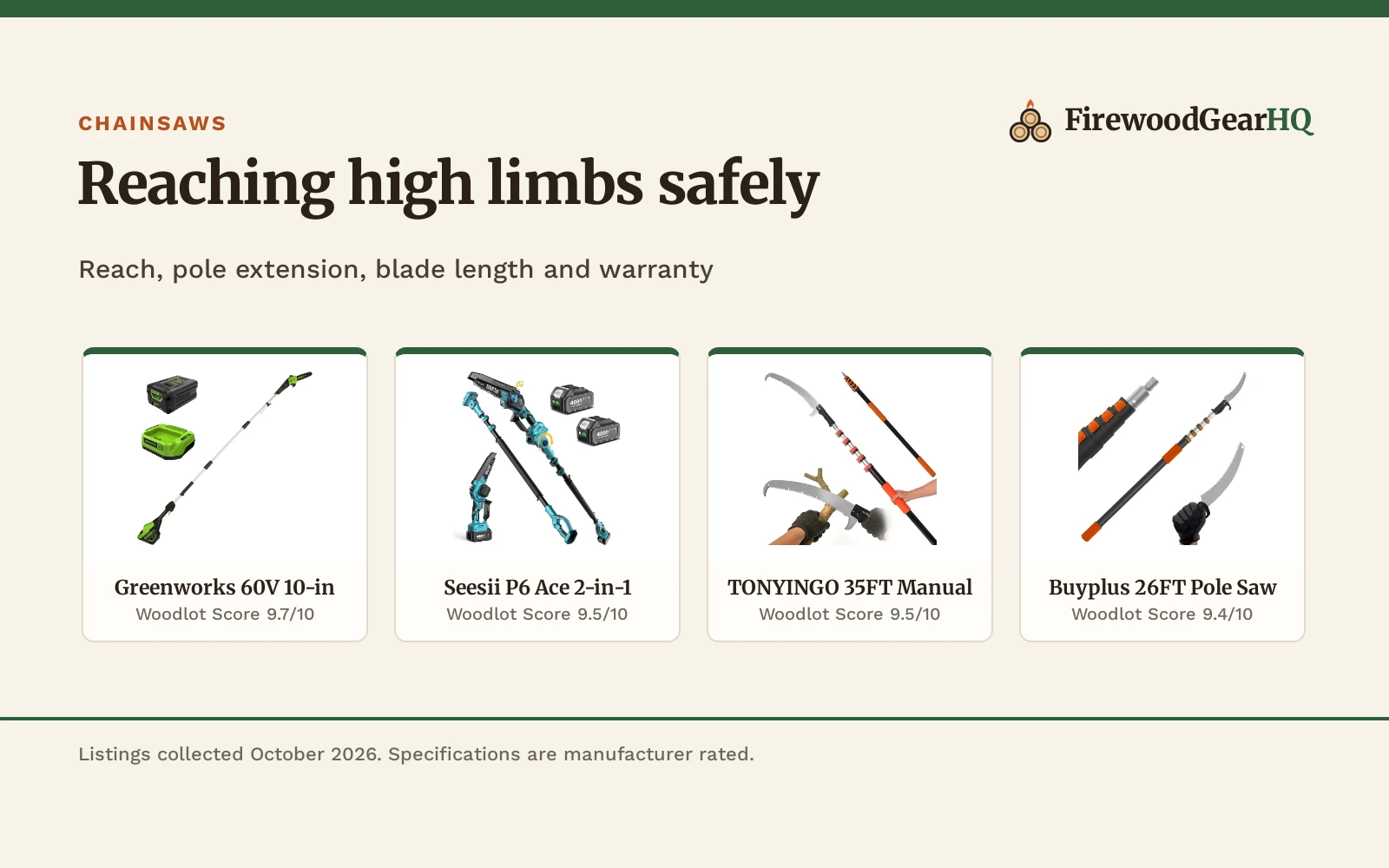
 SEESII 2-in-1 Mini Chainsaw & Pruning Shears9.7/10View on Amazon
- 2
 Greenworks 60V 10 in Electric Pole Saw9.7/10View on Amazon
- 3
 Mini Chainsaw Cordless Compatible with Milwaukee M18 18V9.6/10View on Amazon
- 4
 REXBETI 8-Inch Folding Hand SawView on Amazon
- 5
 Samurai Ichiban 13"View on Amazon
- 6
 Folding Hand Saw 8 Inch with Safety Hand GuardView on Amazon
- 7
 Pruning SawView on Amazon
- 8
 2-in-1 Cordless Pole SawView on Amazon
- 9
 6-inch Mini Chainsaw Cordless: Pure Copper Brushless MotorView on Amazon
Fall cutting season is when the pruning question comes up. You are clearing low limbs, trimming storm-broken branches and feeding the brush pile, and a heap of limbs sits waiting to become kindling. The choice is mini chainsaw vs pruning saw: a small powered saw that chews through limbs fast, or a simple hand saw that stays quiet, costs little to own and is always ready. This guide compares the two and shows which fits your work.
More options to compare
 REXBETI 8-Inch Folding Hand SawCheck price on Amazon
 Samurai Ichiban 13"Check price on Amazon
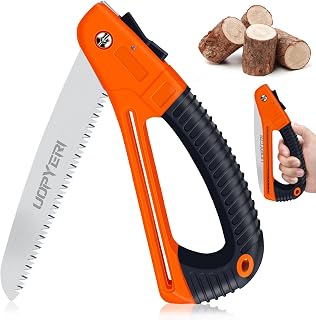 Folding Hand Saw 8 Inch with Safety Hand GuardCheck price on Amazon
 Pruning SawCheck price on Amazon
 2-in-1 Cordless Pole SawCheck price on Amazon
 6-inch Mini Chainsaw Cordless: Pure Copper Brushless MotorCheck price on Amazon
FirewoodGearHQ may earn a small commission if you buy through links on this page. The price you pay stays the same. Read our affiliate disclosure.
The quick answer
Choose the mini chainsaw if you cut a lot of limbs and want speed: it powers through branches with far less arm work. Choose the pruning saw if you trim occasionally, work near the house, or want the simplest tool that just works. If you already own a full-size chainsaw for firewood, a pruning saw covers the small stuff and the mini chainsaw is a luxury.
Mini chainsaw vs pruning saw: what to buy
A mini chainsaw is a small powered saw, usually battery driven, with a short bar and chain. It cuts on its own once you pull the trigger, so thick limbs go fast and your arm stays fresh. The trade is noise, a battery to keep charged, chain oil and tension to watch, and a chain that demands respect.
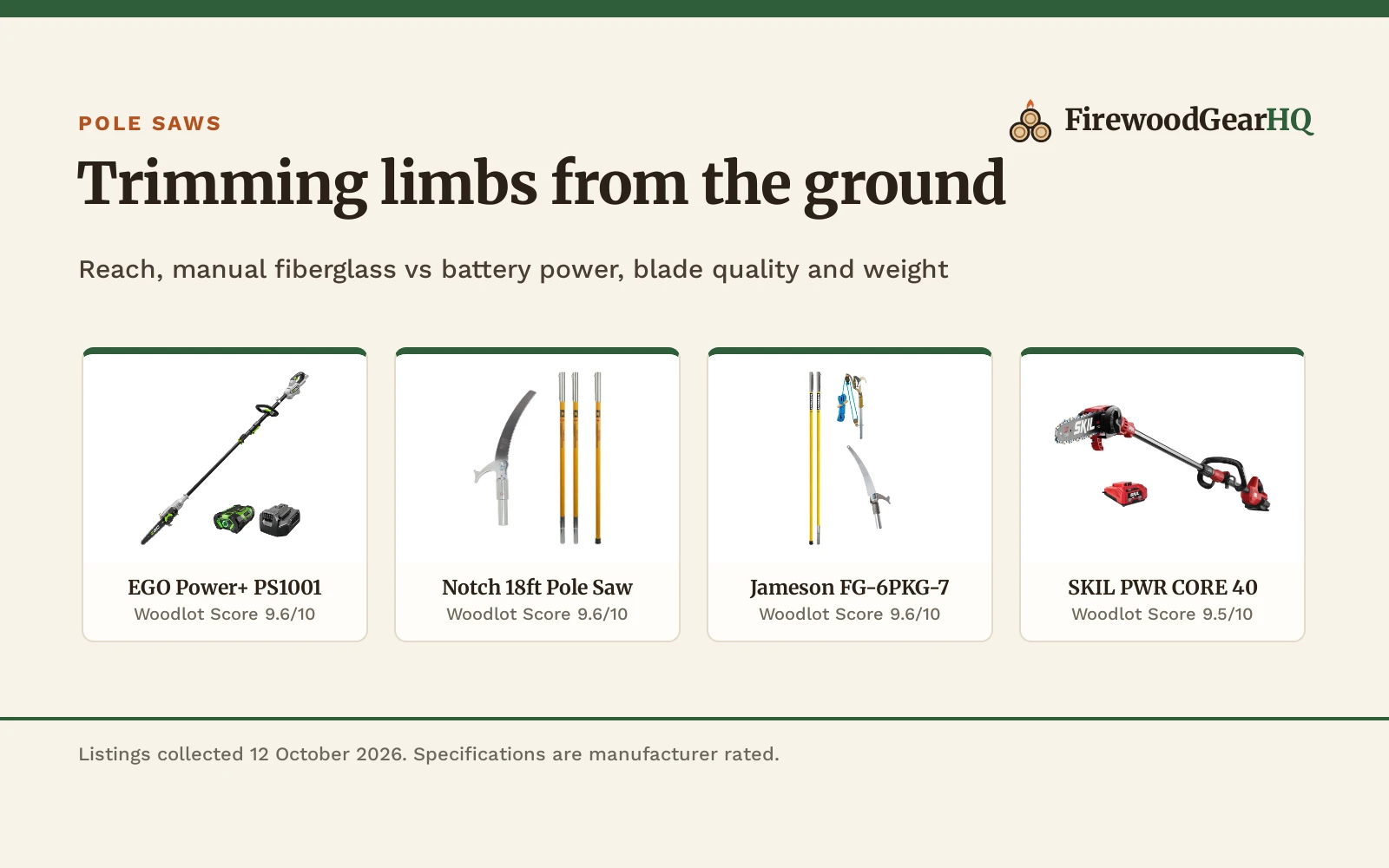
A pruning saw is a hand saw with aggressive teeth. You supply the muscle, and in return you get a tool that is quiet, light, cheap to own and always ready. The pruning saws in this guide cut limbs from 4 inches up to 10 inches in diameter, depending on the model. For firewood work that means trimming branches to length, cutting kindling stock and clearing storm limbs, all without fuel or batteries.
When the pruning saw is the right tool
Pick the pruning saw when the job is light and close at hand. Trimming a few branches, cutting fallen limbs into stove-length pieces and working early in the morning without waking anyone are pruning saw jobs. There is no battery to forget, no fuel to mix and nothing to charge. A folding saw closes down small and rides along in a pack on any walk around the property.
When the mini chainsaw is the right tool
Pick the mini chainsaw when speed matters more than simplicity. Clearing storm-broken limbs, cutting a winter’s worth of kindling limbs or trimming dozens of branches in one session is faster with power. If your arms tire quickly or you have a lot of overhead cutting, the powered chain does the work your shoulder would otherwise do. Keep the battery charged and the chain oiled, and it earns its keep.
Four pruning saws, ranked
We scored the four pruning saws in our data on performance, build, value, safety listing and warranty, and ranked them below. All four are manual saws, so the ranking comes down to cutting capacity, blade steel, handle design and the warranty the listing states.
1. Corona RS 7510D, 18-inch
The Corona RS 7510D leads on capacity: its 18-inch curved blade cuts limbs up to 10 inches in diameter, the largest in this group. The listing states a high-carbon Japanese SK5 steel blade with a chrome coating, impulse-hardened teeth and 14 teeth, plus a D-handle shaped for two-handed or gloved use. The listing states it cuts 2x faster and carries a lifetime warranty. It is the pick when the limbs are thick.
2. Corona RS 7120, 13-inch
The smaller Corona, the RS 7120, carries the same RazorTOOTH design in a 13-inch curved blade that cuts limbs up to 7 inches in diameter. The listing states the same high-carbon Japanese SK5 steel, chrome plating and impulse-hardened teeth, 6 teeth in the spec table, and an ergonomic pistol grip. It also states a lifetime warranty. Choose it when the 18-inch model is more saw than the job needs.
3. REXBETI 8-inch folding saw
The REXBETI folds from 17.8 inches open to 9.6 inches closed and weighs 9.76 ounces, so it disappears into a pack or pocket. The listing states an 8-inch SK5 steel blade with 7 TPI staggered teeth for green wood, branches and firewood, rated for 4-inch to 5-inch diameter branches, and a rubber coated polymer handle. The listing states a 1-year warranty. It is the carry-everywhere option.
4. Mossy Oak 7-inch folding saw
The Mossy Oak is a 7-inch folding saw with a D6A and M2 bimetal blade and a Teflon coating, and it ships with a carry pouch. One listing wrinkle: the bullets claim 7 TPI triple-ground teeth while the spec table lists 49 teeth, so the tooth count is unclear. The listing states a limited warranty with no stated term. It is a serviceable backup saw, but the unclear spec and unstated warranty term put it last.
How to choose between them
Start with the volume of work. A few weekends of trimming a year points to the pruning saw; a steady stream of storm cleanup and kindling cutting points to the mini chainsaw. Think about noise and neighbors, too: early morning work near houses favors the quiet hand saw. Cost matters as well: a pruning saw is a simple tool with no batteries or chargers to buy, while a mini chainsaw is a powered tool with parts that wear. Finally, be honest about your arm: a powered chain is kinder to tired shoulders, and a hand saw keeps you moving when the battery is dead. Many wood burners end up with both, since the pruning saw handles the quick trims and the mini chainsaw takes the heavy sessions. If you are sizing up saws for the woodpile, see the best chainsaw for firewood and our chainsaw types guide.
Frequently Asked Questions
Can a pruning saw cut firewood?
For small stuff, yes. The saws here handle limbs from 4 inches to 10 inches in diameter, which covers branches, kindling stock and small rounds. Splitting and bucking full logs still belongs to a full-size chainsaw.
Is a mini chainsaw hard to maintain?
Not hard, but it needs attention a hand saw does not: keep the chain tensioned, keep bar oil in it and charge the battery before the job. A pruning saw needs only an occasional wipe and a dry place to hang. If you dislike upkeep, the hand saw wins.
Is a pruning saw safer than a mini chainsaw?
A pruning saw has no powered chain, so there is no kickback and no spinning chain to manage. That makes it the calmer tool for quick trims. Still wear gloves and eye protection, and keep your free hand clear of the blade’s path. For powered saw safety, read our chainsaw safety gear checklist.
What size branch can a pruning saw handle?
It depends on the saw. The Corona RS 7510D is rated for limbs up to 10 inches in diameter, the RS 7120 up to 7 inches, and the REXBETI folding saw for 4-inch to 5-inch branches. Match the saw to the thickest limb you cut regularly.
Can I use a mini chainsaw for pruning trees?
Yes, and it is fast for the job, but the noise and the chain oil can be a drawback near ornamental trees and gardens. A pruning saw makes cleaner, quieter cuts on live limbs and is easier to carry up a ladder. For more on hand saws, see pole saw vs pruning saw.
Related guides
Choosing a saw is only part of the firewood year. See the best chainsaw for firewood when the rounds get big, mini chainsaw problems before you buy a powered mini, and the chainsaw safety gear checklist for protective gear. For hand saw choices, read pole saw vs pruning saw and our chainsaw types overview.