Pole Saw vs Pruning Saw: Which One Should You Buy?
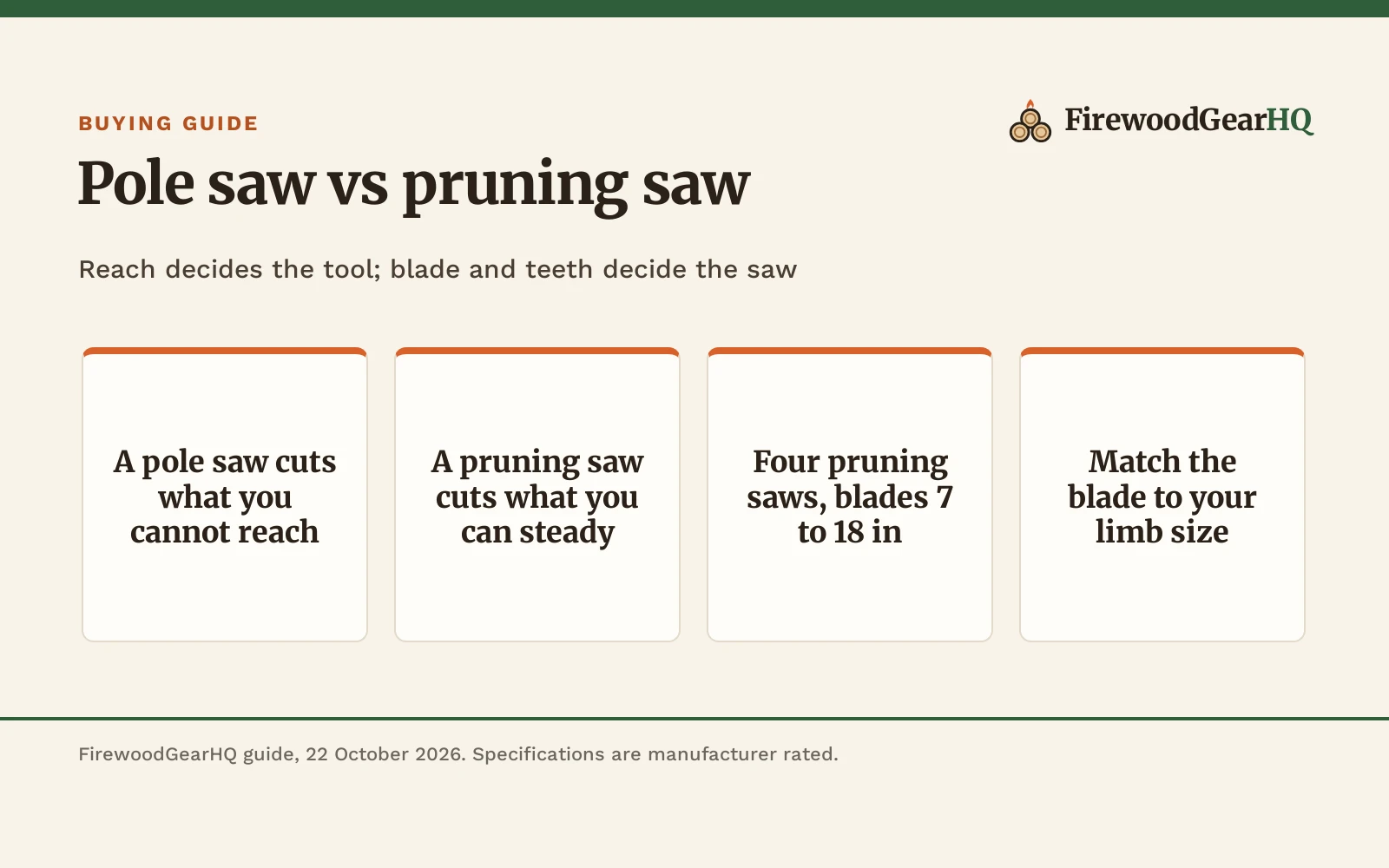
A pole saw reaches limbs overhead; a pruning saw cuts thicker limbs up close. Compare the four hand pruning saws in this guide by blade, teeth and warranty.

On this page
Top picks at a glance
As an Amazon Associate we earn from qualifying purchases.
- 1
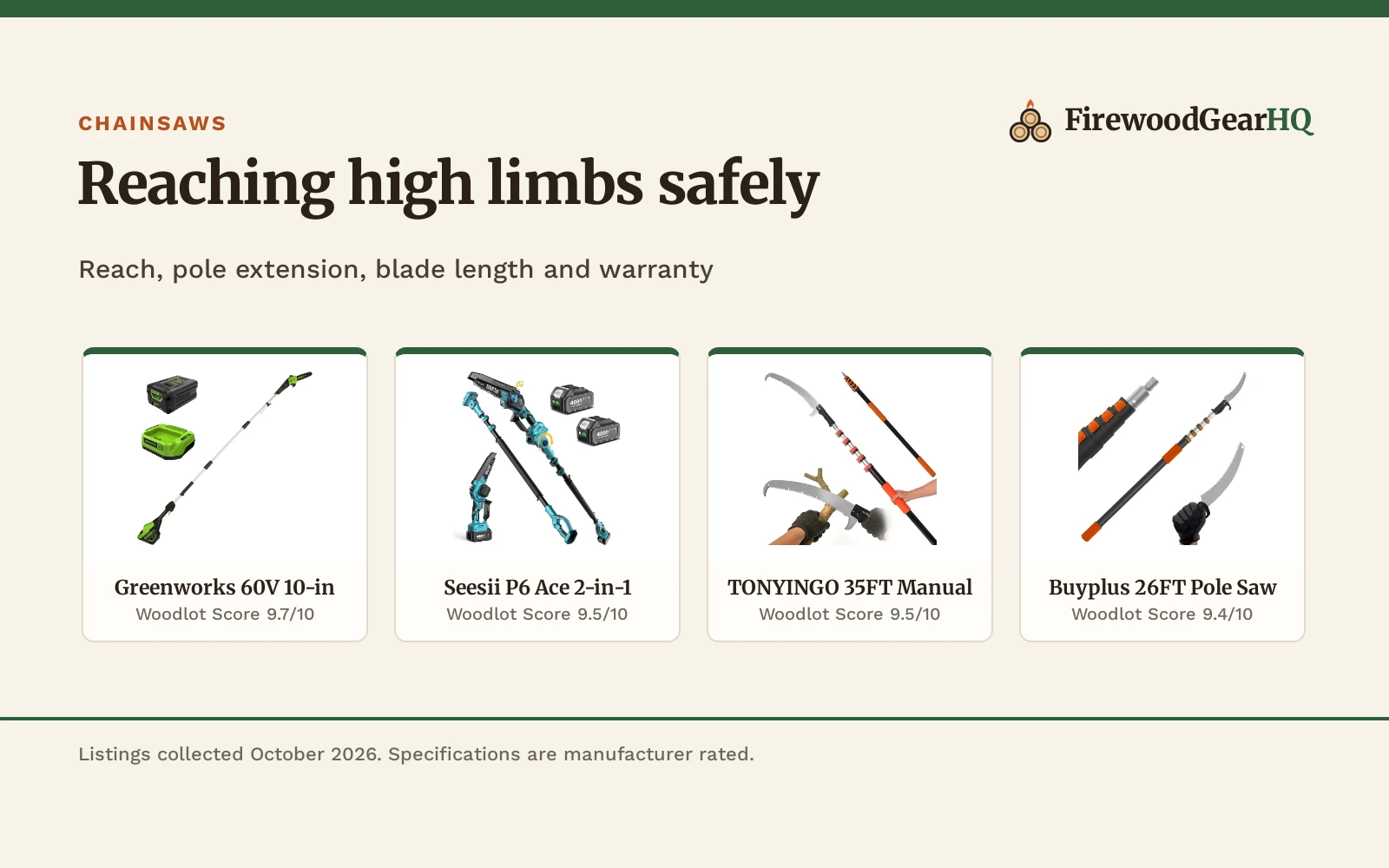
 Greenworks 60V 10 in Electric Pole Saw9.7/10View on Amazon
- 2
 SEESII 2-in-1 Mini Chainsaw & Pruning Shears9.7/10View on Amazon
- 3
 Greenworks 40V 8 in Pole Saw Hedge Trimmer Kit9.6/10View on Amazon
- 4
 REXBETI 8-Inch Folding Hand SawView on Amazon
- 5
 Samurai Ichiban 13"View on Amazon
- 6
 Hand Saw for TreeView on Amazon
- 7
 Folding Hand Saw 8 Inch with Safety Hand GuardView on Amazon
- 8
 Pruning SawView on Amazon
- 9
 2-in-1 Cordless Pole SawView on Amazon
Cutting season is when the brush piles up and the saws earn their keep. Pole saw vs pruning saw is not really a rivalry: a pole saw is a saw head mounted on a long pole for cutting limbs above your head, and a pruning saw is a hand saw for cutting limbs you can reach and steady. If the branch is up in the canopy, you need the pole; if it is at arm’s reach, the pruning saw does cleaner work on thicker wood.
More options to compare
 REXBETI 8-Inch Folding Hand SawCheck price on Amazon
 Samurai Ichiban 13"Check price on Amazon
 Hand Saw for TreeCheck price on Amazon
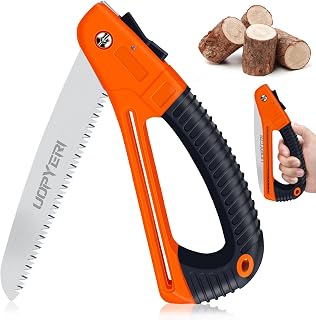 Folding Hand Saw 8 Inch with Safety Hand GuardCheck price on Amazon
 Pruning SawCheck price on Amazon
 2-in-1 Cordless Pole SawCheck price on Amazon
FirewoodGearHQ may earn a small commission if you buy through links on this page. The price you pay stays the same. Read our affiliate disclosure.
Pole saw vs pruning saw: the quick answer
A pole saw trades leverage for reach. The long pole puts a small saw head where your arms cannot go, but the cut is slower and you cannot steady the limb. A pruning saw puts your full arm and body behind a rigid blade, so it cuts faster and cleaner through wood you can reach. The largest saw here cuts limbs up to 10 in in diameter; the REXBETI, the longest of the folding saws, lists branches 6-7 in across.
What each tool does
A pruning saw is a short, rigid hand saw with aggressive teeth. The four in this guide have blades of 7 in to 18 in, with tooth patterns from 7 TPI staggered to the Corona’s 14 precision-sharpened teeth, made to rip through green and dry wood, limbs and brush. You steady the limb with your free hand, the saw stays on the cut, and the rigid blade gives you control on every stroke.
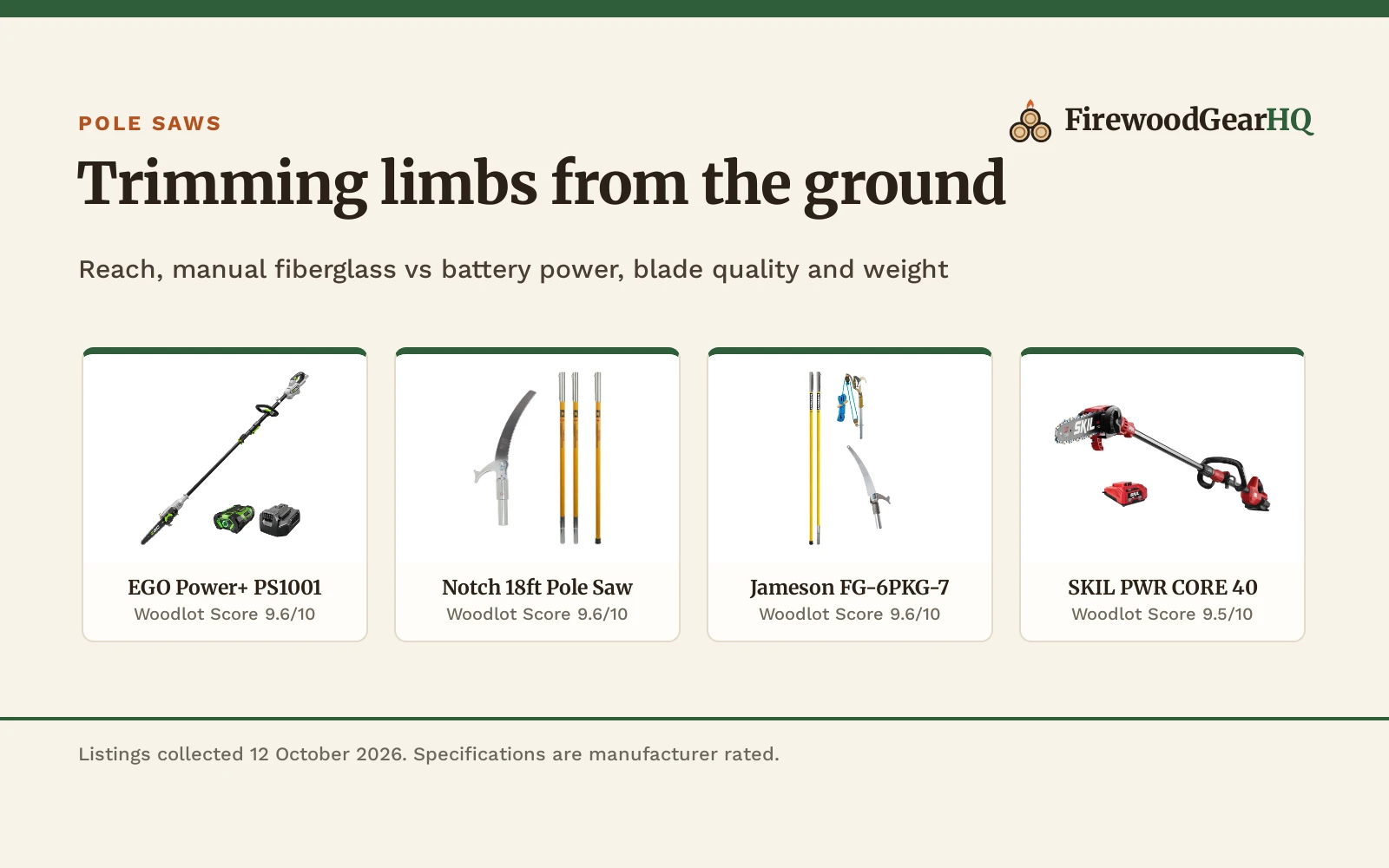
A pole saw is built for the opposite problem: limbs past arm’s reach. The pole puts the blade in the canopy while you stand on the ground. It gives up the hand saw’s cut speed and control, because you are driving the blade through a long, flexing lever with no second hand on the wood. For limbs within reach, the pruning saw wins; for limbs you cannot reach, a pole saw like the best manual pole saw is the tool.
The four here use 7 TPI staggered, triple-ground and XT tooth patterns, plus the Corona’s 14 precision-sharpened teeth. The difference between the two tools is the handle, not the teeth.
Gear section: four pruning saws, ranked
Ranked by stated capacity, build and warranty. First is the Corona RS 7510D: an 18 in curved blade that cuts limbs up to 10 in in diameter, with RazorTOOTH precision-sharpened teeth (14 teeth) in high carbon Japanese SK5 steel, a chrome blade coating and impulse-hardened teeth. The ergonomic D-handle suits gloved or two-handed operation, it weighs 1.1 pounds, and the maker states a Lifetime warranty. It lists the largest stated capacity and the strongest stated warranty of the four, a Lifetime term.
Second is the REXBETI 11 in folding saw: SK-5 steel blade with aggressive 7 TPI staggered teeth, listed for branches 6-7 in in diameter, with a reinforced blade structure for heavy cutting and an ergonomic rubber-coated polymer handle. It weighs 14.88 oz, model REX025, and a bag is possibly included. One caution: the spec table says Lifetime warranty while the warranty description says 1 Year. The two conflict, so count on 1 year.
Third is the Bahco 396-LAP Laplander: a 7.5 in (19 cm) blade with XT toothing at 7 TPI in Swedish steel, with a rust-protected low-friction coating and a secure lock in both open and closed positions. The two-component 9 in plastic handle includes a leather strap, and it weighs 7.52 oz. The listing names green and dry wood, bone and plastic as its range, which is wider than the other three. The warranty is stated only as Limited Warranty, with no term given.
Fourth is the Mossy Oak 7 in folding saw: D6A and M2 bimetal blade with 7 TPI triple-ground teeth and a Teflon coating that the maker lists for less friction and rust resistance. The auto-lock folding design keeps the teeth covered when folded, the non-slip handle has an attachment hole, and a carry pouch is included. It weighs 0.26 kg. Warranty Type is Limited Warranty with no term stated.
How to pick between them
Start with the limbs. The Corona’s 10 in capacity covers the thickest storm-fall limbs; the REXBETI’s 6-7 in range covers most yard pruning and firewood cuts; the Bahco and Mossy Oak, both 7 in class blades, suit light pruning and camp use. Then decide how you will carry it: the REXBETI, Bahco and Mossy Oak all fold, while the Corona’s D-handle rig is the saw you keep in the truck for serious limbs.
Check the steel and the teeth. Japanese SK5 steel with impulse-hardened teeth and a chrome coating (Corona), SK-5 steel with staggered teeth (REXBETI), Swedish steel with a rust-protected coating (Bahco) and bimetal with a Teflon coating (Mossy Oak) are all stated corrosion and edge measures, in that order of detail. And read the warranty line: the Corona states the strongest term, Lifetime, while the REXBETI’s warranty description says 1 Year and its spec table says Lifetime, so count on 1 year.
If your cutting is mostly overhead, stop comparing hand saws and read the best manual pole saw and the best battery-operated pole saw guides first. A hand saw cannot do the pole saw’s job, and for wood you can reach, the hand saw gives more control.
Wear eye protection and gloves for cutting, splitting and handling, follow every tool's manual, install stoves to code, and have the chimney inspected and cleaned every year. See EPA Burn Wise and NFPA heating safety. Read our Safety Disclaimer.
Frequently Asked Questions
Can a pruning saw replace a pole saw?
No. A pruning saw needs you to reach and steady the limb; a pole saw puts the blade where your arms cannot go. The four saws here are all hand saws for limbs within reach.
What size limb can these pruning saws cut?
The Corona lists limbs up to 10 in in diameter, and the REXBETI lists branches 6-7 in in diameter. The Bahco and Mossy Oak listings give no stated capacity, so read the listing and buy capacity you can confirm.
Is a folding pruning saw less sturdy than a fixed one?
The REXBETI listing calls out a reinforced blade structure for heavy cutting, and both the Bahco and Mossy Oak list locks that hold the blade open. The listings give no flex or break data, so pick by the stated blade and lock, not by assumption.
Why do the tooth patterns differ?
The REXBETI uses 7 TPI staggered teeth, the Mossy Oak 7 TPI triple-ground teeth, the Bahco 7 TPI XT toothing and the Corona 14 precision-sharpened teeth. Each maker pairs the pattern with its blade; the listings do not rank them against each other.
Are these saws good for firewood cutting?
The listings name green and dry wood, branches, limbs and firewood across the four saws. For rounds and big logs a chainsaw or splitting tool is the faster choice; these saws are for limbs and brush.
Related guides
See the best manual pole saw, the best pole saw for trimming and the cordless vs gas pole saw comparison.