Mesquite vs Hickory Firewood: Which One Should You Buy?
Hickory listings carry this comparison with kiln-dried logs and chunks for grills, smokers, and fireplaces, while mesquite stands as the alternative named in the question.

On this page
Top picks at a glance
As an Amazon Associate I earn from qualifying purchases.
- 1
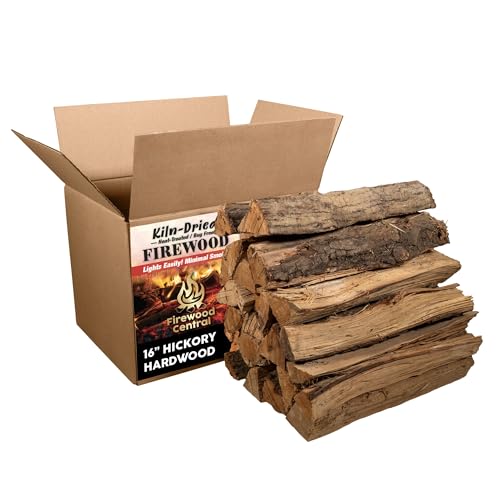 Firewood Central Kiln-Dried PA Hickory9.5/10View on Amazon
- 2
 Old Potters Kiln Dried Firewood Small Cooking Logs9.3/10View on Amazon
- 3
 Smoak Firewood's Cooking Wood Mini SplitsView on Amazon
- 4
 Smoak Firewood’s Cooking Wood ChunksView on Amazon
- 5
 Camerons All Natural Mesquite Wood Chunks for Smoking. 420 CuView on Amazon
- 6
 Mr. Bar-B-Q Mesquite Wood Chunks for SmokersView on Amazon
At the woodpile in burning season, the choice between mesquite and hickory shapes heat, aroma, and cooking flavor. Mesquite vs hickory firewood comes down to this: the listings here cover hickory only, in kiln-dried logs and chunks for grills, smokers, and fireplaces, while mesquite stands as the alternative named in the question, with no mesquite listing to compare against. For a buyer choosing from these listings, hickory is the side with stated sizes, weights, and uses, and mesquite remains a question to answer from a mesquite listing, not from this guide.
More options to weigh up
 Smoak Firewood's Cooking Wood Mini SplitsCheck price on Amazon
 Smoak Firewood’s Cooking Wood ChunksCheck price on Amazon
 Camerons All Natural Mesquite Wood Chunks for Smoking. 420 CuCheck price on Amazon
 Mr. Bar-B-Q Mesquite Wood Chunks for SmokersCheck price on Amazon
FirewoodGearHQ earns a small commission if you buy through links on this page. The price you pay stays the same. Read our affiliate disclosure.
Mesquite vs hickory firewood: the quick answer
Hickory, as listed here, is a dense hardwood sold kiln-dried for heat and cooking: logs in 12 inch lengths, chunks in a fist size, and an artisanal box with a low-smoke burn type. Mesquite has no listing in this guide, so no mesquite size, weight, or burn claim is stated here. A buyer who wants mesquite should compare a mesquite listing side by side with the hickory figures below, rather than assuming both woods match on heat or aroma.
| Listing | Form | Stated size and weight | Stated uses |
|---|---|---|---|
| Smoak hickory logs | Logs | 12 inch lengths, widths average 3-4 inches, box 17x13x13, 45-50 lbs | Grills, smokers, pizza ovens, stoves, firepits, fireplaces |
| Smoak hickory chunks | Chunks | Average 3 inch x 3 inch, box 12x12x12, 25-30 lbs, 1728 cubic inches | Grills, smokers, pizza ovens, with or without charcoal |
| Cutting Edge hickory box | Logs | Bundles of 10 lbs and 50 lbs, dimensions not stated | Indoor and outdoor fires |
The gear in this guide
Smoak hickory logs. This listing leads the gear section on completeness: 12 inch lengths with widths averaging 3-4 inches, in a box of 17x13x13 weighing 45-50 lbs, including kindling and firestarter for easier fire starting. The listing states USDA certified, kiln dried, completely organic wood with no chemicals used, for grills, smokers, pizza ovens, stoves, firepits, and fireplaces that use 12 inch lengths. The listing also points to 8 inch mini splits and 5-6 inch tiny pizza wood in the same listing, and to 16 inch lengths in the storefront, for buyers who need a different length.
Smoak hickory chunks. This listing follows as the cooking chunk option: fist size chunks averaging 3 inch x 3 inch, in a box of 12x12x12 weighing 25-30 lbs, with 1728 cubic inches stated. The listing states USDA certified kiln dried wood with no chemicals used, for use with or without charcoal, and claims chunks burn longer than chips for wood fired flavor. The listing names grills, smokers, and pizza ovens, and anything that a 3 inch square piece will fit into. The spec table lists a weight of 12.29 kg alongside the title weight range.
Cutting Edge hickory box. This listing follows as the artisanal box option: hand-inspected, kiln-dried logs described as dense hardwood with a hot, slow burn, a bold and rich hickory aroma, and a minimal smoke burn type, in bundles of 10 lbs and 50 lbs. One contradiction needs noting: the spec table lists Type of Wood as Oak and Aroma as Oak, while the title and bullets describe hickory throughout, so the title and bullets govern and the wood is read as hickory. The listing claims hickory burns hotter and longer than oak with less smoke, stated as the maker claim, and product dimensions are listed as NA, so no log size is stated for this box.
Choosing firewood for cooking and heating
Match the piece to the firebox
Piece size decides fit before flavor matters. The Smoak logs suit stoves and fireplaces that use 12 inch lengths, while the Smoak chunks suit any grill, smoker, or pizza oven that a 3 inch square piece will fit into. The Cutting Edge box states no dimensions, so fit must be checked against the box on arrival rather than from the listing. For another hickory comparison, see birch vs hickory firewood.
Kiln-dried and certified
Both Smoak listings state USDA certified, kiln dried wood with no chemicals used, and the Cutting Edge listing states kiln-dried, hand-inspected logs that are clean and ready to burn indoors or outdoors. All 3 listings here state kiln drying, and the Smoak logs add kindling and firestarter in the box. A listing that states no drying method leaves the buyer guessing, so drying claims deserve the same check as size and weight.
Aroma and cooking use
Aroma is where hickory makes its case in these listings: a bold and rich aroma from the Cutting Edge listing, and wood fired flavor from the Smoak listings for grills, smokers, and pizza ovens. The Smoak chunks claim a longer burn than chips for flavor, stated as the maker claim. Mesquite aroma and flavor are not stated in any listing here, so this guide makes no mesquite flavor claim.
Safe burning notes
Burn only seasoned or kiln-dried wood, and install and use stoves per the maker instructions and local code. Keep smoke and CO alarms in working order, and arrange an annual chimney inspection. Never use stove or chimney installation steps from a buying guide as a substitute for a certified pro, and check local rules before burning outdoors.
FAQ: wood, fire and gear
Is hickory good firewood?
The listings describe hickory as a dense hardwood with a hot, slow burn and a bold, rich aroma, with a minimal smoke burn type stated for the Cutting Edge box. Both Smoak listings add USDA certified, kiln dried quality with no chemicals used. Those are the maker claims, stated as listed.
What sizes do the hickory listings offer?
The Smoak logs offer 12 inch lengths with widths averaging 3-4 inches, and the Smoak chunks offer pieces averaging 3 inch x 3 inch. The Cutting Edge box lists product dimensions as NA, so no log size is stated for that box, though bundles of 10 lbs and 50 lbs are stated.
Are these listings kiln-dried?
Both Smoak listings state USDA certified, kiln dried wood, and the Cutting Edge listing states kiln-dried, hand-inspected logs. All 3 listings here state kiln drying, with no chemicals used stated for the Smoak listings.
Can hickory be used for cooking?
The Smoak logs list grills, smokers, pizza ovens, stoves, firepits, and fireplaces, and the Smoak chunks list use with or without charcoal in grills, smokers, and pizza ovens. The Cutting Edge listing focuses on indoor and outdoor fires rather than cooking, so cooking use is stated for the Smoak listings.
What about mesquite?
No mesquite listing appears in this guide, so no mesquite size, weight, heat, or aroma figure is stated here. Compare a mesquite listing against the hickory figures above before choosing, since this guide cannot settle the mesquite side from hickory data alone.
More firewood guides
Also see our birch vs hickory firewood, walnut vs hickory firewood, hickory vs maple firewood, oak vs hickory firewood, best firewood to burn and firewood BTU chart guides.