Maple vs Elm Firewood: Which One Should You Buy?
Maple vs elm firewood: how the two species compare for heat and handling, the four boxed kiln-dried listings ranked, and how to store them.

On this page
Top picks at a glance
As an Amazon Associate I earn from qualifying purchases.
- 1
 Cooking Wood Mini Splits9.3/10View on Amazon
- 2
 Wilson Split Firewood9.1/10View on Amazon
- 3
 Fatwood Fire Starter Sticks 10lb Box9.4/10View on Amazon
- 4Wilson Maple Split FirewoodView on Amazon
- 5
 Camerons All Natural Maple Wood Chunks for Smoking. 420 Cu inView on Amazon
Maple vs elm firewood is a question worth settling while the woodpile is still easy to top up in October. Both are hardwoods that heat a home, but the boxed market answers the question for you: maple is stocked and ready to burn, and no elm listing appears in the covered set. The short answer is that maple is the practical pick for the boxed buyer, in split boxes you can carry to the porch. Elm, where burners use it, comes from a local cutter or from your own saw, which is a different buying rhythm altogether.
More options to weigh up
 Wilson Maple Split FirewoodCheck price on Amazon
 Camerons All Natural Maple Wood Chunks for Smoking. 420 Cu inCheck price on Amazon
The four listings below tell the boxed side of the story. One is maple, one is the oak variant of a multi-species listing, one is cherry, and one is hickory. All four are kiln-dried, and each states its size and moisture or handling plainly. Read on for how they rank, what each suits, and where elm fits for the burner who sources it locally.
FirewoodGearHQ earns a small commission if you buy through links on this page. The price you pay stays the same. Read our affiliate disclosure.
Maple vs elm firewood: the quick answer
For boxed firewood, maple wins by default: it is the species actually on the shelf in the listings covered, cut to stove length and kiln-dried. Elm does not appear in the covered set, so the comparison is between what you can buy today and what you would source from a local cutter. Ranked by stated specs, here is how the four listings stack up:
| Product | Stated size | Stated weight or volume | Best for |
|---|---|---|---|
| Old Potters Kiln-Dried Hickory | 16-inch logs | 1.5 cu ft, about 40 lb | Stove and fireplace heat |
| Wilson Maple Split Firewood | 1 to 3 inch splits | 16x12x8 inch box | Fireplace, fire pit and bonfire |
| Firewood Central Kiln-Dried PA Cherry | 16-inch splits, 14–18 per bundle | 38 lb | Grills, smokers and pizza ovens |
| Wilson Split Firewood, Oak Regular | 1 to 3 inch splits | 16x12x8 inch box | Small loads and mixed use |
Old Potters Kiln-Dried Hickory
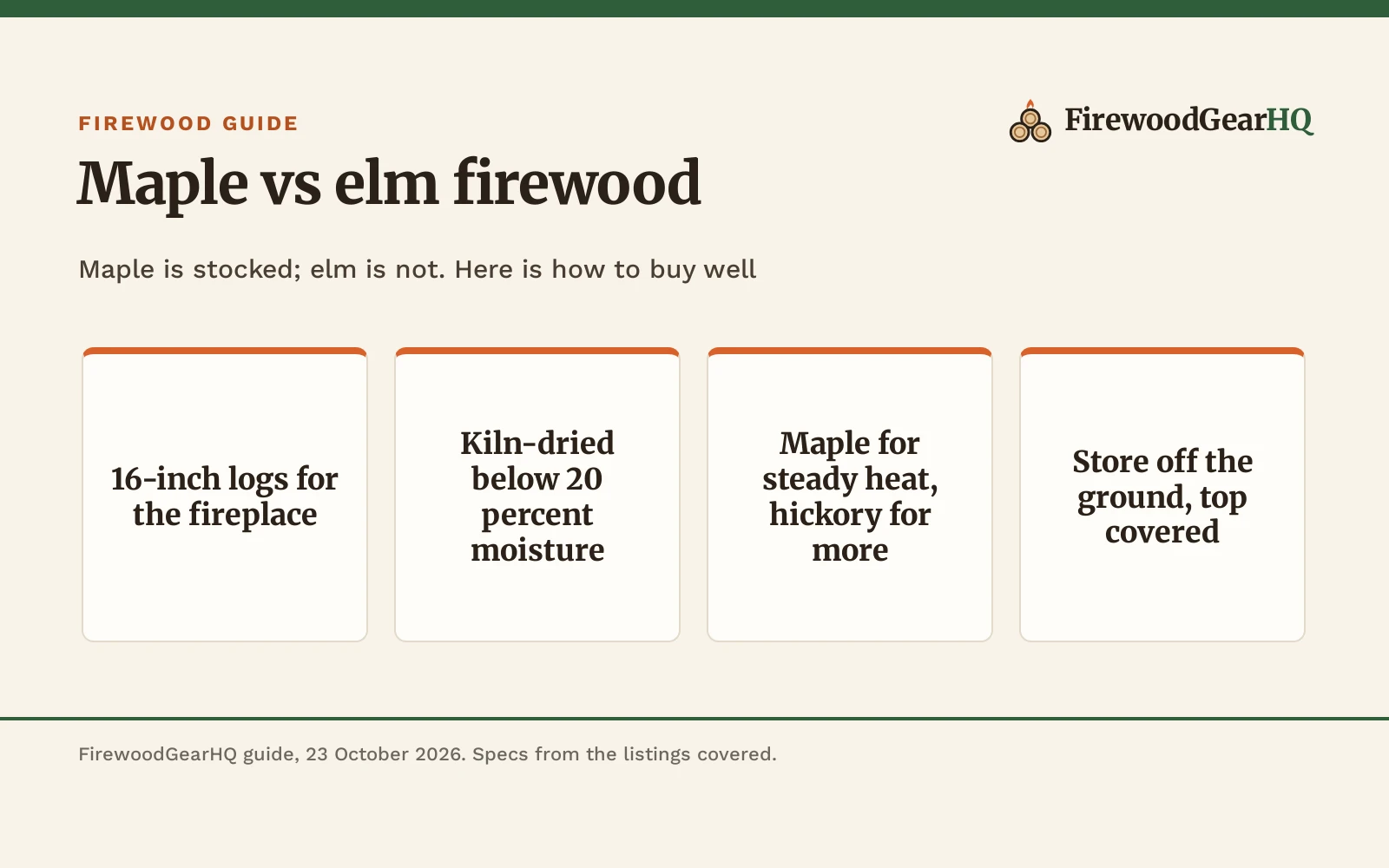
The strongest listing on stated specs. The maker calls it the hottest, longest-burning wood it sells, with a strong, smoky aroma, and the box is fully specified: 16-inch logs, 1.5 cu ft, about 40 lb, USDA certified kiln dried to below 20% moisture. The listing states the logs are sized for indoor fireplaces, wood stoves, backyard fire pits, Solo Stove and chimineas, ready to burn the day they arrive. If your maple-vs-elm question is really about maximum heat from a box, this hickory is the listing to beat.
Wilson Maple Split Firewood
The actual maple pick. The listing states natural kiln-dried maple splits, 1 to 3 inches in diameter, in a regular-size box of 16x12x8 inches, seasoned as well as kiln dried. The wood is sustainably harvested in the upper peninsula of Michigan, and the listing states kiln drying wicks away moisture for a hotter burn with less smoke and no smoldering. Note the listing states weight varies per box, so buy by the box, not by the pound.
Firewood Central Kiln-Dried PA Cherry
The crossover pick for heat and cooking. The listing states a 38 lb bundle of 14–18 evenly sized 16-inch splits, dried to 15% moisture or less and PDA-certified premium firewood, in the listing’s wording. The wood is PA cherry, USA-sourced, and the maker lists a sweet, fruity flavor for pork, poultry, fish and veggies, with a clean, low-smoke burn. A solid second heat source that doubles as cooking wood.
Wilson Split Firewood, Oak Regular
The listing offers four species, birch, maple, oak or cherry, and this variant is the oak one, so read the variant before you buy. The box is the same regular size, 16x12x8 inches, with 1 to 3 inch splits, kiln dried for a hotter burn with less smoke. The listing again states weight varies per box. It suits small loads and mixed use, and the species choice lets you try oak, maple, cherry or birch across boxes.
Maple at the woodpile
Maple earns its place as a steady heating wood, and the Wilson box shows why the species works in boxed form: small 1 to 3 inch splits that light easily, kiln drying that removes the moisture question, and a box you can carry where the wood is needed. For a fireplace or fire pit, maple is the uncomplicated middle of the hardwood lineup, and it seasons into a reliable shoulder-season and winter fuel when you buy it from a cutter.
Against the other listings, maple sits between hickory and cherry on the stated claims: the maker calls hickory its hottest, longest-burning wood, while cherry brings the sweet cooking smoke. Maple’s case is simpler, a box of named-species splits, dried and sized for the fire you already have.
Where elm fits
Elm does not appear in the listings covered here, which is the honest limit of this guide’s boxed comparison. Burners who heat with elm generally buy it from a local cutter or cut and split it themselves, and the comparison that matters there is price per cord and how the wood was handled, not a box spec. If elm is what your cutter sells, the same buying rules apply: buy a named species, ask how it was dried, and stack it off the ground under cover.
Buying and storing boxed firewood
Boxed firewood solves the two problems of buying from a pile: unknown species and unknown moisture. Here the species is named on the box, and the moisture is stated: below 20% for the Old Potters hickory, 15% or less for the Firewood Central cherry. The Old Potters listing advises storing the box off the ground in a dry, ventilated spot, which is sound advice for any boxed wood. A firewood rack keeps the box off the soil, and a firewood cover keeps rain off the top layer without sealing the sides.
Turn a stack's length, height and depth into full and face cords, and estimate how much wood a winter takes.
FAQ: wood, fire and gear
Is maple firewood good for a fireplace?
Yes. The Wilson maple listing states kiln-dried splits of 1 to 3 inches in diameter, which the listing pairs with a hotter burn, less smoke and no smoldering. Small splits light easily and suit fireplaces, fire pits and bonfires.
What length firewood should I buy for a stove?
16-inch logs suit indoor fireplaces, wood stoves, fire pits and Solo Stove, per the Old Potters listing. The Wilson boxes carry 1 to 3 inch splits for smaller fireboxes and quicker fires.
Is kiln-dried boxed firewood ready to burn?
The listings state so. Old Potters lists USDA certified kiln drying to below 20% moisture, Firewood Central lists drying to 15% moisture or less, and the Old Potters listing states its logs are ready to burn the day they arrive. No splitting or seasoning is needed.
Can I mix species in the woodpile?
The Wilson listing is built for it, offering birch, maple, oak or cherry, and states that cooking with different species achieves different aromas. Mixing a hot wood like hickory with a mild one like maple is a common way to balance a fire.
How should I store boxed firewood?
The Old Potters listing states to store it off the ground in a dry, ventilated spot. Keep the box on a rack or pallets, cover the top in rainy weather, and leave the sides open to the air. See our guides to the best firewood covers for rainy climates and the best adjustable firewood racks.
More firewood guides
Compare the neighboring species in our walnut vs maple firewood and apple vs cherry firewood guides. For the woodpile itself, see the best firewood covers for rainy climates and the best adjustable firewood racks.