How Many Carbon Monoxide Detectors Should Be in a Home
How many carbon monoxide detectors a home needs, counted by level and bedroom, with alarm types, CO2 monitor limits and upkeep explained.

On this page
Top picks at a glance
As an Amazon Associate I earn from qualifying purchases.
- 1
 Kidde Smoke & Carbon Monoxide Detector9.6/10View on Amazon
- 2
 TopTes S2 Multi Natural Gas Detector & Carbon Monoxide9.5/10View on Amazon
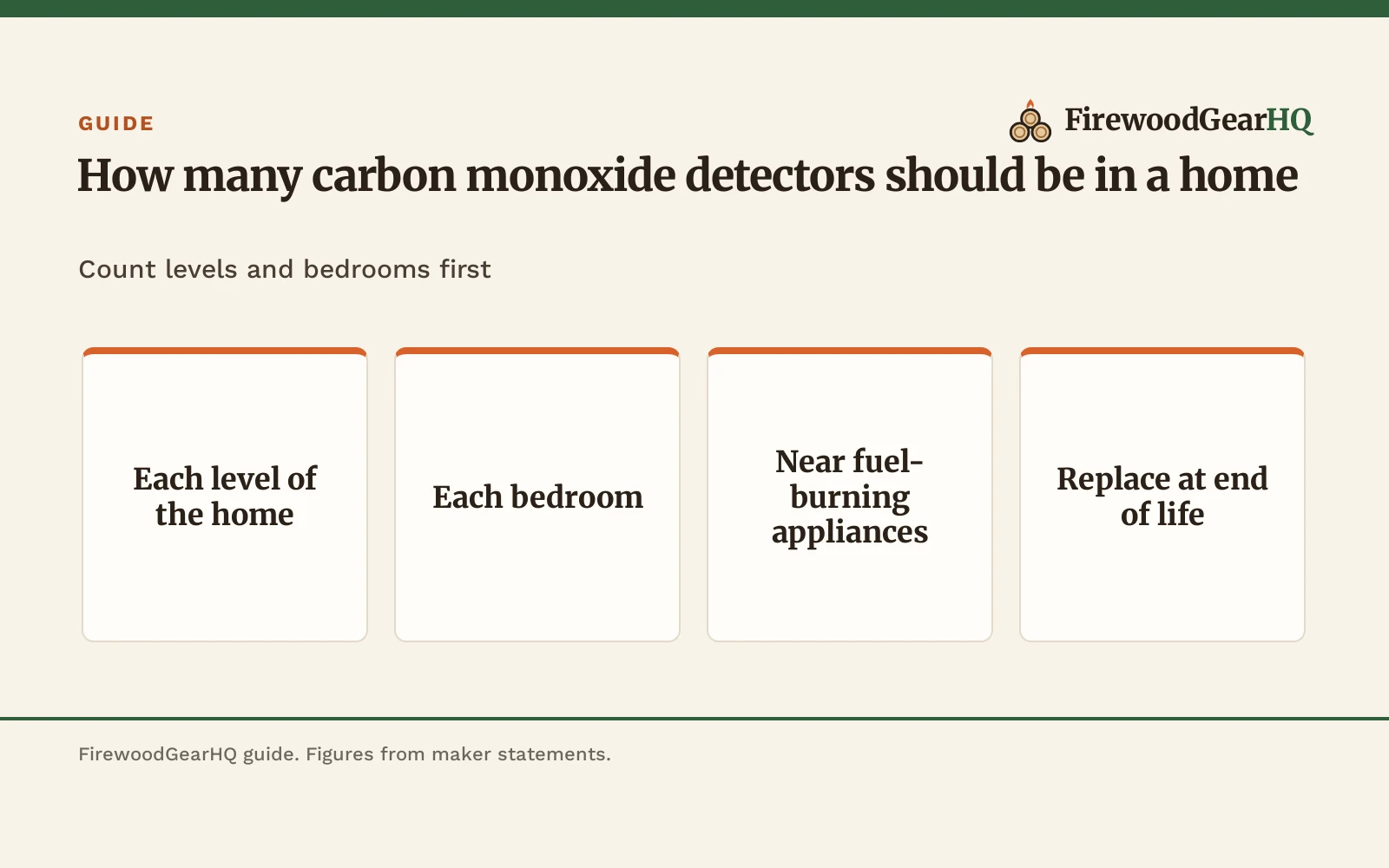
Burning season is when the stove runs for long stretches and the house stays closed against the cold. That is the moment to ask how many carbon monoxide detectors should be in a home, because fuel-burning appliances are working hardest and windows stay shut. Carbon monoxide alarms belong on each level of the home and in each bedroom, with coverage near the appliances that burn fuel.
FirewoodGearHQ earns a small commission if you buy through links on this page. The price you pay stays the same. Read our affiliate disclosure.
The quick answer: how many carbon monoxide detectors should be in a home
Count levels and bedrooms, not square footage. First Alert states the placement plainly for its plug-in alarm: place one on each level of your home and in each bedroom. Bedrooms on more than one level do not change the rule: one alarm on each level of the home and one in each bedroom. The total for your home is the count of levels plus the count of bedrooms, adjusted where a level and a bedroom share the same space.
| Home layout | Where alarms go |
|---|---|
| Bedrooms and living space on the same level | Each bedroom, plus one on that level |
| Bedrooms on more than one level | Each level of the home, and in each bedroom |
| Fuel-burning appliance on a level without bedrooms | That level as well as each bedroom level |
Use the table as a counting method for your own floor plan. Local rules and the alarm maker instructions for your exact model come first where they differ.
Where carbon monoxide alarms belong
Each level of the home
An alarm on each level means a warning can sound near the people who need to hear it, wherever the carbon monoxide starts. Basements and lower levels often hold furnaces, water heaters and stoves, while upper levels hold bedrooms. Coverage on every level closes the gap between where fuel burns and where people sleep. The First Alert plug-in alarm works with any standard outlet and carries a battery backup, so placement on each level does not depend on wiring in that room.
Each bedroom
Bedrooms get their own alarms because doors close at night and sleepers need the warning in the room. First Alert states the same placement for bedrooms as for levels: in each bedroom. Combination smoke and carbon monoxide alarms, such as the Kidde model that detects both smoke and carbon monoxide, cover both hazards in the bedroom with a single unit. Where bedrooms sit off a hallway, follow the maker instructions for your model on placement inside the room.
Near fuel-burning appliances
Wood stoves, furnaces, water heaters and fireplaces are the appliances where fuel burns in a home. An alarm on the same level as those appliances, placed as the maker directs for that model, watches the area where a problem would start. Keep the alarm where its sound carries to living and sleeping areas. For stove-specific gear around the hearth, see the stove accessories guides.
Alarm types you will see
Plug-in alarms with battery backup
The First Alert CO606 plugs (on Amazon) into a standard outlet and carries a 9V battery backup for continuous monitoring during a power failure. It sounds a loud 85 decibel alarm when carbon monoxide levels reach dangerous levels, and the maker states a 7 year limited warranty with an end of life signal. Plug-in models suit rooms with a free outlet on each level.
Battery and hardwired combination alarms
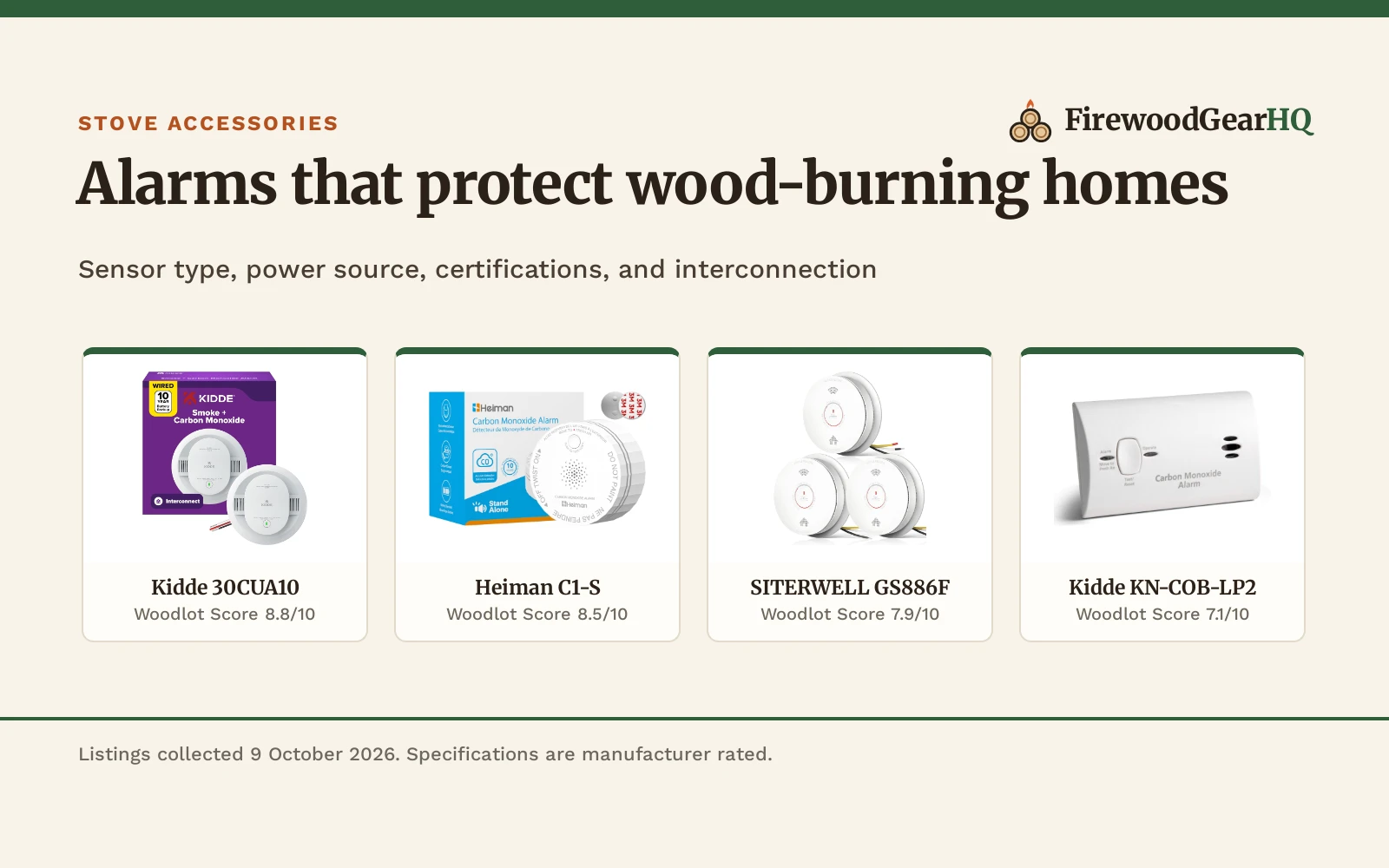
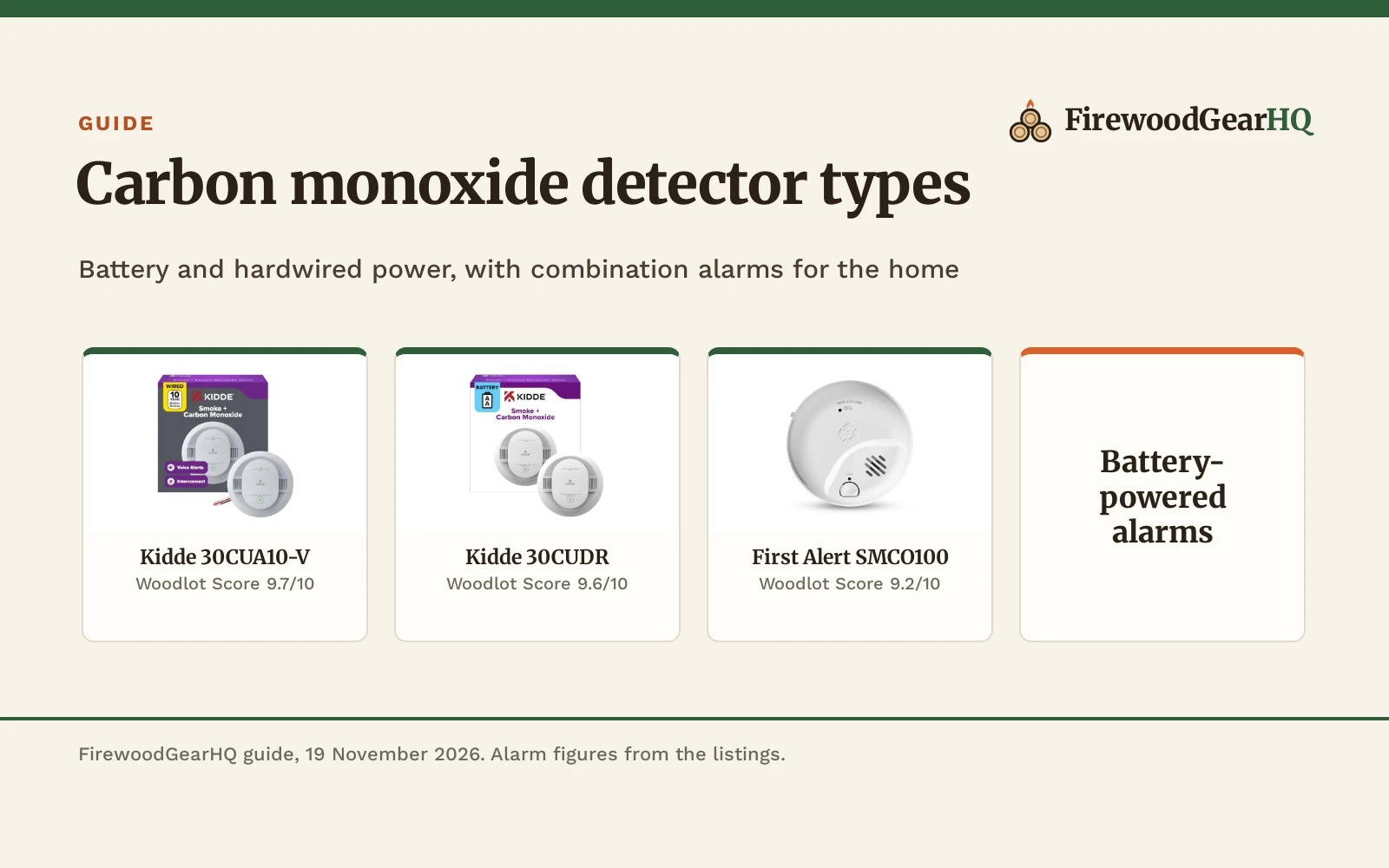
Battery combination alarms detect smoke and carbon monoxide in one unit. The Kidde 30CUDR (on Amazon) runs on two AA batteries, sounds an 85-decibel alarm, and is backed by a 10-year limited warranty. Kidde states it meets UL 217 and UL 2034 standards. The hardwired Kidde model runs on 120V AC power with a 10-year built-in battery backup and can connect with other Kidde alarms so interconnected alarms sound together. Hardwired models suit homes already wired for alarms; battery models suit rooms without that wiring.
Portable carbon monoxide meters
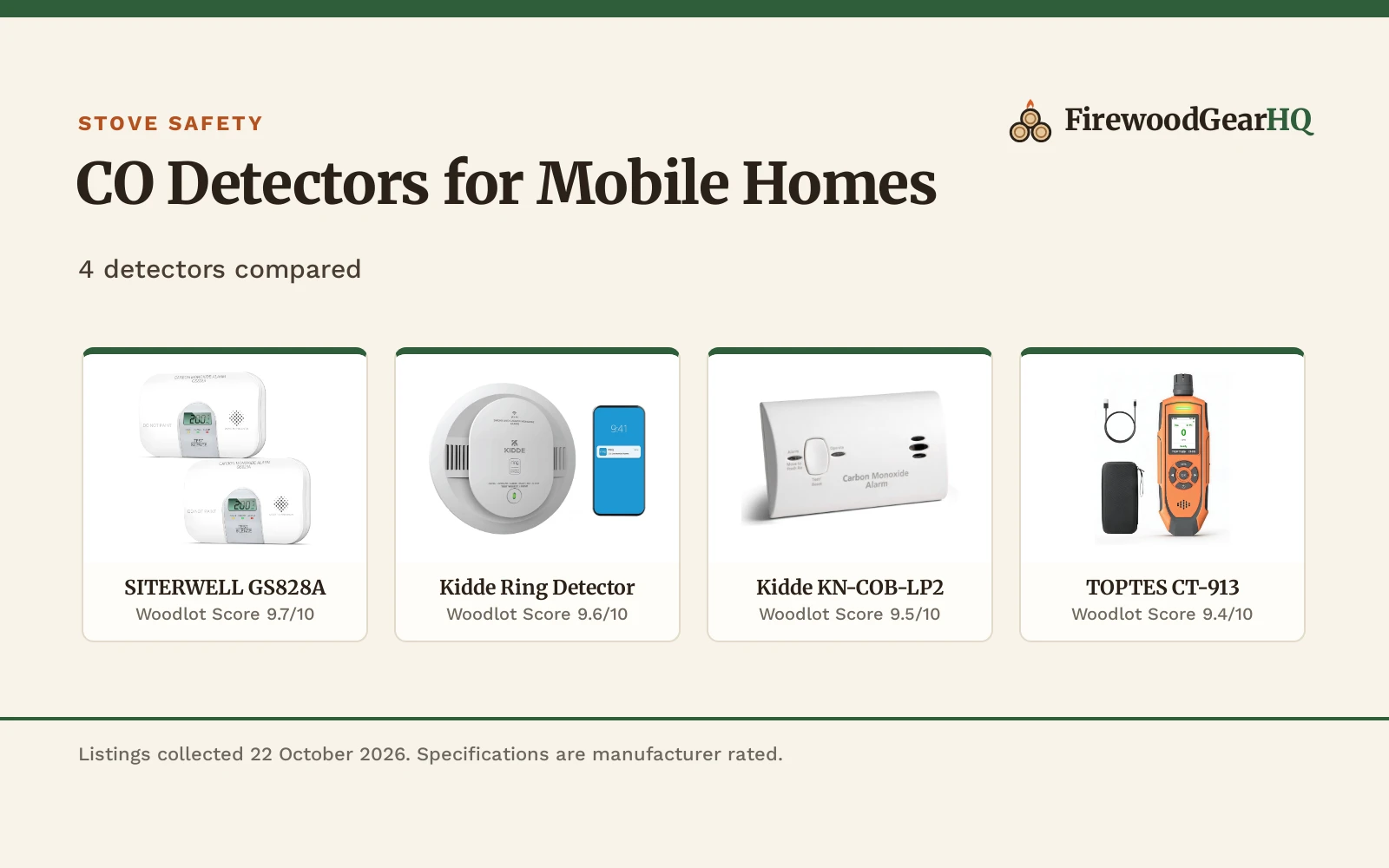
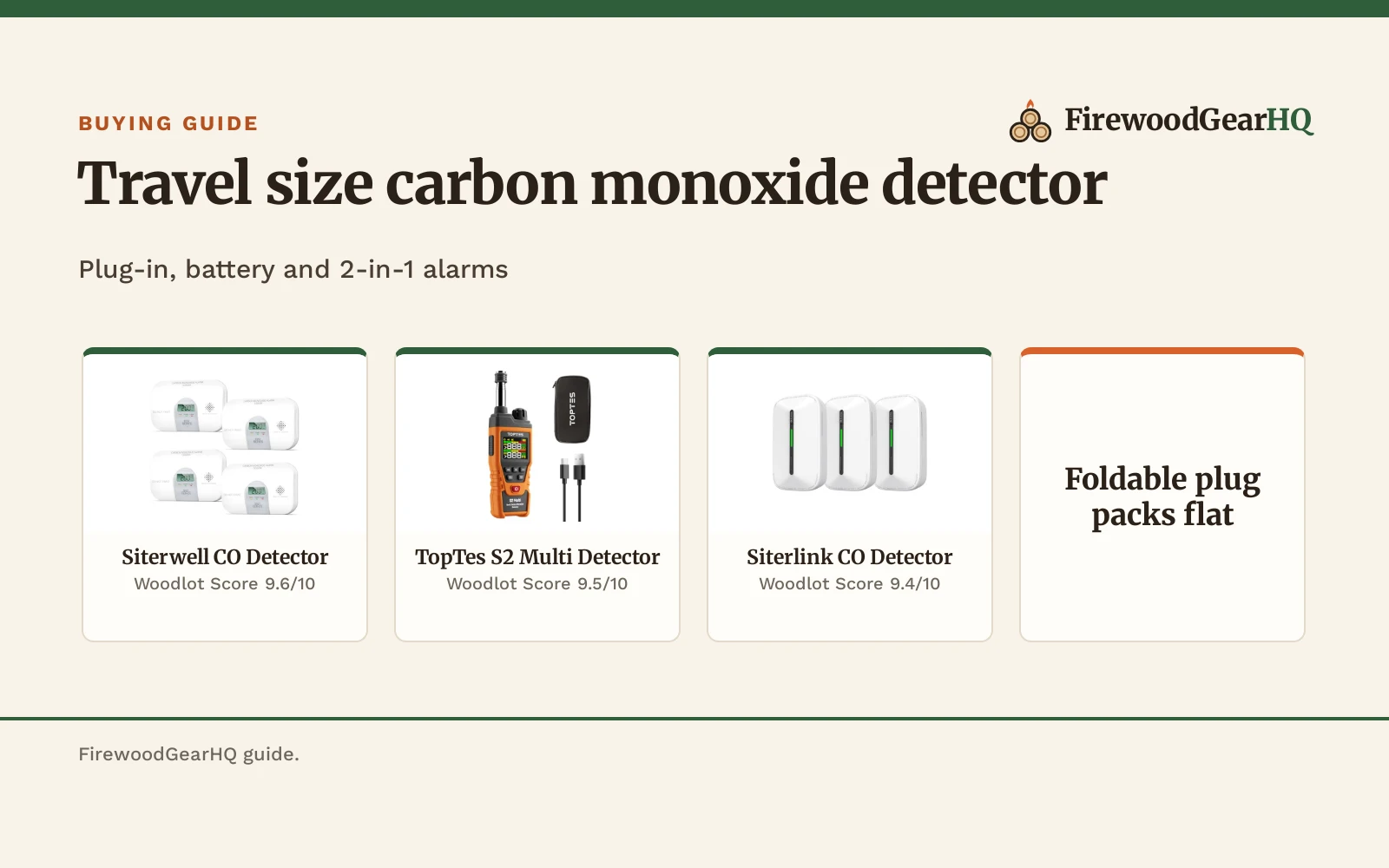
Portable meters measure carbon monoxide for spot checks and work areas rather than standing watch in a bedroom. The Klein Tools ET110 (on Amazon) shows readings from 0 to 1000 ppm with low and high alarms at 35 ppm and 200 ppm. The TopTes S2 Multi (on Amazon) reads carbon monoxide from 0-999 PPM alongside combustible gases. A meter you carry is a checking tool; the alarms on each level and in each bedroom are the standing coverage.
Carbon monoxide is not carbon dioxide
Carbon dioxide monitors track indoor air quality and do not warn about carbon monoxide. The Temtop CO2 monitor (on Amazon) measures CO2 from 400 to 5000 PPM, and its maker states plainly that carbon monoxide cannot be detected by this CO2 detector. The Dienmern monitor in the same group tracks CO2, temperature and humidity in real time. A CO2 reading, however steady, is not a carbon monoxide alarm, and it does not replace the alarms counted above. For the device categories side by side, see carbon monoxide detector types.
Upkeep and replacement
Alarms age out. The First Alert combination alarm carries an end-of-life warning that tells you when it is time to replace the alarm, and the plug-in model has an end of life signal chirp for the same purpose. The First Alert plug-in alarm signals low battery and can mute its low battery signal for up to 8 hours. Warranty terms among these alarms run 7 year and 10-year, but the end-of-life signal on your unit is the replacement cue to follow. Press the button on alarms that have one, and replace the unit when it signals end of life. For model life in detail, see how long First Alert carbon monoxide detectors last.
FAQ: wood, fire and gear
How many carbon monoxide detectors should be in a home?
Place one on each level of your home and in each bedroom, as First Alert states for its plug-in alarm. Count your levels and bedrooms; the level with a fuel-burning appliance is already one of the levels counted.
Do bedrooms need their own alarm?
Yes. The placement guidance from First Alert puts an alarm in each bedroom as well as on each level, so sleepers hear the warning in the room where they sleep.
Can a CO2 monitor replace a carbon monoxide alarm?
No. CO2 monitors measure carbon dioxide, and the Temtop maker states that carbon monoxide cannot be detected by its CO2 detector. Carbon monoxide coverage needs a carbon monoxide alarm.
Plug-in, battery or hardwired: which type fits?
Plug-in models with battery backup suit rooms with a free outlet. Battery combination alarms suit rooms without wiring. Hardwired models on 120V AC with battery backup suit homes wired for alarms, and interconnected models sound together.
How loud is a carbon monoxide alarm?
The First Alert plug-in alarm and the Kidde alarms named here sound at 85 decibel. That stated loudness is the figure to compare across alarms.
More firewood guides
See every stove accessories guide. Also see our carbon monoxide detector types. Also see our smart vs standard carbon monoxide detector. Also see our travel size carbon monoxide detector.