Smart vs Standard Carbon Monoxide Detector: Which One Should You Buy?
Smart detectors add phone alerts and whole-home interconnect to the standard alarm; this guide compares both types with four detectors for wood-heated homes.

On this page
Top picks at a glance
As an Amazon Associate I earn from qualifying purchases.
- 1
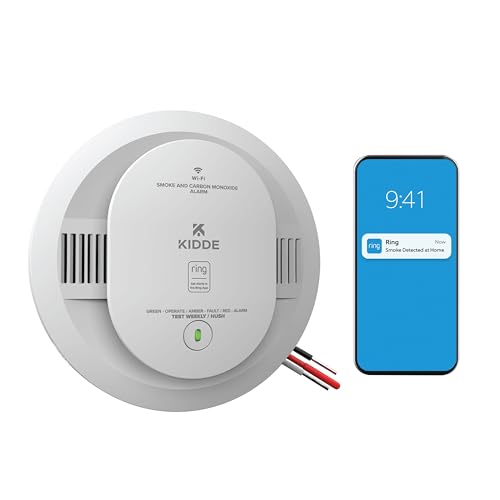 Kidde Smart Smoke & CO Detector with Ring9.5/10View on Amazon
- 2
 Kidde Smoke & CO Detector9.7/10View on Amazon
- 3
 Heiman Smart Carbon Monoxide Detectors9.4/10View on Amazon
- 4
 Amazon Smart Air Quality MonitorView on Amazon
- 5
 First Alert SC5 Hardwire Smart Smoke & Carbon Monoxide AlarmView on Amazon
- 6
 GoveeLife Smart Air Quality Monitor CO2 Detector H5140View on Amazon
- 7
 AKSTEST HW-CO2 Portable CO2 DetectorView on Amazon
- 8
 Smart 2-in-1 Carbon Monoxide + Combustible Gas Tuya Wi-Fi AirView on Amazon
- 9
 TOPTES CT-580 Portable Carbon Monoxide DetectorView on Amazon
A wood stove warms the house, and a carbon monoxide detector watches over it while the fire burns. The smart vs standard carbon monoxide detector question comes down to one difference: a smart detector sends alerts to your phone, and some link every alarm in the house so they sound together, while a standard detector sounds only where it hangs. Both types sense the same gas and sound a local alarm; the smart type adds remote alerts and, in some models, app control and air quality readings. This guide compares the two types and the four detectors in the gear section, so you can match the alarm to your house and your stove.
More options to weigh up
 Amazon Smart Air Quality MonitorCheck price on Amazon
 First Alert SC5 Hardwire Smart Smoke & Carbon Monoxide AlarmCheck price on Amazon
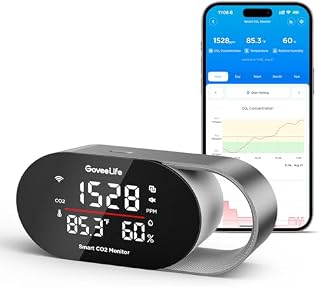 GoveeLife Smart Air Quality Monitor CO2 Detector H5140Check price on Amazon
 AKSTEST HW-CO2 Portable CO2 DetectorCheck price on Amazon
 Smart 2-in-1 Carbon Monoxide + Combustible Gas Tuya Wi-Fi AirCheck price on Amazon
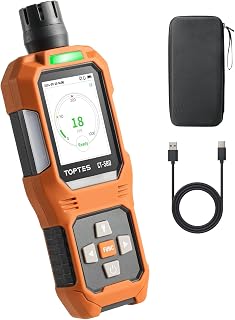 TOPTES CT-580 Portable Carbon Monoxide DetectorCheck price on Amazon
FirewoodGearHQ earns a commission when you buy through links on this site, at no extra cost to you. Affiliate disclosure.
The quick answer
Choose a smart detector if you want phone alerts when you are away and alarms that sound together on models that link them. The HEIMAN smart model also silences nuisance alarms from the app. Choose a standard detector if you want a simple alarm with a long battery life and no app or Wi-Fi to set up. Either type should carry UL 2034 5th Edition for carbon monoxide, and a smoke alarm should carry UL 217. All four detectors in the gear section carry one of those listings, and three of them carry a 10-year limited warranty.
Smart vs standard: what changes
| Feature | Smart detector | Standard detector |
|---|---|---|
| Phone alerts | App alerts at home or away | None; the alarm sounds on the unit |
| Alarms sounding together | Wireless interconnect on some models; linked units sound at once | Each unit sounds alone |
| Remote silence | Silence from the app on some models | Silence button on the unit |
| Extra sensing | Air quality, humidity and low-level CO in some models | Carbon monoxide only |
| Power | Battery or plug-in with battery backup | Battery, with a 10-year battery in the model here |
| Standards | UL 2034 5th Edition for CO models; UL 217 for the smoke model | UL 2034 5th Edition |
A smart detector changes how you hear about danger, and the air quality model senses more besides. A standard detector still sounds its alarm in the room. The smart type earns its place when the house sits empty during the day, or when alarms sit in rooms you rarely enter.
What a smart detector adds
Phone alerts are the headline feature. The Kidde models send real-time alerts through the Kidde app or the Ring app, and the HEIMAN smart model pushes real-time app alerts through its gateway, so a leak while you are out still reaches you. No subscription is required for the Ring app alerts. The HEIMAN smart 3-pack links its three detectors to a gateway, and all three sound at once within 656 ft (200 m), so anyone inside hears the alarm at the same time. The Kidde Ring model also links its alarms by wireless interconnect, so every Kidde alarm in the home sounds together.
Smart models also add control from the app: the HEIMAN app shows battery and alarm logs and silences nuisance alerts remotely. The Kidde air quality model adds a digital display, indoor air quality, humidity and TVOC readings, weekly IAQ trends, and low-level carbon monoxide alerts at 30 to 70 ppm, with a separate alarm pattern at 70 ppm. It uses 2.4 GHz Wi-Fi and works with Alexa and Google Home, while the HEIMAN gateway works with Home Assistant, IFTTT and SmartThings. The HEIMAN smart model carries a FIGARO TGS5141 sensor, UL 2034 5th Edition and CSFM certification.
What a standard detector does well
The standard model in this guide is the HEIMAN 2-pack, and it keeps things simple: no app, no Wi-Fi, no gateway. It runs on a 10-year battery with a 10-year product life, sounds an 85 dB alarm with a flashing LED, and carries UL 2034 5th Edition and CSFM approval. A Figaro electrochemical sensor watches for carbon monoxide build-up, and the unit gives a low battery chirp, fault reminders and an end-of-life warning. The housing is UL94 V-0 flame-retardant ABS and PC, and the mini-sized unit mounts on a wall or ceiling or sits on a desktop. It comes as a 2-pack, so two rooms are covered.
Power and placement
Power shapes where a detector can go. The plug-in Kidde air quality model plugs into a standard 120V outlet and carries two AA backup batteries for coverage during power outages. The Kidde Ring model runs on 2-AA alkaline batteries, included, with no wiring needed. Both HEIMAN models are battery-operated with no wiring. For placement, the HEIMAN 2-pack mounts on a wall or ceiling or sits on a desktop, and the Kidde plug-in model sits in an outlet. Put a detector in the room with the stove and near the bedrooms.
Smart vs standard carbon monoxide detector: the gear in this guide
The four detectors below run in ranked order.
Kidde Smart CO Detector + Indoor Air Quality
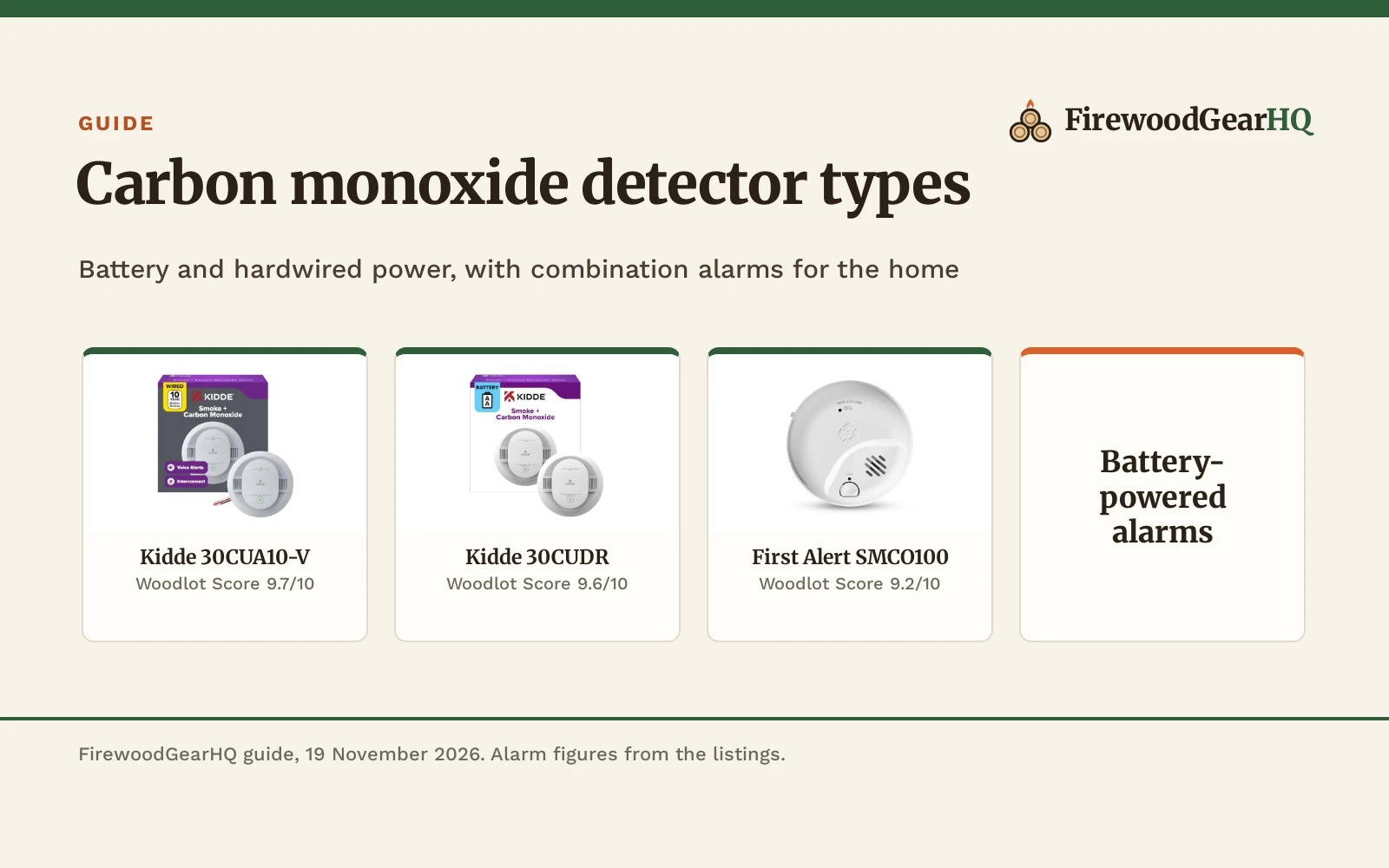
The strongest single unit here. It plugs into a 120V outlet with AA battery backup, sends real-time alerts through the Kidde app over 2.4 GHz Wi-Fi, and watches indoor air quality, humidity and TVOC levels with a digital display. Its low-level carbon monoxide alerts start at 30 to 70 ppm, with a separate pattern at 70 ppm, and it sounds an 85 dB alarm. It carries UL 2034 5th Edition, is ETL Listed, and includes a 10-year limited warranty. At 0.43 lb, it is a compact plug-in unit for a room near the stove.
HEIMAN Smart CO Detectors, 3-Pack with WiFi Gateway
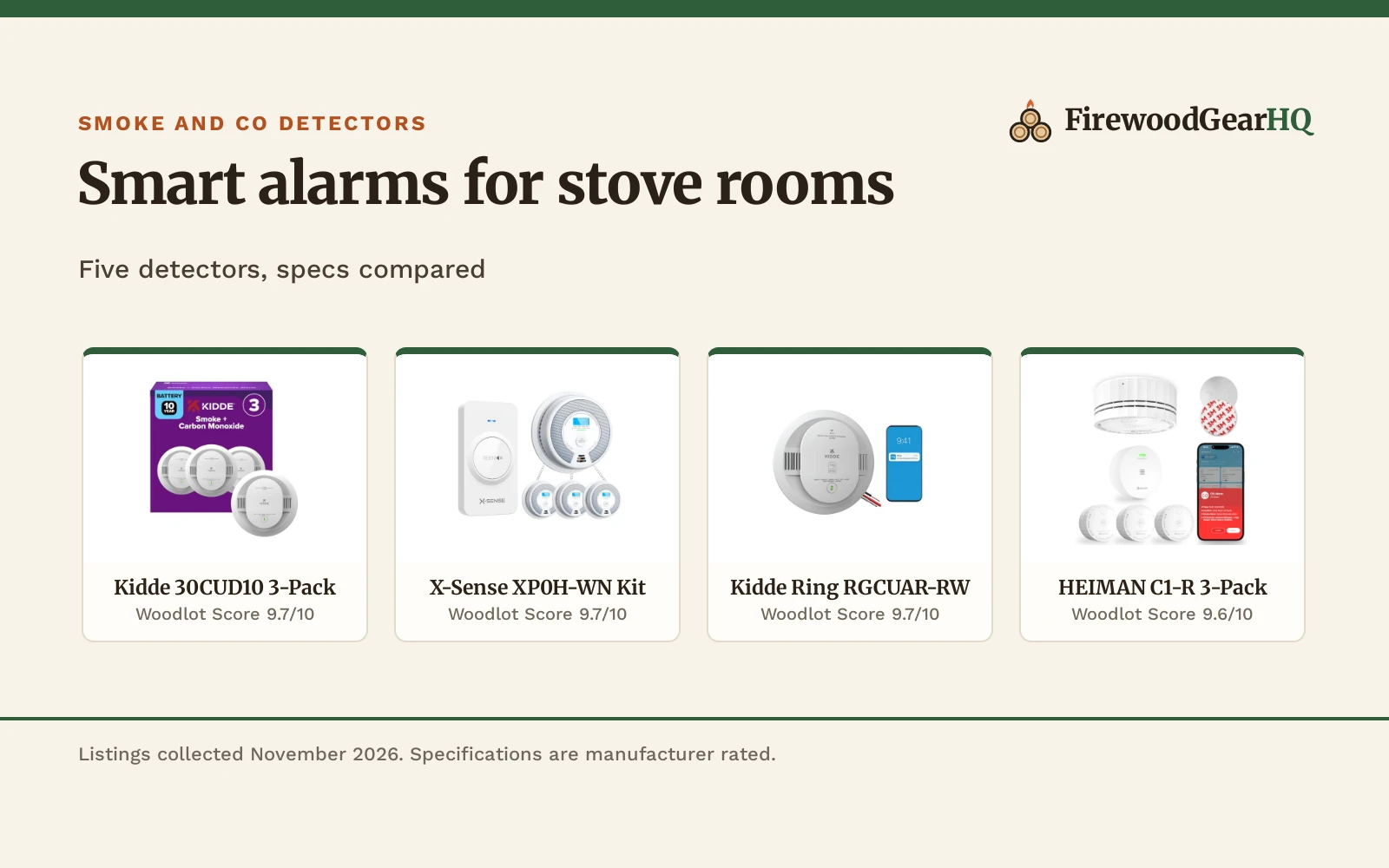
The whole-home smart pick. Three detectors link to a gateway that pushes real-time app alerts to your phone, and all three sound at once within 656 ft (200 m). The app shows battery and alarm logs and silences nuisance alerts remotely. Each unit carries UL 2034 5th Edition and CSFM certification, a FIGARO TGS5141 sensor with 10-year accuracy, and a UL94 V-0 housing. The gateway works with Home Assistant, IFTTT and SmartThings, and the set is battery-operated with no wiring. Each detector weighs 0.22 lb.
Kidde Smart Smoke Detector with Ring
The combination pick. It senses smoke and carbon monoxide, sends real-time Ring app notifications with no subscription required, and uses wireless interconnect so every Kidde alarm in the home sounds together. It has voice alerts and works with Alexa. It runs on 2-AA alkaline batteries, included, and carries UL 217 and FCC standards with a 10-year limited warranty. At 5 in across, it suits a hallway or living room ceiling.
HEIMAN Carbon Monoxide Detectors, 2-Pack
The simple standard pick. Two battery-powered detectors with a 10-year battery and a 10-year product life, an 85 dB alarm with a flashing LED, and UL 2034 5th Edition plus CSFM approval. The Figaro sensor watches for carbon monoxide build-up, and the unit gives a low battery chirp and an end-of-life warning. The UL94 V-0 flame-retardant housing measures 2.75 x 2.75 x 1.45 in and mounts on a wall or ceiling or sits on a desktop. It is the pick for a house that wants alarms with no app to set up.
FAQ: wood, fire and gear
Do I need a smart carbon monoxide detector if I already have a standard one?
A standard detector sounds its alarm in the room, which covers a house where someone is usually home. A smart detector adds phone alerts when you are away, and linked alarms sound together across the house. If you are often away from home, the phone alerts are the reason to switch.
Where should I put a carbon monoxide detector near a wood stove?
The HEIMAN 2-pack mounts on a wall or ceiling or sits on a desktop, and the Kidde plug-in model sits in a 120V outlet. Put a detector in the room with the stove and near the bedrooms.
How long does a carbon monoxide detector last?
Three of the detectors in this guide carry a 10-year limited warranty, and the HEIMAN standard model states a 10-year product life and a 10-year battery, with an end-of-life warning. Replace a unit when the end-of-life warning sounds.
Do smart detectors work during a power outage?
Battery-operated detectors keep sounding on battery power, and the plug-in Kidde model carries two AA backup batteries for coverage during power outages.
What is the difference between UL 2034 and UL 217?
UL 2034 5th Edition is the listing for carbon monoxide alarms, and UL 217 is the listing for smoke alarms. The Kidde Ring model in this guide carries UL 217 and senses smoke and carbon monoxide, while the other three carry UL 2034 5th Edition.
More firewood guides
See the best carbon monoxide detectors, the carbon monoxide detector vs smoke detector, the plug-in vs battery carbon monoxide alarm and the best smart smoke and carbon monoxide detectors. For the stove itself, see the best wood stove for heating a house and the wood stove accessories list, or browse the stove accessories hub.