How Does Wood Pellet Grill Work: Parts, Heat and Smoke
A wood pellet grill feeds compressed wood pellets from a hopper into a firepot, where a fan and a digital controller hold the cooking temperature while the pellets add smoke flavor.

On this page
Top picks at a glance
As an Amazon Associate I earn from qualifying purchases.
- 1
 Weber® Smoque™ 22‑Inch Pellet Smoker9.6/10View on Amazon
- 2
 DAMNISS Wood Pellet Grill & Smoker 8-in-1 Pellet Grill with9.5/10View on Amazon
How does wood pellet grill work? In short, it burns small compressed wood pellets in a firepot, and a powered auger, a fan and a digital controller do the tending for you. You fill the hopper with pellets, set the temperature, and the grill feeds pellets into the fire, blows air across the flame and holds the heat while the pellets add smoke flavor. The sections below walk through each part in order, then the temperatures, the pellets and the questions most buyers ask.
FirewoodGearHQ earns a small commission if you buy through links on this page. The price you pay stays the same. Read our affiliate disclosure.
The quick answer
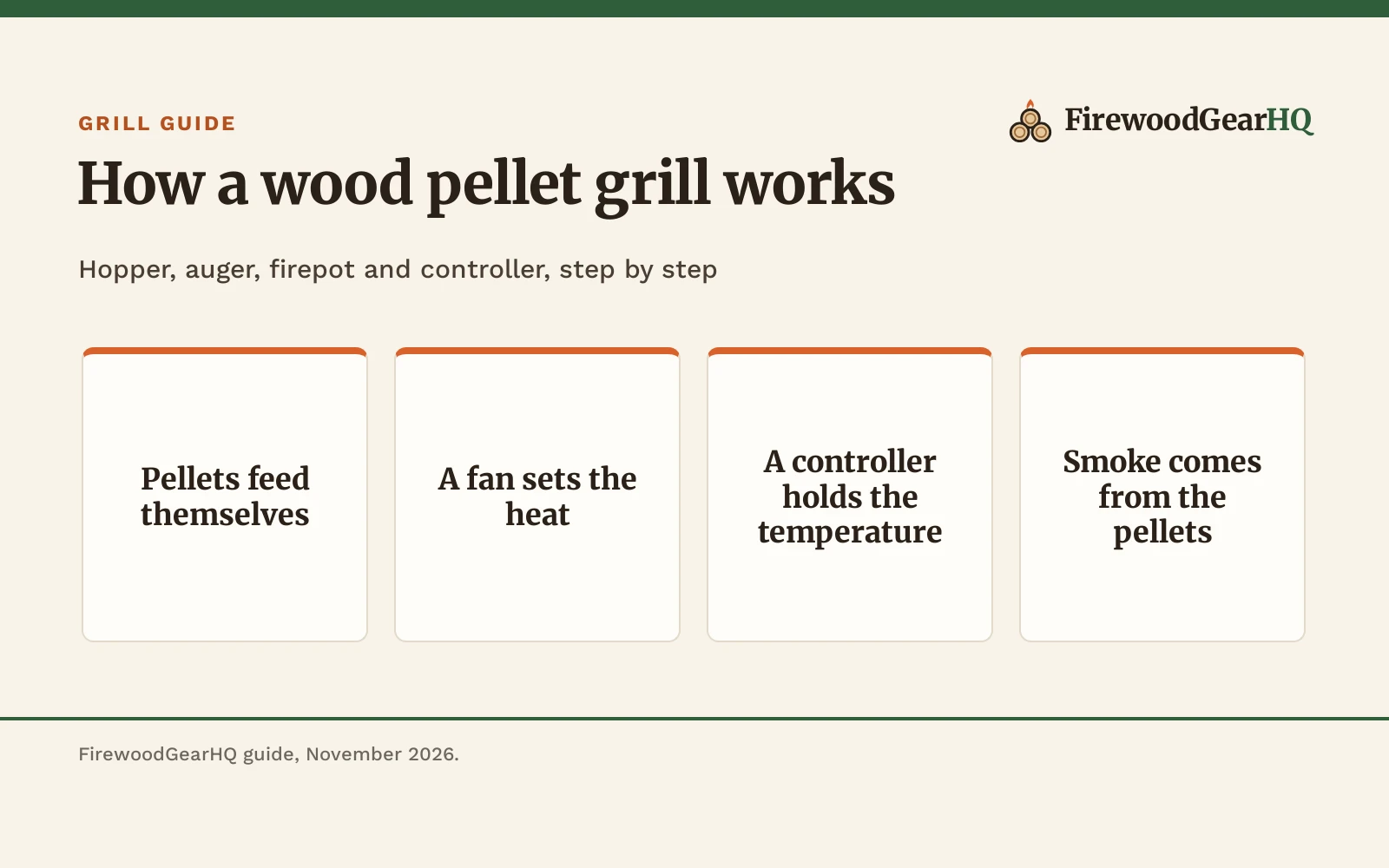
A pellet grill is a wood-fired cooker with electric help. Pellets sit in a hopper. An auger carries them into a firepot, where an igniter lights them. A fan blows air across the fire, and a digital controller reads the temperature and feeds more pellets or pauses the feed to hold the heat you set. Smoke from the burning pellets flavors the food while it cooks.
How does wood pellet grill work: step by step
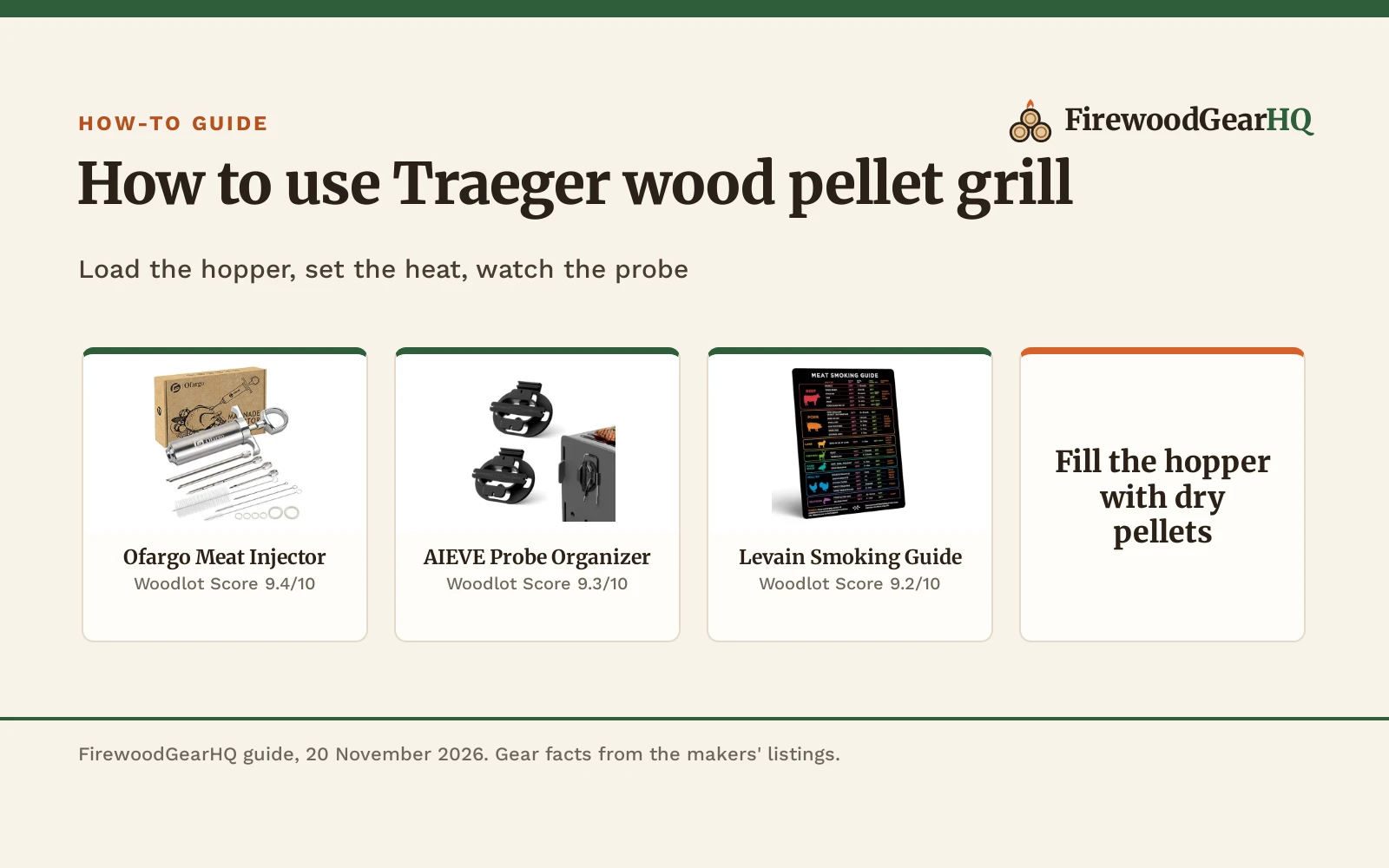
Fill the hopper
Pellets pour into the hopper, the box on the side of the grill that holds the fuel. The grill draws pellets from the hopper as needed during the cook. Keep the pellets dry: damp pellets swell and jam the auger.
The auger feeds the firepot
A screw-shaped auger turns slowly and carries pellets from the hopper into the firepot, the small cup where the fire burns. The controller sets how fast the auger turns: faster for more heat, slower for less. The Weber listing states its Rapid React PID heats up fast and regains temperature when the lid opens, which is the controller and the fan working together to recover heat.
The igniter lights the pellets
An igniter rod heats the pellets in the firepot until they catch. Once the fire is lit, the igniter switches off and the pellets keep burning on their own, fed by the auger and the fan.
The fan and the controller hold the temperature
A fan blows air into the firepot, and the controller watches the temperature inside the grill. When the temperature drops, the controller feeds more pellets and the fan pushes more air. When the temperature climbs past the setting, the feed slows. The Z GRILLS listing states digital temperature control that spreads heat evenly across the cooking surface, and the DAMNISS listing states PID intelligent temperature control that maintains a stable temperature through the cook.
Smoke flavors the food
The smoke comes from the pellets themselves: compressed hardwood that burns and gives off smoke as it cooks. The Weber listing states a SmokeBoost setting that maintains ideal temperatures for deep smoky flavor, and a SmoqueVent system that circulates smoke for flavor and browning. More smoke comes at low heat and less at high heat: that is why pellet grills smoke best low and slow, and sear at the top of the range.
Sizes and temperatures from the listings
The listings in this guide show the range of sizes a pellet grill comes in. The Weber Smoque (on Amazon) is a 22-inch grill that weighs 102.0 pounds and measures 20.4 inches by 38.8 inches by 44.5 inches, with a top temperature of 500°F. The Z GRILLS tabletop (on Amazon) model offers 202 sq inches of cooking area, measures 25.0 inches by 20.0 inches by 13.0 inches, weighs 40.0 pounds and runs from 180° to 375° F and higher. The DAMNISS grill (on Amazon) offers 456 sq in of grilling space, measures 24.0 inches by 45.5 inches by 36.5 inches and runs from 180 to 450 F.
Those figures show the shape of the choice: a tabletop grill with 202 sq inches suits a small household or a campsite, while a 456 sq in grill suits larger groups and more dishes at once. The Weber listing states 2 integrated food probe ports with 2 food probes included, so the cook can watch the food temperature without lifting the lid. The DAMNISS listing states the package includes a rain cover but does not include meat probes.
Warranties differ too. The Weber listing states 5 years on the cook box and all components not covered below, and 3 years on electrical components. The Z GRILLS listing states 3-year quality assurance. The DAMNISS listing states no warranty term.
Pellets and fuel
Pellet grills burn wood pellets: small cylinders of compressed hardwood sawdust. The DAMNISS listing states its grill uses premium wood pellets for a robust, smoky flavor. Use pellets made for pellet grills and smokers, and keep them dry in a sealed bin between cooks. Damp pellets crumble, swell and jam the auger, and they burn with less heat and more ash.
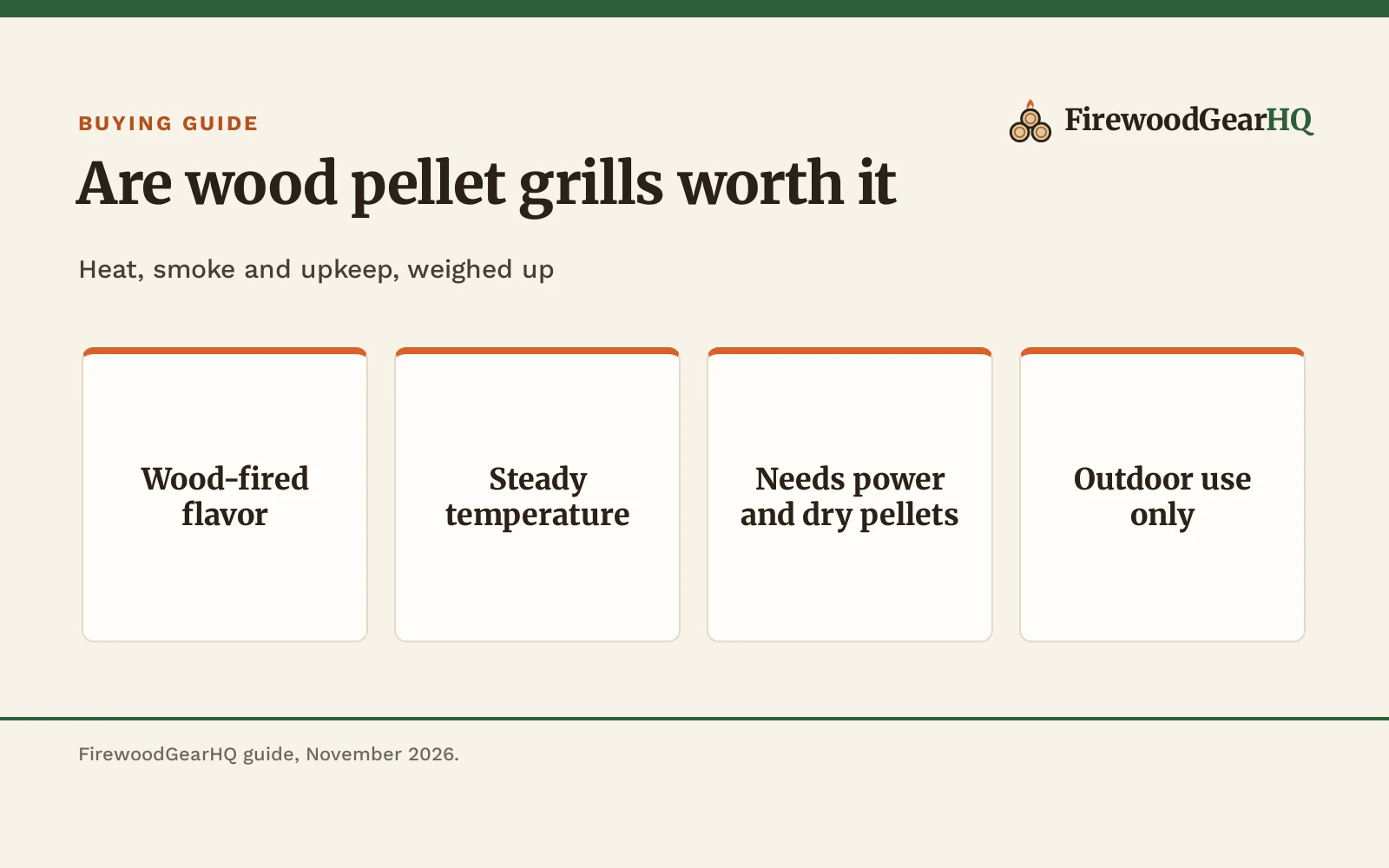
What a pellet grill does well, and what it does not
A pellet grill does the tending for you: set the temperature and it holds it, with smoke flavor built in. The Z GRILLS and DAMNISS listings state 8-in-1 versatility: grill, smoke, bake, roast, sear, braise, barbecue and char-grill. That range is the point of the design: a cooker that smokes ribs low and sears a steak at the top of its range.
What it does not do is run without power. The auger, the fan, the igniter and the controller all need electricity, so a pellet grill needs an outlet or a power source at the campsite. It also needs pellets on hand: no pellets, no fire. And the smoke flavor, while real, is lighter than the smoke from a stick-burner or an offset smoker, because the pellets burn so efficiently.
FAQ: wood, fire and gear
Do pellet grills need electricity?
Yes. The auger, the fan, the igniter and the digital controller all run on power. The listings in this guide state digital control, PID temperature control and electrical components in the warranty, which all point to a grill that plugs in. Plan for an outlet where you cook.
Do wood pellet grills produce smoke?
Yes. The pellets are compressed hardwood, and the smoke they give off flavors the food as it cooks. The Weber listing states a SmokeBoost setting for deep smoky flavor and a SmoqueVent system that circulates smoke for flavor and browning. At high heat the grill burns cleaner and makes less smoke; at low heat it makes more.
Can you sear on a pellet grill?
Yes, at the top of the temperature range. The Weber listing states a top temperature of 500°F, the DAMNISS listing states a range of 180 to 450 F with searing among its functions, and the Z GRILLS listing states a range of 180° to 375° F and higher, with searing among its 8 functions. Set the grill to the top of its range and let it come up to heat before the food goes on.
What pellets do you use in a pellet grill?
Use wood pellets made for pellet grills and smokers. The DAMNISS listing states its grill uses premium wood pellets for a robust, smoky flavor. Do not use heating pellets or pellets with additives: the grill is a cooker, and the pellets are the fuel and the flavor. See the heating pellets vs BBQ pellets comparison before stocking up.
How much cooking space do you need?
It depends on how many people you cook for. The Z GRILLS tabletop model offers 202 sq inches of cooking area, which the listing frames for small families, apartment dwellers, campers and solo grillers. The DAMNISS grill offers 456 sq in, which the listing frames for large groups or multiple dishes at once. Match the cooking area to the crowd, not to the size of the grill.
More firewood guides
See the wood-fired cooking hub, how to use a pellet smoker, best wood pellets for smoker, best pellet storage bins and how to clean a pellet smoker.