Are Wood Pellet Grills Worth It? Buyer’s Guide
How wood pellet grills cook, what they need, what they cost to run and who they suit, so you can decide before you buy.

On this page
Top picks at a glance
As an Amazon Associate I earn from qualifying purchases.
- 1
 Kipiea 600D Heavy Duty Grill Cover for Traeger Pro 22 & 5759.7/10View on Amazon
- 2
 Z GRILLS 600D Wood Pellet BBQ Grill9.7/10View on Amazon
- 3
 Pellet Smoker with Cover9.6/10View on Amazon
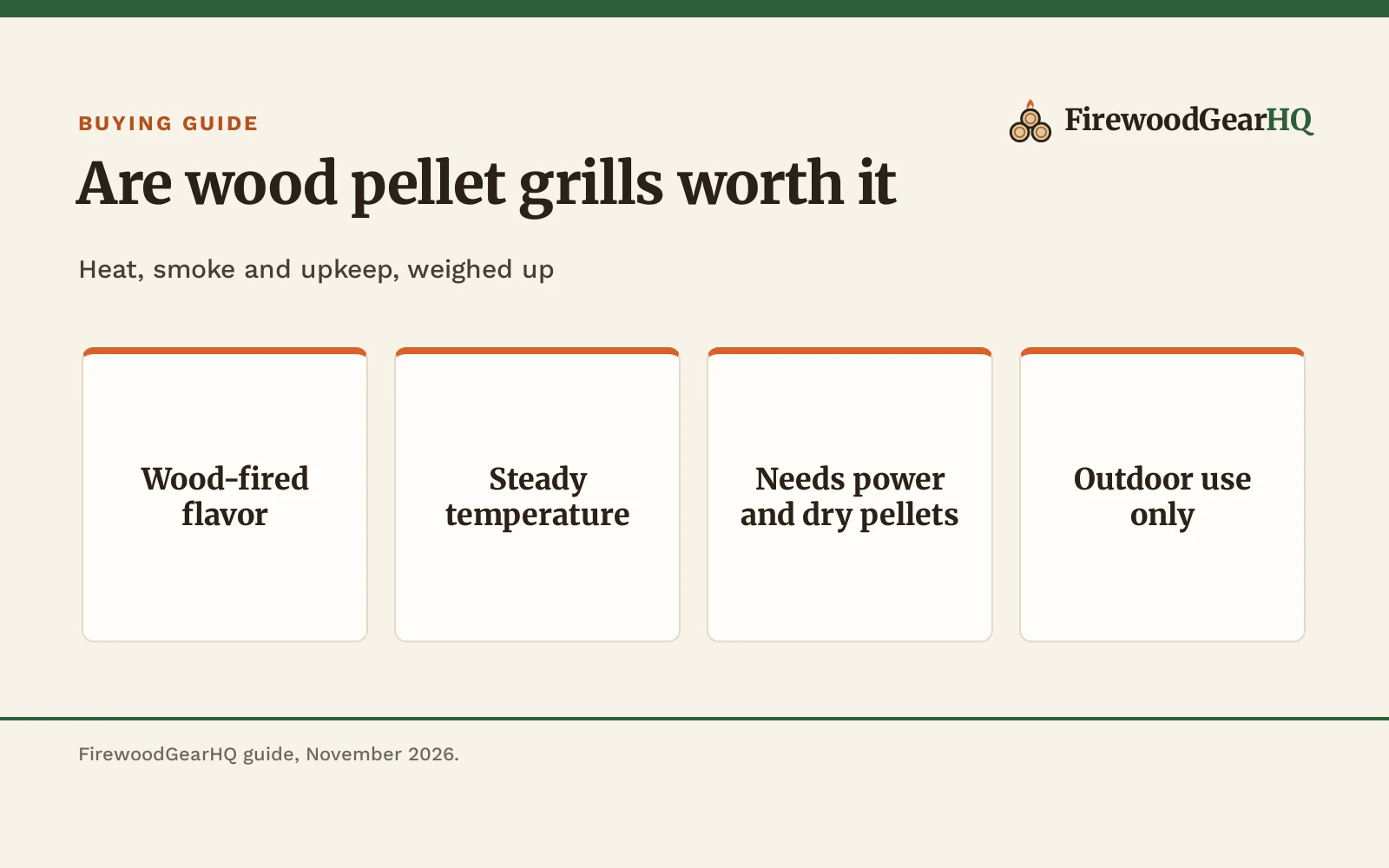
Fall is the season for long cooks outdoors, with the woodpile stacked and the smoker earning its keep on weekends. Are wood pellet grills worth it? For most backyard cooks who want wood-fired flavor without tending a live fire, yes: a pellet grill holds its temperature on its own, burns compressed wood pellets and handles low-and-slow smoking as well as everyday grilling. They are worth less if you have no power outlet near the cooking spot, no dry place to store pellets or no patience for cleaning ash out of the fire pot.
FirewoodGearHQ earns a small commission if you buy through links on this page. The price you pay stays the same. Read our affiliate disclosure.
The quick answer
A pellet grill is worth it when you cook outdoors often and want steady heat with wood smoke and little tending. It is a poor fit when you grill far from power, want a hard sear over open flame or expect the deep smoke of a stick burner. If you already own a gas grill for weeknights and a charcoal grill for weekends, a pellet grill adds slow smoking and hands-off roasting more than it replaces either grill.
How a pellet grill works
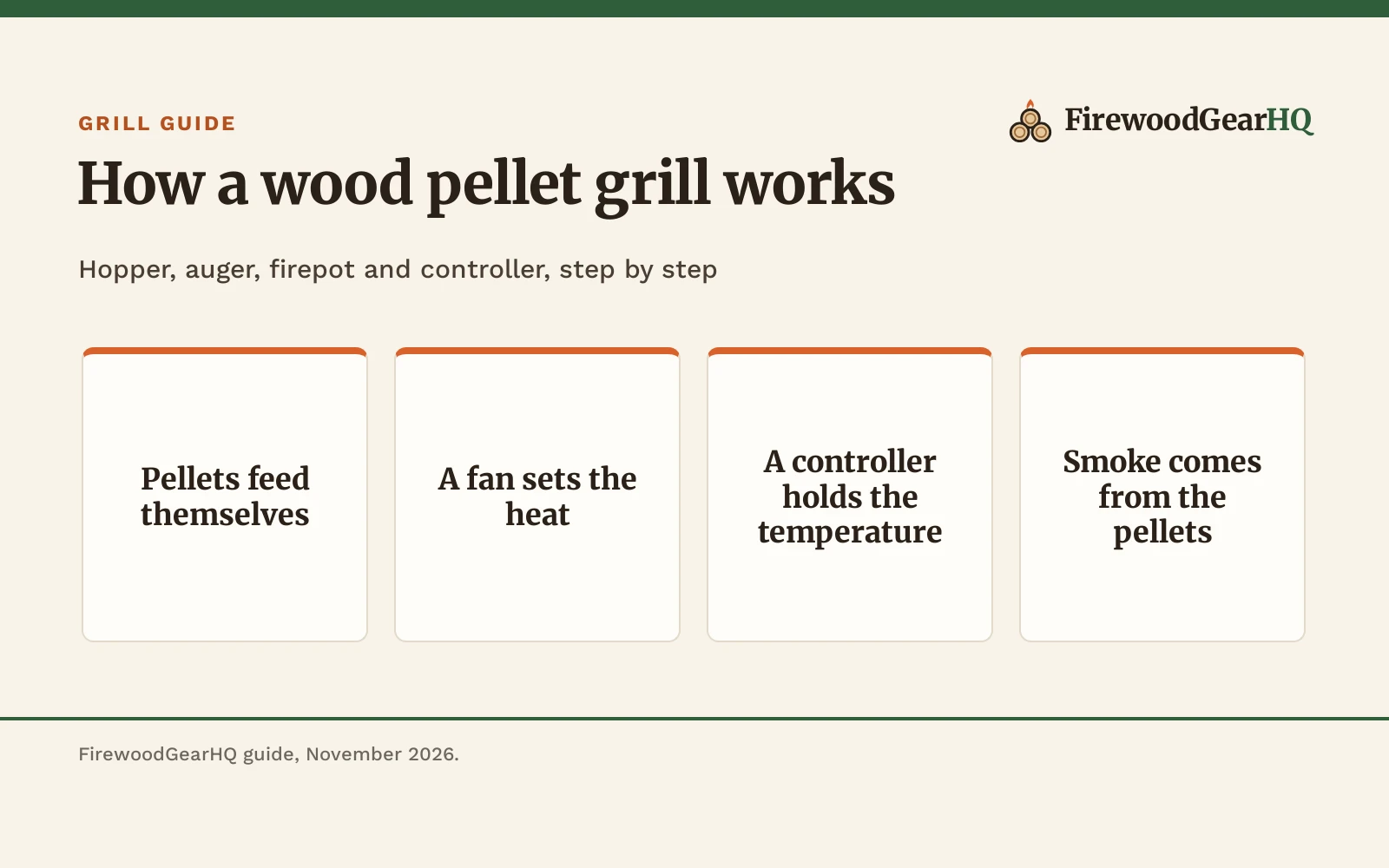
A pellet grill burns small cylinders of compressed sawdust, fed from a hopper by an auger into a fire pot. A fan feeds air to the fire, and a controller reads the cooking temperature and speeds up or slows down the auger to hold it. A drip tray sits above the fire pot to catch grease and spread heat, and a chimney or vent lets smoke out. You load pellets, set the temperature on the controller, and the grill does the rest, adding pellets as the fire needs them. When the cook is done, the grill runs a shutdown cycle that burns down the pellets left in the fire pot and cools the grill, so the fire does not smolder back toward the hopper.
What pellet grills do well
Wood-fired flavor without tending a fire
Pellets are wood, so the smoke tastes like wood. Apple, cherry, hickory, maple and oak pellets each lend their own character to meat, and switching pellets is as simple as emptying the hopper and pouring in a new bag. You get smoke flavor on a weeknight cook without building and nursing a charcoal fire.
Steady temperature
The controller is the whole point of a pellet grill. Set the temperature and the auger and fan hold it while you prep sides or sit with guests. That steadiness is what makes long smokes, roasts and even baking possible on a grill.
Smoking and grilling from the same cooker
The same cooker covers low-and-slow brisket, pork shoulder and ribs, plus burgers, chicken and vegetables at grilling heat. That range means the same cooker can handle a whole cookout menu, from the long smoke that starts in the morning to the quick grill at dinner.
Easy startup
There is no chimney starter, no lighter fluid and no waiting on coals to ash over. Fill the hopper, switch the grill on, set the temperature and wait for it to come up to heat. That ease is what gets a pellet grill used on busy evenings when a charcoal fire feels like too much work.
What they cost you
Pellets and running costs
Pellets are the running cost, sold by the bag at hardware and grocery stores and online. A long smoke eats through pellets faster than a quick grill, and cold or windy weather makes the grill burn more to hold heat. Buying pellets in bulk lowers the cost per bag, and keeping them dry stretches each bag further. Plan for pellets as part of the grill, not as an afterthought, and check what a bag costs near you before you commit.
Power and placement
A pellet grill needs power for the auger, fan, controller and igniter. That means a weather-safe outlet within reach of the cord, or a long extension cord run with care. No outlet means no pellet grill, which rules out remote campsites and far corners of the yard. Plan the spot before you buy, and keep the grill where the cord does not cross a walkway.
Cleaning and upkeep
Ash builds up in the fire pot and grease collects in the drip tray and bucket, so a pellet grill needs regular cleaning. Scoop ash out of the fire pot before it chokes the fire, scrape the drip tray and empty the grease bucket before grease causes flare-ups or stale flavors. Pellets left in the hopper absorb damp and swell, which jams the auger, so store pellets in a dry bin indoors and empty the hopper between long gaps in use.
Where pellet grills fall short
Searing
Most pellet grills top out at grilling heat rather than the fierce direct heat that gives a steak a hard crust. You can still cook a steak on a pellet grill, and a hot cast iron pan or a gas grill finishes it for the crust. If searing is your main event, a pellet grill on its own will leave you wanting.
Smoke flavor vs a stick burner
Pellet smoke is milder than the smoke from an offset smoker burning splits. Pellets burn clean and efficient, which is good for steady heat and bad for heavy smoke. Cooks who want deep smoke often add a smoke tube or run the grill at its lowest smoking setting for the early part of the cook.
Moving parts and repairs
An auger, a fan, an igniter and a controller are moving and electric parts, and each part can fail. Charcoal and gas grills have fewer parts to break. When the auger or fan fails mid-cook, the fire dies, so keep the maker manual handy and know where spares come from before you need them.
Weather and moisture
Rain and damp are the enemy of pellets. Wet pellets swell, crumble and jam the auger, and a grill left uncovered in a storm can take on water in the hopper. A cover helps, and a roof over the cooking spot helps more. Never store pellets outside in an open bag.
Where to put a pellet grill
Pellet grills are outdoor-only. Set the grill away from walls and overhangs, never in a garage or a tent, and keep smoke and carbon monoxide alarms in the house nearby. Charcoal, gas and pellet grills all make carbon monoxide, which has no smell and can build up fast in a closed space. Give the grill clear space on all sides and keep it away from anything that burns.
Are wood pellet grills worth it for you?
Buy a pellet grill if you cook outdoors often, like smoked food and want steady heat without tending a fire. Skip it if you grill far from power, live for a hard sear, or already own a smoker you love. A pellet grill shines as the main outdoor cooker for a household that grills through the week and smokes on weekends, and it gathers dust for a cook who only grills now and then.
FAQ: wood, fire and gear
Do pellet grills need electricity?
Yes. The auger, fan, controller and igniter all run on power, so a pellet grill needs an outlet nearby. Without power it cannot feed pellets or hold temperature, which is why pellet grills stay in the yard rather than going to a remote campsite.
Can a pellet grill sear a steak?
It can cook a steak, but a hard sear over open flame is not its strength. A hot cast iron pan or a gas grill finishes steaks for the crust. If searing matters most to you, choose a model with a direct-flame sear zone or finish steaks on a hotter grill.
Do pellet grills make real smoke flavor?
Yes, and the flavor comes from real wood pellets. It is milder than the smoke from an offset smoker burning splits, because pellets burn clean. For more smoke, run the grill at its lowest smoking setting early in the cook or add a smoke tube filled with pellets.
Can I leave a pellet grill outside?
Yes, with a cover and a dry hopper. Rain in the hopper swells pellets and jams the auger, so keep the grill covered between cooks and store pellets indoors in a sealed bin. A roof over the cooking spot is the best protection.
How often should I clean a pellet grill?
Clean the fire pot and drip tray after every few cooks, and empty the grease bucket before it fills. Ash left in the fire pot can choke the fire, and stale grease can flare up and give food an off flavor. A quick vacuum of the fire pot and a scrape of the tray keep the grill cooking clean.
More firewood guides
See the wood-fired cooking hub, then compare the charcoal grill vs pellet grill and the pellet smoker vs charcoal smoker. For fuel, read charcoal vs wood pellets for smoking and the who makes the best pellet grill guide. Keep pellets dry with the wood pellet storage ideas guide, and compare smokers in the best pellet smokers and the best grill thermometers.