How to Dispose of Wood Stove Ashes Safely: A Step-by-Step Guide
How to dispose of wood stove ashes safely using a covered metal bucket, outdoor cooling precautions, fire safety steps and clean garden repurposing ideas.
 By FirewoodGearHQ Editorial
Updated October 9, 2026
By FirewoodGearHQ Editorial
Updated October 9, 2026
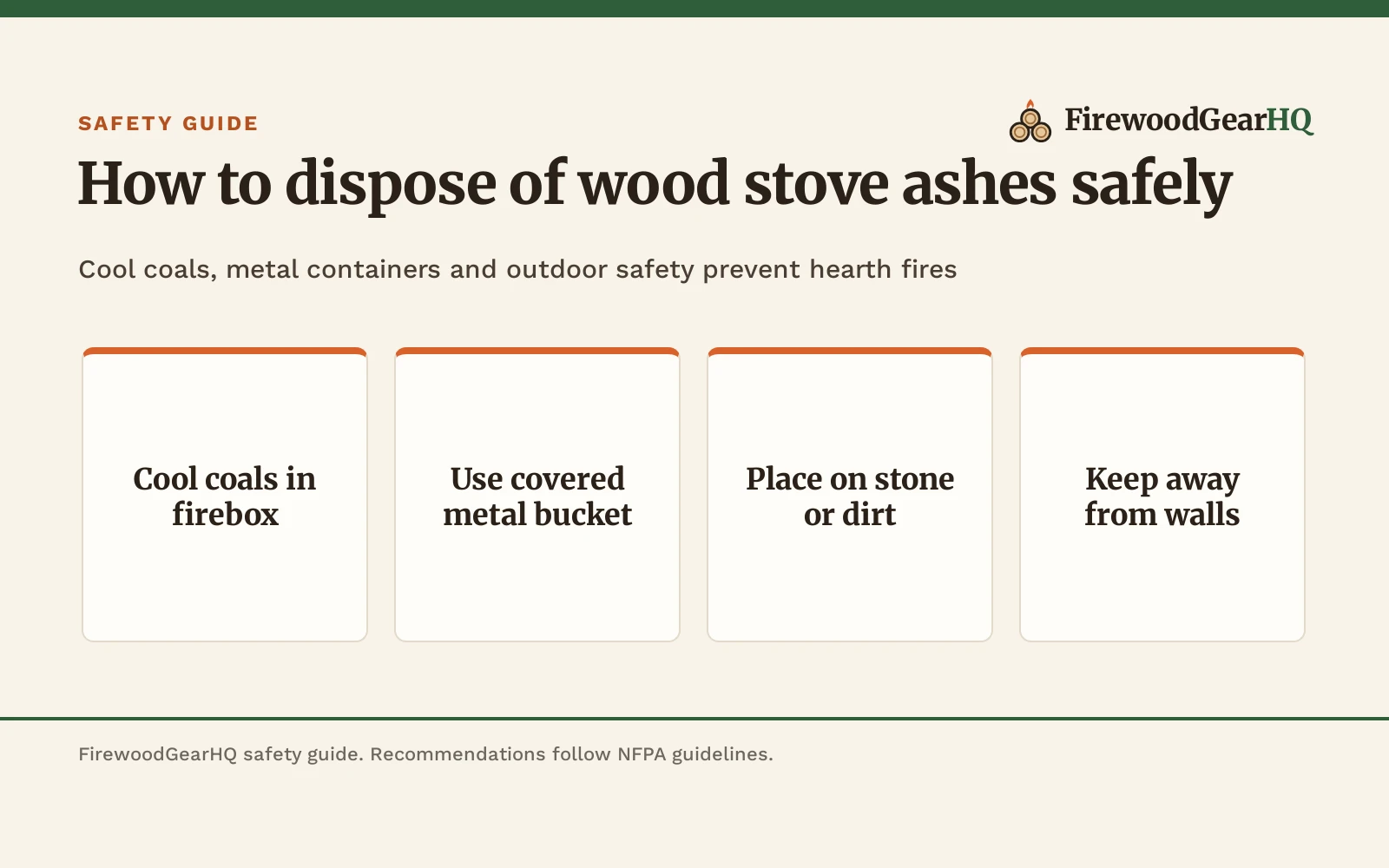
Learning how to dispose of wood stove ashes safely protects your home from hidden embers that can smolder for days. Scoop ashes into a dedicated metal bucket with a tight lid using a metal shovel, move it immediately outdoors onto non-combustible ground like dirt or stone, and let it cool completely before disposal. Never use plastic, paper, or cardboard, and keep the container clear of wooden decks and walls.
FirewoodGearHQ earns a commission when you buy through links on our product pages, at no extra cost to you. Read our affiliate disclosure.
The quick answer
To dispose of wood stove ashes safely, let the fire burn out and allow coals to settle. Use a metal shovel to transfer ashes into a heavy-gauge metal container with a tight lid. Carry the bucket outdoors immediately and set it on a non-combustible surface such as bare ground, concrete, or stone pavers, well away from wooden walls and decks. Keep the lid sealed until all coals and ash are completely cold to the touch. Cold ashes can then be scattered on garden beds, added to compost, spread on icy paths for traction, or bagged for trash collection.
Ash container specifications comparison
| Brand and Model | Stated Capacity | Material | Stated Features |
|---|---|---|---|
| Plow & Hearth (11693-BK) | 3 gallons | 28-gauge galvanized iron | Double-layer steel bottom, wooden grip handle |
| Nouva | 5.15 gallons (19.5 L) | Galvanized iron (4.3 pounds) | Raised bottom, metal shovel |
| AMAGABELI GARDEN & HOME | 5 gallons | Steel (2.5 pounds) | Flexible metal handle, wide opening |
| Poofzy | 2.6 gallons | Metal | Tight lid, shovel, broom, gloves |
| Smedley & York (MINI) | 1.5 gallons | Galvanized iron | Tool pocket, steel handle with wooden grip |
| BRIAN & DANY | 1.3 gallons | Metal | Raised bottom, load capacity up to 25.6 pounds |
Ash containers vary from compact 1.3-gallon pails to large 5.15-gallon cans. While makers highlight double bottoms or raised bases to reduce direct heat contact, every metal bucket conducts heat and must sit outdoors on non-combustible ground. Tight lids keep drafts from scattering cinders. For dedicated containers, see our guide to the best ash bucket for fireplace and stove use.
How to dispose of wood stove ashes safely step by step
Let the fire die down and coals settle
Allow the fire to go out completely before cleaning. Opening stove doors while logs burn disrupts draft and spills soot onto the hearth. Letting coals burn down to gray ash reduces unburned debris and cools the firebox. Keep the door latched until you are ready to scoop.
Scoop ash gently with a metal shovel
Use a sturdy metal shovel from a fireplace tools set with wood rack to lift ash slowly without creating dust clouds. Do not scrape down to bare firebricks. Leaving a shallow bed of ash insulates the firebox floor and helps start your next fire.
Transfer directly into a dedicated metal bucket
Keep the bucket right by the firebox door so the shovel travels a short distance. Never use cardboard boxes, paper bags, or plastic pails, which can ignite or melt instantly. Deposit each scoop low in the metal container to avoid flyaway dust.
Secure the tight-fitting metal lid
Put the metal lid on firmly right after scooping. A snug lid cuts off oxygen to extinguish buried embers, blocks wind gusts, and stops accidental spills during transport. Ensure the lid sits securely on the bucket rim before moving it.
Move the container outdoors to non-combustible ground
Carry the container outside immediately. Do not leave warm ash buckets on wooden floors, rugs, or porches, as metal conducts heat downward. Place the bucket on bare dirt, gravel, concrete, or stone pavers, well clear of wooden walls, vinyl siding, and dry leaves.
Allow the ashes to sit until completely cold
Ash insulates heat, keeping buried coals hot for days. Keep the bucket outside with the lid closed until the contents are completely cold. Check the bucket exterior by hand and inspect inside with a metal poker before final disposal.
Safe ways to repurpose or discard cold wood stove ashes
Once ashes are thoroughly cold, several safe disposal options are available:
- Garden soil amendment: Alkaline hardwood ash supplies potassium and calcium, acting like lime to raise soil pH. Spread it thinly over acidic beds, but avoid acid-loving plants like blueberries and azaleas.
- Compost pile enrichment: Dust small amounts of cold ash into compost to supply minerals and balance acidic materials without spiking pH.
- Walkway traction: Cold ash scattered on icy steps and driveways provides gritty traction and absorbs sunlight to melt ice without corrosive salts.
- Household trash disposal: Cold ashes can go into household trash. Place them in a sealed trash bag and put it in your outdoor bin on pickup day.
The National Fire Protection Association (NFPA) recommends placing ashes in a metal container with a tight-fitting lid, setting the container on a non-combustible floor or outdoors on the ground well away from combustible materials, and keeping ashes sealed until all cinders are thoroughly cooled.
Mistakes that cause hearth and disposal fires
Most ash-related fires stem from simple disposal mistakes rather than stove malfunctions.
Dumping ashes into cardboard, paper, or plastic is the most dangerous error. Hidden embers can smolder unseen and quickly ignite combustible containers once air enters.
Leaving metal ash cans on wooden decks or floors is another hazard. Sustained heat transfer through metal can ignite dry wood underneath. Always place buckets on bare ground, stone, or concrete.
Never vacuum ashes with a household or shop vacuum. Fine ash ruins ordinary filters and blows dust into your home. Live embers can also ignite the filter and canister. To learn why standard vacuums fail, read our guide on what is an ash vacuum. For cold cleanouts, canister vacs in our review of the best ash vacuum for wood stoves capture fine dust safely.
Finally, avoid dumping ash outdoors on windy days or near dry grass and leaves, where stray sparks can ignite brush fires.
Fireplace ash disposal versus wood stove cleanout
While safety rules are the same, fireplace ash disposal differs from wood stove maintenance. Open fireplaces collect ash beneath grates where drafts easily scatter dust. Wood stoves feature airtight fireboxes with door gaskets for controlled airflow. See our guide on wood burning stove vs fireplace designs for key differences.
When running a wood stove, using the best wood stove fan circulates heat across the room, but cleanout safety remains essential. Burning seasoned hardwoods from our guide to the best wood for a wood stove yields fine ash with fewer unburned coals, while monitoring operating temperatures with the best wood stove thermometer keeps combustion clean. High-efficiency fireboxes in our guide to the best wood stove for heating a house burn wood thoroughly to minimize waste.
Wear eye protection and gloves for cutting, splitting and handling, follow every tool's manual, install stoves to code, and have the chimney inspected and cleaned every year. See EPA Burn Wise and NFPA heating safety. Read our Safety Disclaimer.
Frequently Asked Questions
How long should wood stove ashes cool before disposal?
Cool ashes until they are completely cold throughout the container. Because ash insulates heat, buried embers can stay hot for days. Keep the bucket sealed outdoors on dirt or stone until all heat is gone.
Can I put wood stove ashes in a plastic bucket or trash can?
No. Never use plastic buckets, plastic trash cans, cardboard boxes, or paper bags. Live cinders can melt plastic or ignite paper, starting structure fires. Always use a metal bucket with a tight lid.
Can I vacuum wood stove ashes with a household vacuum?
No. Standard vacuum filters cannot stop fine ash, which damages the motor and leaks into room air. Hot cinders can also ignite the vacuum. Use a fire-safe ash vacuum designed for hearth cleanup.
Where is the safest place to dump wood stove ashes?
Store cooling ashes outdoors on bare ground, gravel, or stone pavers, well clear of buildings and decks. Once completely cold, scatter them on garden beds or seal them in bags for municipal trash.
Are wood stove ashes good for garden soil and compost?
Yes, in moderation. Wood ash supplies potassium and calcium and raises soil pH. Avoid using it around acid-loving plants like blueberries and azaleas, and do not over-apply to alkaline soils.
Can hot embers hide inside cold-looking ash?
Yes. Ash traps heat and starves coals of oxygen until you disturb the bed. Fresh air can reignite dormant embers instantly, so always treat ash as hot until thoroughly cooled.
Related guides
Explore our hub of stove accessories, the best ash bucket for fireplace cleanout, and our explanation of what is an ash vacuum. For powered cleaning, see the best ash vacuum for wood stoves. Organize hearth tools with a fireplace tools set with wood rack, and monitor firebox temperatures with the best wood stove thermometer. Distribute heat efficiently using the best wood stove fan. Choosing wood or stoves? See our guide to the best wood for a wood stove, our comparison of wood burning stove vs fireplace designs, and top picks for the best wood stove for heating a house. Visit our main wood stoves guide for more operating advice.
About the author
The FirewoodGearHQ editorial team researches firewood and wood heating equipment from published specifications, ratings and warranty terms, and scores every pick the same way. We do not run our own product trials.