Steel Wedge vs Plastic Wedge: Which One Should You Buy?
Steel wedge vs plastic wedge: steel wedges split firewood, plastic wedges fell trees. Jobs, tools and safety for each.

On this page
Top picks at a glance
As an Amazon Associate we earn from qualifying purchases.
- 1
 Hooyman Splitting Wedge 5 Pound Log Splitter Tool with Heavy9.7/10View on Amazon
- 2
 Fiskars Splitting Axe XXL X279.6/10View on Amazon
- 3
 ESTWING Sure Split Wedge9.6/10View on Amazon
- 4
 Collins 4 lb. Forged Steel Diamond Splitting Wedge 7-inView on Amazon
- 5
 2 PCS 2 Sizes Diamond Wood Splitting WedgeView on Amazon
- 6
 Husqvarna Plastic Felling WedgeView on Amazon
- 7
 Fiskars 9.5" HelixPlus Splitting Wedge for Large LogsView on Amazon
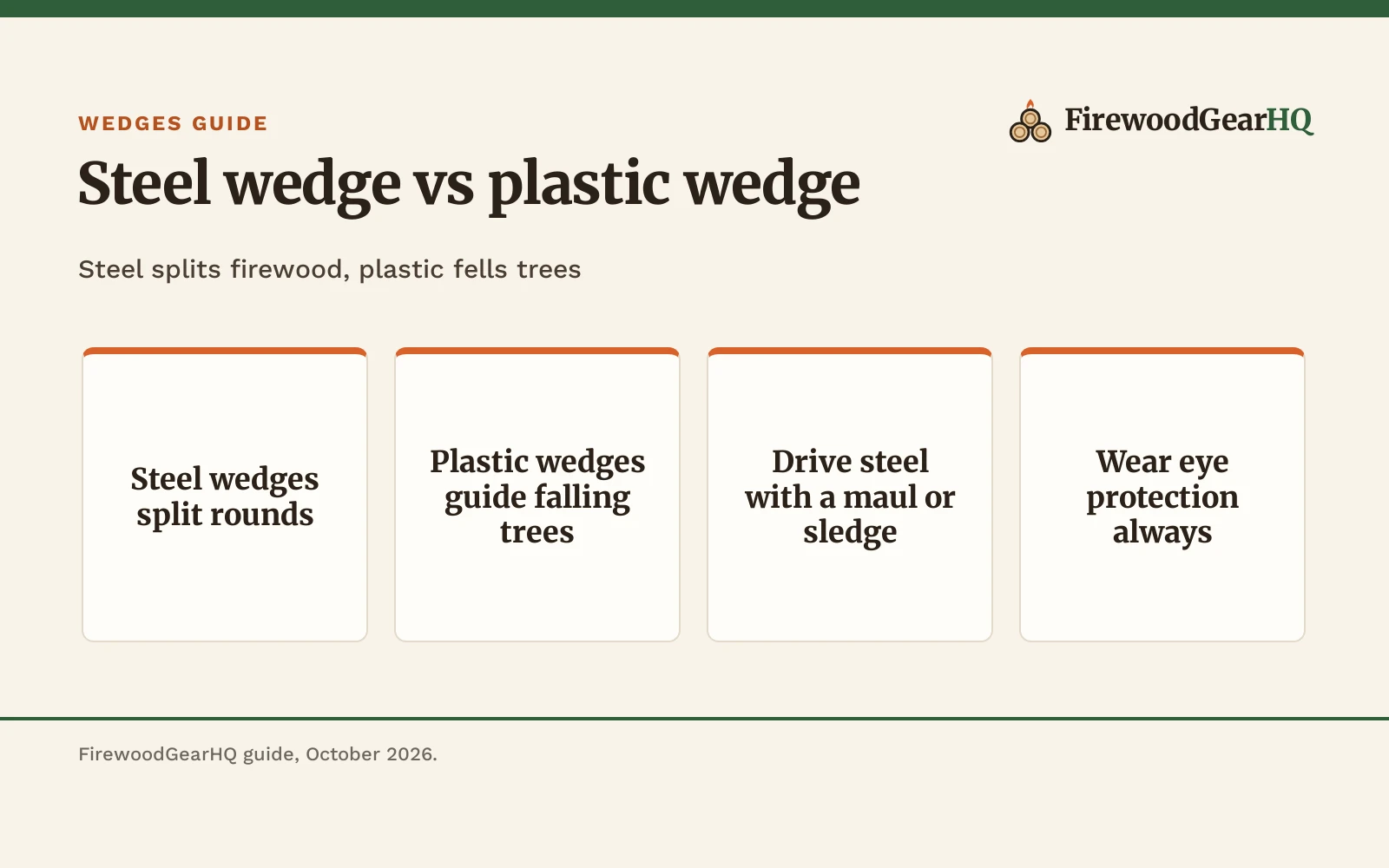
Steel wedge vs plastic wedge is really two different tools for two different jobs: the steel wedge splits firewood, driven into a round with a maul or sledge to force the wood apart, and the plastic wedge fells trees, driven into the back cut to lift the trunk and steer the fall. Buy the steel wedge for the splitting pile and the plastic wedge for the felling cut; neither does the other job well.
More options to compare
 Collins 4 lb. Forged Steel Diamond Splitting Wedge 7-inCheck price on Amazon
 2 PCS 2 Sizes Diamond Wood Splitting WedgeCheck price on Amazon
 Husqvarna Plastic Felling WedgeCheck price on Amazon
 Fiskars 9.5" HelixPlus Splitting Wedge for Large LogsCheck price on Amazon
FirewoodGearHQ may earn a small commission if you buy through links on this page. The price you pay stays the same. Read our affiliate disclosure.
The quick answer
If you split firewood by hand, you want the steel wedge: hardened steel, driven with a maul or sledgehammer, made to take repeated heavy blows and force rounds apart along the grain. If you fell trees with a chainsaw, you want the plastic wedge: lightweight polymer, driven into the felling cut to keep the kerf open, lift the tree and guide its direction. The steel wedge lives at the chopping block; the plastic wedge lives in the saw box. Many woodpiles need both, but for different days.
What the steel wedge does
The steel splitting wedge is a simple brute: a hardened steel wedge with a striking face on top and a sharp edge below. Set the edge in a check or crack on the end of the round, or start it in solid wood where the grain runs straight, and drive it with a splitting maul or sledgehammer. Each blow forces the wood apart along the grain until the round pops into halves. Steel wedges shine on knotty, twisted rounds that defeat an axe, because the wedge keeps driving where an axe bounces out.
Steel takes abuse by design. The striking face mushrooms slowly over seasons of use, and the edge can be dressed with a file when it dulls. A steel wedge can also rescue a stuck axe: drive the wedge into the kerf beside the buried axe head and the wood releases its grip. See how to use a splitting wedge for the full technique.
What the plastic wedge does
The plastic felling wedge works in the chainsaw cut, not on the chopping block. Once the back cut is underway, the wedge goes into the kerf behind the bar to keep the cut from pinching the bar, then deeper driving lifts the trunk and tips the tree toward the intended lay. Plastic is the material because the chainsaw may touch it: a plastic wedge that meets the chain gets chewed without wrecking the chain, where a steel wedge would destroy cutters and throw sparks.
Felling wedges come in shapes for the job: slim wedges for small trees and tight kerfs, broad wedges for big trunks and heavy lean. They stack, so driving one wedge partway and stacking another behind it adds lift. The plastic wedge is also the insurance policy in the back cut of most trees you fell, not just the leaners.
Steel wedge vs plastic wedge: the real difference
The difference is the job, not just the material. The steel wedge is a splitting tool driven by a maul at the woodpile; the plastic wedge is a felling aid driven in the chainsaw kerf in the woods. Steel is heavy, hard and very hard to damage; plastic is light, sacrificial and chain-safe. You can split a round with a steel wedge and a maul all afternoon. You cannot fell a tree safely with one, because the saw may find it, and steel against a moving chain is dangerous. You can carry plastic wedges in a pocket all day. You would not want to split firewood with one, because the maul would destroy it and the wood would barely notice.
When steel wins
Steel wins at the splitting pile. Knotty rounds, crotch wood, elm and other stringy species that laugh at an axe all yield to a driven steel wedge. Steel also wins as the rescue tool: a wedge beside a stuck axe or stuck maul head frees the tool without a second trip to the truck. Keep a steel wedge and a maul at the block through splitting season, and the tough rounds stop being a problem.
When plastic wins
Plastic wins wherever the chainsaw works. Every felling cut deserves a wedge in the back cut before the tree commits, and plastic is the only safe choice there. Plastic also wins on weight: a pocketful of wedges goes everywhere the saw goes, while steel stays at the block. For directional felling, stacking plastic wedges gives the lift that muscle alone cannot, steering the trunk off its lean and onto the lay.
Driving each wedge
Drive the steel wedge with a splitting maul or sledgehammer, striking the face squarely. Glancing blows mushroom the edge of the face and can send the wedge skittering, so set it firmly and swing straight. Drive the plastic wedge with a wooden or plastic mallet, or the poll of an axe used with care; a steel hammer face chews the plastic head. In the felling cut, drive the wedge as soon as the kerf will take it, before the tree settles onto the bar. See felling wedge vs splitting wedge for the head-to-head comparison.
Using them safely
Wedges store enormous force, so treat both with respect. Wear eye protection: steel on steel can throw chips, and splitting wood throws splinters. Wear gloves and boots, and keep bystanders, children and pets clear of the splitting area and the felling zone. Check the steel wedge face for mushrooming and dress it before the lip grows sharp. Check plastic wedges for cracks and retire chewed ones; a cracked wedge can shatter under the mallet. Never put any body part in line with the wedge, and never drive a wedge toward your own feet.
Frequently Asked Questions
Can I use a steel wedge for felling?
No. The chainsaw can hit it, which would destroy the chain and throw sparks. Felling wedges must be plastic, or another chain-safe material, so a touch of the chain only chews the wedge.
Can I use a plastic wedge for splitting firewood?
Not well. A maul would destroy the plastic head, and the wedge lacks the mass and hardness to force rounds apart. Use steel at the splitting block.
What do I hit a steel wedge with?
A splitting maul or sledgehammer, striking the face squarely. See splitting maul vs sledgehammer for the striking tools.
What do I hit a plastic wedge with?
A wooden or plastic mallet, or the poll of an axe used with care. A steel hammer face damages the plastic head.
How many wedges should I carry?
Carry more than one plastic wedge for felling, since wedges stack for extra lift and a spare covers a lost or chewed one. Keep a steel wedge at the splitting block, not in the saw box.
Do wedges wear out?
Steel wedges mushroom at the face and dull at the edge over seasons of use; dress the face and file the edge. Plastic wedges crack or get chewed by the chain; retire damaged ones.
Related guides
Also see wood splitting wedge vs axe and splitting axe vs felling axe.