Corded Electric vs Battery Chainsaw: Which One Should You Buy?
A direct comparison between corded electric and battery chainsaws covering power delivery, cutting mobility, runtime limits, maintenance, and woodpile safety.

On this page
Top picks at a glance
As an Amazon Associate we earn from qualifying purchases.
- 1
 CRAFTSMAN Electric Chainsaw9.6/10View on Amazon
- 2
 Greenworks 40V 16" Brushless Cordless Chainsaw9.7/10View on Amazon
- 3
 Oregon 2400W Corded Electric Chainsaw with 16" Guide Bar &9.6/10View on Amazon
- 4
 Tietoc Mini Chainsaw 6-Inch with 2 BatteriesView on Amazon
- 5
 SEESII 2-in-1 Electric Pole Saws for Tree TrimmingView on Amazon
- 6
 CEEPUY Mini Chainsaw CordlessView on Amazon
- 7
 WEN CP1216 Electric ChainsawView on Amazon
- 8
 WORX Electric ChainsawView on Amazon
- 9
 2-in-1 Electric Pole Saw for Tree Trimming For Branch CuttingView on Amazon
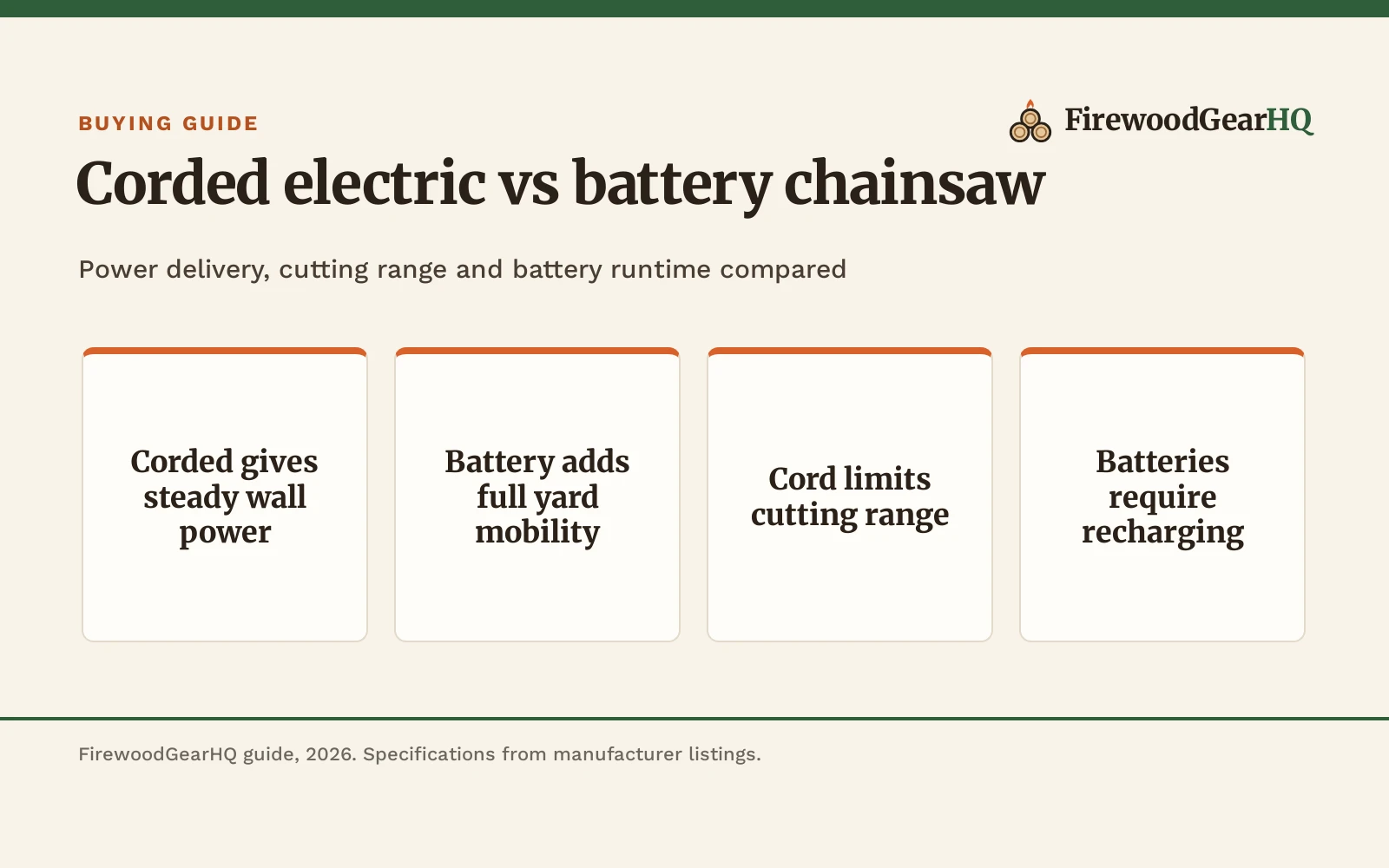
When autumn chill arrives and fallen limbs need clearing before winter, choosing the right saw keeps firewood chores moving. For homeowners comparing a corded electric vs battery chainsaw, the choice depends on where you cut and whether you need unlimited runtime or complete yard mobility. Corded electric chainsaws deliver steady cutting power beside an electrical outlet without battery drain. Battery chainsaws provide full cutting freedom across woodlots, trading continuous wall power for portable rechargeable packs.
More options to compare
 Tietoc Mini Chainsaw 6-Inch with 2 BatteriesCheck price on Amazon
 SEESII 2-in-1 Electric Pole Saws for Tree TrimmingCheck price on Amazon
 CEEPUY Mini Chainsaw CordlessCheck price on Amazon
 WEN CP1216 Electric ChainsawCheck price on Amazon
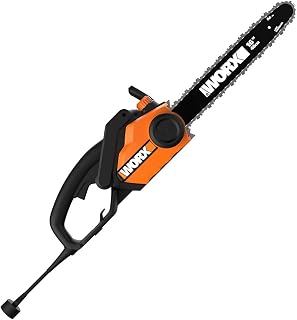 WORX Electric ChainsawCheck price on Amazon
 2-in-1 Electric Pole Saw for Tree Trimming For Branch CuttingCheck price on Amazon
FirewoodGearHQ may earn a small commission if you buy through links on this page. The price you pay stays the same. Read our affiliate disclosure.
The quick answer
A corded electric model suits firewood prep directly beside a woodshed, garage, or patio. Drawing continuous wall power, it runs without battery swaps or recharging pauses. The trade-off is the extension cord, which restricts working radius and requires careful handling around log rounds.
A battery chainsaw excels across larger acreage, along trail paths, and for storm cleanup beyond electrical outlets. Lithium-ion platforms provide rapid throttle response, push-button starting, and quiet operation without exhaust fumes. However, runtime is finite, making spare battery packs essential for large firewood piles.
Corded electric vs battery chainsaw comparison
Both tool styles replace traditional gas engines with clean, push-button electric motors, yet their power delivery methods shape how and where you can work. Review the primary differences below to match each saw design to your property layout and cutting habits.
| Feature | Corded Electric Chainsaw | Battery Chainsaw |
|---|---|---|
| Power source | Continuous wall power via extension cord | Removable rechargeable lithium-ion battery pack |
| Working radius | Confined to extension cord reach | Full mobility across the property |
| Cutting runtime | Continuous while plugged in | Limited by battery pack charge |
| Tool weight | Lighter chassis without battery mass | Heavier chassis due to battery pack |
| Maintenance routine | Bar oil reservoir and chain tension | Bar oil, chain tension, and battery charging |
| Starting mechanism | Safety lockout switch and trigger pull | Safety lockout switch and trigger pull |
| Ideal firewood task | Stationary bucking at the woodpile | Limbing, pruning, and remote bucking |
Power delivery and cutting performance
When bucking hardwood rounds into stove lengths, motor torque keeps the guide bar moving through dense grain. A corded electric chainsaw draws constant alternating current from household wiring, maintaining steady rotational speed without fading. For cutting beside an outdoor workshop or woodshed, constant current provides a reliable sawing pace until the woodpile is stacked.
Battery chainsaws rely on direct current from rechargeable lithium-ion cells. Modern cordless models often feature a brushless chainsaw motor, which adjusts output to match cutting resistance while reducing heat. Brushless tools provide fast chain speed and crisp throttle response. However, bucking thick logs draws heavy current and depletes charge faster than light limbing. For dedicated firewood cutting, compare top picks in our best electric chainsaw and best battery chainsaw for homeowners guides.
Mobility, reach, and extension cord demands
A battery chainsaw offers complete cutting freedom. You can hike into back acreage, buck fallen timber along a fence line, or clear storm blowdowns without managing cables or snagging plugs. This mobility makes cordless tools ideal for property maintenance beyond electrical outlets.
A corded saw remains tethered to a receptacle. Managing an extension cord around split logs and brush requires caution so the moving chain never nicks the cable. Wire gauge also affects motor health, as undersized leads cause voltage drops that overheat motors.
For example, Seeklyze lists an indoor extension cord at 16 gauge, 6 feet in length, rated for 13 amps, 125 volts, and 1625 watts with a 3 prong plug, explicitly noting it is not water resistant and designed for indoor spaces. Outdoor chainsaw use requires outdoor-rated cords built for weather exposure and continuous current draw. Woodcutters using corded saws must select heavy outdoor cords with sufficient conductor thickness to maintain voltage at the tool.
Tool weight, balance, and operator fatigue
Processing firewood involves repetitive lifting, where tool balance directly influences operator fatigue and cutting control.
Corded chainsaws are lighter because they carry no onboard energy cells. Without battery or fuel weight, the chassis stays nimble, easing shoulder strain when bucking firewood rounds at a sawbuck for extended periods.
Battery chainsaws carry the additional mass of a lithium pack. Higher capacity batteries add noticeable weight, shifting tool balance. While balanced handles distribute this weight well, working through large logs demands steady posture to manage forearm fatigue.
Maintenance, storage, and winter operation
Both electric styles avoid carburetor maintenance, spark plug changes, and fuel mixing. However, cutting gear still requires regular upkeep.
Both designs use automatic oilers for the guide bar and chain. Keep the reservoir filled with clean lubricant, checking our guide to chainsaw oil for battery chainsaws. Sharp cutting teeth are equally critical, as dull cutters strain motors and waste energy. Review how often to sharpen a chainsaw chain and keep cutters tuned with a chainsaw sharpener.
Winter brings specific battery precautions. Lithium-ion packs lose temporary capacity in subfreezing conditions, and unheated winter storage can harm cell life. Store batteries and chargers indoors, carrying warm packs to the woodpile when ready to work. Corded models store safely in cold sheds without cell degradation.
Woodpile safety and protective gear
Electric and cordless chainsaws start instantly with full motor torque, requiring proper protective gear for every job.
Equip yourself according to Occupational Safety and Health Administration (OSHA) logging eTool guidance. Wear heavy-duty chainsaw chaps for cut-retardant leg protection, a forestry helmet with face screen and hearing muffs, safety-toe boots, and cut-resistant chainsaw gloves. Review our complete chainsaw safety gear checklist before cutting.
Kickback occurs when the upper tip of the guide bar contacts wood, driving the saw back toward the operator. Verify that the chain brake engages crisply, maintain a firm two-handed grip, and never cut above chest height. Never cut firewood alone on a woodlot; keep a partner within contact range. For tree felling, hire certified arborists rather than taking unnecessary risks.
Wear cut-resistant chaps, a helmet with face screen and hearing protection, gloves and sturdy boots. Know where the kickback zone is (the upper tip of the bar), keep the chain brake working and the chain sharp, and never cut alone in the woods. Felling trees is hazardous work: hire a professional for large, leaning or storm-damaged trees, especially near buildings or power lines. See OSHA logging safety for chain saw operators. Read our Safety Disclaimer.
Frequently Asked Questions
Can a corded electric chainsaw cut hardwood firewood logs?
Yes. Steady wall current allows corded saws to cut seasoned oak, maple, and ash. Keep the chain sharp and let chain speed guide the cut rather than forcing the bar into the wood.
How long will a battery chainsaw run while bucking firewood?
Runtime depends on battery capacity and wood diameter. Continuous cuts through dense hardwood consume power faster than light pruning. Rotating spare batteries through a charger maintains steady workflow.
Can I use any standard household extension cord with an electric chainsaw?
No. Indoor cords lack exterior moisture protection. Seeklyze lists an indoor cord at 16 gauge, 6 feet, 13 amps, 125 volts, and 1625 watts with a 3 prong plug, specifying it is not water resistant. Outdoor chainsaw cutting requires outdoor-rated cords with proper weather insulation and conductor thickness.
Do electric and battery chainsaws require bar and chain oil?
Yes. The guide bar and cutting chain generate friction that requires lubrication. Both saw styles include an oil reservoir that feeds lubricant to the bar rails. Running without bar oil damages the bar and chain quickly.
Which saw is better for bucking firewood at a woodpile?
A corded saw is ideal for stationary bucking beside a shed or garage where an outlet is nearby, providing unlimited runtime. For woodpiles located across property boundaries, a battery chainsaw provides needed mobility.
Related guides
Compare additional options in our electric chainsaw vs gas and gas vs battery chainsaws guides. Review bar sizes and powerheads in our overview of chainsaw types. When selecting saws for fuel prep, see our recommendations in the best chainsaws for firewood, our roundup of the best electric chainsaws, and our guide to the best battery chainsaws for homeowners. For cutting technique, review how to buck firewood safely with a chainsaw and verify gear with our chainsaw safety gear checklist.