Best Splitting Maul for Large Logs (2026)
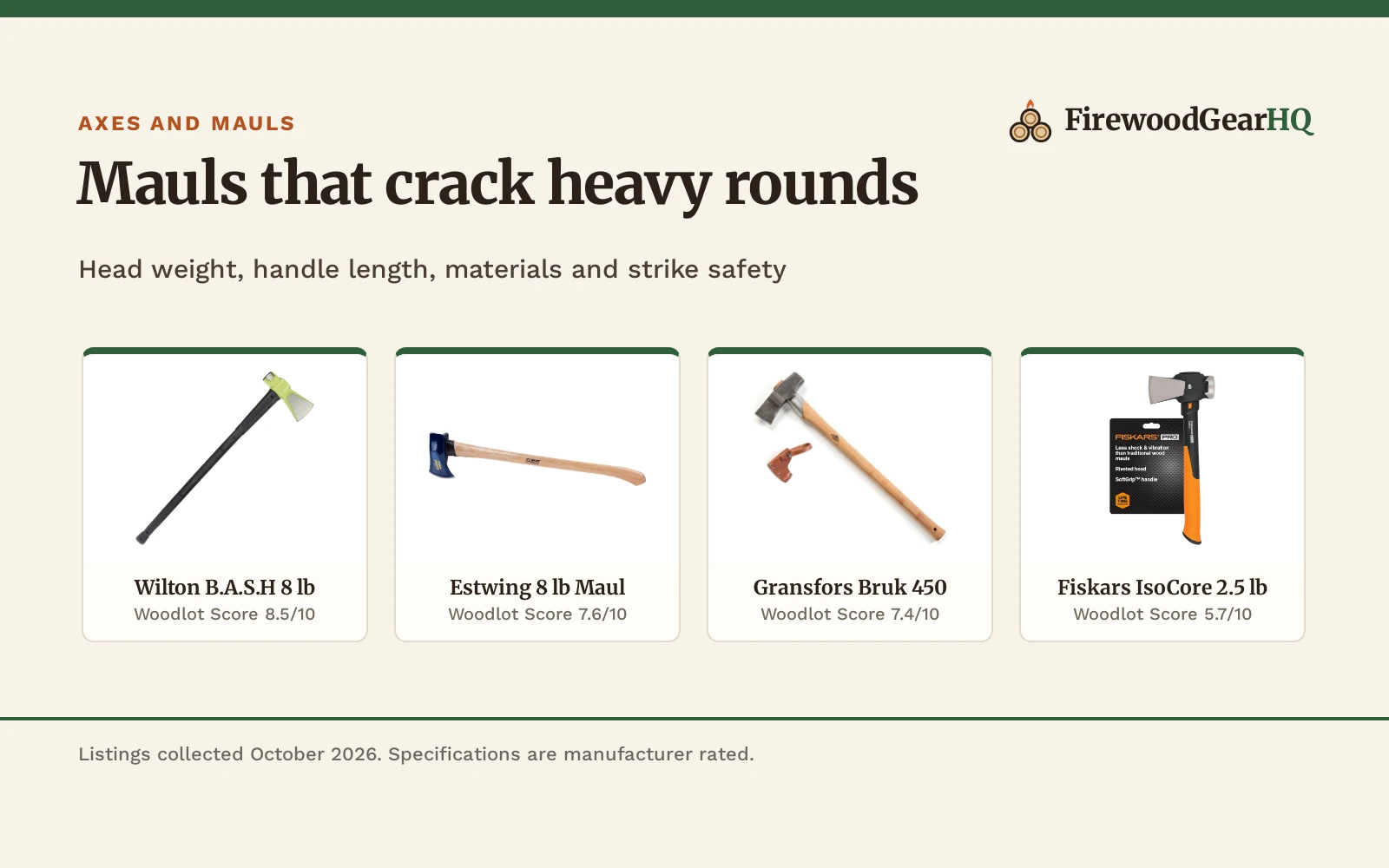
Four splitting mauls compared by head weight, handle length, materials, safety features and warranty, from an 8 lb heavy-duty maul to a light kindling tool.

On this page
Top picks at a glance
As an Amazon Associate we earn from qualifying purchases.
- 1
 Best OverallWilton B.A.S.H 8 lb9.7/10View on Amazon
- 2
 Best Traditional MaulEstwing 8 lb Maul9.6/10View on Amazon
- 3
 Best Swedish ForgedGransfors Bruk 4509.5/10View on Amazon
- 4
 Best for KindlingFiskars IsoCore 2.5 lb9.2/10View on Amazon
- 5
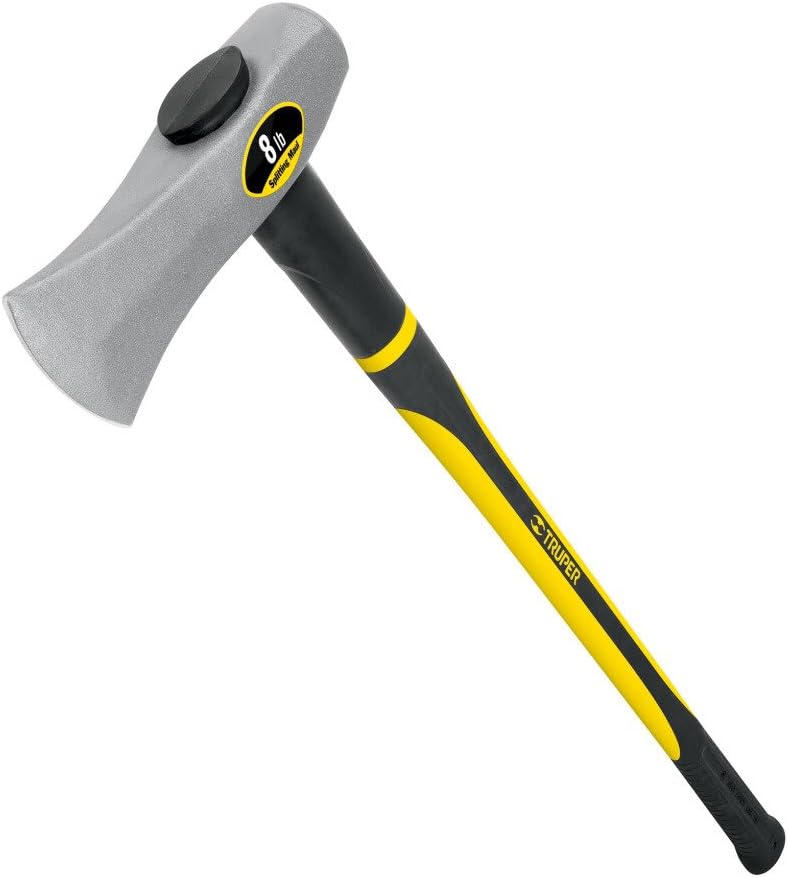 Truper 30958 8-Pound Splitting MaulView on Amazon
- 6
 Estwing 6 lb Wood Splitting Maul with 36-Inch Hickory HandleView on Amazon
- 7
 Channellock Maul AxeView on Amazon
- 8
 Estwing 6 lb Wood Splitting Maul with 36-Inch FiberglassView on Amazon
- 9
 ESTWING Fireside Friend Splitting MaulView on Amazon
- 10
 36" Splitting AxeView on Amazon
When fall firewood prep shifts from bucking fallen trees to splitting big rounds, a lightweight axe bounces right off stubborn grain. Splitting seasoned oak, knotty maple or oversized rounds calls for heavy downward momentum and a wide wedge that forces wood fibers apart on impact. This guide compares four tools to find the best splitting maul for large logs by the specs that matter at the chopping block: head weight, handle length, steel hardness, strike safety features and manufacturer warranty.
FirewoodGearHQ may earn a small commission if you buy through links on this page. The price you pay stays the same. Affiliate disclosure.
Quick picks
- Best Overall Wilton B.A.S.H 8 lb: 8 lb head on a 36 in steel core handle with a safety plate and a stated lifetime warranty. Check price on Amazon
- Best Traditional Maul Estwing 8 lb Maul: 8 lb forged head hardened to 50 to 55 HRC with a 36-inch hickory wood handle. Check price on Amazon
- Best Swedish Forged Gransfors Bruk 450: 7 lb total weight with a 31.50 inch handle, convex edge and a vegetable tanned leather sheath. Check price on Amazon
- Best for Kindling Fiskars IsoCore 2.5 lb: 2.5 lb head on a 14 in IsoCore shock-absorbing handle with a stated lifetime warranty. Check price on Amazon
The picks

Wilton B.A.S.H 36" Splitting Maul
An 8 lb drop-forged splitting maul with a 36 in steel core handle, safety plate, anti-vibe neck and a stated lifetime warranty.
Pros
- 8 lb drop-forged steel head hardened to 46 HRC for splitting large wood
- Steel core handle designed to eliminate breakage during overstrikes
- Safety plate fastens head to handle to prevent head dislodging
- Lifetime manufacturer warranty stated in the listing
Cons
- 10 pounds listed total weight requires strength and stamina over long splitting sessions
- Spec table lists 38 in length while title lists 36 in
- Spec table lists head weight as 3.63 kg while title lists 8 lb
- Steel core and vulcanized rubber handle cannot be replaced like traditional wood handles

Estwing 8 lb Wood Splitting Maul with 36-Inch
An 8 lb forged splitting maul with a 36-inch hickory wood handle, hardened to 50 to 55 HRC for heavy log splitting.
Pros
- 8 lb forged steel head provides heavy downward momentum for large logs
- Forged head hardened to 50 to 55 HRC for edge retention and impact durability
- 36-inch contoured hickory handle gives long reach and swing leverage
- Alloy steel blade with 7.95 in width for wedging apart tough wood fibers
Cons
- No warranty term is stated on this listing
- 9.5 pounds total listed weight is tiring during extended splitting
- Wood handle lacks built-in overstrike collar protection
- Listing attributes manufacturer as Groz rather than Estwing
Gransfors Bruk Splitting Maul 31.50 Inch Wood
A 7 lb Swedish-made splitting maul with a 31.50 inch wood handle, convex edge, included leather sheath and Axebook.
Pros
- Stated for splitting very thick and knotty chunks of wood
- Convex alloy steel edge with 6.3 centimeters blade length
- Protective vegetable tanned leather sheath included in the box
- Hand-forged Swedish tool shipped with an English language Axebook
Cons
- No warranty term is stated on this listing
- Head weight is not stated separately from total weight
- Weight differs between bullets (7 lbs) and spec table (3.58 kg)
- Spec table lists manufacturer as Drake Off Road Tools

Fiskars Pro IsoCore 2.5 lb Splitting Maul
A compact 2.5 lb maul on a 14 in IsoCore shock-absorbing handle with a chisel edge and a stated full lifetime warranty.
Pros
- IsoCore Shock Control System claims to transfer 2X less shock and vibration
- Inseparable riveted head design prevents head detachment
- Heat-treated alloy steel blade with rust-resistant coating
- Full lifetime warranty stated by the manufacturer
Cons
- Listing explicitly states it is designed for kindling and small logs, not large logs
- Spec table lists 6 pounds head weight and 22oz weight, contradicting 2.5 lb title
- Spec table lists wood handle despite IsoCore composite handle description
- 14 in handle lacks the length and leverage needed to split large diameter rounds
More options to compare
 Truper 30958 8-Pound Splitting MaulCheck price on Amazon
 Estwing 6 lb Wood Splitting Maul with 36-Inch Hickory HandleCheck price on Amazon
 Channellock Maul AxeCheck price on Amazon
 Estwing 6 lb Wood Splitting Maul with 36-Inch FiberglassCheck price on Amazon
 ESTWING Fireside Friend Splitting MaulCheck price on Amazon
 36" Splitting AxeCheck price on Amazon
Compare the picks
| Model | Woodlot Score | Head weight | Handle length | Handle material | Total weight (listed) | Warranty (stated) |
|---|---|---|---|---|---|---|
| Wilton B.A.S.H 8 lb | 9.7/10 | 8 lb | 36 in (38 in in spec table) | Steel core with rubber | 10 pounds | Lifetime |
| Estwing 8 lb Maul | 9.6/10 | 8 lb | 36 in | Hickory wood | 9.5 pounds | Not stated |
| Gransfors Bruk 450 | 9.5/10 | Not stated | 31.50 in | Wood | 7 lbs (3.58 kg in spec table) | Not stated |
| Fiskars IsoCore 2.5 lb | 9.2/10 | 2.5 lb (6 pounds in spec table) | 14 in (16in in spec table) | IsoCore (wood in spec table) | 3 pounds (22oz in spec table) | Full lifetime |
Specifications are manufacturer rated, collected 13 October 2026. Weights, dimensions and handle materials are as listed and reflect listing details. Wilton and Fiskars state a lifetime warranty.
How we scored them
Each maul is scored on performance, build, value, safety and warranty, using only what the listing publishes. The scoring weights are on our How We Pick page.
| Product | Woodlot Score | Perf. /35 | Build /25 | Value /25 | Safety /10 | Warranty /5 |
|---|---|---|---|---|---|---|
| Wilton B.A.S.H 8 lb | 9.7 | 32 | 24 | 20 | 7 | 3 |
| Estwing 8 lb Maul | 9.6 | 30 | 21 | 20 | 5 | 0 |
| Gransfors Bruk 450 | 9.5 | 29 | 22 | 18 | 5 | 0 |
| Fiskars IsoCore 2.5 lb | 9.2 | 16 | 18 | 15 | 5 | 3 |
Scores run from 9.2 to 9.8: each product’s point total is placed on that range, so more points always means a higher score.
Choosing the best splitting maul for large logs
Head weight and splitting force
Splitting large rounds requires enough head mass to drive through dense, stringy wood grain. An 8 lb head delivers heavy downward momentum, allowing gravity and swing speed to force apart stubborn rounds without wedging stuck. Lighter heads, such as a 2.5 lb tool, work well for kindling prep and small firewood but lack the mass required to crack large logs in a solid strike.
Handle length and swing leverage
A long handle provides greater swing speed, leverage and reach, which is critical when addressing large logs placed on a low chopping block. A 36-inch or 38 in handle gives tall splitters full extension and keeps the swing arc moving cleanly past the operator. A shorter 31.50 inch handle offers controlled swings in tighter woodlots, while a 14 in handle is strictly meant for one-handed kindling duty.
Handle materials: hickory wood versus steel core
Traditional wood splitting mauls rely on hickory handles because dense hickory absorbs impact vibration naturally and allows replacement if damaged. A metal handle splitting maul or steel-core design, like Wilton Unbreakable Handle Technology with vulcanized rubber, eliminates handle snapping during overstrikes and includes thick anti-vibe necks to dampen vibration. Composite handles, such as IsoCore shock control systems, also absorb impact but cannot be fitted with a traditional splitting maul replacement wooden handle.
Overstrike protection and strike safety
When splitting large rounds, missed strikes and overstrikes can impact the handle directly below the maul head. Built-in overstrike protection, steel reinforcement plates, or thick rubber collars keep the head firmly mounted and prevent handle splintering. Always wear safety glasses and steel-toe boots, and maintain a completely clear swing zone around the chopping block.
Splitting maul versus splitting axe
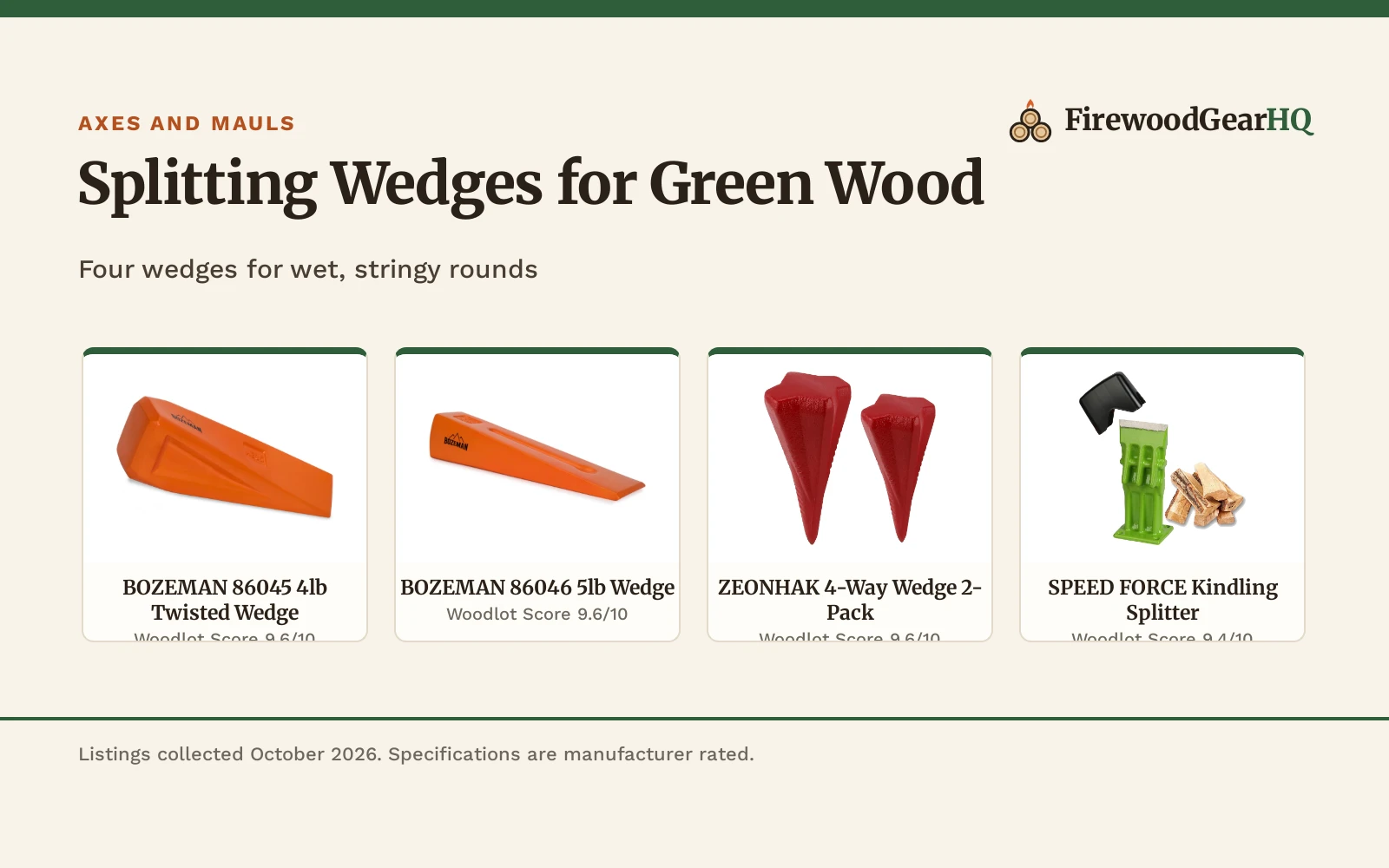
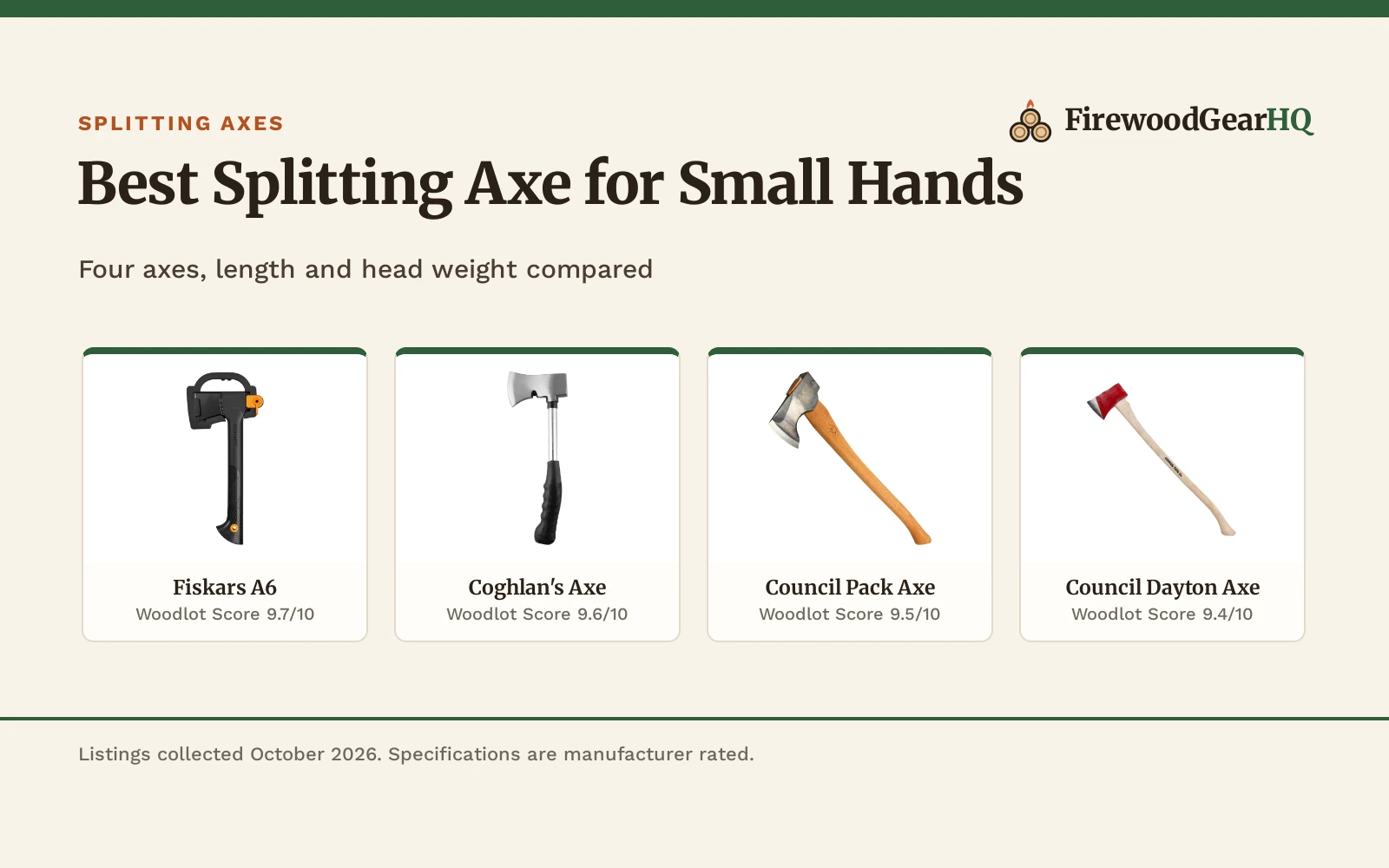
A splitting axe features a narrow, sharp blade designed to cut wood fibers on moderate-diameter logs. A splitting maul combines a broader, blunt wedge with heavy head weight to burst logs along natural growth rings. For oversized or knotty rounds, a wood splitting maul or a dedicated splitting wedge avoids getting stuck where a lighter axe would bind. Read our breakdown on splitting axe vs maul differences for more woodpile context.
Plan your annual woodpile needs before winter splitting begins: our firewood cord calculator helps estimate cord volume.
Turn a stack's length, height and depth into full and face cords, and estimate how much wood a winter takes.
Clear the swing area (overhead too), split on a solid chopping block at a comfortable height, keep your feet apart with the block in front of you, and wear eye protection and sturdy boots. Replace a cracked or loose handle before you swing again. Read our Safety Disclaimer.
Around the Woodpile
- Establish a clear swing zone around your chopping block, keeping bystanders, pets and hazards well away from the swing arc.
- Cover sharpened maul heads with a protective leather sheath or edge guard during storage and transport to prevent accidental contact.
- Check that the head remains firmly seated on the handle before swinging, looking for loose wedges, cracked wood or dislodged safety plates.
- Set large, knotty rounds on a broad, low stump rather than bare ground to protect the blade edge from hidden rocks and dirt.
Frequently Asked Questions
How to use splitting maul on large logs?
Position the log upright on a solid, low chopping block. Stand with a balanced stance, grip the handle firmly with both hands, and aim for existing natural cracks or the outer edges rather than the dead center of knot clusters. Let the downward momentum of the heavy head do the work rather than straining your shoulders.
How to swing a splitting maul?
Keep your feet planted wide and stable. Raise the maul overhead with your dominant hand near the head and non-dominant hand at the base, then slide your top hand down toward the base as you swing downward in a smooth, straight arc. Follow through cleanly while bending your knees so any miss strikes the block rather than your legs.
Can you sharpen a splitting maul?
Yes, a splitting maul can and should be touched up to remove burrs, chips and blunt edges. While a maul relies primarily on wedge angle and head weight rather than razor sharpness, a clean bevel helps the head bite into tough bark without glancing off.
How to sharpen a splitting maul?
Clamp the maul head firmly in a bench vise. Use a flat mill bastard file or an axe sharpening stone, working along the original factory edge profile from heel to toe. Avoid grinding away the thick convex shoulders that give the maul its splitting power.
What handle length is recommended for large logs?
A 36-inch handle is standard for splitting large logs on the ground or on a low chopping block. The longer length generates maximum centrifugal force and swing leverage while keeping the strike path safely away from your body on a follow-through.
Related guides
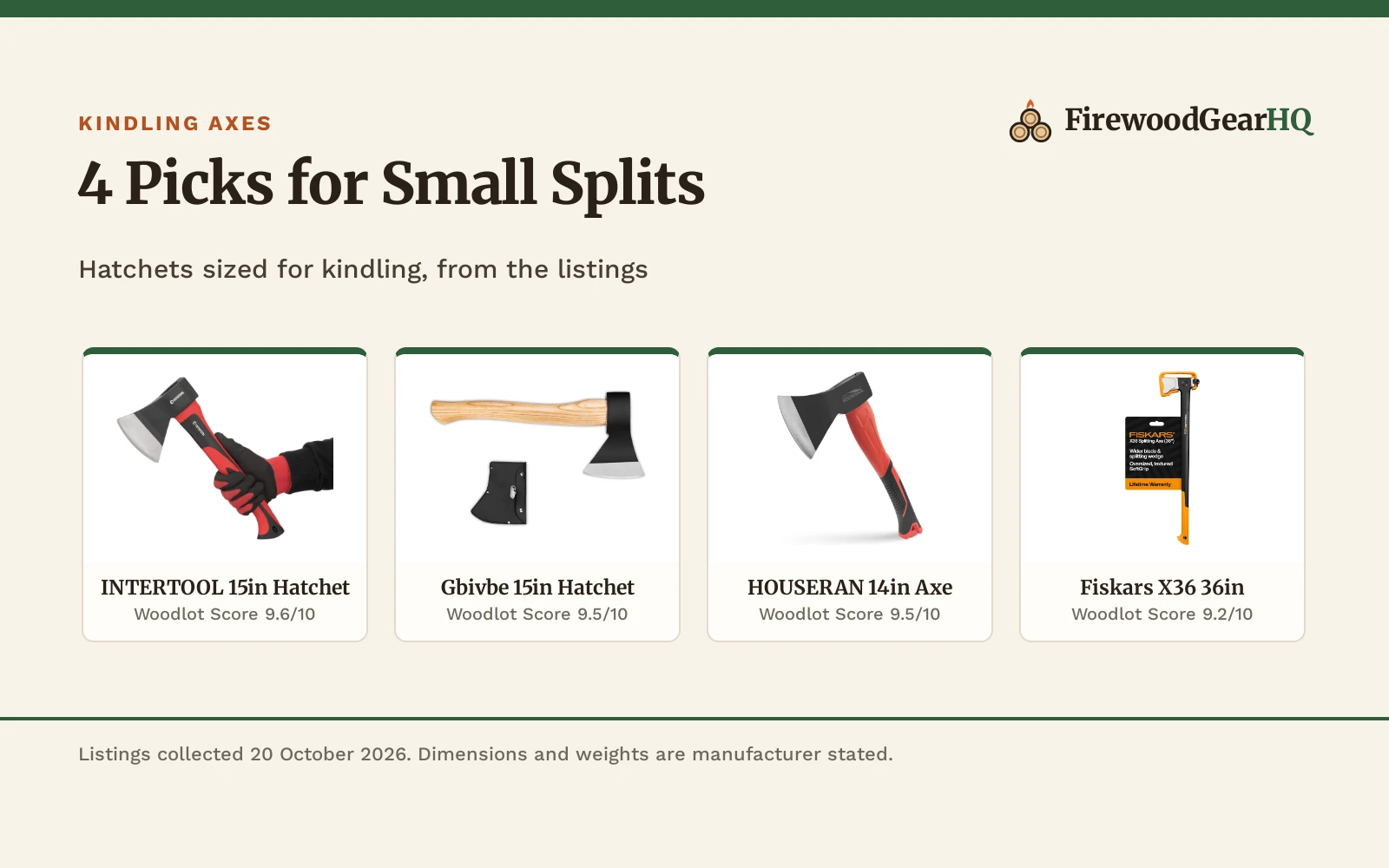
Explore the axes and mauls hub for more firewood tools, or review our guide on what is a splitting maul. Choosing the right tool weight? See how heavy should a splitting maul be and our comparison on splitting axe vs maul. When tackling gnarly logs that defeat standard swings, learn how to use a splitting wedge and see the best splitting wedges. For lighter firewood preparation, compare the best splitting axes and read how to split wood with an axe. Keep your cutting edges sharp with the best axe sharpener. If manual splitting becomes too demanding, read log splitter vs splitting maul and check our guide on how to move heavy logs safely. Curious about wood condition? Find out is it easier to split wood green or seasoned, and explore hardwood vs softwood firewood differences.