Wood Burning Stove Weight and Floor Protection
Wood burning stove weight varies by model, so check the listing, plan the move and the floor under it, and match the hearth protection to the stove.

On this page
Top picks at a glance
As an Amazon Associate I earn from qualifying purchases.
- 1
 H&ZT Large Hot Tent Stove9.5/10View on Amazon
- 2
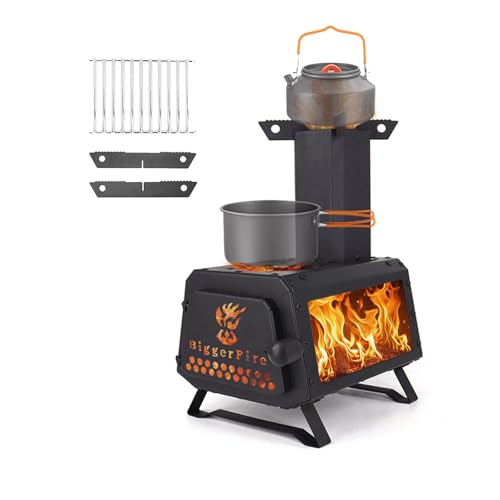 Portable Wood Burning Stove9.4/10View on Amazon
- 3
 HGD 27" Smokeless Fire Pit with Stand & Grill Rack9.2/10View on Amazon
Fall prep ends with a stove in the room and a woodpile by the door, and the question that comes with the stove is a plain one: how heavy is it, and will the floor under it hold. The answer to wood burning stove weight is not one number for every stove. It changes with the size of the firebox, the thickness of the steel or cast iron, the firebrick lining and the parts that ship with it. This guide explains what the weight number covers, where to find it in a listing, and what to put under the stove once it is home.
FirewoodGearHQ earns a small commission if you buy through links on this page. The price you pay stays the same. Read our affiliate disclosure.
The quick answer
Check the listing for the stove itself, because the weight lives in the spec table under Item Weight, and it changes from model to model. The stove body carries the bulk of it, while the firebrick, door and legs add their share, and the flue pipe and chimney parts add more once they are on. What sits under the stove is lighter by far: the hearth mats in the listings cited here weigh 1.3 pounds to 2.3 pounds, and the stove boards weigh 11.0 pounds to 20.4 pounds. So the floor question is about the stove, and the protection question is about heat and embers.
Wood Burning Stove Weight: What the Number Covers
A stove weight number usually covers the stove as it ships: the body, the firebrick lining, the door with its glass, the legs or pedestal, and the parts in the box. It does not cover the flue pipe, the chimney parts or the hearth pad, which are separate pieces with their own weights. When a listing gives one weight, read the spec table to see what it counts, and when it gives none, treat the weight as not stated rather than guessing from a similar model.
Weight matters for the floor, the move and the hearth. The floor under the stove carries the stove plus the hearth pad plus the wood stacked beside it, so a heavy stove on a weak floor is a problem to catch before delivery, not after. The move needs hands and a plan, because a stove is an awkward load even when it is not a tall one. And the hearth pad or stove board under it needs to match the stove footprint and the maker heat and ember rules.
What floor protection weighs
The listings cited here are hearth mats and stove boards, and their weights show how light the protection is next to the stove it guards. The table lists what each listing states.
| Protection | Size | Listed weight |
|---|---|---|
| GRIBUDDY fireplace mat | 48 x 30 in | Not stated |
| Matace fireplace mat | 48 x 36 in | 1.5 lb |
| Matace fireplace mat | 40 x 24 in | 1.3 lb |
| Matace fireplace mat | 60 x 28 in | 2.3 lb |
| Matace fireplace mat | 48 x 28 in | 1.8 lb |
| HY-C stove board | 36 x 52 in | 20.4 lb |
| HY-C hearth extender | 18 x 48 in | 11.0 lb |
| Plexon stove board | 32 x 28 in | 12.25 lb |
| Plexon stove board | 32 x 42 in | 17.0 lb |
The Matace 40 by 24 mat lists 1.3 pounds, the lowest weight in the table, and the HY-C 36 by 52 stove board lists 20.4 pounds, the highest weight in the table. The mats list heat resistance up to 2000°F for the GRIBUDDY mat and up to 1800°F for the Matace mats that state a figure, and the 40 by 24, 60 by 28 and 48 by 28 Matace mats measure 1mm thick. The HY-C boards (on Amazon) list UL1618 Type 2, a 1/2 inch thick fiber board backing and an R-Value of 1.56.
What makes one stove heavier than another
Cast iron stoves carry thick walls and a heavy door, while steel plate stoves use thinner walls and weigh less for the same firebox size. Firebrick lining adds weight inside the firebox, and a large glass door with a steel frame adds more. Legs or a pedestal base add their own share, and a stove with a built-in blower or a cook top carries extra parts. None of that shows in one number, which is why the listing weight is the figure to trust.
A small stove for a cabin and a large stove for a house can look alike in a photo and weigh far apart, so compare listings by their stated weights, not by looks. When a maker lists the weight without the firebrick or without the legs, the number reads low, and the delivered stove weighs more. Read the spec table line by line and note what it counts.
Reading the weight in a listing
Start with the spec table and look for the Item Weight line, then check the Product Dimensions line for the size the weight belongs to. A listing that states a weight but no dimensions leaves the size open, and a listing that states dimensions but no weight leaves the move open. Both gaps are common, and the honest answer for either is not stated.
Listings can also disagree with themselves, so read them with care. The Plexon 32 by 42 board lists a 0.1 inch thickness in its spec table while the Plexon 32 by 28 board lists a 1.0 inch thickness, a gap worth another look before ordering. The GRIBUDDY 42 by 24 mat lists a weight of 1.57 pounds, a figure with more digits than a scale would give, so treat it as a listing quirk rather than a measured weight.
When the weight is missing, ask the maker or the seller before delivery day, and keep the answer with the order. A stove that arrives heavier than planned is a hard load to send back.
Moving a stove and protecting the floor
Plan the move before the stove arrives: clear a path, know where it will sit, and have enough hands for an awkward, top-heavy load. A stove moves best on an appliance dolly with straps, and it should never ride loose in a truck bed. Set it on the hearth pad or stove board only after the pad is in its final place, and check that the stove sits level per the maker instructions and local code.
Floor protection is about heat and embers, not weight. A silicone mat catches embers and shields the floor from heat, and the GRIBUDDY listing notes that the fire source should not directly contact the mat. A steel stove board gives non-combustible thermal and ember protection for floors and walls, per the HY-C listings, and it also works as a wall shield. Pick the protection by the maker heat rules and the stove footprint, then keep smoke and CO alarms in the room, get the chimney checked each year, and burn seasoned wood only.
FAQ: wood, fire and gear
How much does a wood burning stove weigh?
It varies by model, and the listing is the source. Check the spec table for the Item Weight line, and read what the listing says it counts. The protection under the stove is far lighter: mats in the listings cited here weigh 1.3 pounds to 2.3 pounds, and stove boards weigh 11.0 pounds to 20.4 pounds.
Do I need a hearth pad for a wood burning stove?
Yes, the floor under a wood stove needs non-combustible thermal and ember protection. The HY-C boards in the listings cited here list UL1618 Type 2 with an R-Value of 1.56, and they work as a stove board, a hearth extender or a wall shield. Follow the maker instructions and local code for the size and placement, and leave the install to a certified pro.
How heavy is a stove board?
The boards in the listings cited here list 11.0 pounds for the HY-C 18 by 48 hearth extender, 12.25 pounds for the Plexon 32 by 28 board, 17.0 pounds for the Plexon 32 by 42 board, and 20.4 pounds for the HY-C 36 by 52 stove board. Size sets the weight, and the HY-C boards list a 1/2 inch fiber board backing.
What does UL1618 Type 2 mean on a stove board?
It is the listing the HY-C boards state: UL1618 Type 2, with an R-Value of 1.56 and a 1/2 inch thick fiber board backing under embossed printed steel. The HY-C listings describe the board as non-combustible thermal and ember protection for floors and walls. When a board lists no UL1618 mark, treat its heat and ember protection as not stated.
Can a silicone hearth mat sit under a wood stove?
A silicone mat shields the floor from embers and heat, and the Matace mats that state a figure list heat resistance up to 1800°F while the GRIBUDDY mats list up to 2000°F. The GRIBUDDY listing notes that the fire source should not directly contact the mat, so use the mat for ember and heat protection around the stove, not as a surface the fire sits on. Check the maker rules for the stove and the mat before placing either.
More firewood guides
See the wood stoves hub, the best wood stoves and the wood stove sizes guide, plus how to choose a wood stove and the wood stove safety checklist. For the floor under the stove, see the best hearth pad small picks and the hearth pad alternative guide, and for heat, see how hot does a wood burning stove get.