Wall Heat Shield vs Insulation Blanket: Which One Should You Buy?
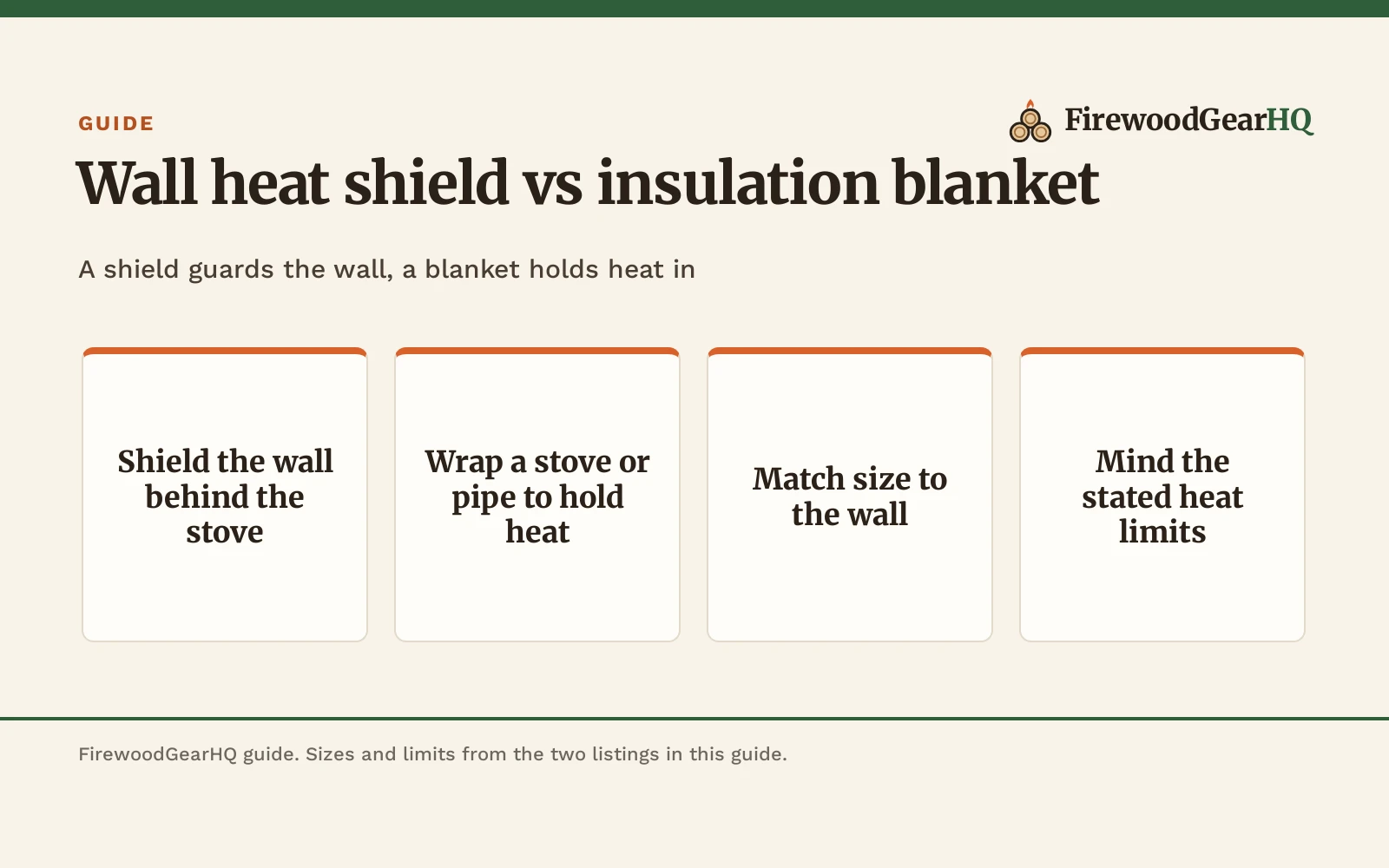
A wall heat shield guards the wall behind a stove from radiant heat, while an insulation blanket wraps a stove or pipe to hold heat in, and this guide compares the two so the right one goes in the right place.

On this page
Top picks at a glance
As an Amazon Associate I earn from qualifying purchases.
- 1
 Ceramic Fiber Insulation Blanket 65"x24"x1.18"9.6/10View on Amazon
- 2
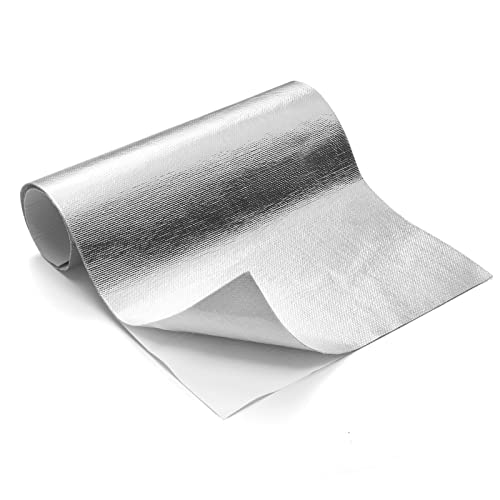 FLASLD Adhesive Heat Shield 12 x 40 InchView on Amazon
- 3FLASLD Adhesive Heat Shield 24 x 40 InchView on Amazon
- 4FLASLD Adhesive Heat Shield 12 x 12 InchView on Amazon
- 5FLASLD Adhesive Heat Shield 40 x 80 InchView on Amazon
- 6FLASLD Adhesive Heat Shield 24 x 24 InchView on Amazon
- 7
 BuyUneed 2300°F Ceramic Fiber Heat Shield Mat 78milView on Amazon
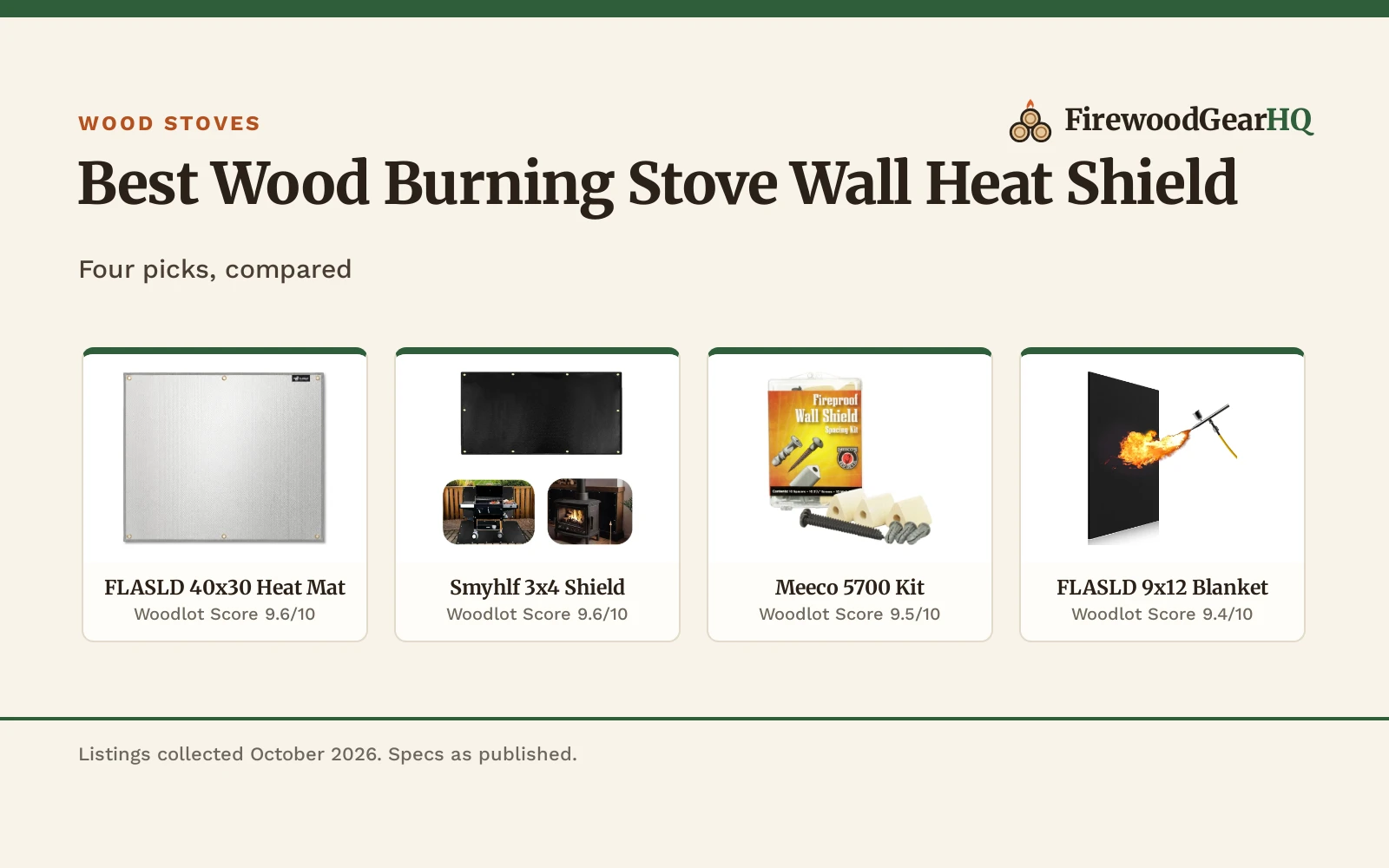
Fall prep ends at the stove wall. A wood stove throws radiant heat at the wall behind it, and that wall needs a plan before the cold nights arrive. Wall heat shield vs insulation blanket is the choice between two different jobs: a shield stands between the stove and the wall to keep radiant heat off the wall, while a blanket wraps a stove body or a pipe to keep heat inside. Pick the shield when the wall needs guarding, and the blanket when heat needs holding in, because each type is built for its own job.
More options to weigh up
 FLASLD Adhesive Heat Shield 12 x 40 InchCheck price on Amazon
- FLASLD Adhesive Heat Shield 24 x 40 InchCheck price on Amazon
- FLASLD Adhesive Heat Shield 12 x 12 InchCheck price on Amazon
- FLASLD Adhesive Heat Shield 40 x 80 InchCheck price on Amazon
- FLASLD Adhesive Heat Shield 24 x 24 InchCheck price on Amazon
 BuyUneed 2300°F Ceramic Fiber Heat Shield Mat 78milCheck price on Amazon
FirewoodGearHQ earns a small commission if you buy through links on this page. The price you pay stays the same. Read our affiliate disclosure.
The quick answer
A wall heat shield is the pick for the wall behind a stove. It is a flat barrier placed between the stove and the wall, and it keeps radiant heat off the wall surface. An insulation blanket is the pick for a stove body, a flue pipe or a similar wrapped surface, where it slows heat loss and keeps heat inside. The listings in this guide are both heat shields, so the blanket side is described here by what it is for, not by a blanket listing, since no blanket listing is included in the guide.
Wall heat shield vs insulation blanket: how they differ
| Type | Where it goes | What it does | Sizes stated in this guide |
|---|---|---|---|
| Wall heat shield | On the wall behind a stove or grill | Keeps radiant heat off the wall | 24 x 40 inch sheet; 3′ x 5′ mat (36″ x 60″) |
| Insulation blanket | Wrapped around a stove body or pipe | Holds heat in and slows heat loss | No blanket listing in this guide |
The difference is the surface. A shield works on a flat wall, where radiant heat lands in a broad patch. A blanket works on a wrapped surface, where heat escapes in all directions and the wrap slows it. A shield is shaped for a flat wall, while a blanket is shaped to wrap, so each one fits its own surface best.
The two shields in this guide
Both listings in this guide are heat shields, shown here with the larger mat first, since it states the wider coverage and the clearer heat limits. Each shield is described only by what its own listing states.
Smyhlf-us 3′ x 5′ heat shield for wall behind grill
The Smyhlf-us listing is a fiberglass mat with a heat-resistant silicone coating on both sides, made to guard a deck fence, a railing or a wall from grill heat, smoke and hot embers. It is also listed as suitable for indoor stove use to protect a wall, floor and furniture. The listing states a temperature range of 900F with a melting point temperature of 2000F, and a size of 3′ x 5′ (36″ x 60″). Copper holes run along the edge of the shield, and the package holds 1 heat shield and 10 nylon ties, so the mat ties to a fence through the holes with no need for extra tools. The listing describes an oil-resistant design that cleans with soap and a rinse or a wipe with a damp towel, and the mat is reusable after washing and drying and folds for storage.
FLASLD adhesive heat shield, 24 x 40 inch
The FLASLD listing is a 24 x 40 inch sheet with a reflective aluminized surface and a peel-and-stick adhesive backing, made to reflect radiant heat away from nearby components, painted surfaces and plastic parts. The sheet is 0.8 mm thick and cuts to the shape a project needs, and its flexible build fits around contours on compatible surfaces. The listing names automotive firewalls, hoods and body panels, plus household surfaces near heat-emitting appliances, as suitable uses, and it says to maintain required equipment clearances and to observe the adhesive-side temperature limits in the product instructions. No temperature limit number is stated for the adhesive side. The listing disagrees with itself on thickness: the bullets state 0.8 mm, while the spec table lists 0.04 inches. The spec table lists the warranty as no, so no warranty term is stated.
How to choose between a shield and a blanket
Start with the surface. A flat wall behind a stove calls for a shield, and a stove body or a pipe calls for a blanket. Then match the size to the wall or the wrap: the FLASLD sheet covers a 24 x 40 inch patch, while the Smyhlf-us mat covers 3′ x 5′ (36″ x 60″), so measure the area and pick the sheet that covers it. Then read the stated limits: the Smyhlf-us listing states 900F with a melting point temperature of 2000F, while the FLASLD listing states no temperature limit number for its adhesive side. For the stove itself, the stove maker instructions and local code govern clearances and fitting, and a certified pro handles fitting work that the listing does not cover. Keep smoke and CO alarms in the stove room, and arrange an annual chimney inspection. Seasoned wood only, since wet wood smokes and builds creosote in the flue.
See the best wood stoves when choosing a stove, and the best carbon monoxide detector for the stove room.
FAQ: wood, fire and gear
Can a wall heat shield go behind a wood stove?
Yes, when the listing states it. The Smyhlf-us listing states indoor stove use to protect a wall, floor and furniture, and the FLASLD listing states household surfaces near heat-emitting appliances as a suitable use. Follow the stove maker instructions and local code for clearances, and leave fitting work to a certified pro.
What size heat shield fits the wall behind a stove?
Match the sheet to the wall area. The FLASLD sheet measures 24 x 40 inch, and the Smyhlf-us mat measures 3′ x 5′ (36″ x 60″). A larger mat covers more wall, so measure the area first and pick the sheet that covers it with room to spare.
Can an insulation blanket replace a wall heat shield?
Not as a direct swap. A blanket wraps a stove body or a pipe to hold heat in, while a shield guards a flat wall from radiant heat. Each type is built for its own job, and no blanket listing is included in this guide, so blanket sizes and limits are not stated here.
How do you clean a fiberglass heat shield?
The Smyhlf-us listing states an oil-resistant design that cleans with soap and a rinse or a wipe with a damp towel, and the mat is reusable after washing and drying. Let the mat dry before folding it for storage.
Does a peel-and-stick heat shield hold near a stove?
The FLASLD listing states a peel-and-stick adhesive backing that goes on a clean, dry surface with firm pressing for even contact, and it says to observe the adhesive-side temperature limits in the product instructions. No temperature limit number is stated, so check the instructions that come with the sheet before fitting it near a heat source.
More firewood guides
See the best wood burning stove wall heat shield and the best wood stove insulation blanket for more picks on each side of this comparison. For the stove itself, see the best wood stoves and the best stove thermometer, and keep the stove room covered with the best carbon monoxide detector.