Mesh vs Plastic Firewood Bags: Which One Should You Buy?
Mesh vs plastic firewood bags compared, with three mesh bags from the listings and plain guidance on which material suits dry storage, carrying and selling.

On this page
Top picks at a glance
As an Amazon Associate I earn from qualifying purchases.
- 1
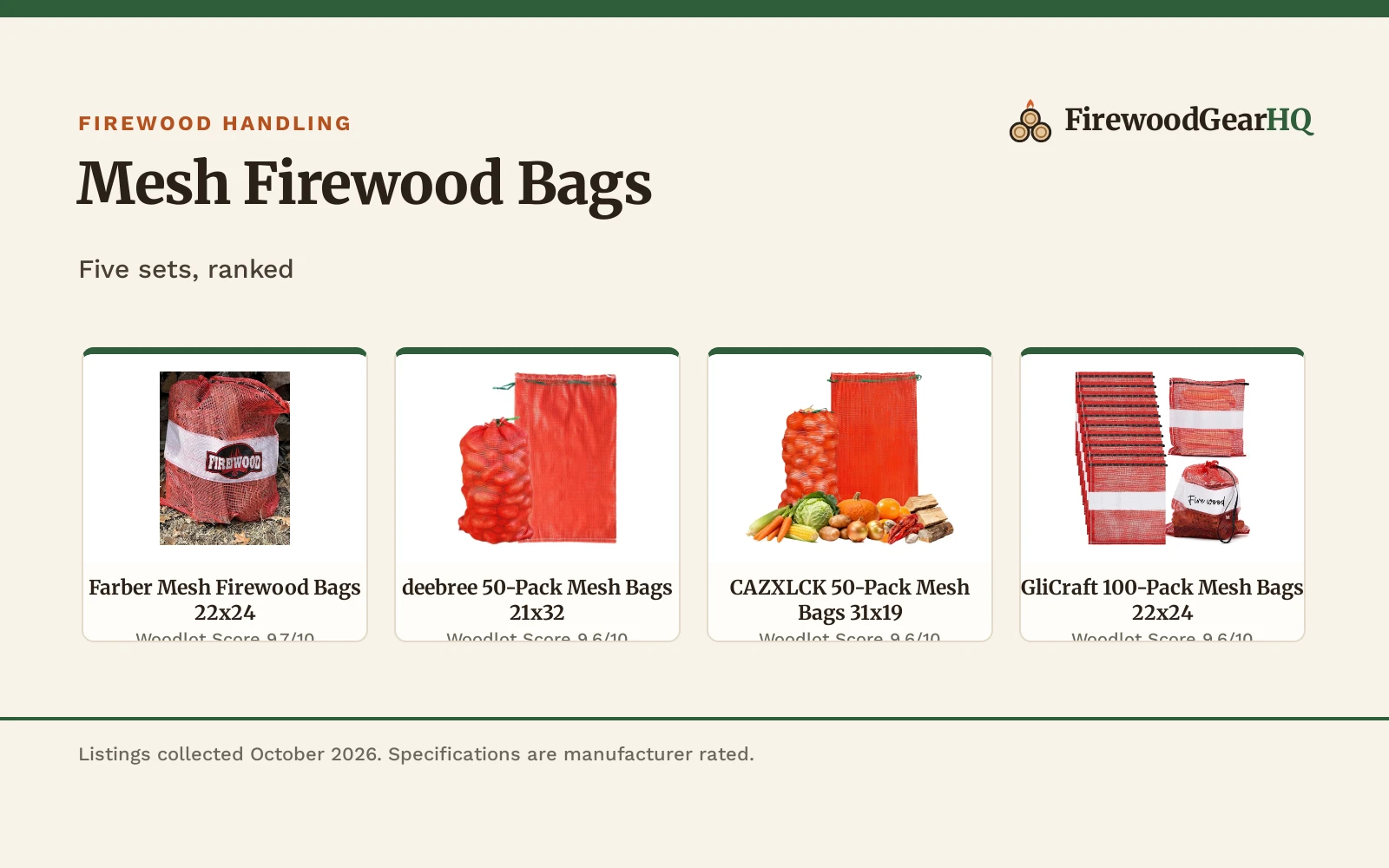
 Farber Mesh Firewood Bags 22x24-100 per Pack Brand: Farber9.7/10View on Amazon
- 2
 50pcs Onion Bags 21"x32" 60 lbs Mesh Produce Bags Potato9.5/10View on Amazon
- 3
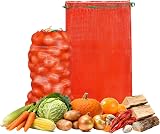 50 Pack Extra Large Drawstring Mesh Produce Bags 31" x 19"9.4/10View on Amazon
- 4Farber Mesh Firewood Bags .75 Cubic FootView on Amazon
- 5
 10 Pack Mesh Onion Bags with Drawstring 11"×18" 10LB forView on Amazon
- 650 Pack Mesh Onion BagsView on Amazon
- 7
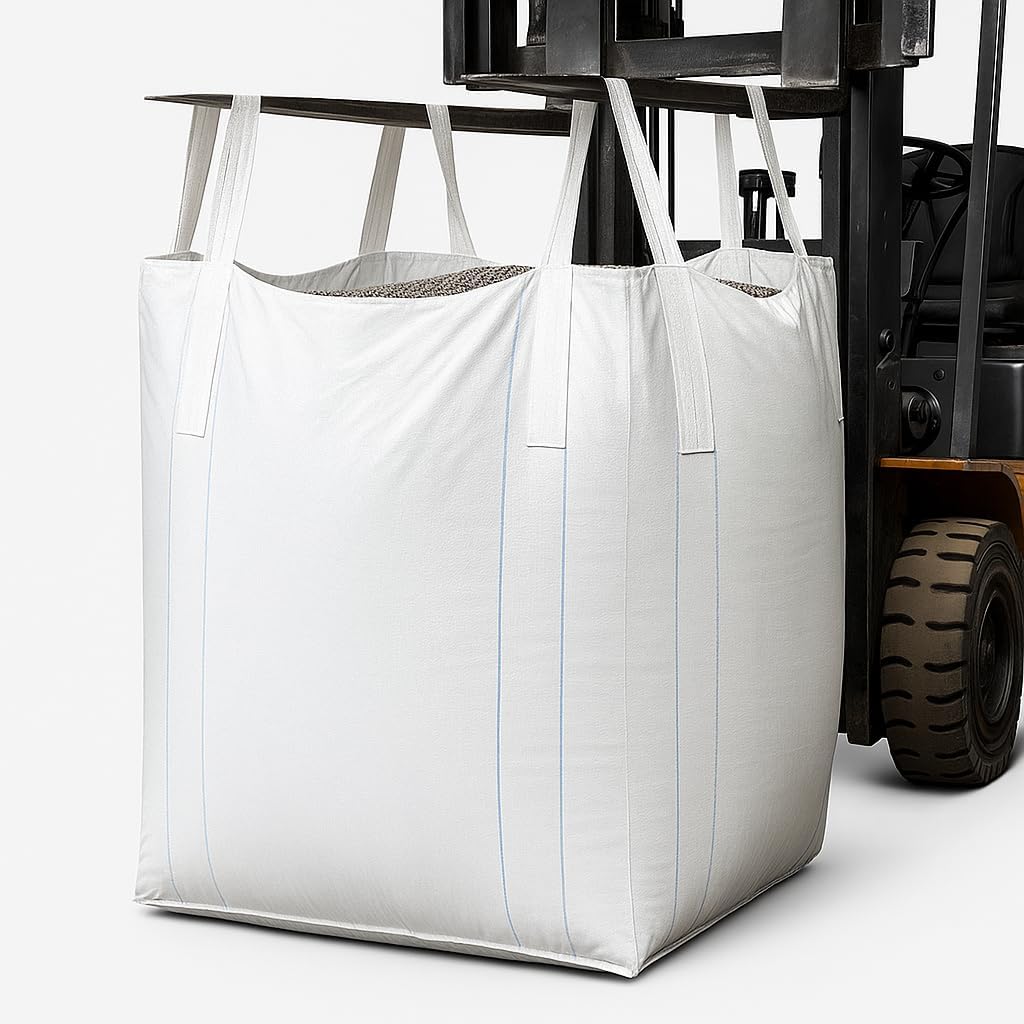 5 Pack FIBC Bulk BagsView on Amazon
When the woodpile is split and stacked and the next job is moving wood to the stove or loading it for a buyer, the bag matters more than it looks. A bag that holds air out holds moisture in, and a bag that lets air through helps a dry load stay dry. This guide answers mesh vs plastic firewood bags directly: mesh bags suit dry storage, carrying and selling where air movement matters, while plastic bags suit only short carries of already dry wood, where keeping rain off matters more than letting moisture out.
More options to weigh up
 Farber Mesh Firewood Bags .75 Cubic FootCheck price on Amazon
 10 Pack Mesh Onion Bags with Drawstring 11"×18" 10LB forCheck price on Amazon
- 50 Pack Mesh Onion BagsCheck price on Amazon
 5 Pack FIBC Bulk BagsCheck price on Amazon
FirewoodGearHQ earns a small commission if you buy through links on this page. The price you pay stays the same. Read our affiliate disclosure.
Mesh vs Plastic Firewood Bags: The Quick Answer
Mesh and plastic solve opposite problems. Mesh is open fabric, so air can move through it, and the contents stay visible without opening the bag. Plastic is a closed sheet, so rain stays out, but moisture in a damp load has nowhere to go, and that load can stay damp inside a sealed bag. For wood that is already dry and stored over a season, mesh is the plain choice. Wood that still needs to dry should stay in an open stack, not in a bag, because even a mesh bag limits air around the load compared with open stacking. For a load carried straight from a dry stack to a dry stove, plastic can do the job, but it adds nothing once the load needs air over time.
The three mesh bags compared below show what mesh does well in practice: drawstring closures, reusable and washable fabric, and sizes made for carrying and selling firewood. None of the listings in this guide is a plastic bag, so the plastic side is described by its material character, not by a listing claim: closed, rain-resistant, and airless. Judge plastic on that character, and judge mesh on the listings.
How Mesh Bags Work
Every mesh listing here describes the same core idea in different words: woven fabric with holes that let air circulate. The deebree listings call the fabric breathable and say it promotes ample air circulation, and the GliCraft listing says the same about adequate air circulation for stored crops. Air movement is the point for stored dry wood: a bag that breathes does not trap damp air around the load.
Mesh also keeps the load visible. The deebree listings state that the mesh bag allows you to see what is inside without opening it, which helps when sorting loads or picking a bag off a stack. The same listings describe the bags as reusable and washable, with uses across harvest, washing, drying, transport and storage.
The closure on all three mesh bags is a drawstring. The deebree 10-pack listing says the built-in drawstring closes the bag quickly, the GliCraft listing describes a drawstring closure that keeps items in place during transport, and the deebree 150-pack listing calls its drawstring sturdy, with heavy duty woven draw tape. A drawstring is simple to close with cold hands, simple to open again, and it leaves no clip or zip to break.
Where Plastic Bags Fall Short
Plastic has one clear strength: a closed sheet keeps rain and snow off the load during a carry. If the wood is already dry and the trip is short, that strength is enough. The weakness shows up as soon as the load needs time. Wood that is still drying gives off moisture, and a sealed plastic bag holds that moisture against the wood. The result is a load that looks protected and stays damp, which is the opposite of what seasoning needs.
An opaque plastic bag hides the load. With mesh, a glance shows the contents, while an opaque plastic bag must be opened or labelled to be identified. Every mesh listing here states reusable fabric, which suits repeated trips through a burning season.
None of this makes plastic useless. For a short carry of dry wood, plastic is light and simple to replace. But for storage over weeks, or for selling loads that a buyer will inspect, mesh answers the job better, because air, visibility and reuse all point the same way.
The Gear: Three Mesh Bags Compared
The three mesh bags below are ranked by stated capacity, pack size and stated features, with the strongest all-round mesh bag first. Each figure comes from that bag’s own listing, and where a listing disagrees with itself, the disagreement is stated plainly.
Deebree 150-pack mesh firewood bags
The deebree 150-pack leads this comparison because it pairs bulk quantity with the strongest stated build. The listing states 150 bags, each 22 x 32 inches, holding up to 50 pounds, with reinforced seams for added strength and a ventilated design made to withstand UV rays. The breathable mesh design allows stored firewood and crops to release excess moisture, and the bags are reusable and washable.
Deebree 10-pack mesh produce bags
The deebree 10-pack comes second, and it carries a contradiction worth noting. The title and bullets state a capacity of 60 lbs for a bag 21 x 32 inches, while the spec table lists a capacity of 50lb. Following the title and bullets, as this guide does, the capacity is 60 lbs, but a buyer should read the listing with that mismatch in mind. Apart from that, the listing is strong: tightly woven polypropylene, a breathable mesh that promotes ample air circulation, a built-in drawstring that closes the bag quickly, and reusable, washable fabric. With 10 bags in the pack, it suits a household that carries wood in turns rather than selling in bulk.
GliCraft 60-pack mesh bags
The GliCraft 60-pack takes third place, and its strength is organisation rather than raw capacity. The listing states 60 bags, each 22 x 24 inches, with a drawstring closure and a 6 inch white band for labelling and marking stored items. That band is a practical touch for anyone selling or storing many bags: the contents can be marked without opening the bag. The listing describes the mesh as durable and breathable, with adequate air circulation for crops, and states no capacity figure, which is why it ranks below the two deebree bags with stated capacities. For a seller who needs many labelled bags, it still earns its place.
Choosing Between Mesh and Plastic
Start from the job, not the material. If the wood is already dry and will be stored for weeks, choose mesh, because air movement keeps damp air from being trapped around the load. Wood that still needs to dry should stay in an open stack, not in a bag, and keep the stack covered on top while the sides stay open to air, as in the guide to should you cover firewood. If the load goes straight from a dry stack to the stove, either material works, and plastic is acceptable for that short carry of dry wood, including in rain.
Then check the bag itself. Look for a drawstring closure, because all three mesh listings use one and it closes fast. Check the stated size against the load: the listings here span 21 x 32 inches, 22 x 24 inches and 22 x 32 inches. Check the pack size against the season: a 10-pack suits a household, a 60-pack suits a seller who labels loads, and a 150-pack suits bulk selling.
For moving wood around the property, a log carrier or log tongs can help with single loads, while bags suit loads that must be carried, stored or sold in quantity.
FAQ: wood, fire and gear
Can mesh firewood bags hold firewood for selling?
Yes. The deebree 150-pack listing describes bags for selling bulk firewood, with 150 bags holding up to 50 pounds each, and the GliCraft listing describes bundling firewood to resale vendors. Mesh lets a buyer see the load without opening the bag, which helps at handover.
Do mesh bags keep rain off firewood?
No, not the way a closed bag does. Mesh is open fabric, so rain can reach the load. Mesh bags suit dry storage under cover, while plastic suits a short carry of already dry wood, including in rain, but not storage over time. Cover the stack on top and leave the sides open to air.
Are mesh firewood bags reusable?
Yes, according to all three listings here. Each listing states reusable and washable fabric, and the deebree listings add uses across harvest, washing, drying, transport and storage. A mesh bag can therefore serve past a single season.
What size mesh bag suits a load?
Match the bag to the split length and the load. The listings here offer 21 x 32 inches in the deebree 10-pack, 22 x 24 inches in the GliCraft 60-pack, and 22 x 32 inches in the deebree 150-pack. Longer splits suit the longer bags, while shorter loads fit the 22 x 24 inch bag.
Do mesh bags let you see what is inside?
Yes. The deebree listings state that the mesh bag allows you to see what is inside without opening it, which helps when sorting, selling or picking a bag from a stack. The GliCraft listing adds a 6 inch white band for labelling, so marked bags can be identified even faster.
More firewood guides
See the firewood handling hub, the best firewood racks with covers and the best firewood moisture meters for storage help that pairs with mesh bags.