Log Splitter Types Explained: Manual, Electric and Gas Splitters
Manual, electric and gas log splitter types compared by force, cycle time and log size, with four splitters that cover each type.

On this page
Top picks at a glance
As an Amazon Associate I earn from qualifying purchases.
- 1
 PPOLB 7 Ton Electric Wood Splitter9.3/10View on Amazon
- 2
 SuperHandy Log Splitter Portable 20 Ton Rapid Auto9.2/10View on Amazon
- 3
 20-Ton Gas Powered Log Splitter9.1/10View on Amazon
- 4
 12 Ton Manual Hydraulic Log Splitter9.0/10View on Amazon
When the woodpile is stacked high and the stove is hungry, the rounds still need splitting before they will burn. A maul handles a few pieces, but a full winter’s worth of firewood calls for a machine built for the job. Log splitter types fall into groups worked by hand, run from an outlet, or powered by an engine of their own. Each type splits the same way, with a wedge forced into the log, and each suits a different pile and place.
FirewoodGearHQ earns a small commission if you buy through links on this page. The price you pay stays the same. Read our affiliate disclosure.
| # | Product | Woodlot Score | Buy |
|---|---|---|---|
| 1 | PPOLB 7 Ton Electric Wood Splitter | 9.3/10 | Buy on Amazon |
| 2 | SuperHandy Log Splitter Portable 20 Ton Rapid Auto | 9.2/10 | Buy on Amazon |
| 3 | 20-Ton Gas Powered Log Splitter | 9.1/10 | Buy on Amazon |
| 4 | 12 Ton Manual Hydraulic Log Splitter | 9.0/10 | Buy on Amazon |
PPOLB 7 Ton Electric Wood Splitter
A 7-ton electric log splitter with a 15 Amp copper motor, two-hand safety control and overload protection.
Pros
- 7-ton hydraulic force, listed for hardwoods like oak and maple
- 15 Amp copper motor listed at 1500 W for steady torque
- Two-hand safety control and overload protection are stated
- Transport wheels and a compact design for garages, yards or workshops
Cons
- 7 tons is the lowest force of the four splitters here
- 12 in maximum log diameter is smaller than the gas models' 16 in
- Needs a power outlet, so it cannot work away from mains power
- No warranty term is stated on this listing
SuperHandy Log Splitter Portable 20 Ton Rapid Auto
A 20-ton gas log splitter with a 7 HP engine, a 2-stage Bucher gear pump and a 7.5-second cycle time with rapid auto return.
Pros
- 20-ton rated system with a 7 HP gas engine and a 2-stage Bucher gear pump
- 7.5-second cycle time with rapid auto return
- Splits logs up to 20 in long and 16 in in diameter
- 10 in transport wheels on a portable horizontal full beam
Cons
- Hydraulic fluid is not included; AW32 fluid is recommended
- Gas powered, so the listing recommends outside use with ventilation
- No warranty term is stated on this listing
- At 130 lb, it shares the heaviest weight of the four splitters here
20-Ton Gas Powered Log Splitter
A 20-ton gas log splitter with a 209 cc, 7 HP engine, an 8-second auto return and a 2-stage gear pump.
Pros
- 20-ton rated force with a 209 cc, 7 HP 4-stroke engine
- 8-second auto return with a 2-stage gear pump
- Handles logs up to 20 in long
- 10 in pneumatic tires and ergonomic handles for moving it around the property
Cons
- No warranty term is stated on this listing
- Hydraulic fluid type and whether it is included are not stated
- Gas engine needs fuel and produces exhaust, unlike the electric and manual models here
12 Ton Manual Hydraulic Log Splitter
A 12-ton manual hydraulic log splitter with a two-speed pump, 37 in handles and built-in wheels.
Pros
- 12 tons of manual hydraulic force with no fuel or power cord
- Two-speed pump with 37 in handles for leverage on tough grain
- Spring-loaded return knob resets the ram between logs
- Built-in wheels and a laser-cut steel frame
Cons
- Every log needs hand pumping; no engine or motor helps
- 8 in maximum log diameter is the smallest of the four splitters here
- No cycle time is stated
- No warranty term is stated on this listing
The quick answer
Manual splitters use hand-pumped hydraulics, electric splitters run a hydraulic pump from an outlet, and gas splitters use an engine to drive the pump. The four splitters in this guide cover all three types, with force from 7 tons to 20 tons. The gas models here list cycle times of 7.5 seconds and 8 seconds, while the manual model is listed as a quieter option for splitting around homes, sheds and campsites, and the electric model lists no gas and no fumes. See how a log splitter works for the parts behind each type.
Log splitter types at a glance
Force, log size and power source set the types apart. The table below uses the figures from the listings in this guide.
| Type | Power | Force | Max log size |
|---|---|---|---|
| Manual hydraulic | Hand pumped | 12 tons | 18.7 in long, 8 in in diameter |
| Electric hydraulic | 15 Amp motor | 7 tons | 21.2 in long, 12 in in diameter |
| Gas hydraulic | 7 HP engine | 20 tons | 20 in long, 16 in in diameter |
The gas models are listed for large splitting jobs, the electric model for home heating and daily use, and the manual model for weekend firewood preparation.
Manual log splitters
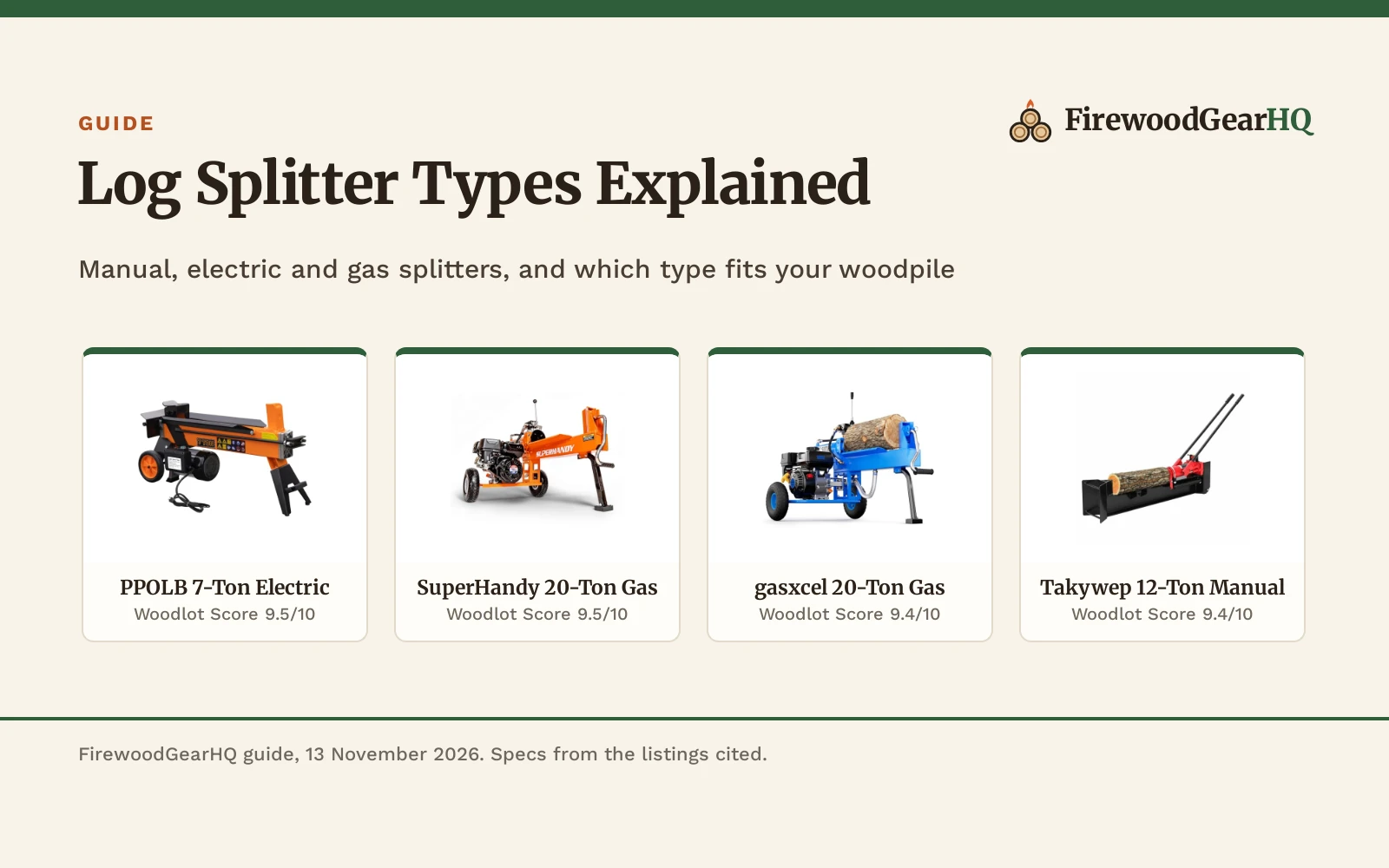
A manual hydraulic splitter works by hand: pumping the handles drives the ram and pushes the log onto the wedge, and a return knob resets the ram between logs. The Takywep manual (on Amazon) model in this guide is rated at 12 tons, with a two-speed pump and 37 in handles that give leverage on tough grain. It handles logs up to 18.7 in long and 8 in in diameter, and it is built from laser-cut steel with built-in wheels for rolling across driveways, grass and uneven yard areas.
The appeal is simple: no gasoline, no power cord, no oil and no electricity are needed, so the splitter works where the pile is stored, from backyards to off-grid cabins. The listing describes it as a quieter option for splitting around homes, sheds and campsites. The trade is effort, since every log needs hand pumping, and the 8 in maximum diameter is the smallest of the four splitters here. See hand vs electric log splitter for a closer look at this choice.
Electric log splitters
An electric hydraulic splitter plugs into an outlet and uses a motor to drive the pump, so there is no fuel to store and no exhaust to manage. The PPOLB electric (on Amazon) model in this guide is rated at 7 tons, with a 15 Amp copper motor listed at 1500 W. It handles logs up to 21.2 in long and 12 in in diameter, and the listing states it suits hardwoods like oak and maple for home heating and daily use.
The listing states two-hand safety control and overload protection, and the splitter has transport wheels with a compact design for moving and storing it in garages, yards or workshops. The limits are the outlet and the force: 7 tons is the lowest rating of the four splitters here, and the 12 in maximum diameter is smaller than the 16 in listed for the gas models. See gas vs electric log splitter to compare the two powered types.
Gas log splitters
Gas hydraulic splitters pair an engine with a two-stage pump, which gives the highest force of the three types and freedom from any outlet. The two gas models in this guide are both rated at 20 tons with a 7 HP engine. The SuperHandy lists a 7.5-second cycle time with rapid auto return, while the gasxcel lists an 8-second auto return, and both list logs up to 20 in long. The SuperHandy lists a 16 in maximum diameter, and the gasxcel listing states 16 in in its title and 18 in in its bullets, a mismatch worth noting before buying.
Both gas models list 10 in wheels for moving around the property, and both weigh 130 lb. The SuperHandy notes that hydraulic fluid is not included and AW32 is recommended, and its listing recommends outside use with ventilation. See what cycle time means on a log splitter and what hydraulic fluid a log splitter uses.
Which log splitter type fits your woodpile
Start with the logs and the location. If the pile sits near an outlet and the logs measure within 21.2 in long and 12 in in diameter, the electric type covers the job with no fuel and no fumes. If the pile sits far from power, the gas type works outdoors away from an outlet, and the manual type works anywhere at all, with no outlet and no engine. Check the maximum log length and diameter of each pick against the rounds waiting to be split, and see what size log splitter you need for a sizing chart.
Force is the next thing to weigh. The gas models here are rated at 20 tons, the manual model at 12 tons and the electric model at 7 tons, and the listing for the electric model states it handles hardwoods like oak and maple. For home firewood, see the best log splitter for home use.
Log splitters for each type
The splitters below cover each type in this guide, with the force, cycle time and log size of each type side by side for comparison.
FAQ: wood, fire and gear
What are the main log splitter types?
Manual hydraulic, electric hydraulic and gas hydraulic. Manual splitters are worked by hand, electric splitters run from an outlet, and gas splitters use an engine to drive the pump. The four splitters in this guide cover all three types.
What size log splitter do I need?
Match the splitter to the logs: the four splitters in this guide list maximum lengths of 18.7 in, 20 in and 21.2 in and maximum diameters of 8 in, 12 in and 16 in, though the gasxcel bullets state 18 in where its title states 16 in. Measure the longest and widest rounds in the pile, then check them against the listing figures. See what size log splitter you need for a sizing chart.
Are electric log splitters strong enough for hardwood?
The listing for the 7-ton electric splitter in this guide states it handles hardwoods like oak and maple for home heating and daily use. Its 15 Amp motor is listed at 1500 W, and the splitter handles logs up to 21.2 in long and 12 in in diameter.
Do gas log splitters need to be used outside?
The SuperHandy gas listing recommends using the splitter only outside with proper ventilation. Gas models produce exhaust, and the listing for the electric model notes it has no gas and no fumes.
What hydraulic fluid does a log splitter use?
It varies by model: the SuperHandy listing recommends AW32 and notes that hydraulic fluid is not included. Check the listing for the model being bought, and see what hydraulic fluid a log splitter uses.
How fast is a log splitter cycle?
The gas models in this guide list cycle times of 7.5 seconds and 8 seconds, with auto return between logs. The manual and electric models list no cycle time. See what cycle time means on a log splitter.
More firewood guides
See the best log splitter for home use and the best log splitter covers, plus how to winterize a log splitter, log splitter vs firewood processor, chainsaw vs log splitter and can you tow a log splitter on the road.