Fireplace Screen vs Glass Doors: Which One Should You Buy?
Fireplace screen vs glass doors: screens keep the fire open and lively, doors seal the firebox and cut drafts. How each works, sizing, safety and which to buy.

On this page
Top picks at a glance
As an Amazon Associate we earn from qualifying purchases.
- 1
 Fire Beauty 3 Panel Arch Top Fireplace Screen Fire Screen9.6/10View on Amazon
- 2
 Plow & Hearth Metal Fireplace Screen Glass Floral Black9.6/10View on Amazon
- 3
 BEAMNOVA Fireplace Screen9.6/10View on Amazon
- 4
 Pleasant Hearth AT-1001 1111 fireplace screenView on Amazon
- 5
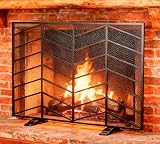 Fire Beauty Iron Chevron Fireplace Screen for Home Use(BlackView on Amazon
- 6
 Fireplace Screen with DoorsView on Amazon
- 7
 Flat Panel Fireplace Screen with Doors Brand: PanaceaView on Amazon
- 8
 Fire Beauty 3 Panel Arch Top Fireplace Screen 3 PanelView on Amazon
- 9
 Classic Fireplace ScreenView on Amazon
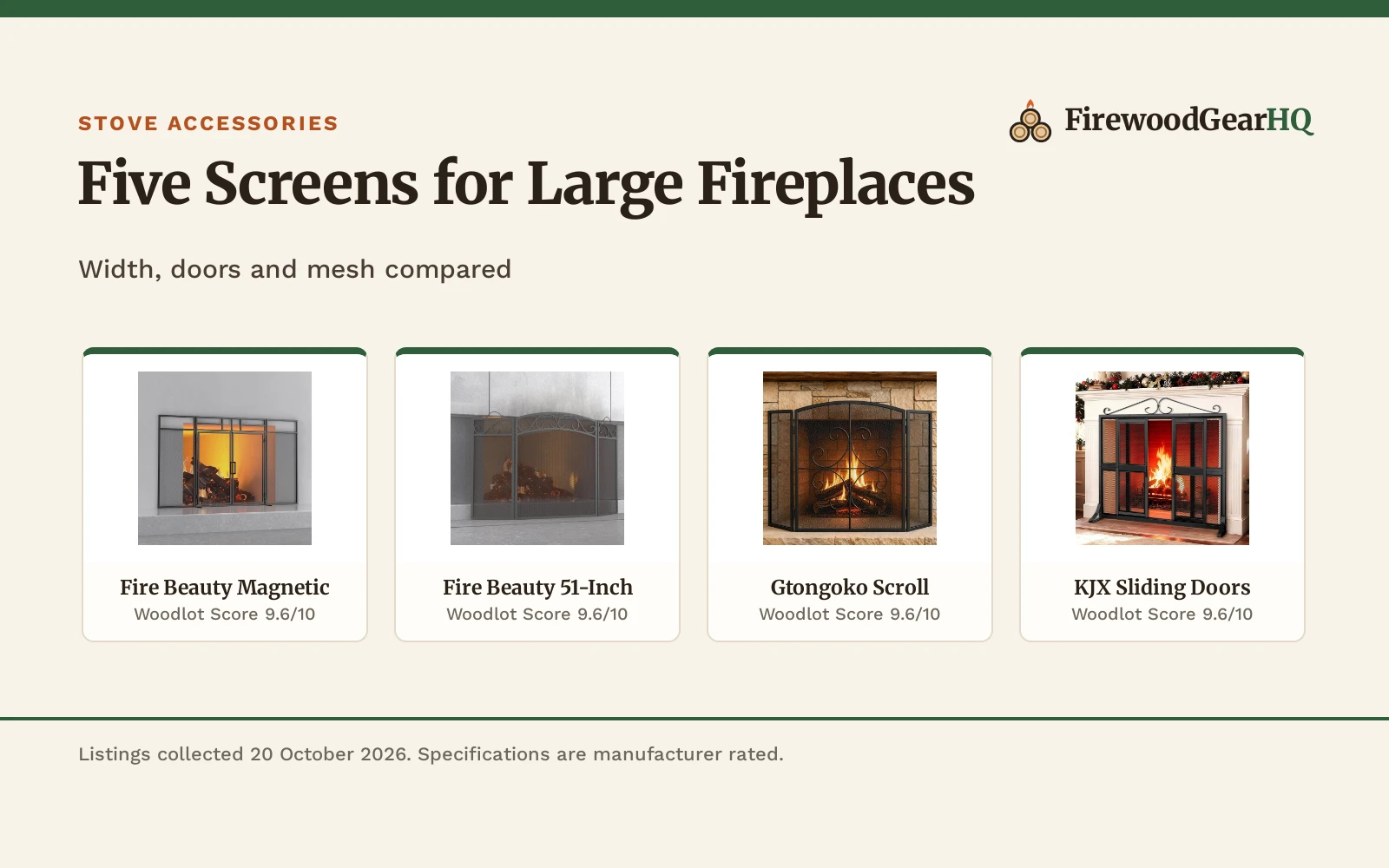
Fireplace screen vs glass doors comes down to what you want the fireplace to do. A screen is a freestanding mesh guard that stops sparks and embers while leaving the fire open to the room: maximum view, maximum crackle, and the heat radiates straight out. Glass doors are a framed enclosure with tempered glass panels and mesh cabinet doors behind them: they close off the firebox when shut, cutting the draft that pulls warm room air up the chimney, and add a solid barrier between kids, pets and the flames. Pick the screen for an open fire feel; pick glass doors for efficiency, draft control and a tighter safety barrier.
More options to compare
 Pleasant Hearth AT-1001 1111 fireplace screenCheck price on Amazon
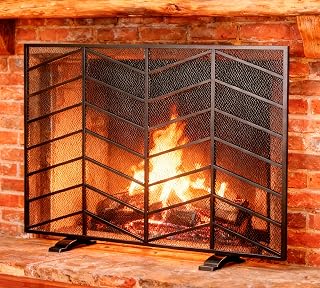 Fire Beauty Iron Chevron Fireplace Screen for Home Use(BlackCheck price on Amazon
 Fireplace Screen with DoorsCheck price on Amazon
 Flat Panel Fireplace Screen with Doors Brand: PanaceaCheck price on Amazon
 Fire Beauty 3 Panel Arch Top Fireplace Screen 3 PanelCheck price on Amazon
 Classic Fireplace ScreenCheck price on Amazon
FirewoodGearHQ may earn a small commission if you buy through links on this page. The price you pay stays the same. Affiliate disclosure.
How a fireplace screen works
A screen stands in front of the firebox, usually on its own feet, with a woven metal mesh that blocks flying sparks and embers. It does not seal the opening: air flows freely around it, which is exactly why the fire burns lively and the room gets the full radiant heat. Screens are the simple option. The Best Choice Products flat screen, for example, measures 38.75 in wide by 31 in tall and needs only the feet screwed on, which the listing says takes as little as 10 minutes. The Kingson screen with hinged doors runs 37.8 in by 30.7 in and weighs 11.9 pounds; the DUMOS screen is 39 in by 30.7 in at 7.9 pounds. Hinged doors on models like the Kingson and DUMOS open for fire access without moving the screen.
Screens suit masonry and prefabricated fireplaces alike because they do not attach to the firebox; they just stand in front of it. The trade-off is the draft: an open firebox with a screen still pulls room air up the chimney, and when the fire dies down the open flue keeps pulling. A magnetic fireplace cover like the 39 by 32 in PAWBOSE, with 12 embedded magnets at 1.2 Tesla each, can seal the opening when the fireplace is cold, but the listing warns magnet performance degrades under sustained high heat, so it stays off during a fire.
How glass doors work
Glass doors mount to the firebox opening in a metal frame. Behind the tempered glass panels sit mesh cabinet doors, so you can run the fire with the glass open and the mesh closed, or close the glass when the fire burns down. The Pleasant Hearth AN-1010, for instance, fits firebox openings 30 to 37 in wide and 22.5 to 29.5 in tall, with 0.1875 in clear tempered glass and standard mesh panel cabinet doors, weighing 44 pounds. The Ascot AT-1000 fits the same opening range, uses 3/16 in tempered glass that opens 180 degrees, and adds an air control slide to meter combustion air; it weighs 45 pounds. The large AT-1002 fits openings 36 to 43 in wide and 25.5 to 32.5 in tall with a 43.5 by 33 in frame.
The important limitation: the Ascot doors are for masonry fireplaces only and cannot be installed on prefabricated fireplaces, per the listing. Measure your opening and check the fireplace type before buying doors; a screen has no such restriction.
Heat and efficiency
With a screen, heat transfer is direct: radiant heat streams into the room and the fire gets unlimited combustion air, so it burns hotter and livelier. But an open firebox is a chimney draft machine. With the fire out and the damper open, warm room air keeps escaping up the flue all winter; with the fire lit, the draft pulls in cold makeup air from around the house. Glass doors change that equation. Closed glass with the mesh doors shut makes the firebox far tighter: far less room air escapes up the chimney, and the air control slide on models like the Ascot lets you meter combustion air instead of letting the chimney decide. The glass itself radiates heat into the room while containing the draft.
Neither option turns an open fireplace into a wood stove. But if your fireplace sits idle most of the week and the house feels drafty, glass doors cut the standby losses a screen cannot touch. If the fireplace is mostly for ambiance on weekends, the screen’s simplicity wins.
Safety for kids and pets
Each blocks sparks. The difference is the barrier. A screen is a mesh fence: it stops embers, and listings like Fire Beauty’s describe the mesh as a barrier for kids and pets, but the mesh gets hot and a determined toddler can still reach around or over a freestanding panel. Glass doors put tempered glass between the room and the fire, with mesh cabinet doors as a backup layer. The glass gets hot too, and curious hands still need watching, but the framed enclosure is the tighter barrier. For households with small children or pets that sleep by the hearth, doors are the safer pick; for a screen, choose a stable wide-footed model and keep the safety zone clear.
Cost, effort and maintenance
Screens are the low-commitment option: stand it up, screw on the feet, done in minutes, and move it aside for cleaning. Glass doors are a real installation: a 44 to 45 pound framed unit that mounts to the firebox, needs accurate opening measurements, and the AT-1001 and AT-1002 carry a 1-year parts warranty per their listings. Expect to spend an afternoon fitting them. Maintenance differs too. A screen’s mesh needs an occasional wipe; the listings call the finish simple to clean. Glass doors need the tempered glass cleaned regularly or soot bakes on and clouds the view, which is the main chore doors add. The mesh panels behind the glass need the same care as any screen.
Sizing: measure before you buy
Measure the firebox opening, width and height, not the surround. Glass doors are sized to the opening: the small Pleasant Hearth models fit 30 to 37 in wide and 22.5 to 29.5 in tall, the medium AT-1001 fits 30 to 37 in wide and 25.5 to 32.5 in tall, and the large AT-1002 fits 36 to 43 in wide and 25.5 to 32.5 in tall. Buy the size that brackets your opening and confirm masonry versus prefabricated. Screens are more forgiving: pick a screen wider and taller than the opening so embers cannot sneak around the edges. The examples here run 35 to 39 in wide and 28 to 31 in tall, and adjustable rear legs on models like the Fire Beauty help them fit different hearths.
Fireplace screen vs glass doors: which should you buy?
Buy a screen if you burn for ambiance, want the fire fully visible and audible, like moving the guard aside for fire tending, or have a prefabricated fireplace that the cited glass doors cannot fit. Buy glass doors if the fireplace sits cold most days and the house feels drafty, if you want to meter combustion air with a control slide, or if kids or pets need the strongest barrier you can get. Some households choose doors for the heating season’s standby efficiency, and a screen is unnecessary then. If you go the doors route, measure carefully and confirm your fireplace is masonry.
Frequently Asked Questions
Do I need glass doors on my fireplace?
No, but they pay off if the fireplace sits unused and the house feels drafty. Doors close off the firebox and cut the warm air lost up the chimney; a screen alone cannot do that.
Can glass doors go on a prefabricated fireplace?
Not the models cited here. The Pleasant Hearth Ascot doors state they are for masonry fireplaces only and cannot be installed on prefabricated fireplaces. A freestanding screen fits either type.
Do glass doors reduce heat in the room?
They change how heat arrives. An open screen lets radiant heat stream out freely; closed glass doors radiate through the tempered glass while stopping the draft that pulls warm room air up the flue. Net comfort usually improves with doors.
Can I burn a fire with the glass doors closed?
Run the fire with the mesh cabinet doors closed and the glass open for the open-fire feel, then close the glass as the fire burns down. The air control slide on models like the Ascot meters combustion air.
How do I stop heat loss when the fireplace is not in use?
Close the damper, and consider doors or a magnetic cover for the opening. The PAWBOSE magnetic cover seals a cold fireplace with 12 magnets, but keep it away from active fires since heat degrades magnet performance.
Related guides
See our best fireplace screens, the stove accessories hub, fireplace tool sets and carbon monoxide detectors for stove homes.