Chainsaw Diagram Explained for Owners
A chainsaw diagram names every part of the bar, chain and sprocket so you can match pitch, gauge and drive links before ordering parts.

On this page
Top picks at a glance
As an Amazon Associate I earn from qualifying purchases.
- 1
 Husqvarna 460 Rancher Gas Powered Chainsaw9.7/10View on Amazon
- 2
 Greenworks 40V 16" Brushless Cordless Chainsaw9.7/10View on Amazon
- 3
 Husqvarna 435 Gas Chainsaw9.7/10View on Amazon
When a chain stretches, a bar wears thin or a sprocket starts to hook, the fix starts with knowing which part is which. A chainsaw diagram is the labelled drawing that names every part of the saw, from the bar and chain to the sprocket and clutch, so you can order the right replacement and fit it in the right place. This guide walks through the diagram part by part, explains pitch, gauge and drive links in plain words, and shows how to match a bar and chain before ordering.
FirewoodGearHQ earns a small commission if you buy through links on this page. The price you pay stays the same. Read our affiliate disclosure.
The quick answer
A chainsaw diagram labels the guide bar, the chain, the drive sprocket, the clutch and the covers that hold them together. The bar is the flat steel rail the chain runs around. The chain is the loop of cutters and drive links that does the cutting. The sprocket is the toothed wheel that drives the chain, and it sits behind the clutch cover. To order parts, match the bar length, the chain pitch, the gauge and the drive link count to the saw.
What a chainsaw diagram shows
Most diagrams show the saw from the side, with the bar pointing outward and the engine and handles on the other side. Labels point to each part, and an exploded view pulls the covers away so the parts underneath show in order. The parts that matter for ordering are the bar, the chain, the sprocket and the clutch. The rest of the diagram covers the engine, the handles, the fuel cap and the chain brake, which rarely need replacing as a set.
Read the diagram from the bar inward. The chain sits in a groove around the edge of the bar. The bar bolts to the saw body through slots at its tail, and the sprocket sits at the tail end of the bar, behind the clutch cover. The chain brake sits above the clutch cover, in front of the top handle. When the diagram shows the bar off the saw, the mount end is the end with the slot and the holes.
The bar
The guide bar is the long, flat steel rail that guides the chain. Its length is measured from the tip to where it meets the saw body, and the listings here show a 20 inch bar and a 28 inch bar. A longer bar reaches across wider logs, and a shorter bar is easier to handle and keeps the saw balanced. The reference listing gives the bar a net weight of 1.8 pounds. The bar has a groove around its edge, and the chain drive links ride in that groove. The nose is the rounded tip of the bar, and the tail is the end that bolts to the saw. The mount is the shape of the tail, and it must match the saw. If the mount does not match, the bar will not bolt on, even if the length is right. See the chainsaw size guide for help picking a bar length.
The chain
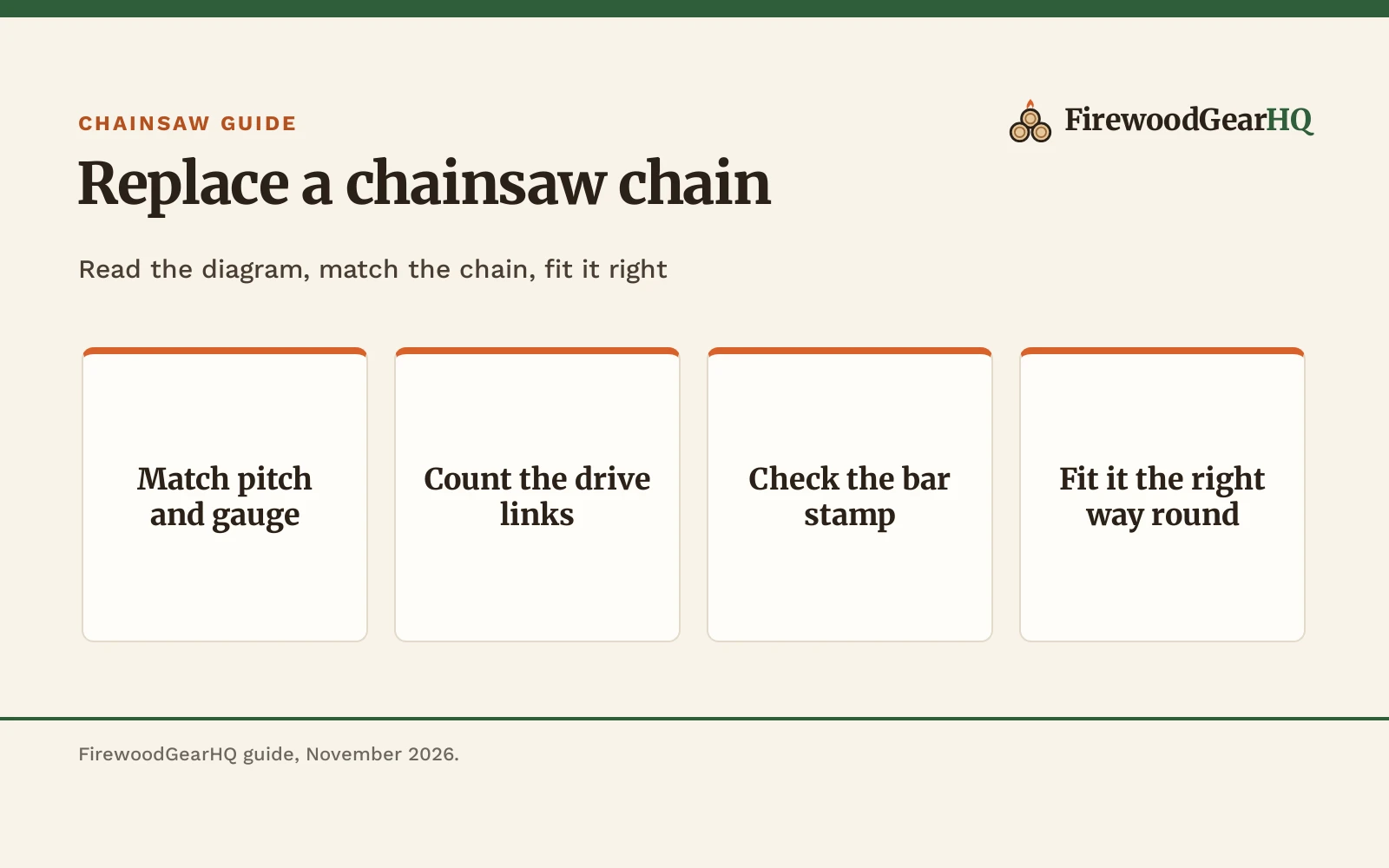
The chain is a loop of steel links that runs around the bar. The cutters are the sharp teeth that bite into the wood. The drive links are the tabs underneath that sit in the bar groove and catch on the sprocket. The tie straps join the cutters and the drive links together. The number of drive links sets the length of the chain loop, and it must match the bar. The reference listings show a chain with 76 drive links for the 20 inch bar and a chain with 92 drive links for the 28 inch bar. A chain with the wrong count will not fit the bar, so count the drive links or match the number on the bar. For filing and care, see how to use a chainsaw file and the chainsaw chain file guide.
Pitch, gauge and drive links
Pitch, gauge and drive link count are the figures that define a chain. Pitch is the spacing between the drive links, and the bar, the chain and the sprocket must all share it. The listings here show a .325 pitch on the 20 inch bar and a three-eighths pitch on the 28 inch bar. Gauge is the thickness of the drive link, and it must match the width of the bar groove. The listings show a .058 gauge on the 20 inch bar and a .063 gauge on the 28 inch bar. Drive link count is the number of drive links in the loop, and it must match the bar length. The table below puts the reference figures together.
| Bar | Pitch | Gauge | Drive links |
|---|---|---|---|
| 20 inch bar | .325 | .058 | 76 |
| 28 inch bar | three-eighths | .063 | 92 |
When a chain and bar disagree on any of these figures, the chain will not run right. A gauge that is too thick will not sit in the groove, and a pitch that does not match the sprocket will not drive the chain. Check each figure before ordering, and see low profile vs standard chainsaw chain if the chain type is unclear.
The sprocket and the clutch
The sprocket is the toothed wheel that turns the chain, and it sits at the tail of the bar, behind the clutch cover. The clutch connects the engine to the sprocket, so the chain only moves when the engine runs fast enough to engage it. On the diagram, the sprocket sits on the clutch drum, and the chain drive links wrap around it. A worn sprocket shows hooked or pointed teeth, and a chain that slips or jumps can also point to a worn sprocket. When the sprocket is replaced, the pitch must match the chain, so check the pitch on the diagram before ordering. The how to tighten a chainsaw chain guide covers chain tension after fitting.
How to read the diagram before ordering parts
Start with the bar. Note the bar length, the pitch, the gauge and the drive link count, and note the mount shape at the tail. Then check the saw the bar fits. The reference bar fits saws from 45 to 62 cc, so the engine size matters as much as the bar length. A bar made for a larger saw may not mount on a smaller one, and a chain made for a different pitch will not run on the sprocket. Match the figures on the diagram to the figures on the part you order, and keep the old bar and chain beside the new ones until the new parts are fitted. If the diagram shows a part name that the listing does not use, match by the figures and the shape, not by the name alone.
FAQ: wood, fire and gear
What does a chainsaw diagram show?
It labels every part of the saw, with the bar, chain, sprocket and clutch at the centre. It shows how the parts sit together and which parts must match when you order replacements.
What is chainsaw chain pitch?
Pitch is the spacing between the drive links. The bar, the chain and the sprocket must all share the same pitch. The reference listings show a .325 pitch and a three-eighths pitch, and pitches must not be mixed on the same saw.
What is chainsaw chain gauge?
Gauge is the thickness of the drive link, and it must match the width of the bar groove. The reference listings show a .058 gauge and a .063 gauge. A gauge that is too thick will not sit in the groove.
How many drive links does my chain need?
The count must match the bar. The reference listings show 76 drive links for a 20 inch bar and 92 drive links for a 28 inch bar. Count the drive links on the old chain, or match the number on the bar.
How do I know which bar fits my chainsaw?
Match the bar length, pitch, gauge, drive link count and mount to the saw, and check the engine size. The reference bar fits saws from 45 to 62 cc. If any figure does not match, the bar will not fit or run right.
Where is the chain brake on a chainsaw diagram?
The chain brake sits above the clutch cover, in front of the top handle. It stops the chain when the front hand guard is pushed forward. See the how to check if your chainsaw or log splitter is recalled guide before buying a used saw.
More firewood guides
See the chainsaw size guide, the chainsaw chain file guide, how to tighten a chainsaw chain and chainsaw vs log splitter. For chain types, see low profile vs standard chainsaw chain and carbide vs standard chainsaw chain.