Brushless vs Brushed Chainsaw: Which One Should You Buy?
Brushless motors run cooler and longer on a charge; brushed motors cost less up front. How the two compare and which fits your cutting.

On this page
Top picks at a glance
As an Amazon Associate we earn from qualifying purchases.
- 1
 Greenworks 40V 16" Brushless Cordless Chainsaw9.7/10View on Amazon
- 2
 Husqvarna 460 Rancher Gas Powered Chainsaw9.7/10View on Amazon
- 3
 WORX Cordless Chainsaw9.7/10View on Amazon
- 4
 6-inch Mini Chainsaw Cordless: Pure Copper Brushless MotorView on Amazon
- 5
 EGO Power+ AP1500 15" 56V Lithium-Ion Cordless BrushlessView on Amazon
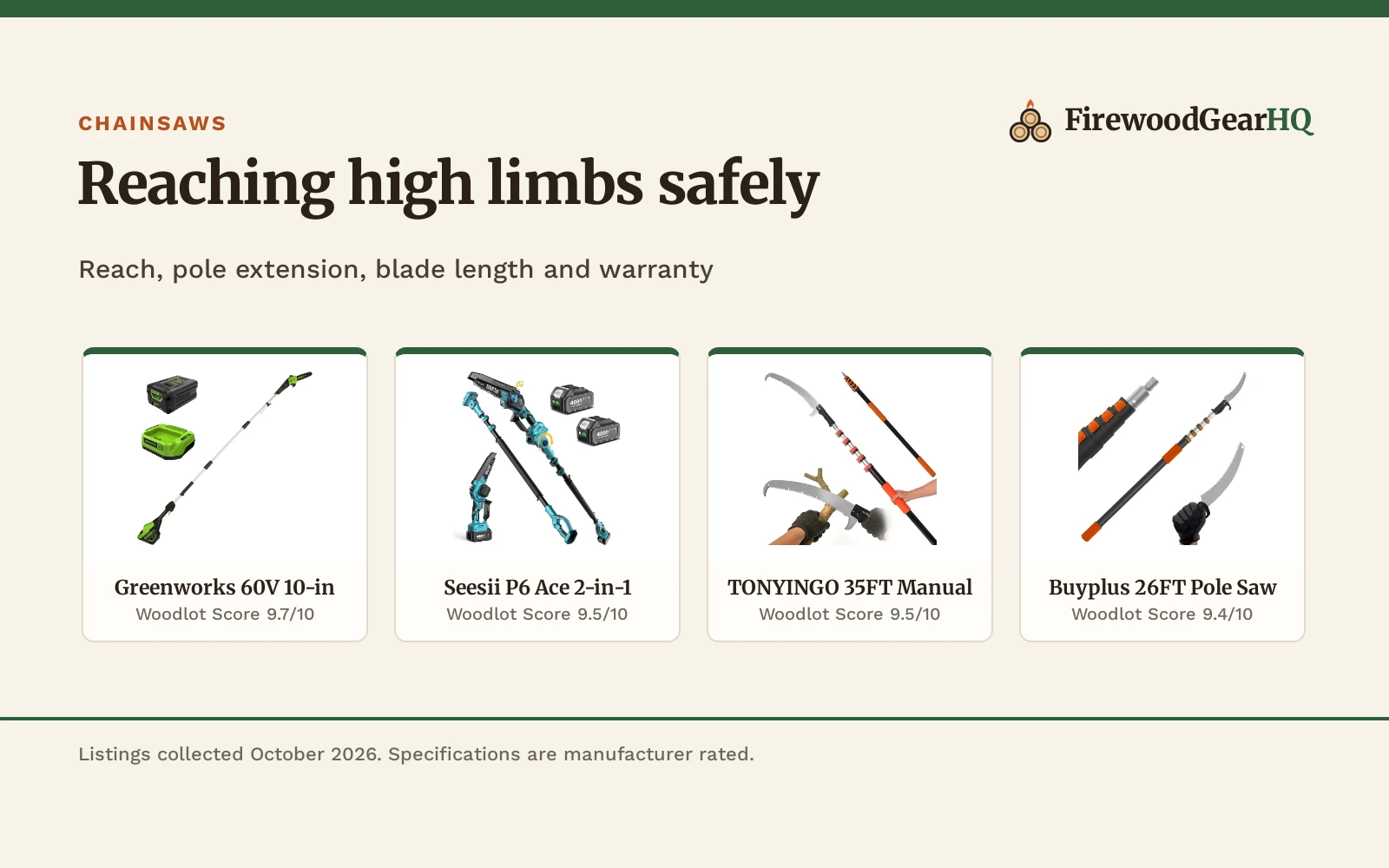
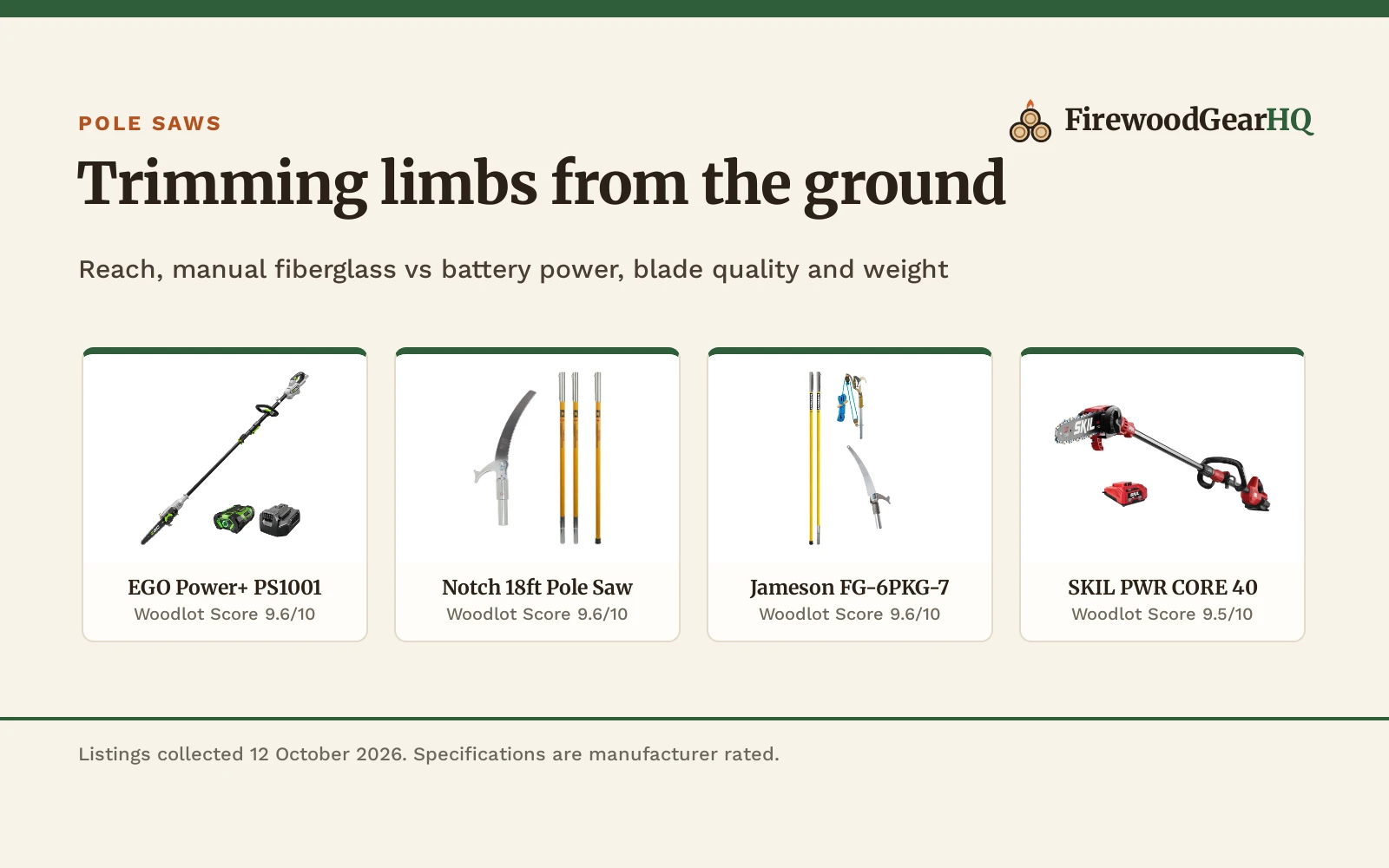
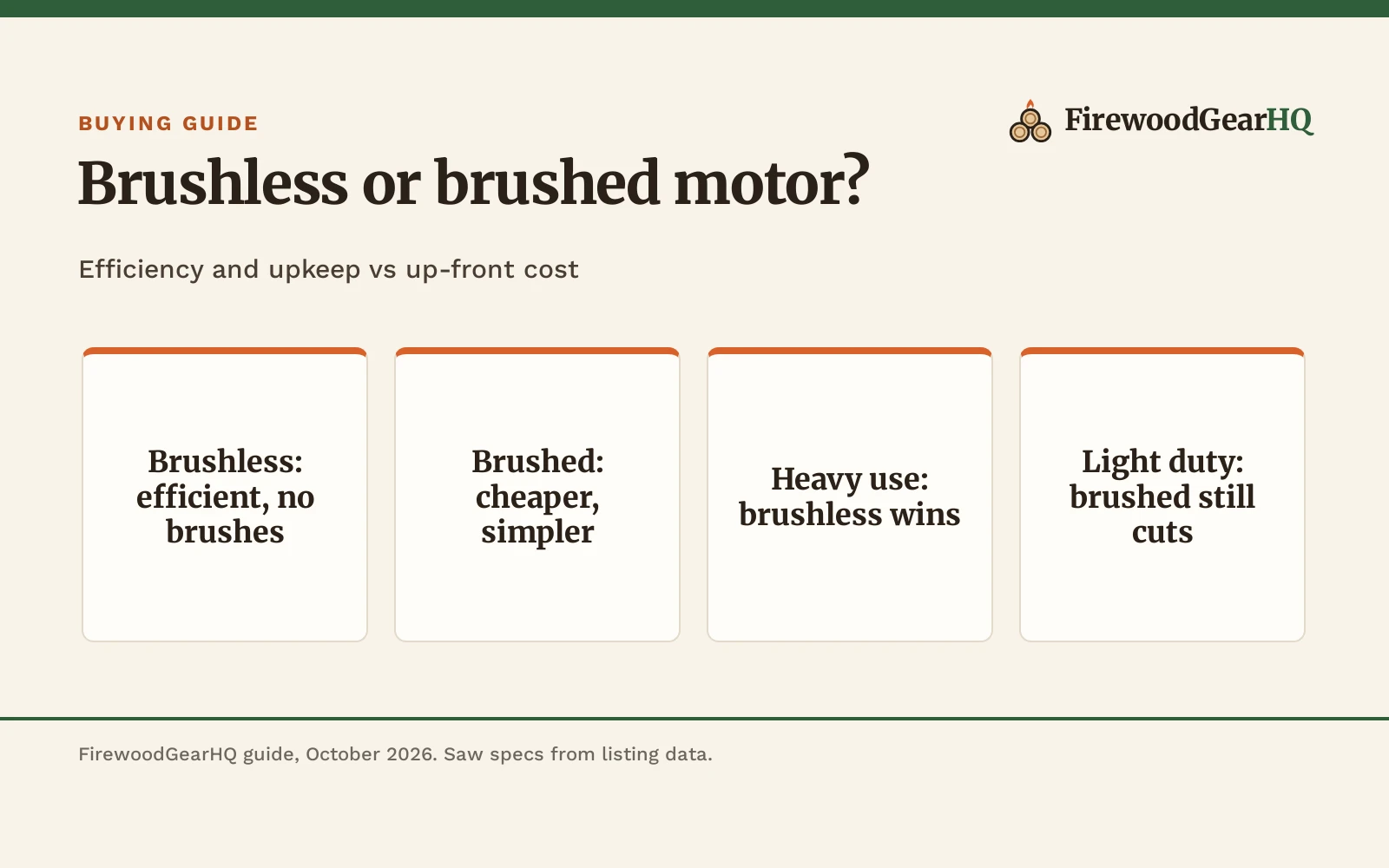
Fall cutting season is here, the rounds are stacked by the splitter, and the limbs still need trimming before they become firewood. That is the job behind brushless vs brushed chainsaw: which motor type belongs in the cordless saw you reach for. A brushless motor uses electronics instead of carbon brushes to spin the rotor, so it wastes less battery as heat and needs no brush changes. A brushed motor is the older, simpler design: cheaper to build, but the brushes wear and some power goes up as heat. For a saw you run hard, brushless is the better buy. For occasional light trimming, brushed still cuts.
More options to compare
 6-inch Mini Chainsaw Cordless: Pure Copper Brushless MotorCheck price on Amazon
 EGO Power+ AP1500 15" 56V Lithium-Ion Cordless BrushlessCheck price on Amazon
FirewoodGearHQ may earn a small commission if you buy through links on this page. The price you pay stays the same. Read our affiliate disclosure.
Brushless vs brushed chainsaw: what the motor changes
The difference lives inside the motor housing. A brushed motor feeds current through carbon brushes that rub the commutator; the rubbing wears the brushes down and turns some of the battery’s energy into heat instead of chain speed. A brushless motor swaps the brushes for an electronic controller, so nothing rubs, nothing wears, and more of each charge reaches the chain. The DOOYUTOOL listing in our sample puts it plainly: its brushless motor delivers “consistent power that does not fade” with lower energy consumption. The waitiey listing claims its 1200W brushless motor gives 50% more power than similar products, which is the maker’s claim, not a measured figure, but the direction is right: brushless saws do more work per charge.
| Brushless | Brushed | |
|---|---|---|
| How it drives the chain | Electronic controller, no contacting brushes | Carbon brushes rub the commutator |
| Efficiency | More of each charge reaches the chain; less heat | Some battery energy lost as heat at the brushes |
| Maintenance | No brushes to replace | Brushes wear and eventually need changing |
| Up-front cost | Usually higher; the electronics cost money | Usually lower; the simpler design |
| Run time per charge | Longer on the same battery | Shorter on the same battery |
| Examples in the sample | waitiey 1200W mini (6 and 8 in bars); DOOYUTOOL 10 in with 4.0Ah battery | Not represented in our sample listings |
Both listings in the sample are brushless: the waitiey mini runs 6-inch and 8-inch bars off DeWalt 20V MAX batteries at a listed 2.51 kg, and the DOOYUTOOL 10-inch ships with a 4.0Ah battery and charger at 4 pounds. No brushed saw appears in the sample; brushed saws still exist, mostly at the budget end of the shelf.
When brushless is the better choice
- You cut a lot. Limbing sessions and storm cleanup drain batteries; the efficiency gain of brushless means fewer swaps and fewer batteries bought.
- You already own the batteries. Both sample saws run DeWalt 20V MAX packs, so the saw is the cheap part if the batteries are already in the shop.
- You hate maintenance. No brushes to inspect or replace, ever. The DOOYUTOOL listing backs its saw with 12 months of after-sales service instead of a wear part.
- One-handed and overhead work. Pruning at height wants every watt reaching the chain; the waitiey mini’s tool-free chain tensioner and auto-oiler keep the fiddling to a minimum.
When brushed is the better choice
- The saw sees light duty. Trimming a few branches a year does not repay the brushless premium.
- Budget is the whole decision. Brushed saws sit at the bottom of the price ladder, and for occasional use that is a fair trade.
- It is a spare or a loaner. A cheap brushed saw in the truck box beats no saw at all.
What to check in a cordless saw listing
Motor type is one line in the listing; these are the others that decide whether the saw suits your wood:
- Bar length. The sample runs 6, 8 and 10 inches: pruning and limbing sizes, not felling sizes. Match the bar to the wood you cut.
- Battery and amp-hours. The DOOYUTOOL ships a 4.0Ah battery and charger; the waitiey is tool-only for DeWalt 20V MAX packs. Amp-hours are your fuel tank.
- Weight. 4 pounds for the DOOYUTOOL, 2.51 kg for the waitiey mini. Overhead work punishes every extra ounce.
- Oiling. Both listings state auto-oiling (the waitiey) or a self-oiling system with a see-through tank (DOOYUTOOL). A dry chain dies fast; see our chainsaw oil for battery saws picks.
Our brushless chainsaw meaning guide explains the motor in more depth, and gas vs battery chainsaw covers the bigger fuel question.
Frequently Asked Questions
Do brushless chainsaws really last longer?
The motor does: with no brushes to wear, there is one less consumable inside. The battery still ages like any lithium pack, and the chain and bar wear the same as on any saw.
Is a brushless chainsaw more powerful?
It uses its power better rather than making more of it. Less energy lost as heat means more chain speed from the same battery, which feels like more power in the cut.
Can I replace the brushes in a brushed chainsaw?
On many brushed tools you can, but on budget cordless saws the brushes are often not sold as a part. When they wear out, the saw is usually done. That is part of the brushless value case.
Are brushless chainsaws worth it for a homeowner?
If you cut more than a few times a year, yes: longer run time per charge and no brush maintenance. For the odd branch, a brushed saw still cuts wood.
Do brushless saws need different chains or oil?
No. Chain, bar and oil care are the same whatever drives them. Keep the chain sharp and the oiler fed and the motor type barely matters day to day.
Brushless vs brushed for a pole saw?
Brushless, for the same reasons: lighter draw on the battery and no maintenance up a ladder. Both sample saws are compact brushless minis aimed at exactly that pruning work.
Related guides
See the corded electric vs battery chainsaw comparison, the DeWalt vs Milwaukee battery chainsaw rundown and our battery chainsaws for homeowners picks.