Why Is My Log Splitter Slow: Common Causes and How to Fix It
Why your log splitter runs slow, how to troubleshoot hydraulic fluid, cold oil, air in lines, valves, and pumps, and the steps to restore normal cycle time.
 By FirewoodGearHQ Editorial
Updated October 9, 2026
By FirewoodGearHQ Editorial
Updated October 9, 2026
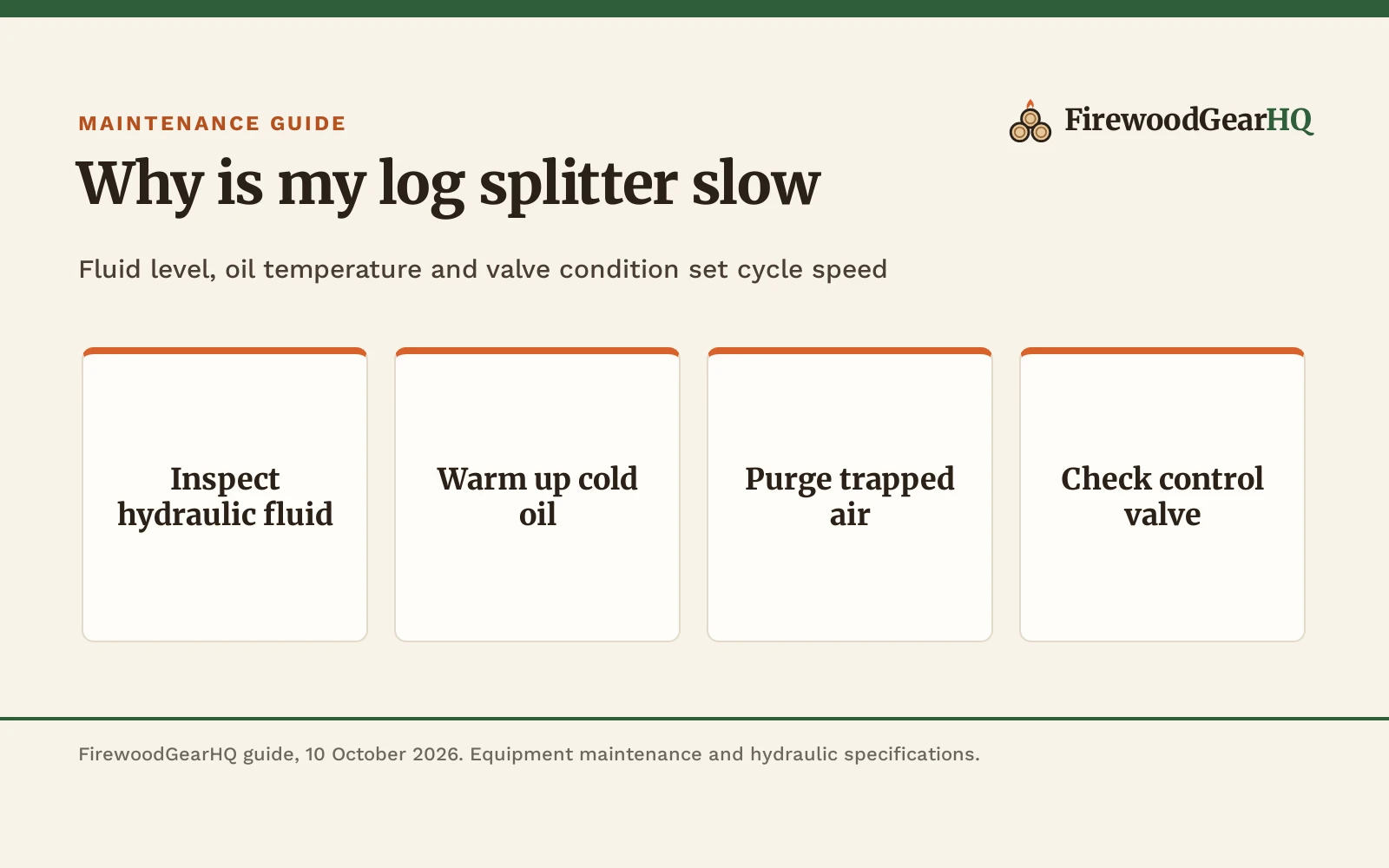
If you are wondering why is my log splitter slow, the most common reason is inadequate hydraulic flow or pressure from low fluid, cold oil, trapped air, or a clogged suction strainer. On gas splitters, low engine speed or pump wear lengthens cycle times, while manual splitters often lose speed to leaking release valves. Checking fluid levels, bleeding the cylinder, and verifying valve seals will usually restore normal splitting speed.
FirewoodGearHQ earns a commission when you buy through links on our product pages, at no extra cost to you. Read our affiliate disclosure.
The quick answer
A log splitter ram moves on hydraulic flow and pressure. Flow sets ram speed, while pressure sets splitting force. A slow ram means the pump or manual cylinder is not delivering sufficient fluid volume into the cylinder. Cold oil, low fluid, air in the lines, or mechanical friction along the beam are the primary culprits.
To restore speed, start with basic maintenance: warm cold fluid without load, top off the reservoir, bleed trapped air, and grease the beam. Two-stage pumps naturally slow down when entering wood to build splitting tonnage; only investigate the pump unloader or relief valve if the ram crawls under no load or stalls completely.
Log splitter cycle times and hydraulic ratings
Cycle time measures the seconds for a ram to complete a full stroke. Splitter ratings balance cylinder size and pump flow to establish cycle speed across equipment types.
| Brand and model type | Stated force or flow | Cycle speed or pump rating | Operational notes |
|---|---|---|---|
| ROCKCUB electric | 7 tons | 18-second cycle time | 3 hp motor at 28 MPa (4060 psi), handles up to 22 in logs |
| PPOLB electric | 7 tons | Not stated | 15-amp copper motor with cross blade cutter |
| TECSPACE electric | 7 tons | Not stated | 15-amp motor with horizontal splitting bed |
| FULL BOAR gas | 35 tons | Not stated | 306 cc engine, 3.55 in wedge adjustment, 700 lbs lift |
| GARVEETECH manual | 12 tons | Manual two-speed pumping | 37 in handles, capacity for 18.7 in length and 8 in diameter |
| BIG RED manual | 12 tons | Manual two-speed pumping | 37 in handles, capacity for 17.7 in length and 7.9 in diameter |
| Takywep manual | 12 tons | Manual two-speed pumping | 37 in handles, capacity for 18.7 in length and 8 in diameter |
| IDEALHOUSE manual | 12 tons | Manual two-speed pumping | 36.25 in handle, capacity for 18.7 in length and 8 in diameter |
| RYFT replacement pump | 16 gpm flow | 3600 rpm maximum | Two-stage pump, 3000 psi working pressure, 25 gpm valve |
Review our guide on what is cycle time on a log splitter to evaluate speed variations, or see our top picks for the best log splitter for home use.
Why is my log splitter slow: common causes
Diagnosing a slow log splitter requires isolating mechanical, hydraulic, and environmental issues.
Manual splitter release knob and dual-speed valves
On manual models from GARVEETECH, BIG RED, and IDEALHOUSE, two-speed handle linkages drive hydraulic pressure. If the release knob fails to seat completely or release seals wear, fluid bleeds back into the reservoir rather than moving the ram.
Low hydraulic fluid and aerated oil
When reservoir fluid drops, the pump draws air. This creates foamy, compressible fluid that causes the ram to extend with a sluggish, jerky motion.
Cold hydraulic fluid and high viscosity
Cold outdoor temperatures thicken hydraulic oil, restricting pump suction. Sluggish flow persists until circulating fluid reaches operating temperature.
Clogged suction strainer and return filters
Wood debris and varnish clog reservoir suction strainers and return line filters. Starving the pump intake cuts fluid delivery, slowing ram extension and return strokes.
Control valve spool binding and bypass leakage
Bent or loose valve linkages prevent the control spool from shifting completely, restricting fluid flow. A stuck pressure relief valve bypasses fluid prematurely, dropping splitting force.
Worn hydraulic pump and reduced drive speed
Worn two-stage pumps, like replacement units from RYFT, allow internal fluid slippage. On gas machines, engine bogging reduces pump revolutions, directly slowing cycle times.
How to troubleshoot a slow log splitter step by step
Follow this maintenance sequence to locate and resolve the slowdown, addressing manual mechanisms first.
Check manual pump release valves and handle pins
Tighten the release knob completely and verify that the needle valve seals. Clean away debris around the seat and replace damaged seals. Lubricate handle pivot pins to ensure full pump strokes.
Inspect reservoir fluid level and oil appearance
Check the reservoir dipstick or sight glass with the ram retracted. Top off low fluid, and replace oil that appears milky from moisture or frothy from air.
Purge trapped air from the hydraulic circuit
On manual splitters, loosen the fill plug and pump with the release open. On motorized splitters, open the breather or bleed screw and cycle the ram smoothly several times without wood.
Clean and lubricate the splitter beam and slide guides
Scrape sap, bark, and dirt from the steel beam with a putty knife. Lubricate slide contact surfaces with clean engine oil to eliminate mechanical drag.
Verify motor speed and electrical supply
Run gas engines at full throttle, checking air filters and governor linkages. For electric splitters, connect directly to an outlet without undersized extension cords to avoid voltage drops.
Inspect control valve linkage and pressure bypass
Ensure the control lever shifts the valve spool through its full stroke. Remove grit from the pressure relief valve seat if the machine bypasses fluid under load.
Preventing hydraulic slowdowns and operational safety
Store splitters under shelter and service hydraulic filters seasonally to maintain peak cycle speeds. Keep cylinder rods wiped clean to protect rod wiper seals from grit.
Safe operation maintains productivity. Under guidance from the OSHA logging eTool, a log splitter must always have only one operator controlling the machine. Keep hands clear of the wedge, beam, and log ends while the ram moves. Always wear protective eye protection, sturdy gloves, and boots.
Electric versus gas log splitter maintenance
Electric splitters require opening the reservoir bleed screw before each session to prevent vacuum resistance from slowing the ram; retighten it before transport. See our electric log splitter troubleshooting guide for motor upkeep. Gas machines require full engine throttle to power two-stage pumps. Compare formats in our gas vs electric log splitter guide, and check tonnage in what size log splitter do I need.
One operator only, with hands well clear of the wedge and the ram. Wear eye protection and gloves, set the splitter on stable, level ground, and keep kids and pets away from the work area. Run gas splitters outdoors only, and never reach in to clear a jammed log while the ram can move. Read our Safety Disclaimer.
Frequently Asked Questions
Why is my log splitter slow to extend?
Low fluid, aerated oil, cold fluid, or a closed electric bleed screw starves the cylinder. Check fluid levels, vent the reservoir, and run the motor at full speed.
How do I fix a slow manual hydraulic log splitter?
Clean and tighten the release knob, inspect the internal valve seal, lubricate handle pins, and cycle the pump with the release open to clear air.
Does cold weather make a log splitter run slow?
Yes. Low temperatures thicken hydraulic fluid, restricting pump suction. Run the machine unloaded for several minutes to warm the oil before splitting.
How do I get air out of my log splitter hydraulic system?
Open the reservoir breather or bleed screw, and cycle the cylinder ram fully back and forth several times without splitting wood to vent air bubbles.
Why does my log splitter slow down when it hits a tough log?
Two-stage pumps automatically shift to high-pressure mode to maximize tonnage in tough wood. Inspect the unloader or relief valve only if the ram crawls with no log.
What is the secondary log splitter slow fix if fluid is full?
If fluid is full, the secondary log splitter slow fix is verifying the control valve opens fully, opening the reservoir bleed screw, and cleaning sticky sap off the beam.
Related guides
Explore our log splitters hub for equipment advice. See our guide to the best log splitter for home use, our review of the best cheap wood splitters, and our guide to the best vertical log splitters. Check sizing in how many tons of log splitter do I need, explore log splitters with box wedges, and compare battery log splitters vs electric log splitters. Check safety in log splitter recalls, and browse electric log splitters, gas log splitters, manual and kindling splitters, and kinetic log splitters.
About the author
The FirewoodGearHQ editorial team researches firewood and wood heating equipment from published specifications, ratings and warranty terms, and scores every pick the same way. We do not run our own product trials.