Electric Log Splitter Troubleshooting: A Step-by-Step Fix Guide
How to diagnose and fix electric log splitter problems, from a humming motor and low hydraulic pressure to trapped air, jammed rams and leaking seals.
 By FirewoodGearHQ Editorial
Updated October 9, 2026
By FirewoodGearHQ Editorial
Updated October 9, 2026
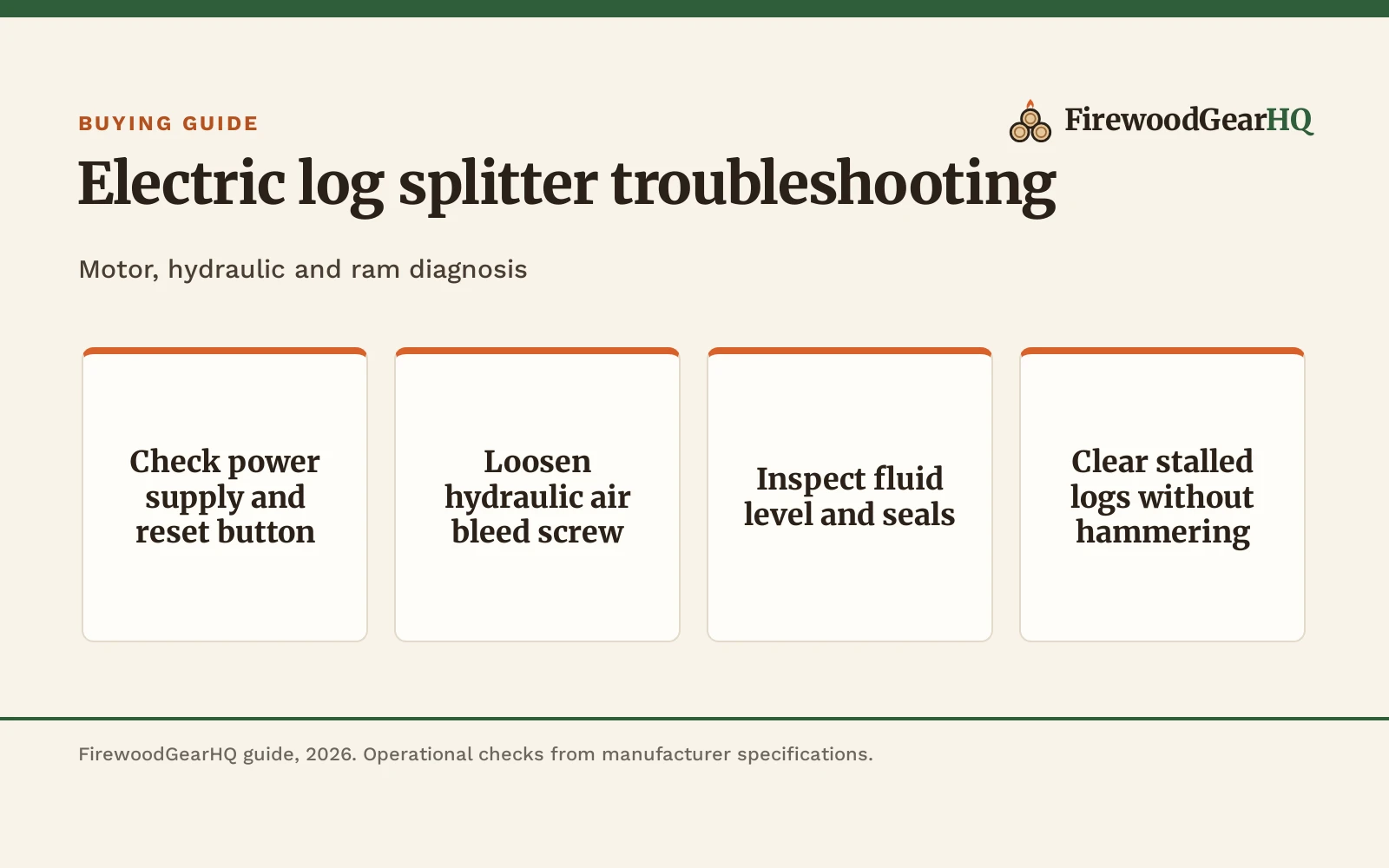
Electric log splitter troubleshooting begins by checking the power supply, resetting the thermal overload switch, and inspecting the hydraulic fluid level. Most common issues stem from an unturned bleed screw, trapped air in hydraulic lines, an overloaded circuit, or low fluid that robs the ram of splitting force. Releasing trapped air, tightening fittings, and connecting directly to a dedicated wall circuit resolve most electric splitter failures without requiring complex mechanical repairs.
FirewoodGearHQ earns a commission when you buy through links on our product pages, at no extra cost to you. Read our affiliate disclosure.
The quick answer
When an electric log splitter fails to run or loses splitting power, diagnose the issue across distinct stages: electricity, hydraulics, mechanical binding, and log grain. Confirm that the motor receives steady voltage from a dedicated wall circuit, press the reset button on the motor housing, and verify that the air bleed screw is open. For example, the Dr Power Pilot 6TE listing specifies a 1090 Watt motor operating on 120V household power, rated for logs up to 10 Inch in diameter and 20 Inch in length. As another reference point, Generic lists an 8 Ton electric splitter with a 2200W electric motor, showing that higher-capacity electric units demand substantial current to cycle properly. Working methodically from the power cord to the hydraulic ram identifies faults quickly.
Electric log splitter troubleshooting chart
| Symptom | Probable Cause | Recommended Fix |
|---|---|---|
| Motor will not run and makes no sound | Tripped household breaker, blown fuse, or tripped thermal overload switch | Check breaker panel, inspect wall outlet, and press motor reset button after cooling |
| Motor hums but ram does not advance | Low voltage from undersized cord, stalled motor, or seized pump | Plug directly into dedicated wall outlet or use heavy-duty cord matching maker specifications |
| Ram extends with weak splitting force | Closed air bleed screw creating tank vacuum, low hydraulic fluid, or trapped air | Open bleed screw, check fluid level on dipstick, and bleed trapped air |
| Ram movement is jerky or stutters | Air bubbles trapped in hydraulic fluid or low reservoir fluid level | Loosen air bleed valve and cycle ram back and forth without a log |
| Hydraulic oil leaks around cylinder or reservoir | Loose hydraulic fittings, damaged cylinder rod seal, or pressurized reservoir from unopened bleed screw | Tighten hose connections, replace damaged rod seals, and open bleed screw before operating |
| Ram fails to retract automatically | Log jammed on wedge, binding control lever linkage, or stuck hydraulic valve spool | Turn off motor, release pressure, dislodge wood safely, and clean valve linkage |
Use the chart to identify whether the symptom originates in the electrical motor circuit or the hydraulic pressure system before disassembling any parts.
What causes electric log splitter problems
Electrical supply issues and tripped overload switches
Electric log splitters rely on induction motors that draw significant electrical current when the pump builds maximum tonnage against tough wood. If the motor suddenly stops during a split, the internal thermal overload protection switch has likely tripped to prevent winding damage. Allow the motor housing to cool down before pressing the thermal reset button near the power switch. A humming motor that refuses to spin can indicate low line voltage, a failed start capacitor, or mechanical resistance in the pump. Best practice is to connect directly to a dedicated, grounded wall receptacle. If an extension cord is necessary, select a heavy-duty, outdoor-rated cord matching maker gauge requirements to prevent voltage sag.
Closed bleed screw and trapped air
The hydraulic air bleed screw is an essential operational setting on an electric log splitter. During transport and storage, the bleed screw must remain closed to prevent hydraulic oil from spilling. Before operating the machine, loosen the bleed screw so air can move freely into and out of the hydraulic reservoir. When the ram extends, oil is drawn from the reservoir into the cylinder; if the bleed screw remains closed, a vacuum forms in the reservoir, starving the pump and reducing splitting force. When the ram retracts, returning fluid compresses trapped air in a closed reservoir, generating excess pressure that can force oil past tank gaskets and cylinder rod seals. Always loosen the bleed screw before splitting and close it tightly before moving or storing the machine.
Low hydraulic fluid and fluid contamination
Hydraulic fluid transmits mechanical force from the electric motor and pump to the splitting wedge. When the fluid level drops below the minimum operating mark, the pump draws in air, causing cavitation, pressure loss, and overheating. Check fluid levels regularly by setting the splitter in the manufacturer recommended position, wiping the dipstick clean, and confirming that oil reaches the fill mark. Hydraulic fluid must remain clean and transparent. Fine sawdust, bark debris, and moisture can infiltrate the reservoir if filler caps or bleed screws are left loose during outdoor storage. Replace contaminated fluid according to the equipment manual.
Jammed logs and tough grain
Electric log splitters are engineered for clean, seasoned firewood and straight-grained rounds. When wood features dense knots or twisted grain, the wedge can stall midway through the cut. For example, ROCKCUB lists a 7-Ton splitting force with a 3HP motor and a 28MPa hydraulic pressure rating, with an 18-Second cycle time on its individual model. Even with that manufacturer-rated hydraulic pressure, dense knots can halt the ram. Release the control handle immediately when the ram stops advancing to avoid overheating the motor and pump. Never strike the splitting wedge with a steel sledgehammer, which bends guide rails and damages cylinder rods. Turn off the motor, unplug the unit, and use a pry bar, wooden wedge, or separate splitting maul to free the round safely.
Sticky control valves and linkage binding
Many electric log splitters feature dual controls, such as a push button or foot switch paired with a hydraulic valve lever, to keep hands clear of the splitting zone. If wood chips or dried tree sap pack into the control linkage, the hydraulic valve spool cannot travel through its complete stroke, causing slow ram travel or incomplete retraction. Clear debris from lever pivots, inspect return springs, and apply light silicone lubricant to moving linkages.
How to inspect and maintain an electric log splitter
Routine maintenance prevents minor hydraulic and electrical faults from escalating into costly repairs. Perform these practical checks before every splitting session:
- Bleed valve position: Loosen the hydraulic bleed screw before starting the motor to equalize reservoir pressure, and close it tightly before transport.
- Fluid level and clarity: Inspect the reservoir dipstick to ensure hydraulic oil is clean and within the operating range.
- Beam cleanliness: Clear bark and sawdust from the steel guide beam, and apply a thin layer of machine oil to reduce sliding friction.
- Cord integrity: Inspect the heavy-duty power cord for pinched insulation, cuts, or damaged ground pins.
- Cylinder rod condition: Check the polished steel cylinder rod for scratches or fluid buildup to protect internal rod seals from wear.
Safety is essential when operating high-pressure splitting equipment. Maintain a strict single-operator rule where only the person loading firewood operates machine controls, keeping hands well clear of the wedge and ram. Always wear eye protection and sturdy work gloves. Choose machines with verified UL, ETL, or CSA electrical safety certifications to ensure motor and switchgear meet consumer protection standards.
What happens if you overload an electric splitter
Repeatedly stalling an electric log splitter damages electrical and hydraulic components. When the ram stalls against an immovable knot, hydraulic pressure spikes to the relief setting, rapidly heating the oil and accelerating pump wear. Simultaneously, a stalled motor draws locked-rotor current that stresses start capacitors and degrades winding insulation. If firewood consistently exceeds machine capacity, forcing large rounds through a small electric unit causes premature failure. Consult our guide on what size log splitter do I need and review how many tons of log splitter do I need to match log diameter to proper splitter tonnage.
Cold weather operation and hydraulic fluid behavior
Splitting firewood often occurs during late autumn and winter when temperatures drop below freezing. Hydraulic fluid thickens in cold conditions, increasing pump resistance and starting torque, which can labor the motor or trip circuit breakers. Before splitting in freezing weather, start the motor with the air bleed screw loosened and cycle the ram forward and back repeatedly without a log to warm the fluid to operating temperature. If storing the splitter outdoors, protect it with a durable cover, and review our guide to gas vs electric log splitters if splitting in remote locations without household power.
One operator only, with hands well clear of the wedge and the ram. Wear eye protection and gloves, set the splitter on stable, level ground, and keep kids and pets away from the work area. Run gas splitters outdoors only, and never reach in to clear a jammed log while the ram can move. Read our Safety Disclaimer.
Frequently Asked Questions
Why is my electric log splitter humming but not moving?
A humming motor indicates that current reaches the windings, but the rotor cannot spin. This is typically caused by low line voltage from a long extension cord, a failed start capacitor, or an overloaded pump. Plug directly into a dedicated wall outlet, allow cold hydraulic oil to warm up, and check that the ram is not jammed against wood.
How do I bleed air from an electric log splitter?
To purge trapped air, loosen the air bleed screw on the hydraulic tank. Start the motor and cycle the hydraulic ram fully forward and backward through its complete stroke repeatedly without splitting wood, allowing trapped air bubbles to vent into the reservoir.
Why does my electric log splitter keep tripping the circuit breaker?
Splitters trip breakers when circuits are overloaded or line voltage drops. Operating on shared household circuits, using undersized extension cords, or running cold, thick hydraulic fluid increases motor amp draw. Connect to an isolated, dedicated wall circuit and verify the bleed screw is open.
Can I use an extension cord with an electric log splitter?
Manufacturers advise plugging directly into a dedicated wall receptacle to prevent voltage drop and motor overheating. If an extension cord is necessary, select a short, heavy-duty, outdoor-rated grounded cord matching manufacturer gauge specifications.
How do I free a piece of wood jammed on the wedge?
Never strike the wedge or pusher plate with a steel hammer, which cracks castings and bends guide beams. Turn off the motor, disconnect power, and release hydraulic pressure. Drive a wooden wedge or a splitting wedge into the split grain with a mallet to free the log safely.
Why does the hydraulic ram extend slowly or jerk during splitting?
Slow or jerky ram movement is usually caused by low hydraulic fluid or air trapped in the system. Check the oil level on the tank dipstick and top off with clean fluid if needed. Loosen the air bleed valve and cycle the ram repeatedly without a log to purge air pockets.
Related guides
See our complete log splitters directory, discover our top recommendations in our budget electric log splitters guide, and explore the best log splitter for home use. If comparing power sources, read our detailed breakdown of gas vs electric log splitters and check our best cheap wood splitters guide. Sizing equipment correctly prevents motor strain: review what size log splitter do I need and how many tons of log splitter do I need. For manual backup options, keep a splitting maul and a splitting wedge nearby. To stay informed about product safety notices, read how to check if your chainsaw or log splitter is recalled.
About the author
The FirewoodGearHQ editorial team researches firewood and wood heating equipment from published specifications, ratings and warranty terms, and scores every pick the same way. We do not run our own product trials.