Kindling Cracker vs Kindling Splitter: Which One Should You Buy?
Kindling cracker vs kindling splitter: why the two names describe one tool, what actually differs, and three fixed-wedge splitters ranked from the listings.

On this page
Top picks at a glance
As an Amazon Associate we earn from qualifying purchases.
- 1
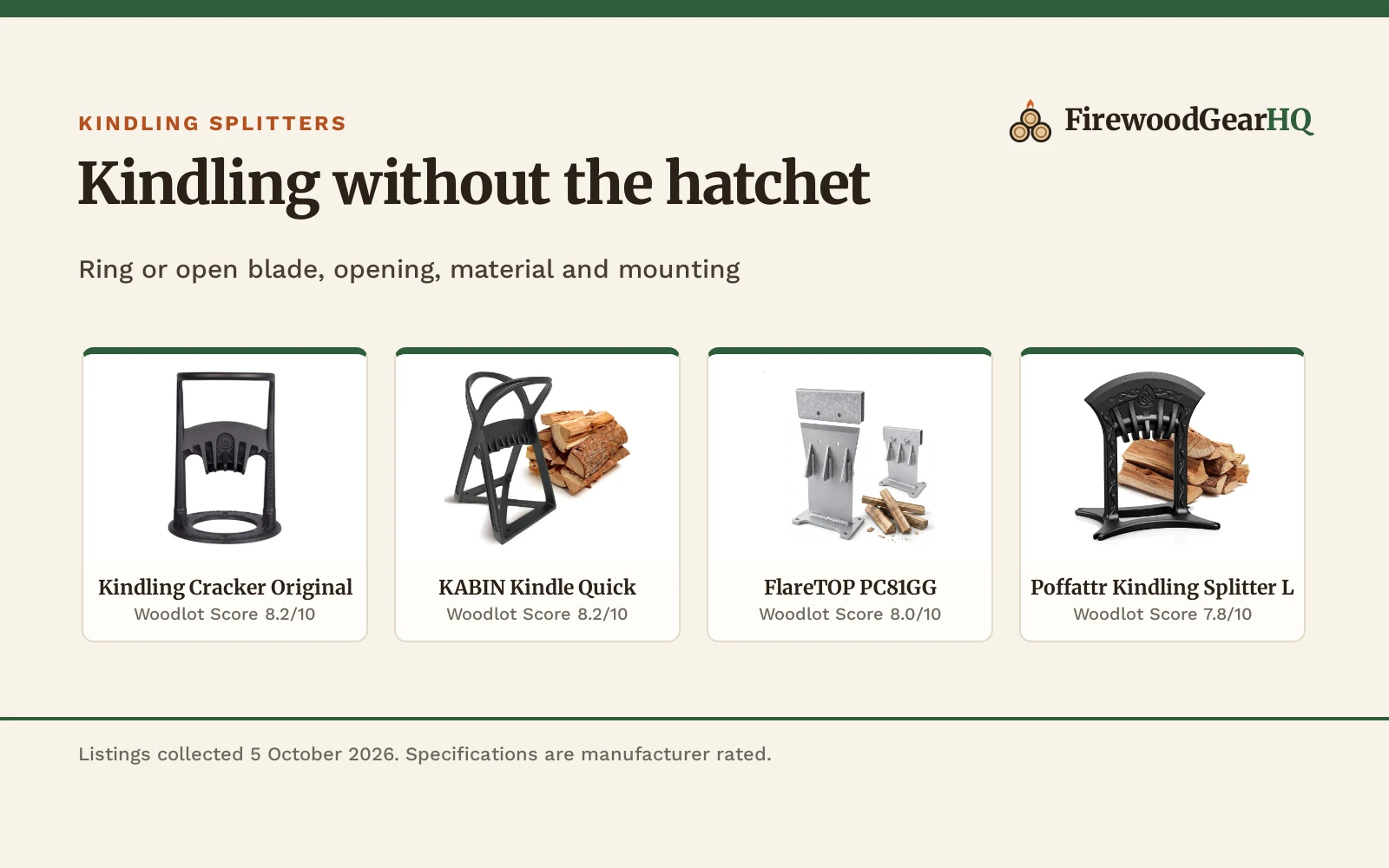
 Kindling Cracker Original Firewood Kindling Splitter9.7/10View on Amazon
- 2
 Heavy-Duty Manual Kindling Splitter with Bolt-On Steel Safety9.6/10View on Amazon
- 3
 Kindling Splitter L9.6/10View on Amazon
- 4
 5 Pcs Firewood Log Splitter Drill BitView on Amazon
- 5
 Wood Splitting Maul 15"View on Amazon
- 6
 KSEIBI 274178 Splitting Axe 36-Inch Wood Splitter ForgedView on Amazon
- 7
 Gisafai 6 Pcs Firewood Log Splitter Drill Bit WoodView on Amazon
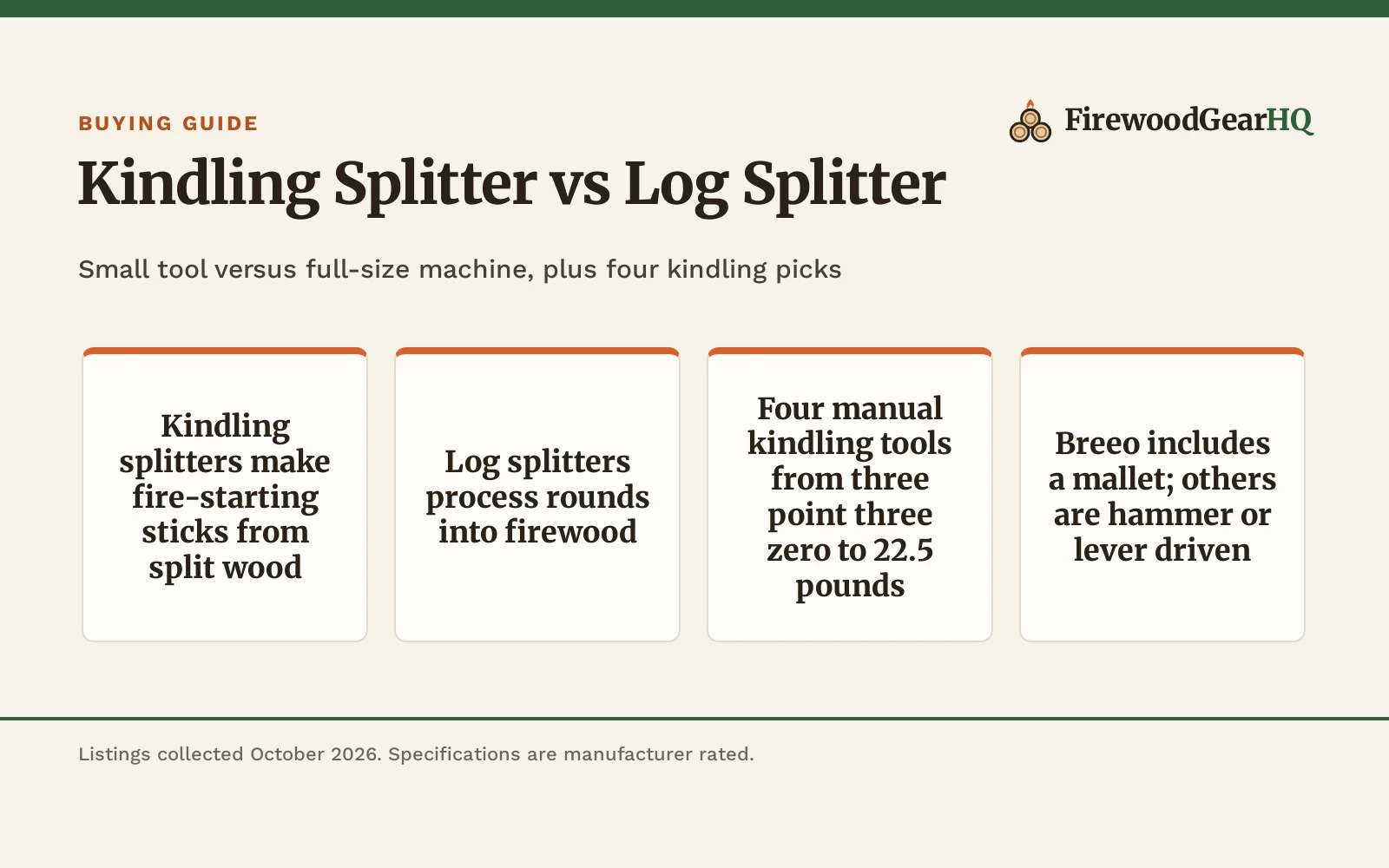
A kindling cracker and a kindling splitter are the same tool by two names: a fixed steel wedge you bolt to a stump, set a log on, and strike with a hammer. So kindling cracker vs kindling splitter is not a brand fight; it is a buyer’s guide to one tool type, and the differences that matter are size, weight, steel and safety hardware. All three tools in this guide are fixed-wedge splitters, ranked below.
More options to compare
 5 Pcs Firewood Log Splitter Drill BitCheck price on Amazon
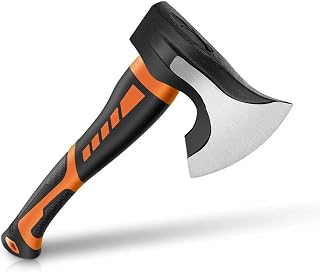 Wood Splitting Maul 15"Check price on Amazon
 KSEIBI 274178 Splitting Axe 36-Inch Wood Splitter ForgedCheck price on Amazon
 Gisafai 6 Pcs Firewood Log Splitter Drill Bit WoodCheck price on Amazon
FirewoodGearHQ may earn a small commission if you buy through links on this page. The price you pay stays the same.
The quick answer
Buy the biggest wedge your stump can hold if you split kindling daily: the Hi Flame’s 9.4 in height takes the biggest logs here. Buy the portable one if the tool travels to camp or the cabin. All three here mount with bolt holes, ship with a safety cover and need no axe swing, which is the whole point of the design.
What a kindling cracker does
The wedge sits fixed on a stump or block. You balance the log on the cutting edge and hit it with a hammer; the log splits and falls to either side. The Hi Flame listing describes exactly this: balance the wood and hit with a hammer and it splits instantly, with the cutting edge quenched for hardness. No axe passes your hands, which is why the listings call it the safe way to make kindling.
What a kindling splitter does
The same thing. Splitter is the generic name, cracker the brand-style name that stuck. The SPEED FORCE listing calls itself both a kindling cracker and a splitter in the same breath: no moving axe, a wedge point that splits firewood, slanted alternating fins that split large logs at an angle and prevent jams. The JINHAN calls itself a kindling maker, cracker and splitter all at once. Different words, one tool.
kindling cracker vs kindling splitter: the differences that matter
Size is the first real difference. The Hi Flame stands 9.4 in tall at 9 lb; the SPEED FORCE is 3 by 2.5 by 7 in at 3.3 lb; the JINHAN is a 3.1 in cube at 1.5 lb. Bigger wedges take bigger logs and need fewer strikes; the small ones travel. Weight is the second: the 9 lb Hi Flame stays put by mass, the lighter two rely on their bolt holes. Steel is the third: the Hi Flame lists #45 steel (AISI 1045) with a quenched cutting edge, the SPEED FORCE lists high-grade nodular cast iron with a hand-ground blade, and the JINHAN lists heavy-duty steel with an anti-rust coating.
The gear: three wedges from the listings
Three fixed-wedge splitters were in the set, ranked by their stated build. The Hi Flame leads: 9.4 in tall, 9 lb, handmade of powder-coated #45 steel with a quenched cutting edge, 4 bolt holes for fixing to a block, a safety cover on the edge, and indoor plus outdoor use. The SPEED FORCE follows: nodular cast iron with all-weather powder coating, a hand-ground sharp blade, slanted alternating fins stated to prevent jams, 4 mounting holes with screws supplied, a safety cover, and a stated lifetime of reliable quality. The JINHAN is third: a 3.1 in cube at 1.5 lb in heavy-duty steel with anti-rust coating, 4 bolt holes, a free protective cover, and a stated two-pound-or-more hammer as the striker. The listings use both names for the same fixed-wedge tool.
How to use one
Bolt it down first: all three list 4 bolt holes, and a bolted wedge stays put mid-swing. Set the log on the edge, keep hands clear of the strike zone, and hit the log with a hammer of at least two pounds, per the JINHAN listing. The cover goes back on the edge when the tool is stored or carried; all three ship one.
Mounting: stump, block or bench
Every wedge here lists 4 bolt holes, and mounting is what makes the tool safe. The SPEED FORCE ships 4 screws with its holes; the Hi Flame notes screws are not included, so bring your own. A stump is the classic mount: drive the bolts in and the wedge never moves. A wooden block or other flat surface works too, per the Hi Flame listing. The 9 lb Hi Flame has the most mass to sit steady before bolting; the 1.5 lb JINHAN relies on its bolt holes to stay put.
Safety covers and edges
All three ship a safety cover on the cutting edge: the Hi Flame, the SPEED FORCE and the JINHAN all state one, with the JINHAN calling it a free protective cover for safe carrying. The cover matters because these edges are genuinely sharp: the Hi Flame’s edge is quenched, the SPEED FORCE’s is hand-ground. Keep the cover on in storage, in the truck and in the pack; take it off only at the stump.
Which one should you buy
For daily kindling at home, the Hi Flame: the 9 lb weight and quenched #45 steel edge do the most work per strike. For a balance of build and portability, the SPEED FORCE: cast iron, jam-preventing fins and a lifetime quality claim at 3.3 lb. For camp and travel, the JINHAN: 1.5 lb in a 3.1 in cube that fits the pack. All three skip the axe swing, which is why you are buying one.
Wear eye protection and gloves for cutting, splitting and handling, follow every tool's manual, install stoves to code, and have the chimney inspected and cleaned every year. See EPA Burn Wise and NFPA heating safety. Read our Safety Disclaimer.
Around the Woodpile
- Bolt the wedge to the stump before the first swing; a loose wedge can shift mid-swing.
- Keep the safety cover on the edge whenever the tool is stored or carried.
- Strike the log, not the wedge: the hammer hits wood, and the edge does the splitting.
- Keep hands and fingers clear of the strike zone; no axe passes them, but the hammer still swings.
Frequently Asked Questions
Is a kindling cracker the same as a kindling splitter?
Yes. The listings here use both names for the same fixed-wedge tool: set the log on the edge, strike with a hammer, no axe swing.
Do I need to bolt it down?
All three list 4 bolt holes, and the SPEED FORCE ships screws. Bolting stops the wedge walking off the stump; the 9 lb Hi Flame has the most mass to sit steady unbolted.
What hammer should I use?
The JINHAN listing states a hammer weighing two pounds or more. Any stout hammer works; the point is you never swing an axe.
Can kids use one?
The JINHAN lists itself as ideal for beginners, seniors and family use since no axe swings. Supervise closely anyway: the hammer still swings and the edge is sharp under its cover.
How big a log can these split?
The Hi Flame’s 9.4 in height takes the biggest logs here; the SPEED FORCE’s slanted fins are stated to split large logs at an angle without jamming. These are kindling tools, not log splitters: keep the rounds modest.
Do they need maintenance?
The SPEED FORCE and JINHAN listings state virtually maintenance-free. Keep the edge covered, the bolts tight and the steel dry.
Related guides
Also see our kindling cracker vs splitting axe. Also see our kindling splitter vs hatchet. Also see our best splitting axe for kindling. Also see our fire starter vs kindling.
More picks: log splitter vs firewood processor.