Kindling Splitter vs Hatchet: Which One Should You Buy?
A kindling splitter keeps your hands clear of the blade at the woodpile; a hatchet goes anywhere but swings near your fingers. Which one fits your firewood routine.

On this page
Top picks at a glance
As an Amazon Associate we earn from qualifying purchases.
- 1
 Kindling Cracker Original Firewood Kindling Splitter9.7/10View on Amazon
- 2
 Kindling Cracker King XL Cast Iron Kindling Splitter9.7/10View on Amazon
- 3
 Heavy-Duty Manual Kindling Splitter with Bolt-On Steel Safety9.6/10View on Amazon
- 4
 Wood Splitting Maul 15"View on Amazon
- 5
 5 Pcs Firewood Log Splitter Drill BitView on Amazon
- 6
 KSEIBI 274178 Splitting Axe 36-Inch Wood Splitter ForgedView on Amazon
- 7
 Gisafai 6 Pcs Firewood Log Splitter Drill Bit WoodView on Amazon
It is a cold October evening, the stove is laid for the first fire of the season, and all you need is a bucket of kindling. That is the real question behind kindling splitter vs hatchet: which tool makes kindling the way you will actually keep doing it all winter. A kindling splitter is a fixed blade mounted on a stump or bench that you drive wood down onto, so your hands stay clear of the edge. A hatchet is a one-handed axe you swing, so it goes anywhere but puts your fingers near the work. If you make kindling at the woodpile, the splitter wins on safety and speed. If you make it at the campsite, the hatchet wins on portability.
More options to compare
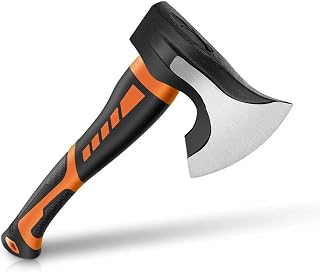 Wood Splitting Maul 15"Check price on Amazon
 5 Pcs Firewood Log Splitter Drill BitCheck price on Amazon
 KSEIBI 274178 Splitting Axe 36-Inch Wood Splitter ForgedCheck price on Amazon
 Gisafai 6 Pcs Firewood Log Splitter Drill Bit WoodCheck price on Amazon
FirewoodGearHQ may earn a small commission if you buy through links on this page. The price you pay stays the same. Read our affiliate disclosure.
Kindling splitter vs hatchet: the difference in one paragraph
The difference is what moves: with a wedge splitter the blade stays put and the wood moves, with a lever splitter you pull the blade through the wood, and with a hatchet the wood stays put and the blade moves. A splitter like the Hi Flame sits at 9.4 inches tall and 9 lbs, bolted through 4 bolt holes to a block, and you set a round on the upward blade and strike it with a hammer. A wall-mounted lever splitter like the Meyoppm takes logs up to 13.8 inches long and splits with a pull of the handle, no hammer at all. A hatchet needs nothing mounted and nothing carried but itself, which is why it is a staple of truck boxes and camp kits.
| Kindling splitter | Hatchet | |
|---|---|---|
| How it works | Fixed upward blade you drive wood down onto with a hammer or mallet, or a lever that pulls the blade through the wood | You swing a one-handed blade down onto the wood |
| Hand safety | Hands stay above and away from the edge; the Hi Flame and SPEED FORCE listings include a safety cover | Fingers hold the wood near the strike zone |
| Speed for a bucket of kindling | Fast and repeatable once mounted; the Qinmorelixy listing promises ¼ to 1 in kindling per strike | As fast as your aim; slows down when you get tired |
| Where it works | At the woodpile, bench or wall where it is mounted | Anywhere: campsite, truck bed, back porch |
| Weight in the sample | 14 oz (Umidex) to 22.5 lb (Breeo); the Hi Flame lists 8 and 9 lb models | Not stated in our sample listings |
| Mounting | 4 bolt holes on the Hi Flame, 4 pre-drilled holes on the ZELARMAN, 4 screws on the Meyoppm; the Breeo folds flat for storage | None needed |
| Wood limits | The Meyoppm and Primachen listings state softwood only; the Hi Flame lists #45 steel (AISI 1045) | Handles knots and odd pieces by feel |
Safety is the honest divider. Every splitter in the sample is built around the same idea: the SPEED FORCE listing calls it “no moving axe or sharpened object passing by your hands and fingers,” and the ZELARMAN listing calls it “a safe manual alternative to an axe.” A hatchet asks for a steady hand and a clear head, which is easy at first and less easy when you are tired.
When the kindling splitter wins
- Daily stove kindling. If the stove eats a bucket of kindling every evening from October to March, a mounted splitter turns it into a short chore instead of a swinging session.
- Safety around the family. A splitter with its cover on is easier to supervise around the family; most people still hover over a beginner’s first hatchet swings.
- Consistent pieces. The fixed wedge splits along the grain in a repeatable way, which gives even pieces that catch fast.
- Small spaces. A 3.1 inch cube like the Qinmorelixy or a 14 ounce Umidex rides in a camp box; a wall-mounted lever splitter like the Primachen frees the bench and the floor.
When the hatchet wins
- Away from the woodpile. Campfires, the deer stand, the back porch: a hatchet needs no stump, no screws and no wall.
- One tool, many jobs. A hatchet limbs branches, drives tent stakes and splits kindling. A splitter only splits.
- Odd and knotty pieces. A splitter wants straight, short rounds; a hatchet reads the grain and works around knots by feel.
- No setup. Nothing to mount, nothing to fold, nothing to remember to bring the mallet for. See our hatchet for winter camping picks for what to look for.
What to look for in a splitter listing
Since the sample is all splitters, here is what to pull from a listing before you buy:
- Mounting. The Hi Flame and ZELARMAN listings show 4 bolt holes or pre-drilled holes for a stump or bench; the Meyoppm includes 4 screws. A splitter that walks is a splitter you stop using.
- Blade steel. The Hi Flame lists #45 steel (AISI 1045) with a quenched cutting edge; the ZELARMAN lists ductile cast iron; the SPEED FORCE lists nodular cast iron. Harder steel holds the edge longer.
- Size against your rounds. The Meyoppm takes logs up to 13.8 inches long; the Qinmorelixy makes ¼ to 1 inch kindling from small pieces. Match the tool to the wood you actually split.
- Safety cover. The Hi Flame and SPEED FORCE listings include a cover for the edge, and one Meyoppm listing includes a protective rubber sleeve. It matters in a shed full of kids’ bikes.
Our kindling cracker vs splitting axe comparison goes deeper on the fixed-blade family, and fire starters vs kindling covers what to do with the pieces once they are split.
Frequently Asked Questions
Is a kindling splitter safer than a hatchet?
Yes, for the usual kindling job. The blade is fixed and your hands stay clear of it, and most listings include a safety cover for storage. A hatchet is safe in practiced hands, but every swing puts an edge near your fingers.
Can a kindling splitter handle hardwood?
It depends on the splitter. The Meyoppm and Primachen listings state their lever splitters suit softwood and not harder woods, so check the listing for wood limits before you buy. For knotty hardwood rounds, a hatchet or a full-size splitting axe reads the grain better.
Do I still need a hatchet if I own a kindling splitter?
Probably, for anywhere the splitter is not. The splitter lives at the woodpile; the hatchet rides in the truck and the camp box. They overlap at home and diverge everywhere else.
What size wood fits a kindling splitter?
Short rounds and split pieces, not full logs. The Meyoppm listing states logs up to 13.8 inches long, and the Qinmorelixy listing turns small pieces into ¼ to 1 in kindling. Cut your rounds to fit before you start.
How do you mount a kindling splitter?
Through the bolt holes into a stump, a log round or a bench. The Hi Flame lists 4 bolt holes, the ZELARMAN lists 4 pre-drilled holes, and the Meyoppm includes 4 screws. Mount it at a height where you can swing the hammer or pull the lever without bending over.
Kindling splitter or splitting axe for firewood?
Different jobs. A splitting axe breaks full rounds into firewood; a kindling splitter turns split pieces into kindling. If you burn a stove all winter you likely want both, and our maul and axe types guide covers the heavy end.
Related guides
See the hand vs electric log splitter comparison, the felling wedge vs splitting wedge guide and the manual splitter hub.