Do Electric Log Splitter Need Hydraulic Fluid? System and Maintenance Guide
Whether electric log splitters need hydraulic fluid to operate, how the hydraulic system works, and how to check and maintain the fluid reservoir.

On this page
Top picks at a glance
As an Amazon Associate we earn from qualifying purchases.
- 1
 PROYAMA 7T Electric Log Splitter9.6/10View on Amazon
- 2
 PowerSmart Electric Log Splitter9.5/10View on Amazon
- 3
 VEVOR Electric Log Splitter9.5/10View on Amazon
- 4
 Universal Hydraulic Fluid Extends equipment and fluid lifeView on Amazon
- 5
 Boss HYD01835 Hydraulic Fluid Brand: Boss SnowplowView on Amazon
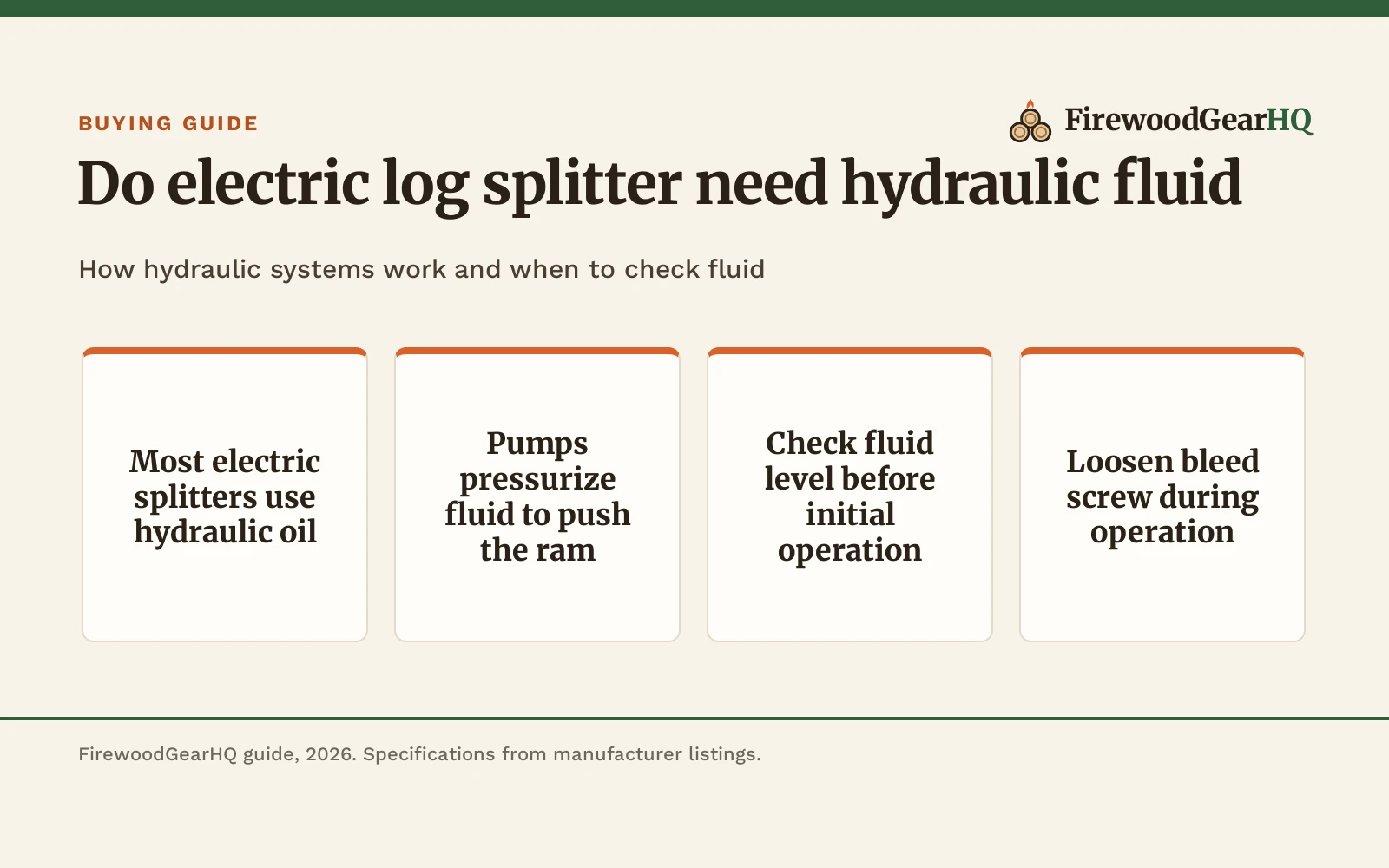
As cold weather approaches and seasoned rounds pile up by the woodlot, homeowners often ask: do electric log splitter need hydraulic fluid? Yes, nearly all consumer electric log splitters require hydraulic fluid to operate. The electric motor powers an internal hydraulic pump that pressurizes fluid to drive a steel ram, pushing logs into the splitting wedge. Without hydraulic fluid in the reservoir, the machine cannot build pressure and cannot split wood.
More options to compare
 Universal Hydraulic Fluid Extends equipment and fluid lifeCheck price on Amazon
 Boss HYD01835 Hydraulic Fluid Brand: Boss SnowplowCheck price on Amazon
FirewoodGearHQ may earn a small commission if you buy through links on this page. The price you pay stays the same. Read our affiliate disclosure.
Do electric log splitter need hydraulic fluid?
Almost every electric log splitter built for home firewood is a hydraulic machine. Rather than driving the ram with mechanical gears, the electric motor turns a hydraulic pump connected to an oil reservoir. When the operator engages the lever, pressurized hydraulic oil enters the cylinder and drives the piston forward with steady force.
Most compact electric splitters ship pre-filled with hydraulic fluid and sealed for transport, but some models ship dry or require topping off before use. Always check the operator manual and inspect the dipstick before running the motor. Seasonal splitting, heat, and minor seepage require periodic inspection and fluid replacement.
The only electric splitters that do not use hydraulic fluid are kinetic models. As explained in our guide comparing a kinetic vs hydraulic log splitter, kinetic machines rely on heavy spinning flywheels and a mechanical rack rather than pressurized oil. However, standard residential electric splitters are hydraulic.
Electric log splitter hydraulic specifications
Manufacturers engineer electric log splitters around specific hydraulic system pressures, pump ratings, and motor sizes. The table below details hydraulic specifications from manufacturer listings for electric log splitters:
| Brand and Model | Manufacturer Rated Force | Motor Power | Hydraulic Pressure | Cycle Time |
|---|---|---|---|---|
| ROCKCUB RC-LS-7T | 7 tons | 3HP | 28MPa (4060 PSI) | 18 seconds |
| Ezasin EALS02 | 16 tons | 2.5eHP (17.4Amp, 1600W) | Not stated | 18 seconds |
| PPOLB PPWS-0004 | 7 tons | 15Amp (1500W) | Not stated | Not stated |
| TECSPACE 7 Ton | 7 tons | 15 Amp | Not stated | Not stated |
These published figures show how hydraulic systems function across electric splitters. The ROCKCUB listing states a 3HP motor driving a hydraulic pump at 28MPa (4060 PSI) to deliver 7 tons of force with an 18-second cycle time. The Ezasin listing states a 2.5eHP motor drawing 17.4Amp at 1600W to produce 16 tons of force through a hydraulic gear pump with an 18-second cycle time. The PPOLB listing specifies a 15Amp motor at 1500W delivering 7 tons of force, while the TECSPACE listing pairs a 15 Amp motor with a hydraulic system for 7 tons. Each machine depends on fluid circulation to generate splitting tonnage.
How hydraulic systems work in electric log splitters
The electric motor and hydraulic pump
The electric motor turns an internal hydraulic pump, converting electrical power into hydraulic pressure rather than driving the ram through mechanical gears.
The reservoir and fluid circulation
The frame tube or dedicated tank serves as the hydraulic reservoir. The pump draws oil from this reservoir and routes it to the control valve, circulating fluid back at low pressure when idle.
The control lever and hydraulic cylinder
Engaging the control lever directs pressurized oil into the cylinder, forcing the ram forward into the log. Releasing the lever returns the valve to neutral, allowing return springs or reverse flow to retract the ram into the starting position.
The hydraulic bleed screw
Most electric splitters include an air bleed screw on the reservoir. Loosening the screw allows the tank to breathe, preventing vacuum during extension and venting air as oil warms and returns. Snug the screw closed before transport or storage to avoid leaks.
How to check and maintain hydraulic fluid
Proper hydraulic maintenance ensures consistent splitting force and extends pump longevity. Follow these inspection practices during seasonal firewood prep:
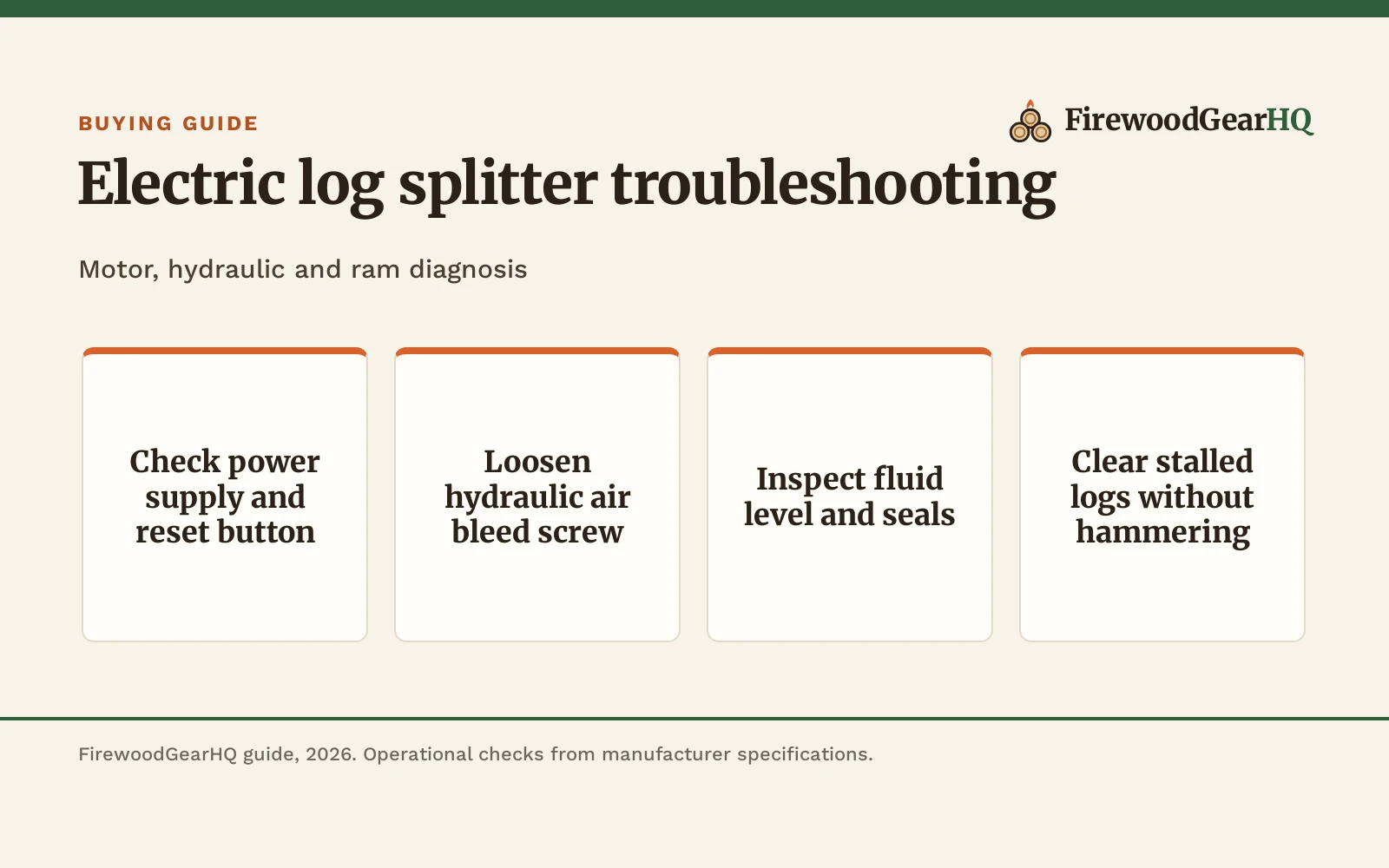
- Fluid level check: With the ram fully retracted and the splitter level, loosen the bleed screw, then remove the dipstick or check the sight glass. Wipe clean, reinsert per maker instructions, and verify the oil rests between the indicator marks.
- Fluid color inspection: Clean fluid looks amber or golden. Milky oil indicates water contamination, while dark or scorched oil indicates heat degradation requiring replacement.
- Inspecting for leaks: Check cylinder seals, fittings, the drain plug, and the bleed screw for oil residue along the chassis.
- Bleed screw adjustment: Loosen the bleed screw slightly before splitting to let the tank breathe. Snug it closed before transport or storage.
- Changing the hydraulic oil: Place a drain pan beneath the plug, open the bleed screw, and drain old fluid completely. Reinstall the drain plug securely, refill with fresh hydraulic oil meeting the maker specification until full, and cycle the ram to purge air.
What happens if hydraulic fluid runs low or degrades
Low or degraded fluid causes immediate operating trouble. When oil drops below the pump intake, air enters the lines. The pump whines loudly, and pressure drops, causing the ram to stall on tough logs. For troubleshooting when force drops, see our guide on why wont my log splitter split.
Low fluid also causes jerky, sluggish ram travel. If cycle times slow noticeably, consult our checklist on why is my log splitter slow. Running without enough oil also generates severe friction, overheating pump gears and hardening rubber cylinder seals.
Safe operation around the electric log splitter
Electric splitters generate tremendous crushing force that demands strict safety discipline. Safe operation requires one operator only at the controls. Never allow another person to hold or steady a log while the ram is in motion. Uncoordinated movement is the primary cause of crushing injuries.
Keep hands clear of the wedge and splitting zone at all times. Operators should stand at the controls with firm footing on level ground and wear approved eye protection against flying bark fragments. For a full safety overview, review our log splitter safety rules.
Electric splitters compared to kinetic alternatives
Homeowners reading our electric log splitter guide and roundup of the best log splitter for home use often ask about non-hydraulic alternatives. Kinetic splitters use an electric motor to spin balanced flywheels, engaging a rack and pinion to drive the ram forward rapidly without hydraulic oil.
While kinetic units split straight rounds quickly, hydraulic splitters deliver steady, controlled pushing force. If a tough knot halts the ram, the hydraulic relief valve bypasses oil safely, protecting motor and chassis.
Turn a stack's length, height and depth into full and face cords, and estimate how much wood a winter takes.
Frequently Asked Questions
Do electric log splitters come with hydraulic fluid already installed?
Most compact residential electric splitters ship pre-filled with hydraulic fluid, but not every model does. Check the dipstick and consult the manual before starting a new machine.
Can you use regular motor oil in an electric log splitter?
No. Standard motor oil lacks the anti-foaming and moisture-separating properties required by hydraulic pumps. Consult our guide on what hydraulic fluid for a log splitter to pick the right oil.
How often should hydraulic fluid be changed in an electric log splitter?
Most manufacturers recommend replacing fluid periodically or whenever it looks cloudy or dark. Maintenance routines are detailed in our log splitter maintenance guide.
Why does an electric log splitter need a bleed screw?
The bleed screw allows the unpressurized reservoir to breathe as the cylinder moves. It prevents vacuum on extension and vents air during return, but must be closed during transport to prevent leaks.
What happens if an electric log splitter runs out of hydraulic fluid?
The pump draws air, whines loudly, and cannot advance the ram. Running dry quickly causes pump seizure and cylinder damage.
Do all log splitters use hydraulic fluid?
No. Kinetic splitters use spinning flywheels and a rack to split wood without oil. However, standard electric log splitters rely on hydraulic systems.
Related guides
See our log splitters hub, the electric log splitters guide, and our reviews of the best electric log splitters and the best log splitter for home use. For fluid recommendations and care, read what hydraulic fluid for a log splitter and our seasonal log splitter maintenance guide. If your machine runs slowly or loses power, consult our guides on electric log splitter troubleshooting, why is my log splitter slow, and why wont my log splitter split. Comparing power sources and splitting styles? See gas vs electric log splitter, electric vs kinetic log splitter, kinetic vs hydraulic log splitter, and battery log splitter vs electric log splitter. Also see our log splitter safety rules. Also see our how does a log splitter work. Also see our how to winterize a log splitter. Also see our cheap wood splitter. Also see our log splitter comparison. Also see our how many tons log splitter do i need. Also see our what size log splitter do i need. Also see our what is cycle time on a log splitter. Also see our best log splitter cover. Also see our log splitter recalls what owners should check.