How to Use a Stump Vise: Step-by-Step Field Sharpening Guide
How to use a stump vise to anchor your chainsaw guide bar in the woods, drive the forks into solid wood, clamp the bar firmly, and sharpen cutters safely.

On this page
Top picks at a glance
As an Amazon Associate we earn from qualifying purchases.
- 1
 Oregon Chainsaw Chain Sharpening Kit with Hard Case Contains9.5/10View on Amazon
- 2
 Forester Heavy Duty 7” Stump Vise for Chainsaw Sharpening9.5/10View on Amazon
- 3
 Timber Tuff Portable Chainsaw Stump Vise for On Site Chain9.4/10View on Amazon
When autumn firewood cutting is underway, a dull chain that throws dust instead of chips slows work quickly. Hitting dirt or gravel rounds cutter teeth and pulls cuts crooked. Knowing how to use a stump vise solves that problem in the woods without a trip back to the bench: drive the tapered forks into a solid stump, slide the chainsaw guide bar into the clamping jaws, tighten the wing screw until the bar is rigid, and file each cutter to its factory witness mark.
FirewoodGearHQ may earn a small commission if you buy through links on this page. The price you pay stays the same. Read our affiliate disclosure.
The quick answer
A stump vise provides a solid field sharpening stand anywhere you cut firewood. Driving the forks into sound wood anchors the clamp, while locking the guide bar stops the saw from shifting as you push the file. The chain remains free to advance along the rails so you can rotate the loop by gloved hand, file opposing teeth evenly, and check depth gauges before cutting again.
Stump vise dimensions and weight comparison
| Brand and model | Stated dimensions | Stated weight | Stated material |
|---|---|---|---|
| Husqvarna 596286001 | 5 x 3 x 0.8 inches | 12 ounces | Not stated |
| PFERD 17080 | 5.95 x 3.9 x 1.45 inches | 12.3 ounces | Steel |
| MaxPower 336588 | 7.38 x 4.75 x 1.38 inches | 13.3 ounces | Not stated |
| GardenP+ SV26368A | 5.31 x 3.82 x 1.02 inches | 13.7 ounces | Not stated |
| QWORK WD5263 | 5.87 x 4.02 x 1.06 inches | 1.06 pounds | Hard steel |
| FORESTER FORSV7 | 7 x 2.25 x 3.75 inches | Not stated | Drop-forged cast iron |
| Oregon 26368A | 17.5 x 6.75 x 5.1 inches | 0.3 kg | Plastic in spec table, steel forks in description |
Field filing clamps fit easily into a wedge pouch. The Husqvarna listing states 12 ounces and 5 x 3 x 0.8 inches. Steel models include the PFERD at 12.3 ounces and 5.95 x 3.9 x 1.45 inches, and the QWORK at 1.06 pounds and 5.87 x 4.02 x 1.06 inches. FORESTER lists drop-forged cast iron measuring 7 x 2.25 x 3.75 inches, MaxPower lists 7.38 x 4.75 x 1.38 inches and 13.3 ounces, and GardenP+ lists 5.31 x 3.82 x 1.02 inches and 13.7 ounces. The Oregon listing contradicts itself, listing plastic material in its spec table but steel forks in its description, with 0.3 kg weight and 17.5 x 6.75 x 5.1 inches dimensions. Stihl lists metal construction and 7 years spare part availability for model L700-00008810403.
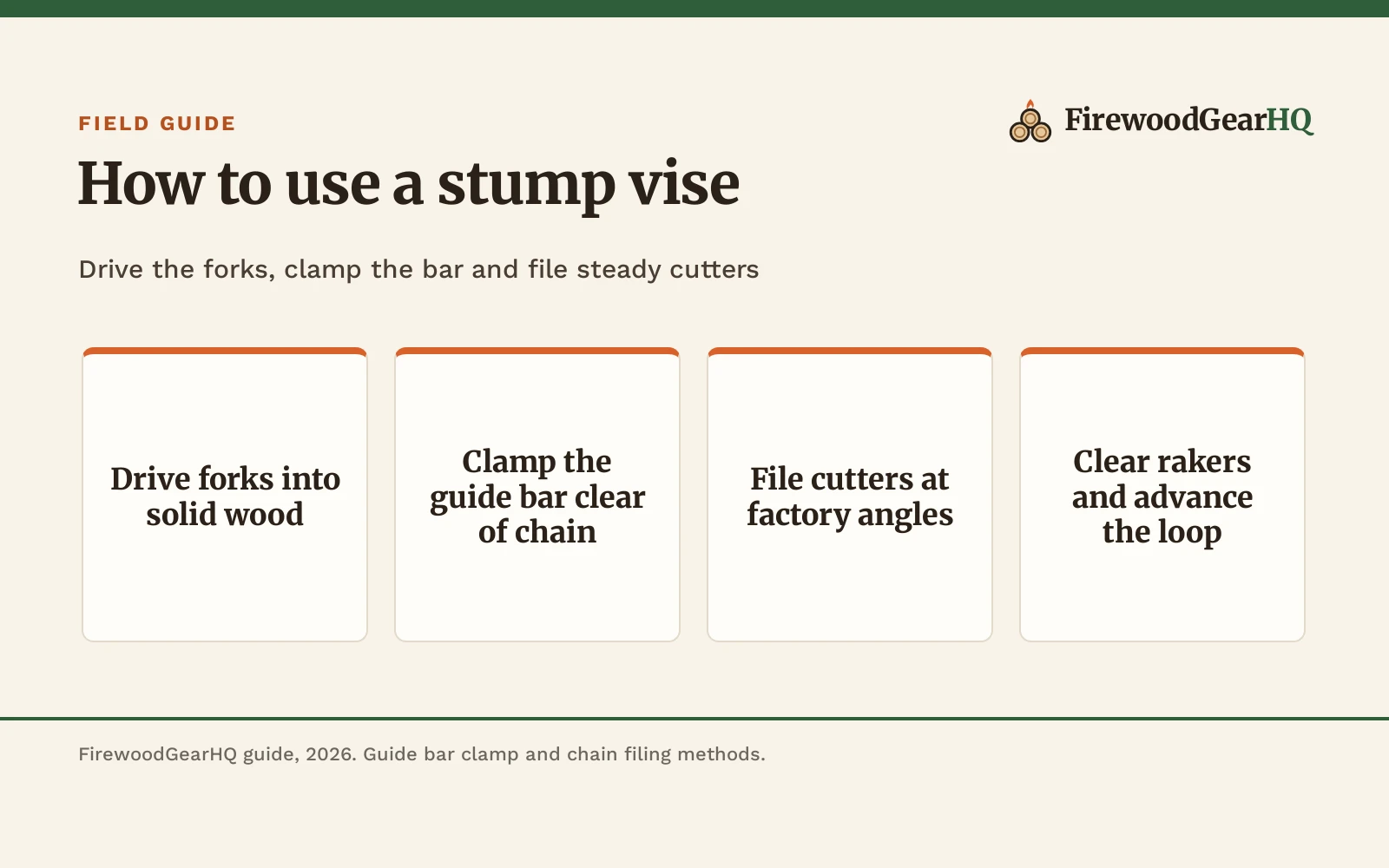
How to use a stump vise
Select a stable stump or heavy wood round
Select a sound tree stump or stand a heavy bucked log upright on level ground. Avoid punky or rotten wood that cannot support filing force. Clear away loose bark, chips, and dirt to expose solid wood.
Drive the pointed forks into the wood grain
Set the vise near the stump edge so the saw motor and bar clear the wood. Align the forks across the grain rather than along splits. Drive the forks straight into the wood using a wooden mallet or the back of a plastic wedge until the shoulders rest flush against the wood.
Slide the chainsaw guide bar into the clamping jaw
Turn off the engine, ensure the switch is off, and engage the chain brake. Open the vise jaws, slide the solid center of the guide bar into the clamp, and ensure the chain rails remain clear. Tighten the wing screw firmly by hand until the bar cannot tilt or wobble.
Sharpen cutters evenly at the factory witness mark
Put on heavy gloves. Keep the chain brake engaged to hold the chain stationary. Align your round file with the cutter witness mark, push the file forward across the cutting face, and lift on the return stroke. File each exposed cutter on the top rail with an equal stroke count.
Advance the loop and check depth gauges
Release the chain brake, pull the chain forward with a gloved hand to bring dull cutters into position, and re-engage the brake before filing. Repeat until all teeth are sharp on both sides. Check rakers with a depth gauge tool and file down high spots flat.
Loosen the clamp and remove the vise
Engage the chain brake and check chain tension. Loosen the wing screw, remove the saw, and set it safely on the ground. Rock the vise body along the forks or tap a wedge underneath to lift it out of the stump. Clean sawdust from the threads before stowing.
Field checks for steady chainsaw sharpening
Before and during filing, confirm these key conditions:
- Stump firmness: the base wood must not rock or shift during filing.
- Rail clearance: jaws must clamp the bar body without pinching the chain groove.
- Smooth chain movement: the loop slides freely along the rails by gloved hand when the brake is released.
- Chain brake lock: the brake holds the chain rigid during every file stroke.
- Uniform cutter length: equal stroke counts keep teeth matched for straight cuts.
- Proper depth gauges: correct raker height prevents grabbing or excessive vibration.
What happens if you file without a vise
Filing freehand in the woods often causes uneven angles and rounded edges. When the saw rests loose on a log or lap, the bar shifts with each file stroke. That movement alters cutting angles and leads to mismatched tooth lengths, making the saw cut crooked and bind in firewood rounds. If your saw pulls sideways, see our guide on why does my chainsaw cut crooked. A stump vise holds the bar rigid, maintaining proper cutter geometry.
Stump vises compared with shop bench vises
A workshop bench vise provides a sturdy station for chain maintenance, but stays bolted in the shop. A portable stump vise brings that stability to the woodlot. Carrying one in your kit lets you touch up dull cutters right where you cut instead of hiking back to a bench. Compare tools in our guide to the best chainsaw sharpener and the best portable chainsaw saw sharpener, or see dedicated models in our stump vise for chain saw sharpening review.
Chainsaw safety in the woodlot
Always shut off the engine and engage the chain brake before mounting the bar in a stump vise. Wear cut-resistant chainsaw gloves when handling the chain. Core woodlot PPE is essential: wear certified chainsaw chaps, boots, and a helmet with face screen and hearing protection. Follow OSHA logging eTool guidance by watching for kickback and never cutting alone. Review our chainsaw safety gear checklist for full details.
Wear eye protection and gloves for cutting, splitting and handling, follow every tool's manual, install stoves to code, and have the chimney inspected and cleaned every year. See EPA Burn Wise and NFPA heating safety. Read our Safety Disclaimer.
Frequently Asked Questions
How deep should a stump vise be driven into the wood?
Drive the forks in until the shoulder of the vise rests flush against the wood surface. This prevents twisting or rocking under file pressure.
Can you use a stump vise on a downed log instead of a stump?
Yes. Any stable log heavy enough to remain motionless works well. Avoid soft, rotten sapwood that could yield while filing.
Does clamping the guide bar damage the chainsaw?
No, as long as you clamp the solid center of the bar and hand-tighten only. The jaws hold the bar body without pinching the chain rails shut.
How tight should you turn the wing screw on a stump vise?
Tighten the wing screw firmly by hand until the bar cannot tilt. Never use pliers or wrenches, which can distort the bar rails or strip threads.
Can you sharpen all cutters without unclamping the saw?
Yes. Release the chain brake to advance the chain along the rails, re-engage the brake to file, and switch your stance to sharpen opposing teeth.
How often should you sharpen a chainsaw chain in the field?
Touch up cutters whenever the saw produces dust rather than coarse chips, or pulls sideways. See how often should you sharpen a chainsaw chain and confirm your file size with what chainsaw chain do I need.
Related guides
Explore more equipment care in our chainsaw gear section. Check out the best chainsaw for firewood, stock felling wedges with our best tree felling wedges guide, and browse all models in our chainsaws directory. Also see our stump vise for chain saw sharpening. Also see our best chainsaw sharpener. Also see our best portable chainsaw saw sharpener. Also see our how often should you sharpen a chainsaw chain. Also see our why does my chainsaw cut crooked. Also see our chainsaw safety gear checklist. Also see our best chainsaw gloves. Also see our best chainsaw chaps. Also see our what chainsaw chain do I need.