Types of Propane Heaters Explained
A plain guide to the types of propane heaters, from tall freestanding patio heaters to portable models, with the heat output and coverage figures to compare.

On this page
Top picks at a glance
As an Amazon Associate I earn from qualifying purchases.
- 1
 NEWBULIG Patio Heater 489.6/10View on Amazon
- 2
 Amazon Basics 469.4/10View on Amazon
- 3
 Mars Explo 509.3/10View on Amazon
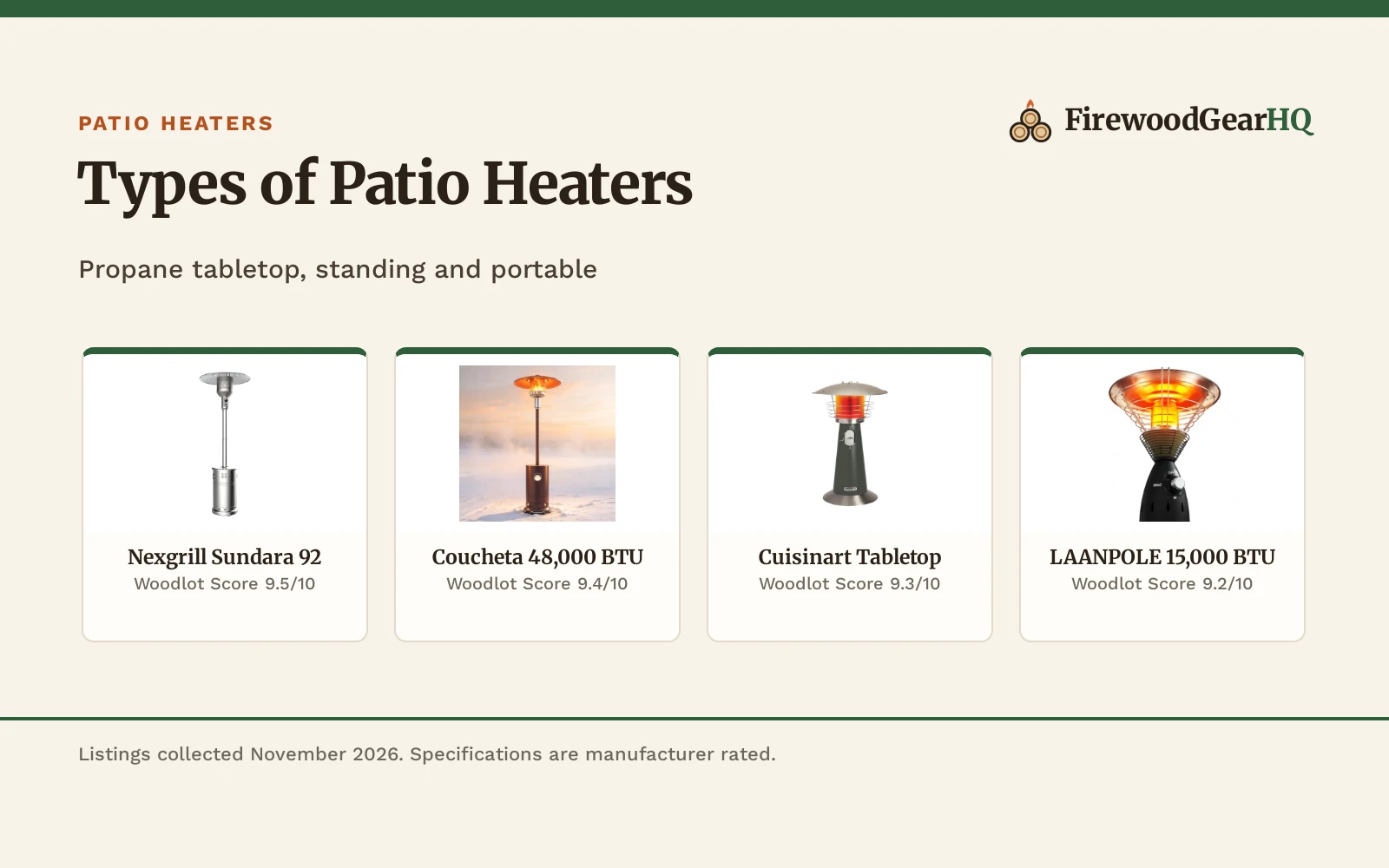
Evenings on the patio turn cool fast once the sun drops, and a seating area that felt inviting at dusk can feel empty by nightfall. Types of propane heaters solve that problem in different ways: tall freestanding patio heaters that spread warmth from above, table-design models with a ring for drinks, portable heaters that move from patio to campsite, and fire pit tables that put the flame at the centre of the gathering. Each type burns propane from a refillable cylinder, but they differ in how they spread heat, how far they reach and where they fit. This guide explains each type, the figures that matter and how to pick the right one for the space outside the back door.
FirewoodGearHQ earns a small commission if you buy through links on this page. The price you pay stays the same. Read our affiliate disclosure.
The quick answer
For most patios, a tall freestanding heater is the default choice: the listings in this guide list freestanding models at 46,000 to 50,000 BTU, with heat reaching across 18 to 20 ft in diameter. A table-design model gives the same output with a drinks ring built around the pole, while a portable heater at 15,000 BTU suits a campsite, a garage or a small corner of the patio. Match the output and the coverage to the space, check the tank size and the tilt shut-off, and the choice narrows fast.
Types of propane heaters at a glance
The table below sets the main types side by side, using the figures the makers list.
| Type | Heat output | Coverage | Suits |
|---|---|---|---|
| Freestanding patio heater | 46,000 to 50,000 BTU | 18 to 20 ft diameter | Patios and seating areas |
| Table-design patio heater | 50,000 BTU | 200 sq. ft. | Dining and drinks at the table |
| Portable heater | 15,000 BTU | Not stated | Campsites, garages and small patios |
| Fire pit table | Not stated | Not stated | Gatherings around a flame |
Heat output alone does not settle the choice. A tall heater throws warmth down and out across a seating area, while a portable heater warms the space close around it, so the shape of the space matters as much as the figure on the box.
Freestanding patio heaters
The freestanding patio heater is the tall mushroom shape seen outside cafes and on home patios: a pole on a weighted base, a burner near the top and a wide reflector that pushes heat down and out. Amazon Basics lists its model at 46,000 BTU with heat across an 18 foot diameter, and the heater measures 32.1 x 32.1 x 91.3 inches. East Oak lists its model at 50,000 BTU with heat across 20 feet in diameter.
Most freestanding models run from a 20 lb propane tank that sits inside the base, and the tank is not included. Wheels let the heater move between seating areas, and a tilt safety valve shuts the gas off if the heater tips. East Oak adds a water tank in the base, listed as holding up to 26.45 lbs, to steady the heater in a breeze, while Hykolity fits a sand box for the same job. Ciays lists about 30 minutes of assembly for two people, and noticeable heat in about 1 minute from a push-button ignition, so light the heater before guests settle in rather than after. When the season ends, a cover keeps the heater clean in storage; see the best patio heater cover for winter guide.
Table-design patio heaters
A table-design heater is a freestanding heater with a round table built around the pole, so drinks and plates sit within reach of the seats. Hykolity lists its table-design models at 50,000 BTU with heat across 200 sq. ft., and East Oak lists the same output with heat across 20 feet in diameter. The table ring is stainless steel on the East Oak model, and the pole carries the same one-touch ignition and control knob as a plain freestanding heater.
The makers pair these models with ballast low down: East Oak fits a water tank listed as holding up to 26.45 lbs, and Hykolity fits a sand box. Wheels under the base let the whole heater roll into place.
Portable propane heaters
Portable propane heaters trade output for size and weight, and they go where a tall patio heater cannot. Laanpole lists its portable heater at 15,000 BTU with two heat settings, low and high, and a head that rotates to spread warmth across a tent, a patio or a garage. The listing describes it as hooking up to a standard propane cylinder, and the tip-over protection cuts the gas if the heater falls.
These heaters suit a campsite, a fishing trip, a tailgate or a corner of the garage, and the protective grille keeps hands clear of the hot mesh. They warm the space close around them rather than a wide seating area, so place one near the chairs rather than at the edge of the patio. The maker lists the heater for both indoor and outdoor settings, but always follow the maker instructions and local code for ventilation and clearances.
Fire pit tables and other propane heaters
A fire pit table sets the burner into the tabletop, so the flame sits at the centre of the seating and the table edge holds drinks. The shape suits conversation better than a tall heater, since everyone faces the flame, and the table stays useful when the burner is off. Compare the two shapes in the propane patio heater vs fire pit guide before choosing. Radiant and infrared models warm people and surfaces directly rather than heating the air, and they suit a covered patio or a spot where the wind strips heat away from a tall heater. See the best radiant patio heater guide and the electric infrared vs propane patio heater comparison for the trade-offs.
How to choose the right type
Start with the space, then the output, then the practical details. The right type is the one that fits the seating, reaches across it and stays steady in the weather the patio gets.
Match the heater to the space
Compare the seating area with the coverage the maker lists. A table-design heater at 50,000 BTU covers 200 sq. ft. on the Hykolity listing, and East Oak lists heat across 20 feet in diameter, so a heater of that size suits a dining set or a lounge group rather than a single chair. A small patio needs less: see the best propane patio heater for a small patio guide for models sized to tight spaces.
Check the heat output
Output is listed in BTU, and the listings here run from 15,000 BTU for a portable heater to 46,000 and 50,000 BTU for tall patio heaters. A higher figure means more heat, not a warmer evening on its own: wind, open sides and cold air all pull warmth away, so treat the figure as a starting point and compare like with like.
Look at the tank
Most tall heaters run from a 20 lb propane tank that sits inside the base, and the tank is not included. Check how the tank loads: Ciays fits a sliding door so the cylinder swaps without lifting the upper assembly, and East Oak cuts a hole in the bucket so the gas valve closes without lifting it. A spare tank avoids a cold evening when one runs out mid-gathering.
Weigh the safety features
Look for a tilt shut-off, flame-out protection and a guard around the burner. Ciays lists triple safety protection, with the gas shutting off if the heater tilts beyond 45 degrees and flame-out protection stopping the gas if the flame goes out. DWVO lists the same 45 degree tip-over protection alongside low-oxygen protection, and its reflector uses four panels of 1.5 mm metal, each 15 x 11.6 in, to push heat toward the seats.
Think about wind
Wind is the enemy of a tall heater, since it strips heat sideways before it reaches the seats. East Oak advises against use in storms or when wind speeds exceed force 6, and its conical barrel and water tank add weight low down for stability. A reflector that blocks wind from the rear, ground stakes for grass and a cover for storage all help on a breezy patio. See the best patio heater for windy areas guide for models built for exposed spots.
FAQ: wood, fire and gear
What is the most common type of propane heater?
The tall freestanding patio heater is the most common type, and the listings here put its output at 46,000 to 50,000 BTU. It suits patios, cafes and restaurant terraces, and its reflector spreads heat down and out across the seats around it.
How much space does a propane patio heater warm?
It depends on the model. Amazon Basics lists heat across an 18 foot diameter, East Oak lists 20 feet in diameter, and Hykolity lists 200 sq. ft. Ignovate lists warming up to a 10-foot radius. Treat those figures as the maker claims for calm air, since wind shortens the reach.
What size propane tank does a patio heater use?
Most tall patio heaters run from a standard 20 lb propane tank, and the tank is not included with the heater. The cylinder sits inside the base, held by a chain or a strap, and the base may also hold water or sand for ballast.
Can a propane patio heater be used indoors?
The listings describe these heaters for outdoor use on patios, decks and gardens. Some listings mention indoor settings, but always follow the maker instructions and local code, keep the heater clear of walls and soft furnishings, and never run it in a closed room without ventilation.
Do propane patio heaters work in wind?
They work, but wind shortens their reach and can tip a light heater. East Oak advises against use in storms or when wind speeds exceed force 6. A weighted base, a water tank or sand box, ground stakes on grass and a reflector that blocks wind from the rear all help, and a sheltered corner beats an open edge of the patio.
More firewood guides
For the next step, see the best propane patio heater for a balcony guide, the best propane patio heater for a small patio guide and the best patio heater for windy areas guide. To weigh fuel choices, read the propane vs natural gas patio heater comparison and the electric vs propane patio heater comparison. Compare a heater with a wood stove in the wood stove vs propane heater guide, and keep the heater covered with the best patio heater cover for winter guide.