Smokeless vs Regular Fire Pit: Which One Should You Buy? (2026)
Smokeless vs regular fire pit: how secondary combustion works, what the regular side keeps, and four smokeless examples ranked from portable pits to a permanent ring.

On this page
Top picks at a glance
As an Amazon Associate we earn from qualifying purchases.
- 1
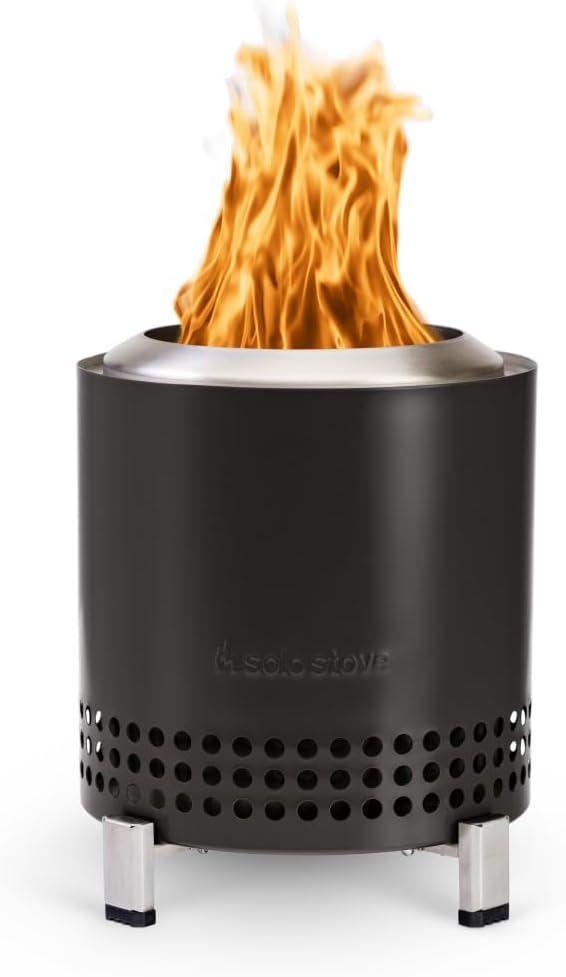 Solo Stove Mesa XL 7" Tabletop Fire Pit9.7/10View on Amazon
- 2
 OutVue 42 Inch Fire Pit with 2 Grills9.7/10View on Amazon
- 3
 East Oak Fuoco 21 Inch Smokeless Fire Pit9.6/10View on Amazon
- 4
 Smokeless Fire Pit Ring Outdoor Insert 36 Inch Round SteelView on Amazon
- 5
 27 Inch Smokeless Wood-Burning Fire PitView on Amazon
- 6
 Koutemie Outdoor Smokeless Fire Pit Ring Liner 40-InchView on Amazon
- 7
 Radiate Portable Smokeless Campfire Fire PitView on Amazon
- 8
 Wood Pellet Patio Heater & Pellet Fire PitView on Amazon
- 9
 Cuisinart Outdoor Fire PitView on Amazon
Smokeless vs regular fire pit? Choose smokeless if you hate smoke in your eyes and on your clothes: a smokeless pit uses engineered airflow and secondary combustion to burn off smoke before it leaves the fire. Choose a regular fire pit if you want the simplest, cheapest ring of steel and do not mind tending the smoke. All four product listings here are smokeless, so this guide explains the smokeless side from what the listings state, contrasts it honestly with the regular side, and ranks the four examples.
More options to compare
 Smokeless Fire Pit Ring Outdoor Insert 36 Inch Round SteelCheck price on Amazon
 27 Inch Smokeless Wood-Burning Fire PitCheck price on Amazon
 Koutemie Outdoor Smokeless Fire Pit Ring Liner 40-InchCheck price on Amazon
 Radiate Portable Smokeless Campfire Fire PitCheck price on Amazon
 Wood Pellet Patio Heater & Pellet Fire PitCheck price on Amazon
 Cuisinart Outdoor Fire PitCheck price on Amazon
FirewoodGearHQ may earn a small commission if you buy through links on this page. The price you pay stays the same. Read our affiliate disclosure.
The quick answer
A smokeless fire pit is a regular fire pit with better breathing. The listings describe the mechanism the same way: an internal airflow system feeds extra oxygen to the fire so unburned gases combust instead of leaving as smoke. OutVue calls it a scientific internal airflow system for a clean flame; Iron Forge Tools calls it efficient airflow and secondary combustion for a cleaner burn; Solo Stove calls it air-flow efficient for a smoke-free fire. A regular pit has none of that engineering: it is a bowl or ring where wood burns once, and the smoke goes where the wind takes it.
The trade is price, complexity and expectations. Smokeless pits cost more, need dry wood to work as promised, and still make some smoke at startup. Regular pits are simple steel, burn anything, and smoke. If your patio sits close to neighbors or your clothes always smell of campfire, the smokeless side earns its premium. If you burn in the open country and do not mind the smoke, the regular side is the honest value.
How a smokeless fire pit works, per the listings
The listings agree on the physics. Primary air feeds the fire from below while secondary air, heated as it rises through the pit’s double wall, injects at the top to burn off the smoke. Iron Forge Tools is the most explicit: engineered airflow and secondary combustion, with a rock base, a 1 in gap between ring and wall, and air vents at the base to optimize smoke reduction. OutVue describes a unique internal airflow design for a clean flame atmosphere with no stinging smoke.
That engineering has conditions. The listings promise low smoke: OutVue says low smoke design, Solo Stove says smoke-free experience, Iron Forge says cleaner burn and more impressive smokeless flames. Read these as low smoke in practice, not zero: Dry wood matters more in a smokeless pit than a regular one, because wet wood overwhelms the secondary burn. And the pits still smoke while lighting, before the secondary combustion gets hot enough to work. Cleaning is the other half of ownership, and the listings compete on it: the Solo Stove has a removable ash pan and base, the OutVue pits lift out an ash tray, and the 15.5 in is designed so you lift the bottom plate, not the whole pit. A pit that cleans easily gets used more; a pit that fights you sits cold.
What the regular side gives up, and keeps
None of these four listings is a regular fire pit, so this section is the honest contrast, not a spec sheet. A regular pit gives up the secondary burn: no double wall, no engineered air channels, just a bowl. What it keeps is simplicity: fewer parts, lower price, nothing to clog, and it burns damp wood without complaint, making heat and smoke in the usual ratio.
The smokeless side gives up some of that forgiveness. The airflow channels want dry fuel and a hot fire to do their work; a smoldering wet-wood fire in a smokeless pit is just an expensive smoky pit. It also gives up portability in one case here: the Iron Forge ring is a permanent install, explicitly not for portable use or campground transport, while the other three are portable.
The gear: four smokeless examples, ranked
First, the Solo Stove Bonfire with stand. The most documented listing: 19.5 in diameter, 21.75 lb, 304 stainless steel with a high-heat ceramic coating, removable ash pan and base, stand included, for 4 to 6 people. The listing promises a smoke-free fire, easy cleaning and years of durability. The warranty line is truncated with no term stated, so it counts for nothing here. Top rank on documentation and materials.
Second, the OutVue 27 in. The big one: 27 in stainless smokeless pit for 7 to 10 people, with a waterproof cover and fire poker included. Same low-smoke airflow design, tool-free assembly, and an ash tray that lifts out for cleaning. For large gatherings it is the capacity pick.
Third, the OutVue 15.5 in. The portable one: 15.5 in stainless smokeless pit with a grill, tote bag, fire poker and waterproof cover, for 3 to 5 people. Bottom brackets protect the deck from heat, and it assembles in seconds with no tools. The take-it-anywhere pick of the four.
Fourth, the Iron Forge Tools 36 in ring. The permanent one: a 36 in heavy-duty steel fire pit ring with a 30 in inner ring, engineered for secondary combustion, installed as a fixed backyard feature with rock or brick. Utility patent pending, veteran-owned maker. It ranks last here because it is a different product: an insert for a built fire pit, not a portable pit, and the listing explicitly rules out portable use.
Smokeless vs regular fire pit: choosing between them
Match the pit to the place. Close neighbors, a small patio, clothes you do not want smelling of smoke: smokeless, and the bigger the group, the bigger the pit, from the 15.5 in OutVue for 3 to 5 up to the 27 in for 7 to 10. The Solo Stove’s 19.5 in for 4 to 6 sits in the middle. Bigger is not just more people: a larger pit takes larger logs and holds a fire longer between feedings, while the small pits want small split wood and more attention. Open land, occasional burns, budget first: a regular pit does the job and the smoke has somewhere to go.
Match the pit to the wood. Smokeless pits reward dry, split hardwood with the clean burn the listings promise; feed them wet wood and the secondary combustion cannot keep up. If your woodpile is whatever the storm dropped, the regular side is more forgiving. Either way, keep the 0.5 meter safe distance the OutVue listings state, keep children and pets back, and never use one on grass or wooden floors.
Frequently Asked Questions
Are smokeless fire pits really smokeless?
Nearly, once hot. The listings promise low smoke, a smoke-free experience and a cleaner burn through secondary combustion, but every pit smokes at startup before the secondary burn gets going. Dry wood is what makes the promise true.
Can I use a smokeless fire pit on a wooden deck?
The OutVue listings say not to use the pit on grass or wooden floors, and to keep a safe distance of over 0.5 meters, especially from children and pets. The 15.5 in model includes bottom brackets to protect the deck from heat, but the listing still warns against wooden floors.
What is secondary combustion?
Per the Iron Forge listing, it is the engineered airflow that burns unburned gases a second time instead of letting them leave as smoke, optimized with a rock base, a 1 in gap and base air vents. OutVue describes the same idea as an internal airflow system for a clean flame.
Do smokeless fire pits need special wood?
The listings do not name species, but the mechanism needs dry wood: secondary combustion only burns off smoke when the fire is hot, and wet wood keeps it cool and smoky. The OutVue 15.5 in listing even burns pellets for an ultra-hot flame.
How do I clean a smokeless fire pit?
Per the listings: the Solo Stove has a removable ash pan and base for post-fire cleanup; the OutVue pits lift out an ash tray, with the 15.5 in designed so you lift the bottom plate, not the whole pit. Let the pit cool fully first, and store it covered in a cool, dry place.
Is the Iron Forge ring portable?
No. The listing states it is a permanent, non-portable design for long-term fixed installation, not intended for portable use or campground transport. The other three are portable.
Related guides
See the best smokeless wood burning fire pit roundup, the round vs square fire pit comparison and the best fire pit for a small yard.