Ryobi vs Milwaukee Chainsaw: Which One Should You Buy?
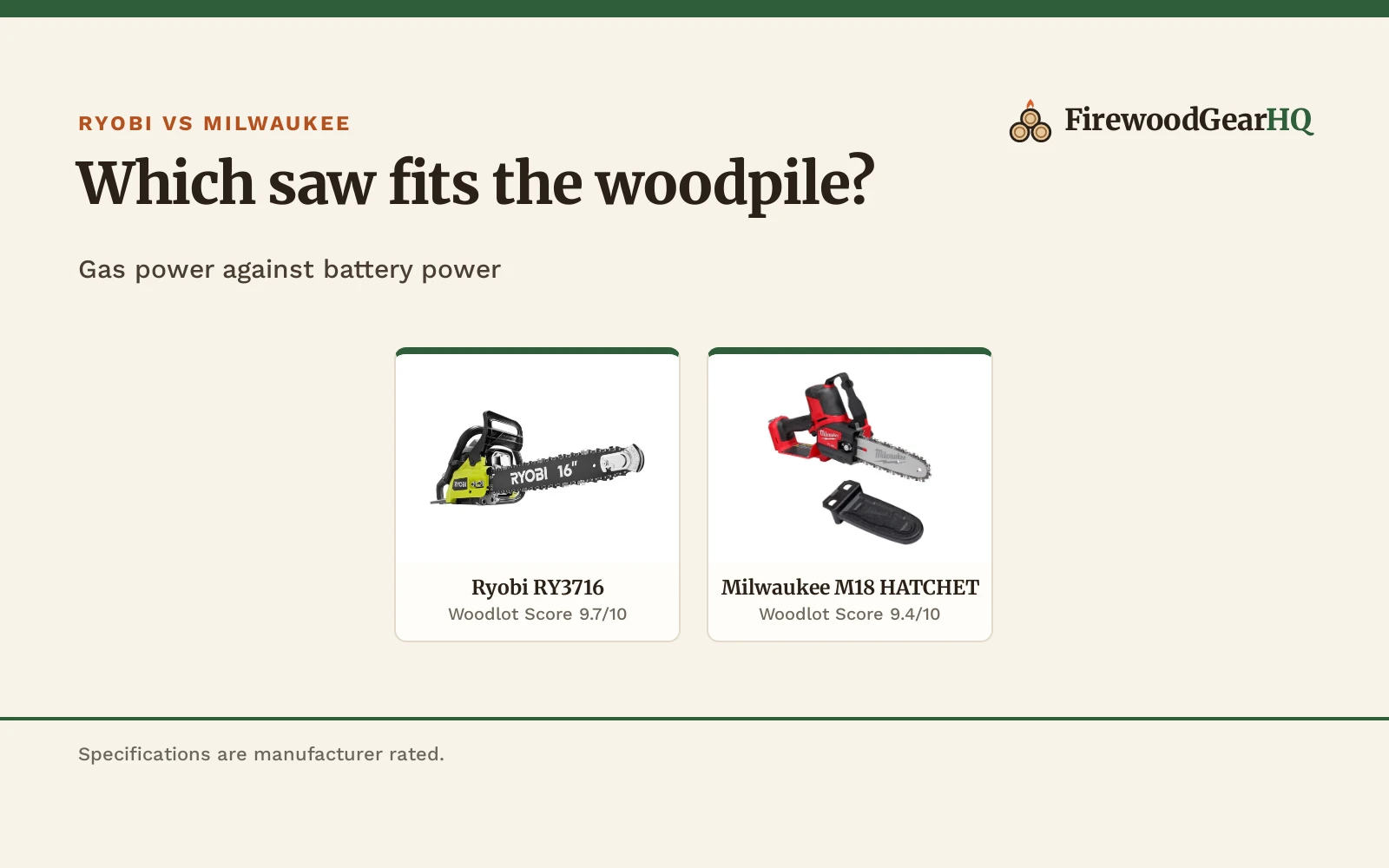
A 37cc gas Ryobi with a 16 in bar and a chain brake against an 8 in battery Milwaukee pruning saw, compared for firewood and pruning.

On this page
Top picks at a glance
As an Amazon Associate I earn from qualifying purchases.
- 1
 RYOBI 16 in. 37cc 2-Cycle Gas Chainsaw9.6/10View on Amazon
- 2
 Milwaukee M18 FUEL HATCHET 8" Pruning Saw9.2/10View on Amazon
Verdict: In this ryobi vs milwaukee chainsaw comparison, pick the Ryobi RY3716 for firewood: a 37cc gas saw with a 16 in bar, a chain brake and a case. Pick the Milwaukee M18 FUEL HATCHET for pruning: an 8 in battery saw under 5 lbs without a battery, for tight spaces and light cuts.
Cutting firewood means bucking rounds, clearing storm-downed limbs and keeping a saw that starts when the woodpile calls. This ryobi vs milwaukee chainsaw comparison pits a gas saw with a long bar against a battery pruning saw, and the two sides sit far apart in size, power source and job. The Ryobi example is the firewood saw here; the Milwaukee example is the pruning saw.
FirewoodGearHQ earns a small commission if you buy through links on this page. The price you pay stays the same. Affiliate disclosure.
Two examples
RYOBI 16 in. 37cc 2-Cycle Gas Chainsaw
A 37cc gas 2-cycle chainsaw with a 16 in bar, 1.5 hp, an inertia-activated chain brake and a heavy-duty case included.
Pros
- 37cc engine, the larger displacement stated here
- 16 in bar for bucking rounds
- Inertia-activated chain brake stops the chain automatically
- Heavy-duty case included for storage and transport
Cons
- No warranty term is stated
- 8 pounds, heavier than the Milwaukee example without a battery
- No bar and chain oil is listed as included
- No spare chain is listed in the box
Milwaukee M18 FUEL HATCHET 8" Pruning Saw
An 8 in battery pruning saw, bare tool only, with a brushless motor, a full house chain and metal bucking spikes.
Pros
- Weighs less than 5 lbs without a battery, for tight spaces
- Full house chain minimizes vibration and delivers clean cuts
- Metal bucking spikes for increased control
- Variable speed trigger increases user control
Cons
- Bare tool only: no charger and no battery included
- 8 in bar suits pruning, not bucking firewood rounds
- No chain brake is stated
- No warranty term is stated
More options to weigh up
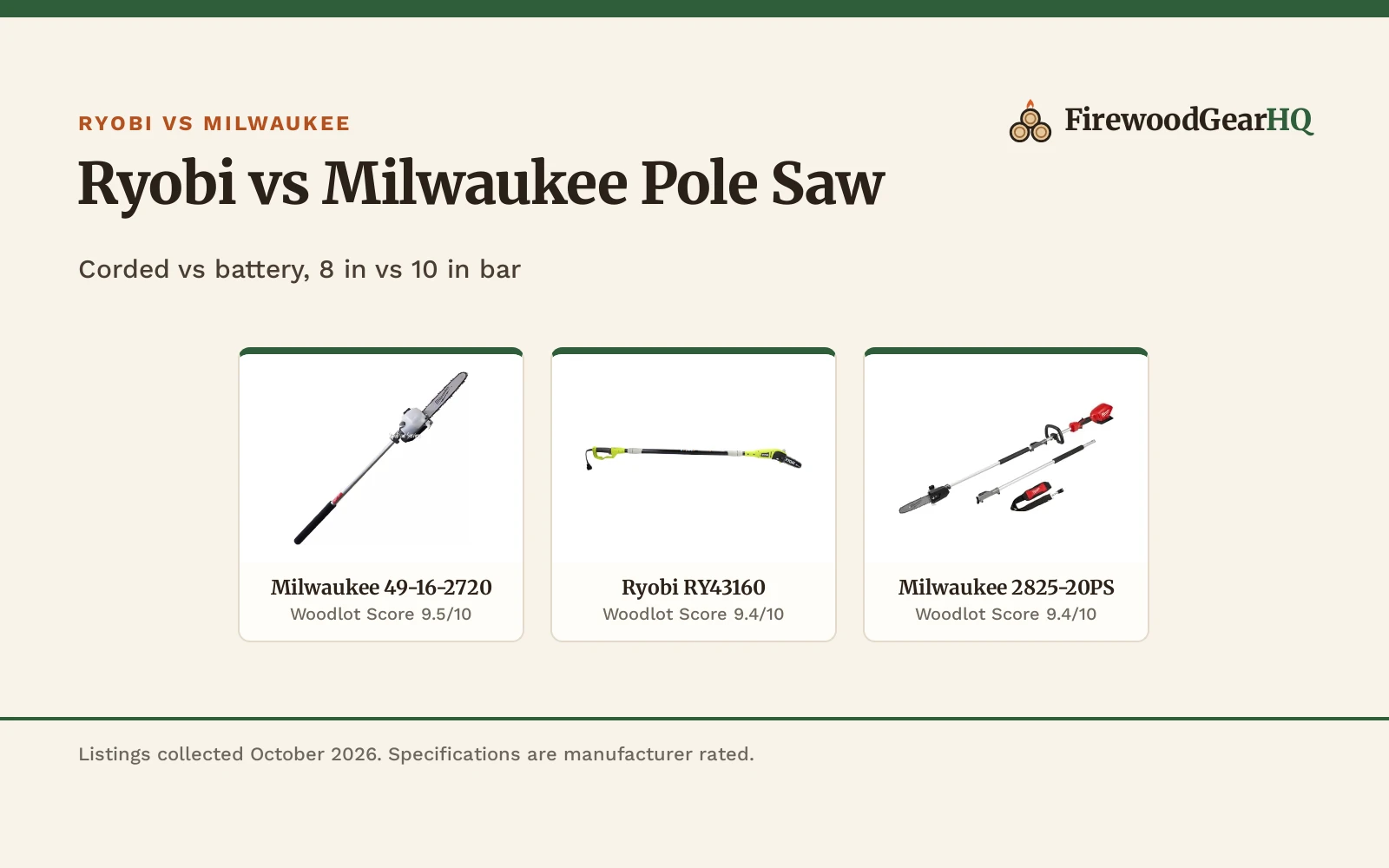
 RYOBI 8 in. 6 Amp Pole Saw Chainsaw Up To 9' ReachCheck price on Amazon
 12-inch Pole saw Attachment fits for ryobi family of BrandsCheck price on Amazon
 Ryobi RY43160 6 Amp 8" Bar Electric Corded 9 Foot Pole SawCheck price on Amazon
Side by side
| Saw | Woodlot Score | Engine | Bar | Chain brake | Warranty |
|---|---|---|---|---|---|
| Ryobi RY3716 | 9.6/10 | 37cc gas 2-cycle | 16 in | Inertia-activated | Not stated |
| Milwaukee M18 HATCHET | 9.2/10 | Battery, up to 25cc gas equivalent | 8 in | Not stated | Not stated |
All ratings here are the manufacturers’ own, as printed on their listings. Every figure in the table comes from the 2 listings in this comparison.
Ryobi vs Milwaukee chainsaw: engine and bar
The Ryobi lists a 37cc 2-cycle gas engine and 1.5 hp. The Milwaukee lists a POWERSTATE brushless motor with the power and performance of a gas engine up to 25cc, as the maker claims, and no horsepower figure. The two bars sit far apart: 16 in against 8 in. The Ryobi bar suits bucking rounds, while the Milwaukee bar suits pruning cuts in tight spaces, where its smaller footprint and ergonomic grip help.
Power source: gas against battery
The Ryobi runs on gas and comes with a heavy-duty case, perfect for off-season storage or for transport to and from the job site, as the listing states. The Milwaukee runs on an M18 battery and is sold as a bare tool only, with no charger and no battery in the box. A buyer without an M18 battery and charger needs both before the Milwaukee cuts anything. Gas means fuel; battery means a charged pack and no cord to manage.
Chain brake and safety
The Ryobi states an inertia-activated chain brake that stops the chain automatically, and a Safe-T-Tip that protects against rotational kickback. The Milwaukee states no chain brake; its stated safety feature is a lanyard loop for tie off points in aerial applications, and metal bucking spikes for control. That gap matters: a chain brake, chaps, a helmet with face screen and hearing protection, gloves and boots belong with any chainsaw work, and no one should cut alone. Check the chain tension before each session, and keep the saw sharp.
Scoring the woodpile
Each example is scored on performance, build, value, safety and warranty, using only what the listing publishes. The weights are explained on the How We Pick page.
| Product | Woodlot Score | Perf. /35 | Build /25 | Value /25 | Safety /10 | Warranty /5 |
|---|---|---|---|---|---|---|
| Ryobi RY3716 | 9.6 | 30 | 21 | 21 | 9 | 0 |
| Milwaukee M18 HATCHET | 9.2 | 27 | 21 | 18 | 3 | 0 |
The 8.8 and 9.8 limits frame every score. Scores follow the ranking in each guide, dropping by at least 0.1 per place, so each pick has its own number.
Wear cut-resistant chaps, a helmet with face screen and hearing protection, gloves and sturdy boots. Know where the kickback zone is (the upper tip of the bar), keep the chain brake working and the chain sharp, and never cut alone in the woods. Felling trees is hazardous work: hire a professional for large, leaning or storm-damaged trees, especially near buildings or power lines. See OSHA logging safety for chain saw operators. Read our Safety Disclaimer.
Around the Woodpile
- Buck rounds with the Ryobi, and keep the bar clear of dirt and stone.
- Wear chaps, a helmet with face screen and hearing protection, gloves and boots for every cut.
- Never cut alone, and keep a phone within reach when working in the woodlot.
- Store the Ryobi in its heavy-duty case between sessions, and keep the Milwaukee battery charged between sessions.
FAQ: wood, fire and gear
Is Ryobi better than Milwaukee for firewood?
For firewood rounds, the Ryobi example here is the fit: a 37cc gas saw with a 16 in bar and a chain brake. The Milwaukee example is an 8 in pruning saw, so it suits pruning, not bucking rounds.
What size chainsaw do I need for firewood?
For bucking rounds, the larger example here is the fit: 37cc with a 16 in bar. The Milwaukee example, an 8 in pruning saw, suits small cuts, not large rounds.
Does the Milwaukee pruning saw need a battery?
Yes. It is sold as a bare tool only, with no charger and no battery in the box, so it needs an M18 battery and charger before it cuts.
Do these saws state a chain brake?
The Ryobi does: an inertia-activated chain brake, plus a Safe-T-Tip against rotational kickback. The Milwaukee states no chain brake.
Should I hire someone to fell trees?
For large, leaning or storm-damaged trees, especially near buildings or power lines, hire a certified pro. Felling is dangerous work.
More firewood guides
See the chainsaw hub and the gas chainsaws, then compare the pruning saw vs chainsaw guide and the Husqvarna vs Milwaukee chainsaw guide. Size the saw with the what size chainsaw do I need for firewood guide, keep it cutting with the best chainsaw sharpener, and see the best battery chainsaw for limbing.