Rigid vs Flexible Chimney Liner: Which One Should You Buy?
Rigid vs flexible chimney liner: which liner type fits your flue, how to size it, and three flexible stainless liners compared, with safety and code notes.

On this page
Top picks at a glance
As an Amazon Associate we earn from qualifying purchases.
- 1
 316 Stainless Steel Flexible Chimney Liner Insert Kit9.6/10View on Amazon
- 2
 Fireside Chimney Supply Stainless Steel Chimney Liner Kit9.6/10View on Amazon
- 3
 Fireside Chimney Supply Basic FireSafe Flexible Chimney Liner9.5/10View on Amazon
- 4
 Fireside Chimney Supply FireSafe Flexible Chimney LinerView on Amazon
- 5FireSafe Flexible Chimney LinerView on Amazon
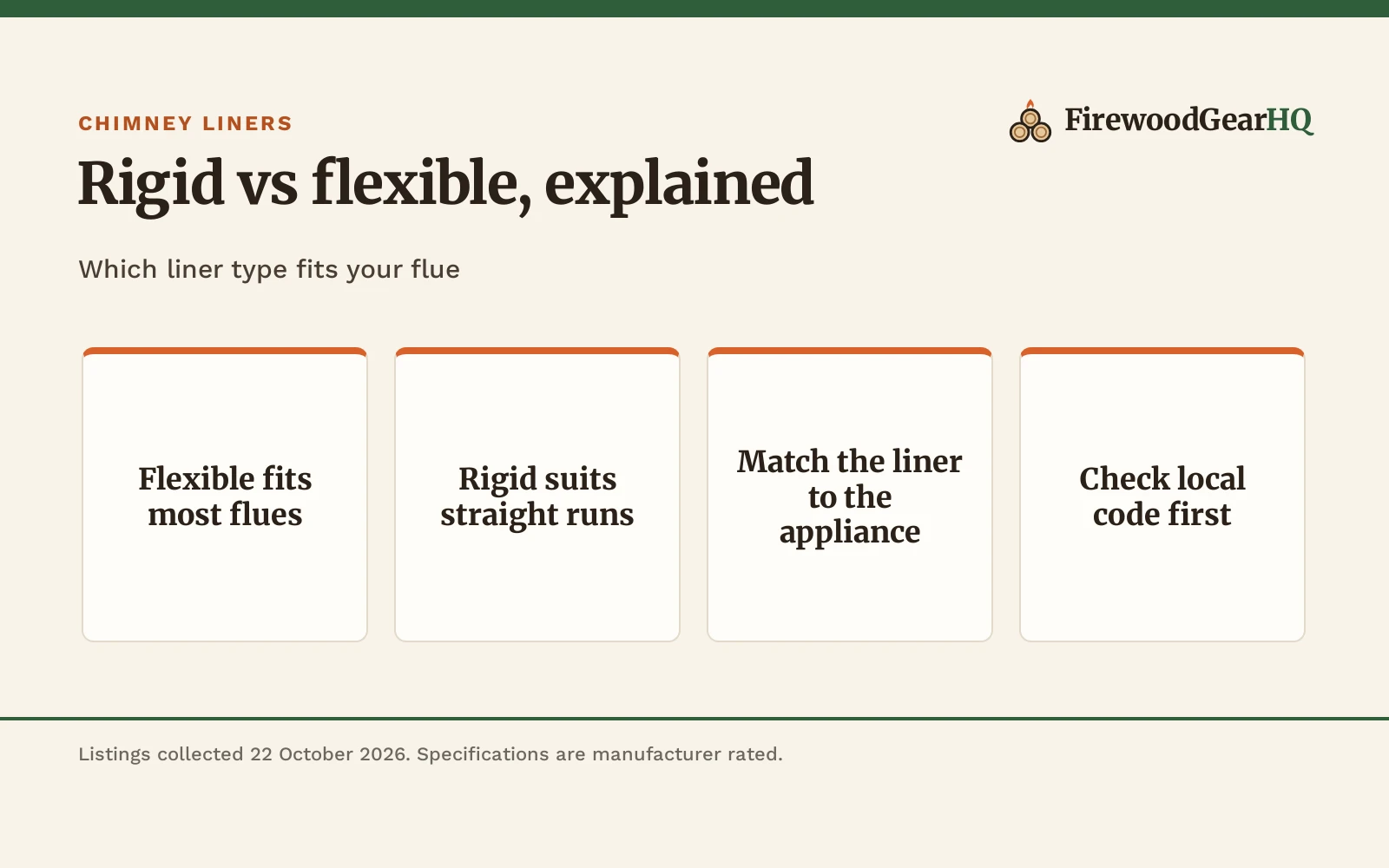
For most masonry chimney relines, a flexible liner is the answer: it bends through offsets and drops down an existing flue, which is why all three liners in this guide are flexible. A rigid liner suits straight runs, where its smooth walls give the cleanest draft. The choice comes down to your flue: offsets and bends mean flexible, and a straight shot means rigid is on the table.
More options to compare
 Fireside Chimney Supply FireSafe Flexible Chimney LinerCheck price on Amazon
- FireSafe Flexible Chimney LinerCheck price on Amazon
FirewoodGearHQ may earn a small commission if you buy through links on this page. The price you pay stays the same. Read our affiliate disclosure.
Rigid vs flexible chimney liner: the short answer
Flexible liners are corrugated stainless tubes that snake through an existing masonry flue, around offsets that a straight pipe cannot follow. Rigid liners are straight stainless sections joined together, with smooth inner walls that sweep clean and draft well. If your chimney has bends, flexible is the practical choice; if it runs straight from the appliance to the top, rigid is worth comparing. Either way, match the liner diameter to the appliance and the flue, and have the work checked against local code.
Flexible chimney liners
A flexible liner is built to bend. The listings here describe 316 and 316L stainless construction with 7-ply seams and 10 corrugations on the Fireside kits, which the maker states create a gas- and watertight barrier. Flexibility is the point: the liner follows the flue down through offsets that would stop a rigid section. The Rockford listing states its flexible liners are only to be installed inside a masonry chimney, which is the standard use case for this type.
Flexible kits come as packages. The Fireside 6 inch by 25 feet kit includes a 13 in by 13 in top plate with a rain cap, a .006 in thick stainless liner and an appliance connector for vertical hookups. The 6 inch by 15 feet kit swaps the appliance connector for a tee connector for horizontal hookups. The Rockford 3 inch by 15 feet kit uses a quick connect system of clamps. Complete kits like these cover the liner, the top termination and the appliance connection in one box.
Rigid chimney liners
A rigid liner is a straight stainless pipe, sold in sections that join into a continuous run. Its smooth inner wall is the selling point: less turbulence, easier sweeping and strong draft on a straight chimney. The tradeoff is the obvious one: it cannot bend, so a flue with offsets is much harder to line with rigid sections, which is why flexible dominates relines that are not straight.
No rigid liner is listed in this guide. The comparison below still holds: if a sweep or inspection shows your flue runs straight, get rigid options quoted alongside flexible ones; if it jogs or offsets anywhere, flexible is the answer and the listings here are the type to look at.
Sizing and matching the appliance
Diameter first. The listings here run 3 inch by 15 feet, 6 inch by 15 feet and 6 inch by 25 feet. The 6 inch kits suit wood stoves and fireplace inserts, which the Fireside listings name alongside gas and pellet appliances; the 3 inch Rockford kit is the smaller-diameter option. Match the liner to the appliance outlet and the flue it has to fit inside: too small chokes the draft, too big will not fit the flue.
Length second. Measure the flue from the appliance connection to the top of the chimney, and buy the listed length that covers it; the kits here come in 15 and 25 foot lengths. Connection type third: vertical hookups take the appliance connector, horizontal hookups the tee connector, as the two Fireside kits show. The top plate and rain cap finish the top of the run.
The liners in this guide
All three are flexible stainless liners, ranked by the completeness of the kit and the strength of the stated credentials.
1. Fireside Chimney Supply 6 inch by 25 feet
The most complete kit here: a 6 inch by 25 feet flexible liner in 316 stainless with 7-ply seams and 10 corrugations, a 13 in by 13 in top plate with rain cap, a .006 in thick liner and an appliance connector for vertical hookups. The listing claims compatibility with wood, gas, oil and pellet appliances, states the liner meets modern building codes, and notes manufacture in the USA from mill-certified stainless. It lists at 30 pounds. Best for taller flues that need the full 25 feet and a complete top-to-appliance package.
2. Rockford Chimney Supply 3 inch by 15 feet
The credential pick: a 3 inch by 15 feet flexible liner in 316 stainless, UL1777 listed in the USA and ULCS635 in Canada, with a warranty the maker states is transferable to the next homeowner. The quick connect system tightens with clamps, and the listing states the liner exceeds chimney industry standards. Best for smaller-diameter relines where a listed liner and a transferable warranty matter.
3. Fireside Chimney Supply 6 inch by 15 feet with tee
The horizontal-hookup pick: a 6 inch by 15 feet flexible liner in 316L stainless with the same 7-ply seams and 10 corrugations, but with a tee connector for horizontal hookups instead of the vertical appliance connector. Same top plate and rain cap, same made-in-USA mill-certified stainless claim, at 20 pounds. Best for wood stoves that connect horizontally into the flue.
Safety and code notes
Chimney work is not a learn-as-you-go project. The Rockford listing states its flexible liners are only for installation inside a masonry chimney, and liner sizing and clearances have to meet local code, so have a certified chimney professional size and inspect the job. The Fireside listings state their liners help prevent chimney fires and carbon monoxide leaks and reduce creosote buildup; treat those as the maker’s claims, not as a substitute for inspection. A UL1777 listing, as the Rockford liner states, is the recognized safety credential for chimney liners in the USA.
After the liner is in, keep the flue clean. See our best chimney sweep kit for wood stoves and best chimney brush for a wood stove guides, and finish the top of the run with the right cap from our best chimney cap for wood stove guide.
Frequently Asked Questions
Can I use a flexible liner in a straight chimney?
Yes. A flexible liner works in a straight flue as well as one with offsets; it just costs some smoothness against a rigid liner. The listings here are all flexible liners, and all three suit straight masonry flues.
What diameter liner does my wood stove need?
Match the liner to the appliance outlet and the flue. The listings here offer 3 inch and 6 inch diameters; the 6 inch kits name wood stoves and fireplace inserts among their applications. When in doubt, have a certified professional size it.
Do flexible liners work with pellet stoves?
The Fireside listings state compatibility with wood, gas, oil and pellet appliances. Check the appliance manual and local code for the required liner type and diameter.
How long do stainless chimney liners last?
The listings claim long-term durability: 316 and 316L stainless construction, 7-ply seams, and a transferable warranty on the Rockford liner. Actual lifespan depends on fuel, burning habits and maintenance, including regular sweeping.
Should I install a chimney liner myself?
The Rockford listing includes do-it-yourself instructions and states its liner is only for masonry chimneys, but liner sizing, clearances and code compliance are professional judgments. This guide does not publish installation steps; have a certified chimney professional handle the job.
Related guides
See our stove accessories hub, the best chimney sweep kit for wood stoves and the best chimney brush for a wood stove. Also see our best chimney cap for wood stove and our best creosote remover for a wood stove.