Pellet Stove vs Electric Heat Cost: Which One Should You Buy?
Pellet heat is loaded by the load and electric heat by the meter, so the cheaper side depends on pellet use, burn time, and how much space needs heat.

On this page
Top picks at a glance
As an Amazon Associate I earn from qualifying purchases.
- 1
 Cleveland Iron Works Bayfront Pellet Stove9.5/10View on Amazon
- 2
 Fire Pit Heat Deflector 24 x 24 x 24 Inch9.4/10View on Amazon
- 3
 64" Pellet StoveView on Amazon
- 4
 Greenstovehori 5 Max Outdoor Pellet Stove with Oven for HotView on Amazon
- 5
 Greenstovehori 5 Outdoor Pellet Stove with Oven for OutdoorView on Amazon
- 6
 Cleveland Iron Works Large Pellet StoveView on Amazon
- 7
 Comfort Glow Pellet Stove for Home HeatingView on Amazon
- 8
 65" Outdoor Pellet StoveView on Amazon
With the woodpile stacked for winter and cold nights ahead, the question is whether pellets or metered power cost less to stay warm. On pellet stove vs electric heat cost, neither side wins outright from the listings alone: pellet heat is loaded by the load and burned over a stated burn time, while electric heat is metered as it is used, so the cheaper side depends on pellet use, burn time, and how much space needs heat. The pellet heaters below are outdoor patio heaters, not whole-home stoves, so they answer the patio side of the question, not the house side.
More options to weigh up
 64" Pellet StoveCheck price on Amazon
 Greenstovehori 5 Max Outdoor Pellet Stove with Oven for HotCheck price on Amazon
 Greenstovehori 5 Outdoor Pellet Stove with Oven for OutdoorCheck price on Amazon
 Cleveland Iron Works Large Pellet StoveCheck price on Amazon
 Comfort Glow Pellet Stove for Home HeatingCheck price on Amazon
 65" Outdoor Pellet StoveCheck price on Amazon
FirewoodGearHQ earns a small commission if you buy through links on this page. The price you pay stays the same. Read our affiliate disclosure.
Pellet stove vs electric heat cost at a glance
Pellet heat has a fuel you can see: a load goes in, a flame burns for a stated time, and the ash tray fills. Electric heat has no load and no ash; it runs on metered power and stops when switched off. The listings below state pellet loads and burn times but state no pellet prices and no electric rates, so no winner can be worked out from them alone. What can be compared is how each side is bought and used, and where each one fits.
How pellet heat adds up
Pellet cost comes in loads. The BPS patio heater takes approximately 5 lbs of pellets per load and delivers 1.5 to 2 hours of steady heat, and the listing says that load is 66% more capacity than the normal 3 lbs version. The YTGLEN heater takes up to 4.4 lbs of wood pellets and provides approximately 2 hours of continuous burning, depending on fuel and use. A longer evening therefore means more loads, and pellets need dry storage between uses; see the best pellet storage bin for keeping them dry. Both heaters leave ash to clear: the BPS listing notes an integrated ash tray and a sponge cleaning tool for the glass tube, and the YTGLEN listing notes a removable ash tray once the unit has completely cooled.
How electric heat adds up
Electric heat is metered as it is used, with no fuel to buy, store, or load and no ash to clear. That makes its cost follow use directly: heat on for longer means more metered use, and heat off means none. The listings here state no electric rates, so this guide states no electric figure either. Electric heat fits indoors where these pellet heaters do not: both pellet heaters below are outdoor heaters, and the YTGLEN listing says to use it outdoors only. For a patio evening, a pellet heater and an electric patio heater are the honest comparison; for whole-home heat, an indoor pellet stove is a different purchase from either listing here.
What decides the bill
Space comes first. A patio heater warms the people around it on a porch, deck, or backyard, while electric heat can warm a room or a whole house, so the two sides are not always heating the same space. Burn time comes next: a load that gives 1.5 to 2 hours suits a short evening, while a longer gathering needs refueling, and the BPS viewing window helps judge when a refill is due. Pellet use per load matters too: the listings state different loads, 5 lbs and 4.4 lbs, each with its own stated burn time, so compare load and time together rather than load alone. Frequency matters last: occasional patio evenings use little energy either way, while nightly use stacks loads on the pellet side and metered hours on the electric side.
Patio pellet heaters in the listings
The BPS heater stands 56 inch tall with a black high-temperature coating over a heavy-duty metal body and a thickened, reinforced square steel base for grass, soil, decks, and other outdoor surfaces. It burns hardwood pellets with what the listing calls a clean-burning flame with minimal smoke, holds approximately 5 lbs per load for 1.5 to 2 hours of steady heat, and includes a rain cap, a pellet viewing window, an integrated ash tray, and a sponge cleaning tool. The listing states an item weight of 26.0 pounds.
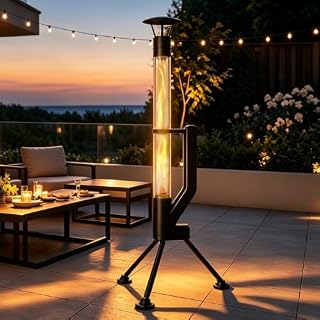
The YTGLEN heater stands 64.47 inches tall as a tower with a glass tube flame display that can be enjoyed from multiple viewing angles. It is made from heavy-duty iron with a weather-resistant finish, holds up to 4.4 lbs of wood pellets for approximately 2 hours of continuous burning, and has a removable ash tray for cleanup after the unit has completely cooled. The listing states an item weight of 18.6 pounds, says the heater is for wood pellets only, and says to use it outdoors only while keeping a safe distance from children, pets, combustible materials, and other heat-sensitive objects.
Safety notes
Both heaters are outdoor heaters, so use them outside only and keep a safe distance from children, pets, combustible materials, and heat-sensitive objects, as the YTGLEN listing states. Let the unit cool completely before clearing the ash tray, and use the rain cap and viewing window as the listings describe rather than reaching into a hot unit. For an indoor stove, which neither listing here describes, follow the maker and local code, keep smoke and CO alarms in place, and arrange annual chimney inspection; those steps belong to indoor installs, not to patio heaters.
FAQ: wood, fire and gear
How much do pellet stove pellets cost?
The listings state no pellet prices, so no cost figure can be given from them. They state loads and burn times instead: approximately 5 lbs per load for 1.5 to 2 hours on the BPS heater, and up to 4.4 lbs for approximately 2 hours on the YTGLEN heater, so the cost of an evening follows the price of the pellets loaded.
How do you work a pellet stove?
Load pellets before use, adding pellets according to the burn duration wanted, as the YTGLEN listing states. The BPS listing adds a viewing window for watching pellet levels at a glance, so refueling can be timed before the flame drops.
How do you clean a pellet stove?
Clear the ash tray: the BPS listing notes an integrated ash tray plus a sponge cleaning tool for the glass tube, and the YTGLEN listing notes a removable ash tray. Wait until the unit has completely cooled before cleanup, as the YTGLEN listing states.
Can a patio pellet heater heat a house?
No. Both listings describe outdoor use on porches, patios, decks, backyards, and gardens, and the YTGLEN listing says to use it outdoors only. A house needs an indoor stove or another home heating system, not a patio heater.
How long does a load of pellets burn?
On the listings here, approximately 5 lbs gives 1.5 to 2 hours on the BPS heater, and up to 4.4 lbs gives approximately 2 hours on the YTGLEN heater. Burn time depends on fuel and use, as the YTGLEN listing states.
More firewood guides
Compare fuel types in the wood stove vs pellet stove guide and the wood pellet patio heater vs propane guide, keep pellets dry with the best pellet storage bin, and see the wood stoves hub for indoor stove options.