Log Lifter vs Cant Hook: Which One Should You Buy?
A log lifter and a cant hook both move logs with leverage, but the hook design, the handle and the stated log range decide which tool suits your firewood work.

On this page
Top picks at a glance
As an Amazon Associate I earn from qualifying purchases.
- 1
 SPEED FORCE 47 Inch TimberJack Forestry/Logging/Log9.7/10View on Amazon
- 2
 Wood-Mizer Steel Cant Hook9.6/10View on Amazon
- 3
 60 in Steel Cant Hook9.3/10View on Amazon
- 4
 Wood-Mizer Steel Cant HookView on Amazon
- 5
 WOODCHUCK Wct03 Timberjack Peavey and Cant HookView on Amazon
- 6
 Ironton Wooden Handle Cant HookView on Amazon
- 7
 Timber Tuff TMW-30 Cant Hook with Timber Tuff and 4-Feet LongView on Amazon
When the cutting is done and the rounds still have to be rolled, repositioned and stacked, a long handle with a biting hook beats lifting by hand. That is the season for the log lifter vs cant hook question, and the answer is direct: a cant hook is the specific tool, a long handle with a swinging hook that bites the log, while log lifter is the broader name for the job of lifting and moving logs, used on the VEVOR listing below alongside Timber Jack. For firewood work, buy the cant hook, because rolling and repositioning logs is the daily job and all four picks below are cant hooks made for it.
More options to weigh up
 Wood-Mizer Steel Cant HookCheck price on Amazon
 WOODCHUCK Wct03 Timberjack Peavey and Cant HookCheck price on Amazon
 Ironton Wooden Handle Cant HookCheck price on Amazon
 Timber Tuff TMW-30 Cant Hook with Timber Tuff and 4-Feet LongCheck price on Amazon
FirewoodGearHQ earns a small commission if you buy through links on this page. The price you pay stays the same. Read our affiliate disclosure.
Log lifter vs cant hook: the quick answer
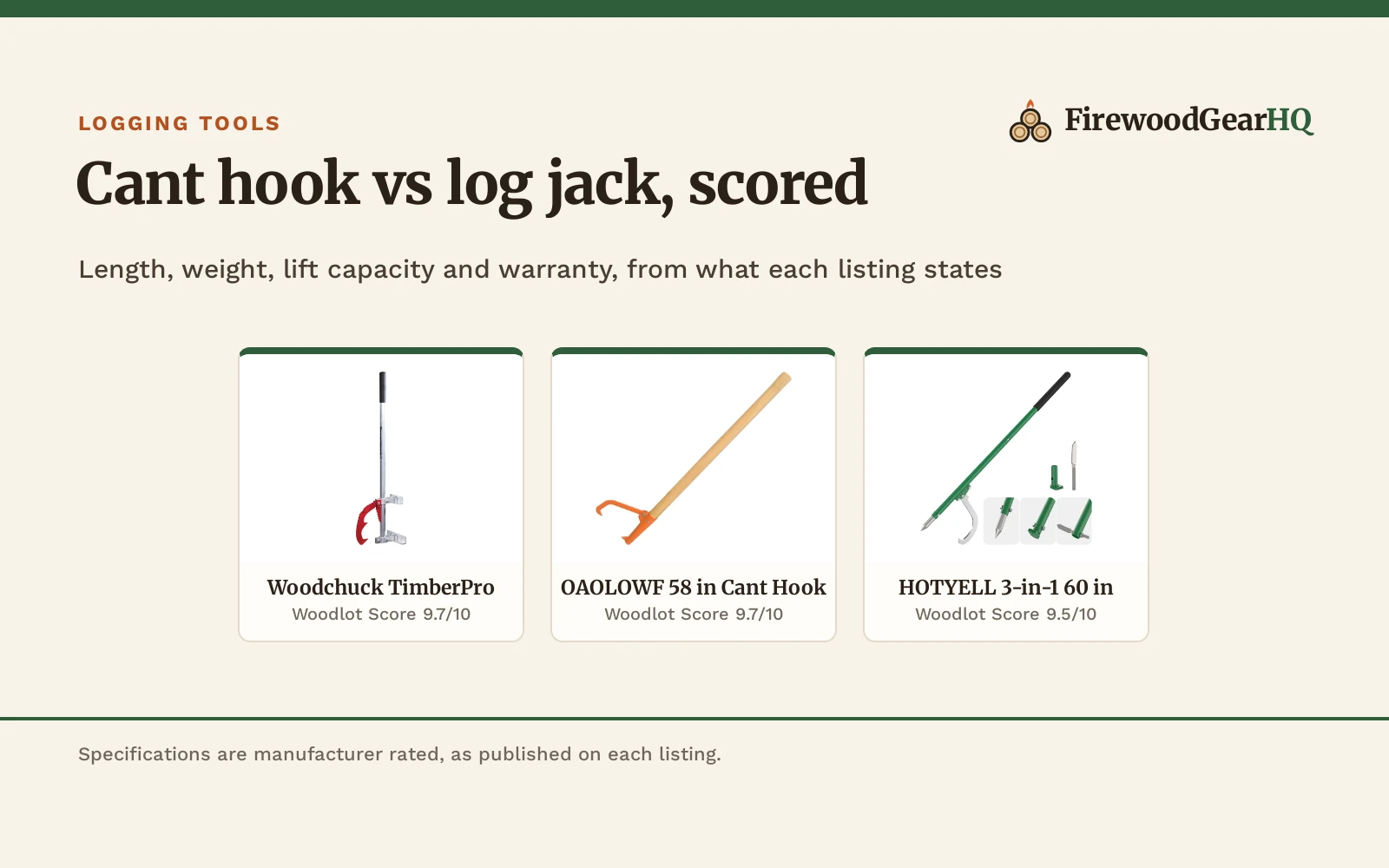
Both names describe moving logs with leverage instead of your back. A cant hook has a hook on a swinging arm that grabs the log, plus a toe hook on the two LogRite models, so one person can roll, drag and reposition a round. A log lifter, in the timber-jack sense of the VEVOR title, does the same class of work: it lifts and moves logs with leverage. The difference is the design, not the job. If your woodpile work is rolling logs for cutting and stacking, the cant hook is the right buy, and the four compared below are ranked highest first.
What each tool does
A cant hook
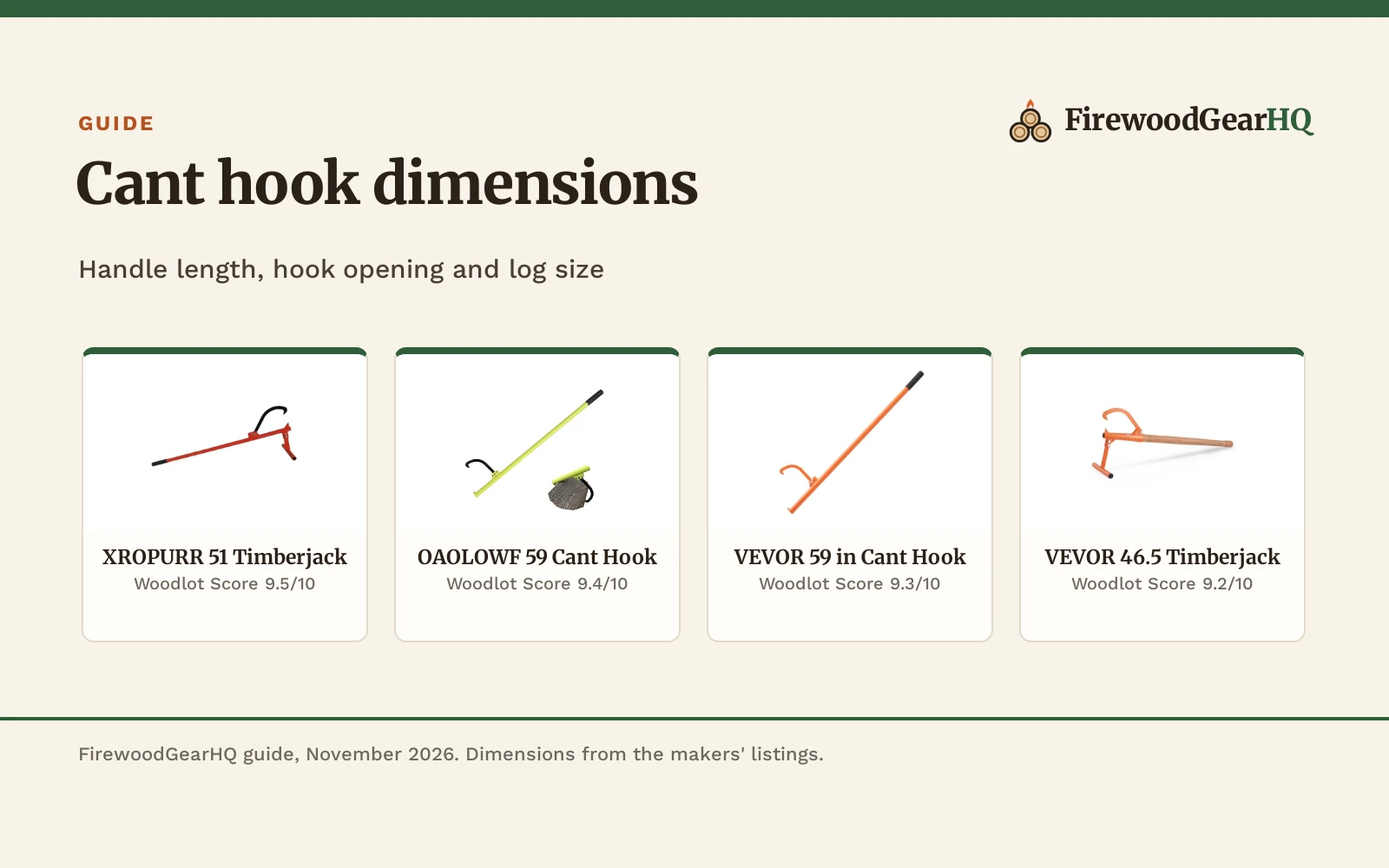
A cant hook is a long handle with a steel hook that swings and bites into the log. The LogRite listings add a zinc-plated, heat-treated toe hook, so two biting edges hold the log while you lever it. The maker copy describes the same work across the brands: the VEVOR listing says its cant hook uses leverage to stack and transport wood in forests, yards and sawmills, and the LogRite listings say theirs are for moving and positioning logs on the ground, calling them a fit for firewood processors. Handles here run 59, 60 or 78 inches across the four picks, which sets how much leverage you get.
A log lifter
Log lifter is the job name, and the VEVOR listing puts it right in the title: a 59-inch cant hook, log roller and log lifter timber jack with a rubber grip. Its bullets describe the adjustable metal hook, the 59-inch handles and a log range up to 32 inches in diameter, all built from heavy-duty carbon steel. If you want the jack-style comparison, see our cant hook vs log jack guide: the jack end of the family is about getting a log end up and workable, while the cant hook end is about rolling and positioning.
The four cant hooks, ranked
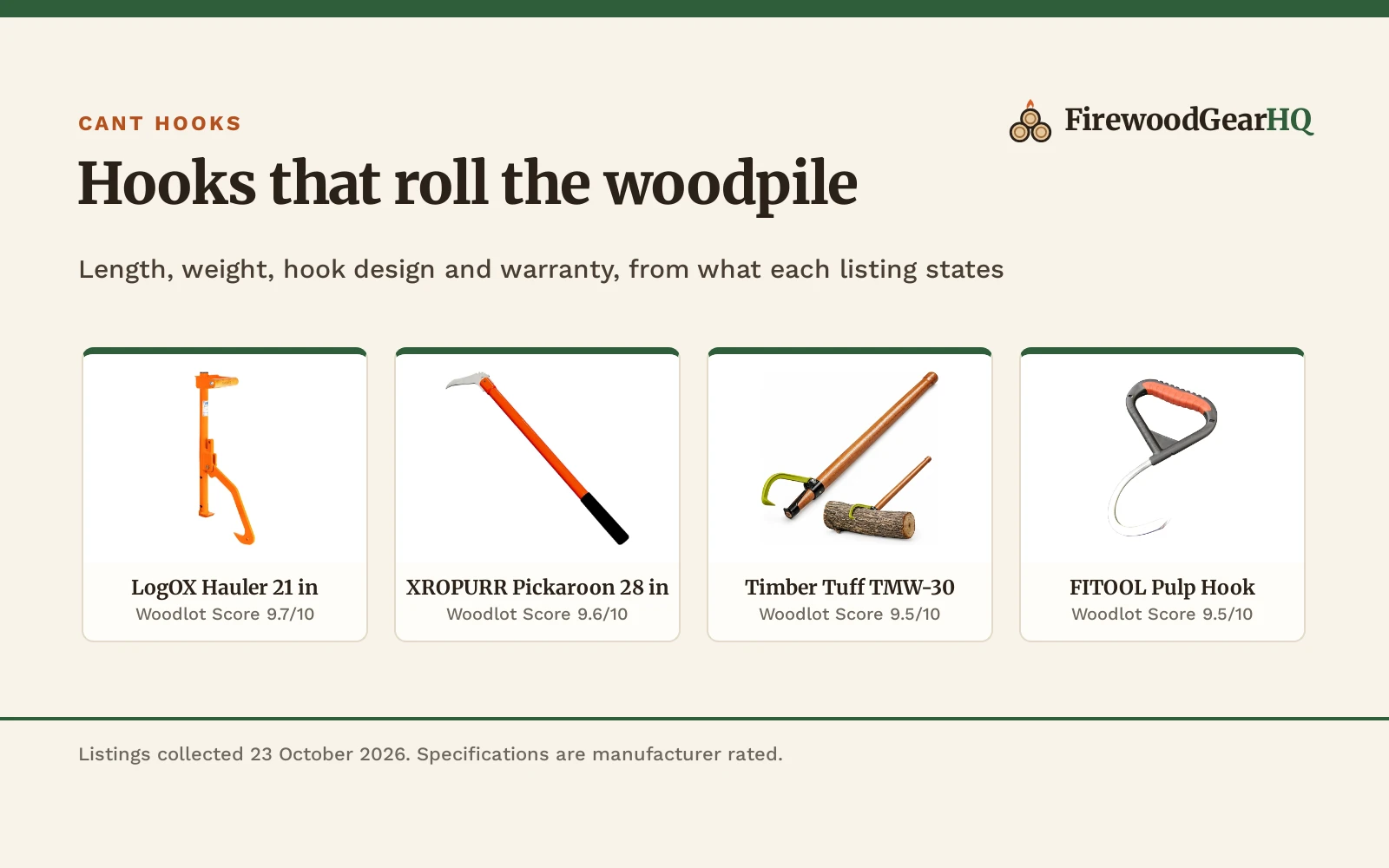
Each pick below is described with the facts its own listing states, ranked by our scores with the strongest first. Where a listing contradicts itself, the gear notes say so, and the ranking trusts the title and bullets over the spec table.
1. OAOLOWF 59-inch cant hook. The listing states a 59-inch tool with a retractable 15-inch opening, sharp steel hooks and extra teeth for a better grip on the log. The handles and hooks are steel with a bright green industrial-grade powder coat, and the grip is a PC material shaped for comfort. The spec table lists 12.87 pounds, and the bullets promise 2 years of after-sales service, which is the only stated service term of the four picks. The steel build and the stated service term put it first.
2. VEVOR 59-inch cant hook. The listing states 59-inch handles with a rubber grip, an adjustable metal hook and a log range of up to 32 inches in diameter. The build is heavy-duty carbon steel with robust welds, finished in an orange powder coat that the listing says protects against rust and corrosion, and the spec table lists 10.8 pounds. Assembly uses screws and nuts with no power tools required, and the bullets describe leverage for stacking and transporting wood. A clean, complete listing with no contradictions, second on the stated specs.
3. LogRite 60-inch cant hook. This is the lightweight pick: aircraft aluminum with a bright blue powder coat, a heat-treated and zinc-plated swinging hook plus toe hook for two biting edges, made in the USA, and the spec table lists 10 pounds. The listing contradicts itself on capacity: the title says it grips 10 to 36 inch logs while the bullets say 10 to 32 inches. Going by the title and bullets, it is a 60-inch ground-positioning tool for firewood processors, and the contradiction keeps it behind the two clean listings above.
4. LogRite 78-inch mega cant hook. The longest handle of the four, stated as 78 inches in the title with 78.5 x 10.38 x 2.25 inches in the spec table, in aircraft aluminum with a bright yellow powder coat, a heat-treated zinc-plated hook and toe hook, and made in the USA. The spec table lists a 35-pound maximum weight recommendation and a 35-pound maximum weight capacity; it does not state an item weight. The same contradiction appears here: the title says 15 to 45 inch logs while the bullets say 8 to 32 inches. Longest leverage of the group, but the conflicting range holds it to fourth. See the best cant hooks for firewood for how these compare with the full field.
FAQ: wood, fire and gear
Is a log lifter the same as a cant hook?
Not exactly, but they do the same class of work. A cant hook is the specific tool: a long handle with a swinging hook that bites the log. Log lifter is the broader job name, and one listing here uses it in the title alongside Timber Jack. All four picks move logs with leverage; the hook design is what makes them cant hooks.
What size log can these cant hooks handle?
By the listings: the VEVOR states logs up to 32 inches in diameter, the OAOLOWF states a 15-inch opening, the LogRite 60-inch states 10 to 36 inches in the title and 10 to 32 in the bullets, and the LogRite 78-inch states 15 to 45 in the title and 8 to 32 in the bullets. Treat the conflicting figures as the listing’s own uncertainty and size up if your logs run big.
What does the 35-pound figure on the 78-inch model mean?
The spec table on that listing states a 35-pound maximum weight recommendation and a 35-pound maximum weight capacity. The listing does not explain either figure further, and it does not state the tool’s own weight, so read it as the maker’s stated limit, not as a weighed measurement.
Should a cant hook listing contradict itself?
No, and it is worth flagging: the 60-inch LogRite says 36 inches in the title and 32 in the bullets, and the 78-inch says 45 in the title and 32 in the bullets. The publishing rule is to trust the title and bullets over the spec table, which is what the gear section above does. Check the live listing before you buy, in case the maker has fixed it.
How do I keep a cant hook from rusting?
All four picks are powder-coated: orange on the VEVOR, bright blue on the 60-inch LogRite, bright green on the OAOLOWF and bright yellow on the 78-inch LogRite. The VEVOR listing says its orange powder coat protects against rust and corrosion. Keep the tool dry between uses and let the finish do its job.
More firewood guides
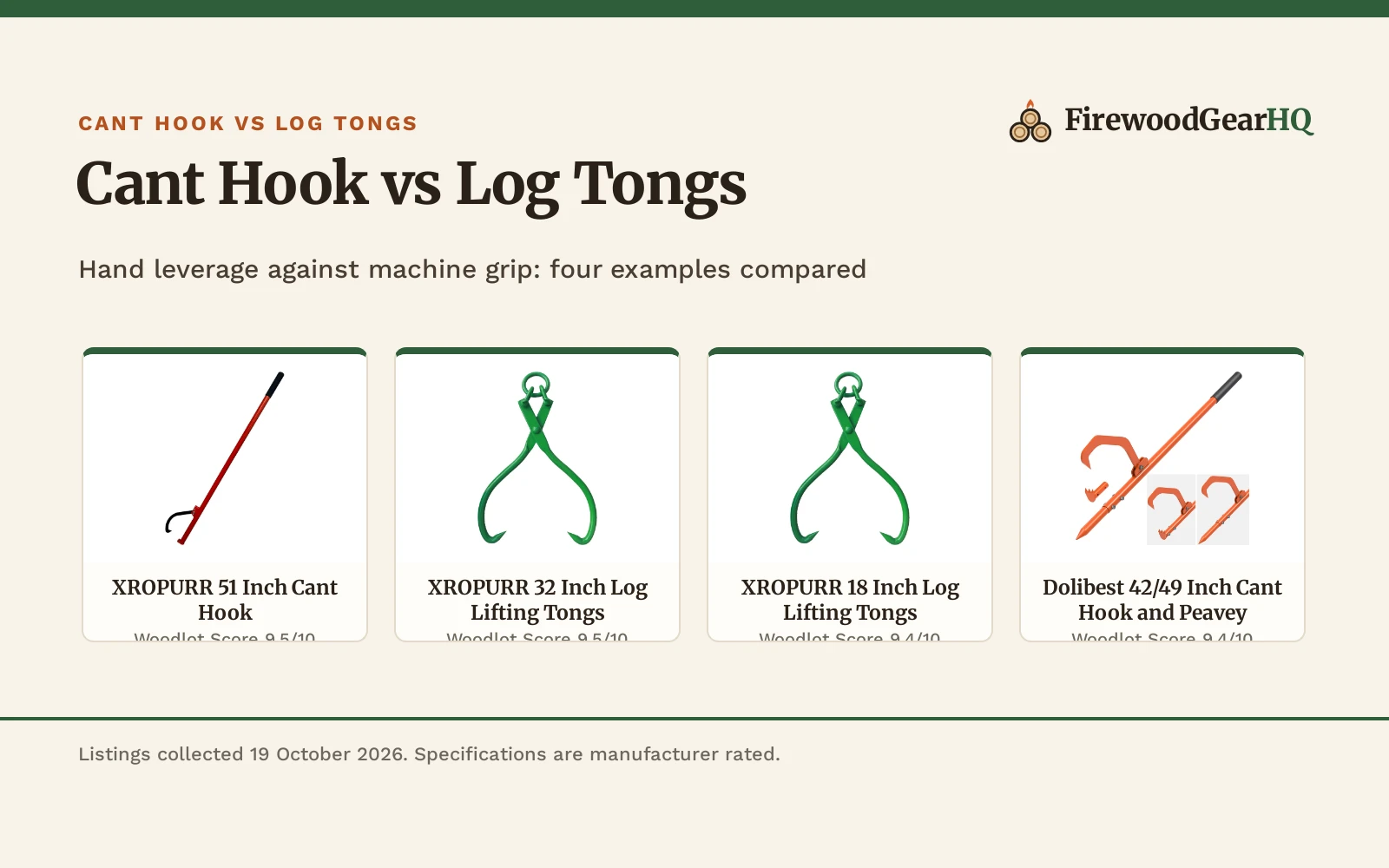
Learn how to use a cant hook safely, compare the cant hook vs peavey and the cant hook vs log tongs, and browse the firewood handling category for the rest of the moving and stacking gear.