Hydraulic Fluid vs Engine Oil for Log Splitter: Which One Should You Buy?
Hydraulic fluid works the splitter hydraulics and engine oil belongs in an engine, with ISO 32 and ISO 46 picks and a seal-conditioning additive compared below.

On this page
Top picks at a glance
As an Amazon Associate I earn from qualifying purchases.
- 1
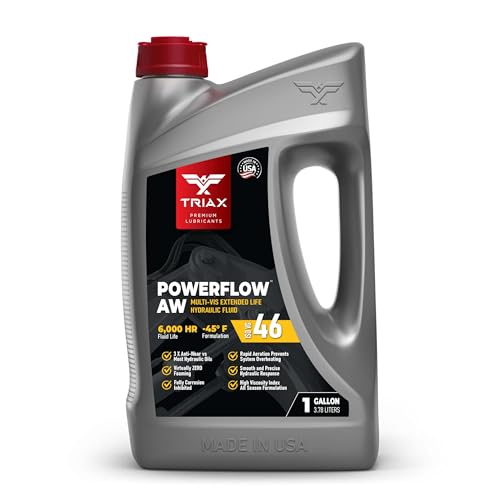 TRIAX Powerflow AW 46 Multi-Viscosity HLP Hydraulic Oil9.6/10View on Amazon
- 2
 CAM2 Promax Premium AW 32 Hydraulic Oil9.5/10View on Amazon
- 3
 STARFIRE AW32 Anti-Wear Hydraulic Oil for Industrial/Mobile9.4/10View on Amazon
- 4
 Original Scheppach Hydraulic Oil Suitable for All WoodView on Amazon
- 5
 LU02322G 2 Gallon Log Split Hydraulic Oil Brand: WARRENView on Amazon
- 6
 STP Premium Small Engine 4 Cycle Oil FormulaView on Amazon
- 7
 Quicksilver Premium Plus Synthetic Blend 2-Stroke Engine OilView on Amazon
- 8
 STA-BILView on Amazon
- 9
 Arnold 2-Cycle Engine Oil MixView on Amazon
Fall prep brings the splitter out of the shed and the woodpile back into focus, with rounds to split and a stack to build before winter burning. Before the splitting starts, a question comes up at the fluid shelf: hydraulic fluid vs engine oil for log splitter. The short answer is that they are different jobs, and this guide sets out which fluid goes where and what the listings state.
More options to weigh up
 Original Scheppach Hydraulic Oil Suitable for All WoodCheck price on Amazon
 LU02322G 2 Gallon Log Split Hydraulic Oil Brand: WARRENCheck price on Amazon
 STP Premium Small Engine 4 Cycle Oil FormulaCheck price on Amazon
 Quicksilver Premium Plus Synthetic Blend 2-Stroke Engine OilCheck price on Amazon
 STA-BILCheck price on Amazon
 Arnold 2-Cycle Engine Oil MixCheck price on Amazon
FirewoodGearHQ earns a small commission if you buy through links on this page. The price you pay stays the same. Read our affiliate disclosure.
The quick answer
Use hydraulic fluid in the hydraulic system and engine oil in the engine, unless the splitter manual lists something else: the manual for the splitter at hand is the deciding source. Every fluid pick in the gear section below is a hydraulic fluid or a hydraulic additive, and none of them is an engine oil. Match the viscosity and type the splitter maker lists in the manual, since the listings here span ISO 32, ISO 46 and a 10W additive.
Hydraulic Fluid vs Engine Oil for Log Splitter: What Each Fluid Does
Hydraulic fluid is the fluid the hydraulic listings describe: anti-wear additives for pumps, air release, water separation and corrosion protection in high-pressure systems. The listings name vane, piston and gear pumps, hydraulic jacks, skid steers, excavators, tractors, presses, compressors and log splitters among the equipment served. Engine oil serves engines, a separate system with its own maker specification, and none of the 4 listings below sells an engine oil as a hydraulic fluid.
The gear: hydraulic fluids and an additive, in ranked order
The 4 picks below are listed in ranked order, from the pick that names log splitters directly to the additive that supports a system rather than filling it.
ULTRA 1PLUS AW ISO 46
This 1 gallon pick leads the ranking because its listing names log splitters directly among its uses, alongside tractors, hydraulic presses, compressors, excavators, backhoes, farm tractors, combines, hydraulic lifts and marine steering systems. It is an ISO 46 oil with AW additives that shield vane, piston and gear pumps from friction, plus rapid water separation, high viscosity index paraffinic base stocks for thermal stability, and compatibility with common seal materials. The spec table lists a flash point of 205 °C and a weight of 7.5 pounds, and the listing notes size options from 1-gallon jugs to 5-gallon pails, 55-gallon drums and bulk totes.
Mag 1 AW ISO 32
This 1 gallon pick is an ISO 32 anti-wear hydraulic fluid with FMX Technology, made for industrial and mobile equipment and high-pressure hydraulic systems. Its listing claims up to 5,000 hours of oxidation stability, plus wear and corrosion protection, varnish control, and air and water separation for reliable operation across a wide range of temperatures. The spec table lists a flash point of 410 °F and a unit count of 128 Fluid Ounces.
TRIAX Powerflow AW 46
This 1 gallon pick is an ISO VG 46 multi-viscosity HLP hydraulic oil with a triple anti-wear booster pack that the maker says holds three times the zinc content of typical hydraulic oils. Its listing claims 6,000-hour severe service life, up to 3 times the lifespan of standard fluids, virtually zero foaming, and a pour point down to -40F for all-season use.
Lucas Oil Hydraulic Oil Booster
This pick closes the ranking because it is an additive, not a fill fluid: a 1 quart, 32 oz bottle of 10W booster and stop leak, weighing 2 pounds. Its listing says it conditions old seals and O-rings to stop and prevent future leaks, removes varnish, restores pressure, adds lubricity for less friction, less wear, less heat and less energy consumption, and extends the life of hydraulic fluid up to 2 times. It suits equipment with wet brakes and works with both synthetic and conventional hydraulic fluids.
Viscosity: ISO 32, ISO 46 and 10W
The listings state their grades plainly, so there is no need to guess. Mag 1 lists ISO 32 with an SAE J300 viscosity grade of 30, TRIAX lists ISO VG 46 with a grade of 40, ULTRA 1PLUS lists ISO 46 centistokes, and the Lucas additive lists 10w with a grade of 10W. A grade that suits one splitter may not suit another, so the manual for the splitter at hand is the deciding source, not the bottle that happens to be on the shelf.
Splitter safety while servicing fluid
Fluid work is maintenance, not a splitting demo: keep hands clear of the wedge, wear eye protection, and keep bystanders out of the work area. Follow the maker manual for fill points and fluid type, and keep the work area clear while the splitter is in use.
FAQ: wood, fire and gear
Can you use engine oil in a log splitter hydraulic system?
No pick in the gear section is an engine oil. As a rule, hydraulic fluid goes in the hydraulics and engine oil goes in the engine, and the manual for the splitter at hand is the deciding source: follow the type and viscosity it names rather than substituting another fluid.
What viscosity hydraulic fluid does a log splitter need?
It depends on the splitter and its manual. The listings here cover ISO 32 from Mag 1 and ISO 46 from ULTRA 1PLUS and TRIAX, plus a 10W additive from Lucas Oil that supports a system rather than filling it. Match the grade the maker lists for the splitter at hand.
What does oxidation stability mean for hydraulic fluid?
It is the maker’s stated resistance to oxidation over service life. Mag 1 claims up to 5,000 hours of oxidation stability, and TRIAX claims 6,000-hour severe service with high oxidation resistance. Longer stated stability points to longer service intervals, but the manual still sets the change interval.
Can a hydraulic additive stop a leak?
The Lucas Oil listing says its booster conditions old seals and O-rings to stop and prevent future leaks, while removing varnish and restoring pressure. It is a 1 quart additive that works with synthetic and conventional hydraulic fluids, and it extends fluid life up to 2 times per the listing. It does not replace a repair for a damaged seal or hose.
Does hydraulic fluid work in cold weather?
TRIAX lists its AW 46 oil as true all season with a pour point down to -40F, which is the cold-weather claim among these listings. Mag 1 describes reliable operation across a wide range of temperatures without naming a pour point. For winter splitting, the pour point and the manual matter more than the season label.
More firewood guides
See the log splitter maintenance checklist, the log splitter vs splitting maul comparison, the log splitters hub and the best log splitter cover picks.