How to Use Log Tongs: A Step-by-Step Guide
How to use log tongs for lifting, skidding and handling firewood logs, with steps for setting the claws, using tractor tongs and staying safe in the woods.

On this page
Top picks at a glance
As an Amazon Associate we earn from qualifying purchases.
- 1
 Skidding Tongs Log Lifting/Swivel Dragging Steel Tongs Log9.7/10View on Amazon
- 2
 28" Log Lifting Tongs Log Lifting Tongs 4 Claw Timber Heavy9.7/10View on Amazon
- 3
 Log Tongs Logging Skidding Tongs Non-Slip Grip- Log Lifting9.6/10View on Amazon
- 4
 Timber Claw HookView on Amazon
- 5
 2 Serrated Claw HookView on Amazon
- 6
 VEVOR Timber Claw HookView on Amazon
- 7
 Log Lifting TongsView on Amazon
- 8
 Log Lifting Tongs 32 InchView on Amazon
- 9
 13 Inch Orange Log TongsView on Amazon
When winter storms drop heavy hardwood across your woodlot, dragging heavy trunk rounds can strain your back before splitting starts. Knowing how to use log tongs lets you move logs safely using scissor-action leverage. Pulling the top ring or tow chain closes the arms and drives the sharp points deep into the wood. The harder the pull, the tighter the steel claws bite.
More options to compare
 Timber Claw HookCheck price on Amazon
 2 Serrated Claw HookCheck price on Amazon
 VEVOR Timber Claw HookCheck price on Amazon
 Log Lifting TongsCheck price on Amazon
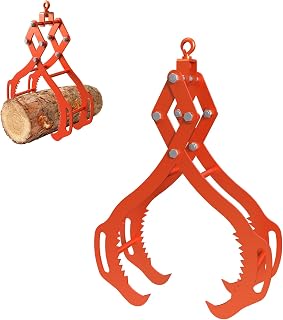 Log Lifting Tongs 32 InchCheck price on Amazon
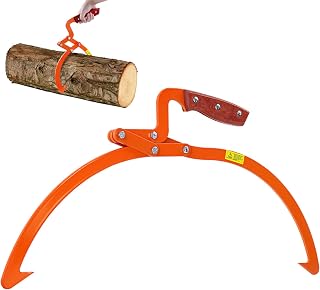 13 Inch Orange Log TongsCheck price on Amazon
FirewoodGearHQ may earn a small commission if you buy through links on this page. The price you pay stays the same. Read our affiliate disclosure.
The quick answer
To use log tongs, place the jaws near the leading end for skidding behind equipment or across the balance point for level lifting. Push the sharp points into solid wood on opposite sides of the trunk. Attach your tow chain or strap to the top ring, take up slack slowly so the scissor arms bite, and maintain steady tension during travel. Slacken the line to release.
Log tong specifications and sizing
Tool choice depends on log diameter and whether you are moving wood by hand or pulling timber behind machines. Hand tongs carry split rounds around a splitter, while heavy grapples attach to tractors, ATVs, and trucks. Reference specifications published by manufacturers show standard sizes:
| Tool | Opening | Capacity | Weight | Features |
|---|---|---|---|---|
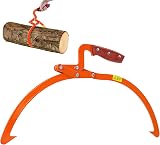
| Meyoppm hand tongs | 13 in | Not stated | Not stated | 2-claw, wood handle, alloy steel |
| XROPURR compact tongs | 18 in | Not stated | 7 pounds | 2-claw, carbon steel, 3-year warranty |
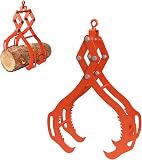
| XROPURR swivel tongs | 32 in | Not stated | 7.41 pounds | 2-claw, powder-coated, 3-year warranty |
| VEVOR 28 in claw | 31 in max (28 in gripping) | 2205 lbs | 35.3 pounds | 4-claw, #45 steel, 360-degree ring |
| XROPURR 28 in grapple | 28 in | 2650 lbs | 32.4 pounds | 4-claw, steel, 3-year warranty |
| Tolpassa 32 in grapple | 32 in | 2700 lbs | 36 pounds | 4-claw, 8mm alloy steel, 360-degree ring |
| VEVOR 36 in claw | 36.8 in max (36 in gripping) | 3307 lbs | 40 pounds | 4-claw, #45 steel, 360-degree ring |
| XROPURR 36 in grapple | 36 in | Not stated | Not stated | 4-claw, forged steel ring, 3-year warranty |
Stated openings range from 13 in on hand tools to 36.8 in on tractor grapples. Tolpassa lists an 8mm steel thickness on its 32 in model, while VEVOR uses #45 steel for ratings up to 3307 lbs. Note that Tolpassa lists 2700 lbs in its bullets but 3300 lbs in its spec table; follow the lower 2700 lbs limit. For unrated tools like the 18 in XROPURR tongs at 7 pounds, stick to ground dragging.
How to use log tongs step by step
Position the jaws for skidding or lifting
Clear debris around the log. For skidding behind a tractor, truck, or ATV, position the tongs near the leading end, back from the cut face in sound wood, so the front lifts while the rear trails. For level lifting with a hoist, place the jaws across the center of balance so the log does not tip. Ensure opposing points sit squarely across the trunk diameter.
Set the claw points into solid wood
Push the claw tips firmly into the wood surface. If bark is thick or loose, clear a small notch with an axe so metal bites sound grain. Tap the back of each hook on frozen wood to seat the tips. Multi-prong designs from Tolpassa and VEVOR provide multiple contact points that resist twisting under load.
Attach your rigging to the top ring
Fasten your chain, strap, or winch hook to the top ring. A 360-degree swivel ring, found on VEVOR and Tolpassa models, lets timber rotate without tangling chains. Center the hook in the ring so pulling force aligns with the scissor arms. Pulling at an angle can pry a claw loose.
Take up tension slowly to engage the bite
Apply power gradually to take slack out of the line. Watch the scissor arms draw together and drive the points into the wood. Pause under light tension to confirm the grip is secure before traveling. If points slip, stop immediately and reset them in sound timber.
Skid or lift along a clear path
Keep timber low. When skidding behind equipment, raise only the front end of the log so the tail drags on the trail. Hauling logs high raises your vehicle center of gravity and risks rollovers. Drive at a steady walking speed, avoiding sudden jerks or stumps that could unload tension and release the claws.
Lower the timber and release tension
Stop on level ground and lower the log completely. Once tow tension slacks, the inward scissor grip relaxes. Lift the center joint or push the handles outward to disengage the claws. Models like Tolpassa grapples feature side handles to spread the jaws without placing fingers near sharp tips.
Hand tongs versus vehicle skidding tongs
Hand log tongs, like the Meyoppm 13 in model, feature an integrated handle for single-hand scissor operation. Woodcutters use them to grab split rounds without bending, saving lower back strain when loading firewood carts or truck beds. They handle individual firewood pieces around the woodpile. For moving split logs indoors, see our reviews of the best log carrier options.
Vehicle skidding tongs are timber grapples built for machinery. Compact 2-claw models weigh 7 pounds or 7.41 pounds, while heavy 4-claw grapples weigh 32.4 pounds, 35.3 pounds, 36 pounds, or 40 pounds in alloy steel or #45 steel. Stated capacities reach 2205 lbs, 2650 lbs, 2700 lbs, or 3307 lbs for skidding tree trunks. For pulling equipment, see the best log tongs and log tongs for tractor front ends.
Safety rules when skidding and lifting logs
Scissor tongs rely entirely on line tension. Any sudden slack or shock load can cause claws to slip. Follow these core safety rules:
- Stay clear of the drop zone: Never walk under suspended logs or stand downhill on slopes. Keep helpers outside the travel path and tow line radius.
- Wear personal safety gear: Wear heavy leather gloves, eye protection, steel-toe boots, and a forestry helmet when operating machinery.
- Inspect hardware: Check pivot bolts, welds, and swivel rings before each pull. Tighten loose nuts and retire bent arms.
- Maintain sharp points: Dull tips slip on hard bark. File claw points to a clean taper that catches wood under light pressure.
- Never exceed load ratings: Stay within stated limits like 2205 lbs or 2700 lbs. Shock loads from hitting rocks can multiply force beyond ratings.
- Position timber first: Roll awkward rounds with a cant hook before setting tongs. Learn how to use a cant hook, find the best cant hook, or check the best log lifter and how to move heavy logs safely.
Frequently Asked Questions
How do log tongs grip the wood?
Pulling tension on the top ring pivots the scissor arms inward. This leverage forces the sharp claw tips into the wood grain, clamping tighter as pulling force increases.
Can you lift logs overhead with log tongs?
No. Log tongs depend on continuous tension and solid wood grain. Slack or wood shear can release the log without warning. Use them for ground skidding or low loading.
Why do log tongs slip off a log?
Claws slip if points are dull, bark is loose or rotten, the jaws sit too close to a split end, or the tow line pulls off-angle. Slack in the line also opens the jaws.
What is the difference between 2-claw and 4-claw log tongs?
A 2-claw model pinches at opposite points, making it lightweight for medium rounds. A 4-claw grapple, like 28 in and 36 in models from VEVOR and XROPURR, adds prongs to prevent twisting.
Can log tongs be used for dragging logs behind an ATV or tractor?
Yes. Skidding tongs attach to a drawbar or tow chain. Lift the lead end slightly off the ground to prevent digging into dirt and pull at a controlled pace.
How do you sharpen log tong points?
Use a mill file to shape a clean, tapered point on each claw following the original bevel. Avoid high-speed grinders that overheat and soften the steel.
Related guides
See our reviews of the best log tongs and log tongs for tractor front ends. For handling logs before bucking, read how to use a cant hook, best cant hook, best log lifter, and how to move heavy logs safely. For hauling firewood, compare options in best log carrier and log carriers for firewood with wheels. When cutting stove wood, review how to bucking firewood safely with a chainsaw, and split rounds with the best splitting maul and best splitting axe. Browse all equipment in our firewood handling hub.