Clay vs Steel Chiminea: Which One Should You Buy?
Clay radiates stored heat and burns charcoal; steel heats fast, burns wood and moves easily. Two chimineas compared from their listings.

On this page
Top picks at a glance
As an Amazon Associate we earn from qualifying purchases.
- 1
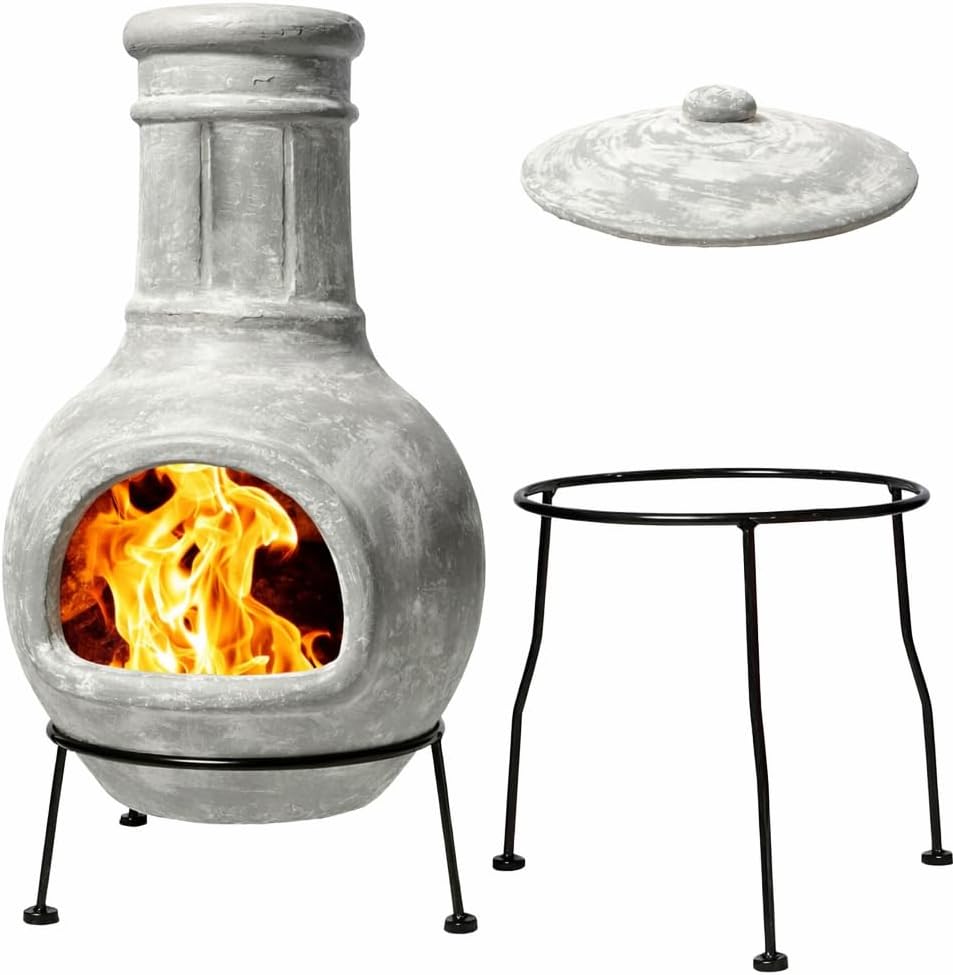 Grey Chimenea Outdoor Fireplace9.5/10View on Amazon
- 2
 Sunnydaze 57" Large Outdoor Chiminea Fire Pit with Cover9.6/10View on Amazon
- 3
 Terracotta Chimenea Outdoor Fireplace9.3/10View on Amazon
Clay vs steel chiminea comes down to how you burn. Choose clay for radiant heat that lingers after the fire dies down, and choose steel for a lighter chiminea that heats fast, handles bigger fires and moves around the patio. The clay chiminea here is a 12 inch diameter, 25.5 inch high charcoal burner at 20 pounds; the steel one is a 17 by 17 by 50 inch wood burner at 13.5 pounds. Both burn solid fuel, both need a level non-flammable surface, and neither should be left burning unattended.
FirewoodGearHQ may earn a small commission if you buy through links on this page. The price you pay stays the same. Read our affiliate disclosure.
Clay vs steel: the quick answer
Clay absorbs heat and radiates it back slowly, which is why the Vintiquewise listing describes clay as acting like a radiator. Steel heats up fast and cools fast, which is why the BDL steel chiminea suits quick evening fires. Clay is heavier for its size at 20 pounds for a 12 inch chiminea; the steel BDL is 13.5 pounds at 17 by 17 by 50 inches. Clay can crack from thermal shock if it gets wet while hot or heats unevenly; steel can rust if the finish fails, though the BDL lists a polished finish.
How each material behaves in a fire: clay vs steel chiminea
The Vintiquewise clay chiminea burns charcoal, per its listing, and the material description says clay absorbs heat and becomes hard and durable when fired at high temperatures. That heat-soak behavior means a clay chiminea keeps warming the patio after the coals die down. The tradeoff is fragility: clay does not like sudden temperature changes, so light it gradually and keep rain off a hot chiminea.
The BDL steel chiminea burns wood, with a rocket-shaped design the listing says improves airflow and heat distribution. Steel does not store heat like clay; it throws heat while the fire burns and cools when it dies. The 3-leg tripod construction keeps it stable, and at 13.5 pounds it is the one you can move to follow the shade or the crowd.
Size and weight in practice
The clay chiminea measures 12 inches in diameter and 25.5 inches high, weighing 20 pounds with its metal stand. The steel chiminea measures 17 by 17 by 50 inches and weighs 13.5 pounds. The steel unit is taller and lighter; the clay unit is shorter, denser and sits lower. On a small patio the clay chiminea’s footprint is smaller, but the steel one’s height throws the smoke higher, which matters when the seating is close.
Fuel: charcoal vs wood
The Vintiquewise listing names charcoal as the fuel, and notes the chiminea can also grill foods and roast marshmallows. The BDL listing names wood as the fuel. Charcoal burns cleaner with less smoke and sparks, which suits a patio near the house; wood gives a livelier flame but more smoke and embers. The BDL includes a mesh screen door, which the clay listing does not mention.
The gear: two chimineas from the listings
BDL steel chiminea: the tall wood burner
The BDL outdoor chiminea is a steel wood-burning fire pit for patio, backyard, garden and camping, 17 inches deep by 17 wide by 50 high at 13.5 pounds. The rocket-shaped steel body aims at better airflow and heat distribution, with a tripod of 3 legs for stability, a mesh screen door and a fire poker included. Polished black finish, modern style, round shape.
Vintiquewise clay chiminea: the charcoal radiator
The Vintiquewise outdoor chiminea is a beige clay charcoal-burning fire pit, 12 inches in diameter and 25.5 inches high at 20 pounds, on a sturdy metal stand. The sun design in an antique finish suits patios and gatherings, and the listing notes grilling and marshmallow roasting alongside plain fires. Clay absorbs heat and radiates it, per the listing.
Placement and safety
Set any chiminea on a level non-flammable surface: stone, brick or concrete, not a wood deck. Keep it clear of overhangs, fences and dry plants, and keep a hose or extinguisher within reach. The BDL mesh screen door helps contain sparks; the clay listing mentions no screen, so watch the wind. Let the fire die fully before leaving it, and empty ash only when completely cold.
Frequently Asked Questions
Which lasts longer, clay or steel?
Neither listing states a lifespan. Clay lasts if it never suffers thermal shock or a hard knock; steel lasts if its finish keeps rust off. The BDL lists a polished finish on steel; the Vintiquewise lists an antique finish on clay with a metal stand. Store either under cover in the off season.
Can I burn wood in a clay chiminea?
The Vintiquewise listing names charcoal as the fuel. Burning wood is less predictable than charcoal, with open flames and sparks that are harder on clay. Follow the listing’s fuel: charcoal for the clay chiminea, wood for the BDL steel one.
Do chimineas need a stand?
The clay chiminea includes a sturdy metal stand, which keeps the hot clay off the patio surface. The steel BDL stands on its own 3 legs. Either way, set the chiminea on a non-flammable surface, not directly on a wood deck.
How do I keep a steel chiminea from rusting?
The BDL listing does not state a rust warranty or coating beyond the polished finish. Keep it dry, empty ash after fires, and store it covered. Touch up any chips in the finish before rust starts.
Can a chiminea heat a patio?
A chiminea warms the seating around it rather than the whole patio. The clay type radiates stored heat after the fire dies; the steel type throws heat while burning. Neither replaces a patio heater for real warmth; see our electric vs propane patio heater guide for that job.
Related guides
See the chiminea vs fire pit comparison, the outdoor fireplace vs fire pit guide and the best fire pit for a small yard. For the fire itself, the round vs square fire pit guide covers shape and heat.