Bow Saw vs Crosscut Saw: Which One Should You Buy?
Bow saw vs crosscut saw: which manual saw suits firewood, with two Bahco 30 in bow saws as concrete examples of the bow side.

On this page
Top picks at a glance
As an Amazon Associate we earn from qualifying purchases.
- 1
 Bahco 10-30-23 30-Inch Ergo Bow Saw for Green Wood9.6/10View on Amazon
- 2
 Husqvarna 460 Rancher Gas Powered Chainsaw9.7/10View on Amazon
- 3
 Bahco 10-30-51 30-Inch Ergo Bow Saw for Dry Wood and Lumber9.4/10View on Amazon
- 4
 Bahco 10-24-51 24-Inch Ergo Bow Saw for Dry Wood and LumberView on Amazon
- 5
 Truper Bow SawView on Amazon
- 6
 HAUTMEC 14 Inch Hand Saw for Wood CuttingView on Amazon
- 7
 Lynx 3' One Man Crosscut Saw Brand: LynxView on Amazon
- 8
 Lynx 4' One Man Crosscut SawView on Amazon
Verdict: In this bow saw vs crosscut saw matchup, pick the bow saw side for fast, everyday firewood cutting: a framed saw whose blade is held under tension, which both examples here illustrate, one tuned for green wood and one for dry wood and lumber. Pick the crosscut saw side when the work is bigger, slower and more traditional: long two-handed cuts on large logs where a bow saw frame cannot reach. Both listings in this comparison sit on the bow saw side, so the bow side gets concrete examples and the crosscut side gets the honest general picture.
Woodpile season brings the same question every year: which manual saw earns a place in the truck. The bow saw is the framed saw, the tool most people grab for limbs, rounds and quick cuts around the woodpile. The crosscut saw is the long toothed blade made for cutting across the grain, the traditional answer for big logs. This bow saw vs crosscut saw comparison sets both sides against each other, using Bahco bow saw listings as the concrete examples of the bow side.
FirewoodGearHQ may earn a small commission if you buy through links on this page. The price you pay stays the same. Affiliate disclosure.

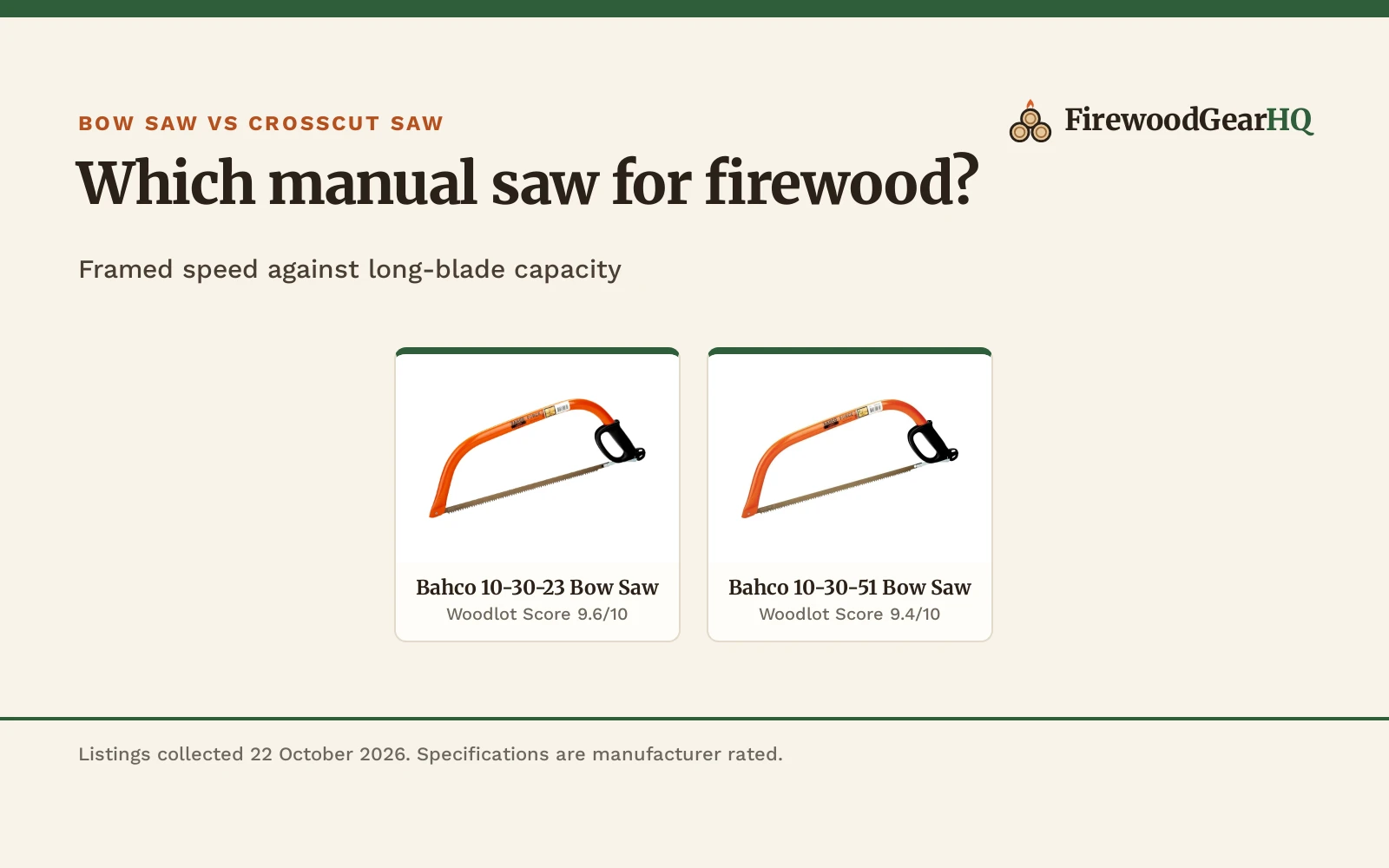
Bahco 10-30-23 30-Inch Ergo Bow Saw for Green Wood
Bahco 10-30-23 30 in Ergo bow saw for green wood, 18 teeth, beechwood handle, alloy steel blade with tensioning mechanism.
Pros
- 18 teeth for green wood
- Beechwood handle
- Tensioning mechanism for straight cuts
- GS specification met
Cons
- No replacement blade SKU stated
- Weight figure not usable
- Limited Warranty with no term
- Green wood focus only
Bahco 10-30-51 30-Inch Ergo Bow Saw for Dry Wood
Bahco 10-30-51 30 in Ergo bow saw for dry wood and lumber, 54 teeth, plastic handle, alloy steel blade, made in Portugal.
Pros
- 54 teeth for dry wood and lumber
- 900 g listed weight
- Tensioning mechanism for straight cuts
- Made in Portugal
Cons
- No certification stated
- Plastic handle, not wood
- Limited Warranty with no term
- No replacement blade SKU stated
More options to compare
 Bahco 10-24-51 24-Inch Ergo Bow Saw for Dry Wood and LumberCheck price on Amazon
 Truper Bow SawCheck price on Amazon
 HAUTMEC 14 Inch Hand Saw for Wood CuttingCheck price on Amazon
 Lynx 3' One Man Crosscut Saw Brand: LynxCheck price on Amazon
 Lynx 4' One Man Crosscut SawCheck price on Amazon
Side by side
| Spec | Bahco 10-30-23 (Bow Saw) | Bahco 10-30-51 (Bow Saw) |
|---|---|---|
| Intended wood | Green wood | Dry wood and lumber |
| Teeth | 18 | 54 |
| Blade | 30 in, alloy steel | 30 in, alloy steel |
| Handle | Beechwood | Plastic |
| Certification | GS (spec table) | Not stated |
| Warranty | Limited (no term) | Limited (no term) |
Example figures are manufacturer rated, as published on each listing and collected 21 October 2026. Both examples sit on the bow saw side.
Bow saw vs crosscut saw: what each side is
The bow saw side is a frame saw: a steel bow holds the blade under tension, and it cuts through limbs, rounds and lumber. Both examples here are 30 in Bahco Ergo bow saws with alloy steel blades, per the listings. The 10-30-23 adds an innovative tensioning mechanism for high blade tension and straight cutting; the 10-30-51 listing states no tensioning figure. The 10-30-23 is built for green wood with 18 teeth and a beechwood handle; the 10-30-51 is built for dry wood and lumber with 54 teeth and a plastic handle. The crosscut saw side is the long blade without the frame: more teeth in the cut on big wood, no frame to limit the depth of the cut, and a slower rhythm. The listings give no crosscut example, so the comparison describes the crosscut side in general terms and puts every stated number on the bow side where it belongs.
Green wood vs dry wood: the bow side split
The two examples split the bow side by wood type. The Bahco 10-30-23 is titled for green wood: 30 in, 18 teeth, beechwood handle, and the bullets say it is designed to cut through green wood, with a tensioning mechanism for high blade tension. The Bahco 10-30-51 is titled for dry wood and lumber: 30 in, 54 teeth, plastic handle, made in Portugal. The 10-30-23 pairs 18 teeth with green wood; the 10-30-51 pairs 54 teeth with dry wood and lumber. That is the whole bow-side decision in one line: match the example to the wood you cut. Neither listing states a tooth pitch, and the only speed figure in the tables is a stray 4500 rpm on two manual saws, so the comparison stops at teeth and wood type.
When the crosscut side fits
A bow saw frame sets the depth of cut: the blade can only cut as deep as the frame allows. On large logs, the frame runs out of reach and the crosscut side takes over, with a long blade and no frame in the way. The bow side wins on speed and convenience for limbs, rounds and lumber you can handle one-handed; the crosscut side wins on capacity for the big stuff. If your woodpile is mostly rounds and limbs, the bow side does the work. If you are cutting large logs by hand, the crosscut side is the tool. The listings state nothing about crosscut saws, so this section makes no product claims about them.
Blades, tension and upkeep
The 10-30-23 lists an innovative tensioning mechanism for high blade tension and straight cutting; both examples list alloy steel blades at 30 in, and the 10-30-51 listing states no tensioning figure. The 10-30-23 listing describes the tensioning mechanism as the way the blade is held under high tension in the frame, which is that example’s upkeep story as stated. The listings say nothing about replacement blade part numbers, sharpening, or crosscut saw upkeep, so the comparison leaves those details unclear rather than guessing.
Handles and handling
The 10-30-23 lists a beechwood handle; the 10-30-51 lists a plastic handle. The 10-30-23 lists lightweight steel tubing for durability and easy handling; the 10-30-51 listing does not state a tubing figure. Both are manual saws. The 10-30-51 lists 900 g. The 10-30-23 lists an item weight of 0.08 kg. The listings state nothing about crosscut saw handling. Do not compare the two sides on weight: the listings do not give both sides, so the comparison leaves it unclear rather than calling a winner.
What the listings leave unclear
Several specs appear on only one example. The 10-30-51 lists 54 teeth, a plastic handle, 900 g and made in Portugal; the 10-30-23 lists 18 teeth and a beechwood handle. The 10-30-23 spec table lists GS under Specification Met; the 10-30-51 lists no certification. Both list Limited Warranty with no term stated. Neither lists a replacement blade SKU. The honest read: the two examples differ in teeth, handle and stated certification, and agree on blade length and blade material.
Two examples
How we scored them
Each example is scored on performance, build, value, safety and warranty, using only what the listing publishes. The 10-30-23 earns the higher total on a fuller listing and a stated green wood pitch; the 10-30-51 trails on a thin listing with no stated safety detail and no warranty term.
| Product | Woodlot Score | Perf. /35 | Build /25 | Value /25 | Safety /10 | Warranty /5 |
|---|---|---|---|---|---|---|
| Bahco 10-30-23 Bow Saw | 9.6 | 29 | 21 | 20 | 7 | 0 |
| Bahco 10-30-51 Bow Saw | 9.4 | 28 | 20 | 20 | 0 | 0 |
Scores run from 9.2 to 9.8: each product’s point total is placed on that range, so more points always means a higher score.
Wear eye protection and gloves for cutting, splitting and handling, follow every tool's manual, install stoves to code, and have the chimney inspected and cleaned every year. See EPA Burn Wise and NFPA heating safety. Read our Safety Disclaimer.
Around the Woodpile
- Give the blade room: hang the saw by its frame so the 30 inch teeth clear the bench and other tools.
- Cut with the wood held steady and the path of the stroke clear of hands and helpers.
- The listings include files and rasps, so keep the teeth clean and sharp enough to bite.
- Wipe the frame and blade dry before storage; alloy steel rusts when it sits wet.
Frequently Asked Questions
Can a bow saw cut large logs?
Up to the frame’s reach. The bow side excels at limbs, rounds and lumber; for large logs the crosscut side’s long frameless blade takes over.
What is the difference between the two Bahco examples?
Wood type and teeth: the 10-30-23 is built for green wood with 18 teeth and a beechwood handle, while the 10-30-51 is built for dry wood and lumber with 54 teeth and a plastic handle. Both are 30 in with alloy steel blades.
Are bow saw blades replaceable?
On the 10-30-23, the blade is held under tension: its listing describes a tensioning mechanism for high blade tension, which is how the blade sits in the frame. The 10-30-51 listing states no tensioning figure.
Which of these has a warranty?
Both list a Limited Warranty with no term stated. The 10-30-23 spec table lists GS under Specification Met.
Do I need a crosscut saw if I own a bow saw?
For limbs and rounds, no. For large logs where the bow frame cannot reach, the crosscut side is the manual answer.
Related guides
For more saw comparisons, see the telescoping vs fixed pole saw comparison. If you split by hand too, see the best splitting maul and the axes and mauls hub, or browse chainsaw gear.