Best Length for Pickaroon (2026)
How to choose the best length for pickaroon work based on your body height, woodlot handling tasks, log splitter setups and posture needs.

On this page
Top picks at a glance
As an Amazon Associate we earn from qualifying purchases.
- 1
 Hookaroon 28 Inch9.6/10View on Amazon
- 2
 FORESTER Pickaroon Logging Tool9.6/10View on Amazon
- 3
 FORESTER Pickaroon Logging Tool9.5/10View on Amazon
When stacking firewood for the winter or clearing bucked rounds in the woods, finding the best length for pickaroon work makes a massive difference to your back and arms. The best length for pickaroon handling on the ground is a long handle that lets you sink the beak into a round and drag or roll it while standing completely upright. For waist-level tasks like pulling splits off a log splitter beam or clearing a truck bed, a short handle gives rapid control and prevents the shaft from striking your knees or the splitter frame. Choosing between long, mid-length, and short handles depends on your standing height and where you spend most of your woodlot hours.
FirewoodGearHQ may earn a small commission if you buy through links on this page. The price you pay stays the same. Read our affiliate disclosure.
The quick answer
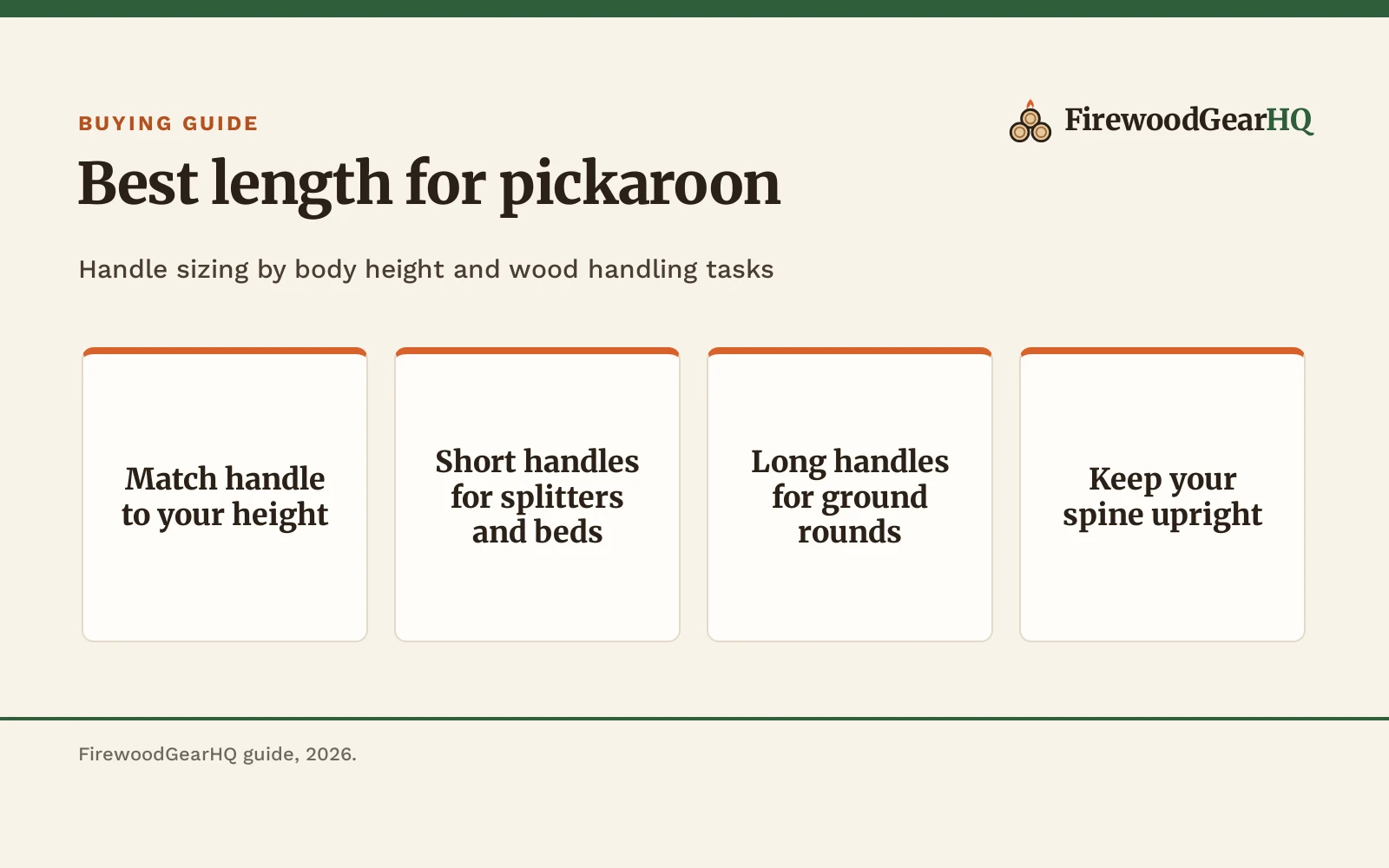
Choose a handle length that matches your physical height and working station. A long handle reaches ground-level wood while your arm hangs naturally so you avoid bending at the waist to hook a log. A mid-length handle serves as an all-around woodlot tool for stacking firewood racks and rolling rounds. A short handle gives precise control for sorting splits at a log splitter or unloading a pickup bed. For general wood handling on rural properties, a mid-length pickaroon wood handle turned from hickory offers versatile balance across chores.
Best length for pickaroon sizing by task and posture
| Handle style | Best wood handling task | Operator posture | Working position |
|---|---|---|---|
| Long handle | Ground pickup, skidding rounds, and clearing cut logs | Fully upright with relaxed shoulders | Forest floor and woodlot ground |
| Mid-length handle | General woodlot chores, stacking racks, and low trailers | Natural standing posture with slight reach | Firewood stacks and trailer beds |
| Short handle | Splitter tables, pickup beds, and kindling prep | Upright at waist level | Splitter beam and vehicle tailgates |
Use the chart to match the tool to your primary chore. Standing tall without bending your lower back is the main ergonomic goal of any pickaroon.
How to choose the right pickaroon length
Match handle length to your standing height
Your standing height is the foundation of pickaroon sizing. When you stand upright with your shoulders relaxed and your arm hanging naturally at your side, a ground-handling tool should hang with its head near your boot or ankle. This allows the pointed beak to engage rounds resting on the ground without requiring you to dip your shoulder or hunch your spine. Taller woodcutters need longer handles to bridge the distance between their hands and ground-level timber. Shorter woodcutters need more compact shafts so the tool swings cleanly without catching the dirt. Selecting a handle proportional to your frame keeps your spine upright throughout long woodlot sessions.
Choose long handles for ground work and dragging
Ground-level work represents the most physically demanding part of firewood processing. Bucking a fallen tree trunk leaves heavy rounds scattered across the forest floor. Bending down repeatedly to roll, drag, or maneuver these green rounds places severe stress on the lumbar spine. A long pickaroon acts as an extension of your arm. You swing the beak into the solid end grain of a round from an upright stance, using the leverage of the long shaft to skid, roll, or slide the wood toward your trailer. This extra reach also helps retrieve rounds from steep ditches or thick brush without stumbling. For moving larger timber across uneven terrain, explore our guide on how to move heavy logs safely.
Use short handles around splitters and truck beds
Working at waist height calls for a completely different tool geometry. When you run a hydraulic splitter, your hands operate around the waist-high beam and splitter table. A long handle becomes awkward in this confined space, repeatedly bumping against the machine frame, tires, or your own legs. A short handle allows rapid, agile strikes to reposition stubborn blocks on the beam, pull splits toward the stacking pile, or retrieve split pieces without putting fingers near the splitting wedge. Short tools also excel when working from the ground at the tailgate of a pickup truck or utility trailer. Because the bed platform rests at waist level, a short handle lets you reach in, sink the beak into a split or round, and slide it toward you without banging a long shaft against the tailgate or sides. If you are setting up your processing area, compare models in our guide to the best log splitter for home use.
Select a pickaroon wood handle for grip and balance
Handle material influences comfort, control, and tool longevity. A traditional pickaroon wood handle crafted from seasoned American hickory or ash offers distinct advantages over synthetic alternatives. Wood naturally absorbs the sharp mechanical shock produced when the steel beak strikes dense, frozen firewood, sparing your wrist and elbow joints from repeated vibration. The natural grain of hickory provides a dependable grip that feels comfortable in bare hands or thick leather work gloves during cold winter mornings. Furthermore, a wooden handle can be sanded, treated with boiled linseed oil, or re-hung on a new shaft if damaged, extending the working life of your tool across many heating seasons.
Consider single-hand versus both-hand control
Your preferred operating style dictates handle dimensions. Short and mid-length pickaroons are balanced for solo-hand use, leaving the opposite hand free to steady a stack, guide a piece into a cart, or operate a machine control lever. The operator swings the tool with a compact forearm motion, hooking, sliding, and stacking splits in continuous rhythm. Longer tools feature sufficient shaft space to accommodate both hands. A grip with both hands gives you the torque needed to roll massive trunk sections, break frozen rounds loose from ice, or steer heavy hardwood pieces onto skidding trails.
How to use a pickaroon safely and effectively
A pickaroon is a precision handling tool, not a chopping axe. Using proper field technique protects your body and keeps the steel point firmly set in the wood:
- Target the end grain: Strike the end grain or the upper shoulder of the round where the wood fibers provide solid purchase. Striking side bark can cause the beak to glance off if the bark slips loose.
- Swing with wrist and forearm: Use a controlled, measured swing driven by your forearm and wrist rather than a full overhead arc. The weight of the forged head provides plenty of penetration.
- Pull to your side: Position your body slightly offset from the line of travel. Pull the round toward the side of your stance rather than straight between your boots to prevent logs from colliding with your shins.
- Maintain a sharp beak: Touch up the forged point periodically with a flat mill bastard file. A sharp, burr-free tip penetrates dry hardwood and wet green timber with minimal swinging effort.
- Wear protective workwear: Always wear steel-toe or composite-toe leather boots and heavy work gloves when handling rounds to safeguard against rolling logs and falling splits.
Following fundamental woodlot safety habits prevents unnecessary strain and keeps handling tasks smooth throughout the cutting season.
What happens when you use the wrong handle length
Working with an ill-fitting pickaroon quickly compromises both ergonomics and safety. If your tool is too short for ground clearing, you are forced to hunch your back on every strike, completely negating the ergonomic benefit of the tool. Hours spent bending over to hook rounds can lead to chronic lower back fatigue and muscle stiffness that cuts your woodlot day short.
Conversely, using an excessively long handle at a log splitter or at the tailgate of a truck bed causes clumsy strikes and handling frustration. The extended grip can snag on clothing, strike your knees during the backswing, or hit the metal splitter beam or tailgate, causing the beak to dislodge unexpectedly. Selecting a handle matched specifically to your working height ensures that each strike lands cleanly and your posture remains upright.
Log pickaroon versus hookaroon and cant hook
Woodcutters often encounter overlapping terms when selecting timber handling gear. Understanding the distinctions helps clarify which tool belongs at your woodpile:
A log pickaroon features an axe-style handle fitted with a head that includes a pointed beak, sometimes backed by a small hammer poll or axe cheek. The term originated in traditional river logging, where river drivers used pointed hooks to snag and guide floating timber without bending over the water. In modern woodlot terminology, the names pickaroon and hookaroon are frequently used interchangeably by manufacturers and woodcutters. While traditional designs varied between slightly curved beaks and straighter pointed picks, both patterns serve the identical purpose of hooking and moving firewood rounds and splits without bending down.
Neither tool should be confused with heavy log rolling equipment. While a pickaroon excels at pulling, dragging, and stacking split wood and medium rounds, it lacks the leverage to turn whole felled tree trunks. For rolling heavy saw logs on the landing, woodcutters rely on a dedicated cant hook, which features a heavy pivoting arm to grip and rotate large logs. To compare rolling tools in depth, read our comparison of cant hook vs peavey designs. When lifting timber off the ground to prevent chainsaw dulling during bucking, a tool from our best log lifters guide elevates the log, while timber tongs from our best log tongs guide offer reliable scissor-action lifting for skidding.
Frequently Asked Questions
What length pickaroon should I choose?
Select a handle length based on where the wood sits and how tall you stand. For retrieving and dragging rounds off the ground without stooping, choose a long handle that reaches near your boots from a relaxed upright stance. For waist-height chores around a splitter table or trailer bed, select a short handle for agile solo control. A mid-length handle provides balanced utility for general woodpile stacking.
What does pickaroon mean?
The word pickaroon traces back to logging and timber driving heritage, describing a tool featuring a pointed metal pick mounted on an axe-pattern wooden shaft. Woodsmen used it to pick and guide floating logs along waterways and mill ponds, keeping their bodies balanced on timber while snagging logs beyond normal reach.
What is a pickaroon tool?
A pickaroon tool is a specialized firewood and timber handling implement consisting of a sturdy handle and a forged steel head with a sharp, pointed beak. It allows wood handlers to grab, pull, drag, and stack rounds and splits without bending down or placing their fingers directly beneath heavy, shifting wood.
What is a log pickaroon?
A log pickaroon is a heavy-pattern pickaroon designed specifically for forestry, sawmills, and firewood operations. It features a robust forged head capable of withstanding hard strikes into dense hardwood rounds and frozen green logs, paired with a resilient wooden shaft that absorbs heavy woodlot impacts.
How to use pickaroon tools safely?
To use a pickaroon safely, establish a balanced stance with feet placed firmly apart. Direct your swing into sound end grain using forearm momentum rather than excessive force. Pull wood toward the side of your body rather than toward your boots, keep the steel point filed sharp, and always wear sturdy leather work boots and protective gloves.
Related guides
Explore our complete firewood handling hub for more timber tools and woodlot advice. For rolling and turning heavy saw logs, compare top options in our guide to the best cant hooks and understand the mechanics in our breakdown of cant hook vs peavey tools. If you need to raise logs off the dirt for cleaner bucking, see the best log lifters. Learn field techniques for moving heavy timber in our guide on how to move heavy logs safely, and check out the best log tongs for skidding and lifting. When splitting your seasoned wood, see our reviews of the best log splitter for home use, compare hand tools in best splitting mauls and best splitting axes, or review crucial safety practices in our log splitter safety rules.