Ash vs Walnut Firewood: Which One Should You Buy?
No listing here sells single-species ash or walnut; this guide answers the species debate with what the listings do settle: moisture, cut length and honest labeling.

On this page
Top picks at a glance
As an Amazon Associate I earn from qualifying purchases.
- 1
 Kiln-Dried PA AshView on Amazon
- 2
 Firewood Central Kiln-Dried PA AshView on Amazon
- 3
 Barton 8-Piece Realistic Ceramic Fireplace Log SetView on Amazon
- 4
 MESA Sticks: Kiln Dried Hardwood Firewood Oak Cherry MapleView on Amazon
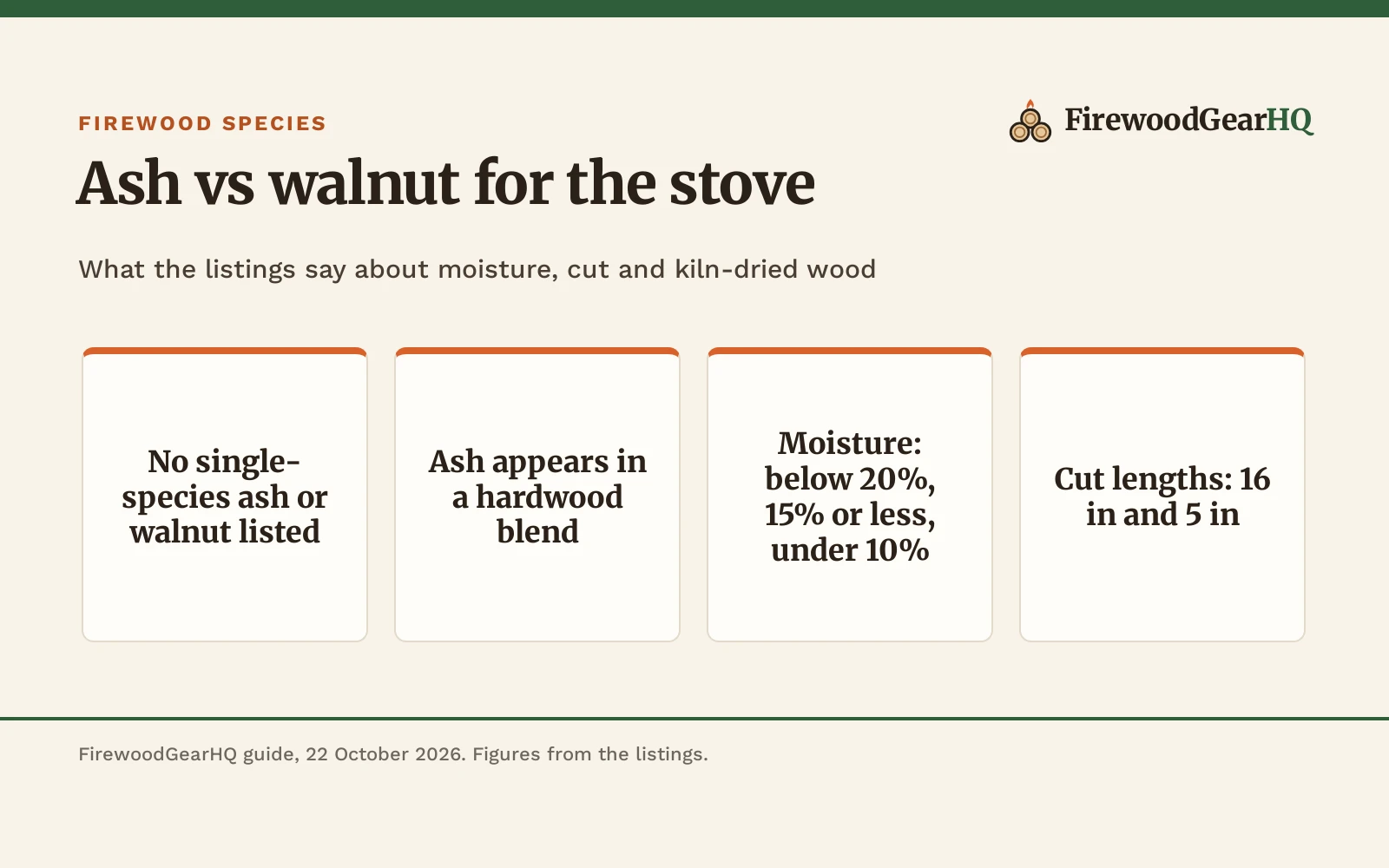
The ash vs walnut firewood debate assumes you can buy either species by name, and that is where this guide starts with a surprise: none of the listings behind it sells single-species ash or walnut. The only ash here typically appears inside a blended box alongside oaks, maples, black birch and beech. So the straight answer is that the listings cannot crown a winner on species alone, but they settle what matters more when you buy firewood: moisture content, cut length and honest labeling. Buy either species kiln-dried, cut to your stove, and labeled as what it is.
More options to weigh up
 Kiln-Dried PA AshCheck price on Amazon
 Firewood Central Kiln-Dried PA AshCheck price on Amazon
 Barton 8-Piece Realistic Ceramic Fireplace Log SetCheck price on Amazon
 MESA Sticks: Kiln Dried Hardwood Firewood Oak Cherry MapleCheck price on Amazon
FirewoodGearHQ earns a small commission if you buy through links on this page. The price you pay stays the same. Read our affiliate disclosure.
The quick answer: ash vs walnut firewood
If you are choosing between ash and walnut firewood, choose the pile that is drier, better cut and honestly labeled over the one with the fancier species name. None of these listings offers single-species ash or walnut; the New England Cookwood savory blend typically contains ash among oaks, maples, black birch and beech. Moisture decides the burn more than the name on the box: these listings show kiln-dried wood at below 20 percent, 15 percent or less, and less than 10 percent moisture. Pick the driest honestly labeled box cut to your stove’s length, and you will burn well whatever the species.
What the listings actually sell
Four kiln-dried firewood boxes, and no ash or walnut singles among them. Old Potters sells a 1.5 cu ft box of hickory and a 1.5 cu ft box of cherry, both USDA certified kiln dried to below 20 percent moisture, cut to 16 inches, at about 40 and 45 pounds. Firewood Central sells a 38 pound bundle of PA cherry in 16 inch splits, 14 to 18 per bundle, kiln-dried to 15 percent moisture or less. New England Cookwood sells a 14 pound box of 5 inch savory blend pieces, kiln dried to less than 10 percent moisture, typically a mix of oaks, maples, black birch, beech and ash. If your heart is set on pure ash or pure walnut, these listings are not it; if you want dry, honestly labeled hardwood, they are.
Moisture matters more than species
Every listing here leads with dryness, and for good reason: wet wood smokes, sulks and coats the chimney, while dry wood lights fast and burns clean. Old Potters heat-treats under USDA oversight to below 20 percent moisture, and notes the wood is accepted where untreated firewood is banned. Firewood Central dries to 15 percent moisture or less for quick ignition and a clean, low-smoke burn. New England Cookwood dries to less than 10 percent moisture content and promises no bugs, pests or mold. Whatever the species on the label, buy the driest figure stated. A moisture meter settles arguments the label cannot; see our best firewood moisture meter for hardwood.
Cut length and box size
Match the wood to the firebox, because the wrong length means resplitting. The Old Potters boxes and the Firewood Central bundle are cut to 16 inches, sized for indoor fireplaces, wood stoves, backyard fire pits, Solo Stove and chimineas. The Cookwood pieces are 5 inches, never exceeding 5.25 inches, with widths between 0.75 and 1.75 inches, sized for pizza ovens, grills and smokers. Box sizes run from the 14 pound Cookwood box to the 1.5 cu ft Old Potters boxes at about 40 and 45 pounds, to the 38 pound Firewood Central bundle of 14 to 18 splits. Buy the cut that fits your appliance as delivered.
Single species vs blends
Old Potters sells a single named species and says so loudly: hickory and nothing else, cherry and nothing else, not assorted hardwood. New England Cookwood sells the opposite, a savory blend that typically mixes oaks, maples, black birch, beech and ash. Single species tells you exactly what you are burning, which matters if you are comparing ash against walnut at all. A blend trades certainty for availability and, in the Cookwood case, for cooking flavor across grills and smokers. For the ash vs walnut question specifically, only a single-species label lets you know you got what you paid for.
How to read a firewood listing
Read listings the way these four teach you to. First, the species: named, like the Old Potters hickory and cherry, or a stated blend, like the Cookwood mix of oaks, maples, black birch, beech and ash. Second, the moisture figure: below 20 percent, 15 percent or less, less than 10 percent, each stated plainly here. Third, the cut: 16 inch logs or 5 inch pieces, matched to your appliance. Fourth, the quantity: 1.5 cu ft, 38 pounds with a split count of 14 to 18, or 14 pounds. A listing that states all four is an honest listing; a listing that hides any of them is asking for trust it has not earned.
Kiln-dried firewood options
If the species debate sent you here but convenience will decide, these are the kiln-dried options in the listings. Old Potters hickory: 1.5 cu ft, 16 in logs, below 20 percent moisture, about 40 lb, USDA certified, described as their longest-burning wood. Old Potters cherry: 1.5 cu ft, 16 in logs, below 20 percent moisture, about 45 lb, USDA certified, bright flame and sweet, mild aroma. Firewood Central PA cherry: 38 lb bundle, 16 in splits, 14 to 18 per bundle, 15 percent moisture or less, sweet fruity smoke for cooking and fires. New England Cookwood savory blend: 14 lb box, 5 in pieces, less than 10 percent moisture, the only pick that typically contains ash. For the full comparison of drying methods, see seasoned wood vs kiln dried wood.
FAQ: wood, fire and gear
Which is better, ash or walnut firewood?
The listings here do not sell either as a single species, so they cannot settle it on species alone. Buy on moisture, cut and honest labeling instead: the driest honestly labeled box, cut to your stove, wins regardless of the name on it.
What moisture content should firewood be?
These listings show below 20 percent for USDA certified kiln-dried, 15 percent or less, and less than 10 percent. Drier lights faster and burns cleaner; verify with a meter rather than trusting adjectives. See how to tell if firewood is seasoned.
Is kiln-dried firewood worth it?
Kiln drying gets wood burn-ready without a season of stacking, and USDA certified heat treatment is accepted where untreated firewood is banned. These listings show what that buys: below 20 percent moisture from Old Potters, 15 percent or less from Firewood Central, and less than 10 percent from New England Cookwood. You pay for the drying and the certainty.
What length firewood do I need?
Measure your firebox and buy that length or shorter. These listings offer 16 in logs for stoves, fireplaces, fire pits and chimineas, and 5 in pieces for pizza ovens, grills and smokers.
Can I burn the savory blend in a wood stove?
The listing sizes the 5 in pieces for grills, smokers and pizza ovens. Check your stove’s manual for minimum piece size before burning small cuts in it; small pieces burn fast and hot.
More firewood guides
See seasoned wood vs kiln dried wood, how to tell if firewood is seasoned, and the best firewood moisture meter for hardwood.