Log Splitter Safety Rules: Safe Operation and Setup Guide
Log splitter safety rules protect operators by enforcing single-person control, keeping hands clear of the wedge, wearing protective gear, and following the equipment manual.
 By FirewoodGearHQ Editorial
Updated October 9, 2026
By FirewoodGearHQ Editorial
Updated October 9, 2026
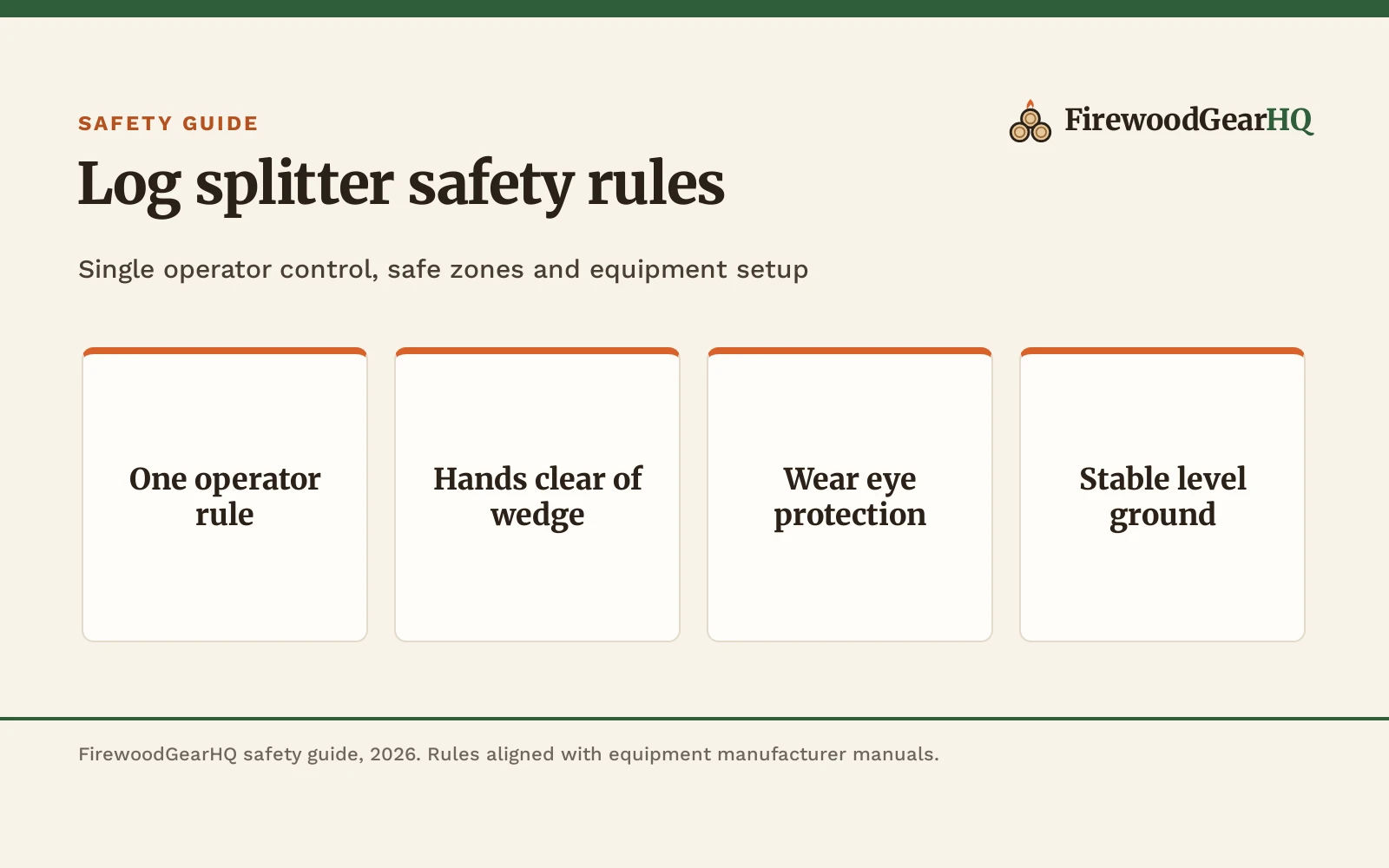
Log splitter safety rules prevent severe crush injuries by establishing strict operating habits around hydraulic machinery. The primary rule is that only one operator controls the machine, handles the wood, and cycles the hydraulic valve. Safe operation also requires keeping hands clear of the wedge and end plate, wearing proper eye protection, seating logs flat, and following the equipment manufacturer manual.
FirewoodGearHQ earns a commission when you buy through links on our product pages, at no extra cost to you. Read our affiliate disclosure.
The quick answer
The core principle of log splitter safety is the one operator rule: only one person controls the hydraulic valve lever and handles logs in the splitting zone. Never let a helper hold logs on the beam while another person activates the ram. Operators must hold logs along the sides rather than the ends, stand firmly in the manufacturer designated operator zone, wear safety glasses, and set the splitter on level ground.
Log splitter safety checklist
| Safety area | Primary hazard | Required safety rule |
|---|---|---|
| Operator control | Crush injury from cycling | Follow the one operator rule; never allow a helper near controls |
| Hands and fingers | Pinch points at wedge | Grip logs by the sides; never touch wood while ram moves |
| Eye protection | Flying bark and wood chips | Wear impact-rated safety glasses or a face shield |
| Hydraulic system | High pressure fluid injection | Never check leaks with hands or gloves; use cardboard |
| Ground setup | Machine tipping during stroke | Operate on flat, level ground with transport wheels chocked |
| Log preparation | Log kicking out under pressure | Square log ends before placing them flat against the foot plate |
Keep this checklist in mind every time you run your splitter to keep firewood processing safe and productive.
Log splitter safety rules
The one operator rule
The one operator rule is the foundation of wood splitter safety. Every hydraulic log splitter manual emphasizes that a single person must manage the entire cycle. When multiple people attempt to split wood together, communication gaps lead to severe crush injuries. If a helper adjusts a log while the operator triggers the lever, fingers can be trapped. Assign helpers to move split wood away from the staging area instead.
Keep hands clear of the wedge and end plate
The area between the moving ram and the splitting wedge is a crushing zone with immense force. When loading logs onto the beam, grasp them firmly along the sides. Never place fingers over the ends facing the wedge or foot plate. Once the log begins to split, release your grip immediately. If wood hangs up on the blade, stop the cycle, retract the ram, shut off power, and tap it loose with a mallet.
Wear required personal protective equipment
Operating heavy firewood gear requires durable protective clothing. Eye protection is mandatory because hardwood under immense hydraulic pressure can shatter unexpectedly, throwing sharp bark toward your face. Heavy leather work gloves shield hands from jagged splinters, while steel toe work boots protect feet from falling logs. Hearing protection is necessary around gas engines, and snug clothing prevents fabric from catching on levers.
Set up on stable, level ground
A log splitter must operate on firm, flat ground to prevent tipping or shifting while splitting heavy logs. Operating on a slope can cause the machine to roll or tilt under pressure. Block trailer wheels with chocks before starting the engine or motor. Clear the working zone of stray logs and loose bark so you have sure footing throughout your work session.
Inspect hydraulic lines and mechanical fittings
Hydraulic systems operate under extreme internal fluid pressure. Before starting, inspect all hoses, cylinder connections, and fittings for signs of wear or weeping fluid. High pressure hydraulic leaks can produce fine streams that pierce skin. Never check hydraulic lines with your hands, whether bare or gloved. Always pass a piece of cardboard along the hose to inspect for leaks, and relieve system pressure before servicing.
Work in good daylight and clear conditions
Fatigue and poor visibility increase the risk of woodlot accidents. Only operate a log splitter during clear daylight hours or under bright outdoor lighting. Never operate machinery in heavy rain or icy conditions. When you feel tired, shut down the splitter, clear the workspace, and resume another day.
Safe log preparation and loading practices
Square log ends before placing them on the beam
Logs split most safely when cut with flat, square ends. When cuts are angled, the hydraulic ram can cause the wood to kick out sideways under pressure rather than pushing straight through the splitting wedge. Before placing a round on the machine, trim uneven ends flat with a chainsaw on a stable stand to ensure uniform contact.
Center the round and stay in the operator zone
Position each log squarely against the beam so the push plate contacts the center of the wood grain. Keep your body strictly within the manufacturer designated operator zone beside the control lever. This keeps you away from flying chips. Never straddle the beam, reach across the moving ram, or stand in the ejection path.
Managing knotty or stuck rounds
Dense hardwoods with interlocked grain or large branch knots can stall a hydraulic cylinder. Never force a stalled ram against a stubborn knot by repeatedly hammering the valve lever. Retract the ram, rotate the log, and attempt the split from another angle. When choosing machinery, investing in the best log splitter for home use provides dependable splitting force and sturdy log cradles.
Electric versus gas log splitter safety
Both electric and gas models demand careful attention to machine power and operating environment. When choosing between power types, our guide on gas vs electric log splitters helps match equipment to your woodpile.
Electric splitters run quietly and produce zero exhaust fumes. Electric splitters are available in a range of motor sizes and splitting capacities. As a concrete example of a home unit, the listing for the TECSPACE electric log splitter specifies a 15 Amp motor and 7 tons of hydraulic splitting force. While 7 tons is sized for residential firewood, even a compact hydraulic ram exerts severe crushing force at the push plate. Always match extension cords to the motor amperage stated in your manual, keep cords off damp ground, and never operate an electric splitter in wet weather.
Gasoline splitters offer higher tonnage and mobility for remote woodlots. However, gas engines introduce exhaust fumes and hot mufflers. Always run gas machines outdoors in open air to prevent carbon monoxide accumulation. Allow the engine to cool before refueling. Selecting a horizontal or vertical model from our best vertical log splitter guide allows heavy rounds to be rolled onto the ground-level foot plate, reducing back strain.
Maintenance and manufacturer manual guidelines
Proper maintenance is an essential part of log splitter safety rules. Always refer to your specific equipment manufacturer manual for oil specifications, cycle procedures, and maintenance intervals. The manufacturer manual outlines grease points and recommended hydraulic fluid types. You can consult our reference guide on what hydraulic fluid for a log splitter to understand fluid viscosity.
Before each splitting season, check hydraulic fluid levels with the dipstick while the ram is fully retracted. Inspect the wedge for dullness and check the beam for loose hardware. When storing equipment at the end of firewood season, follow our guide on how to winterize a log splitter to protect seals. Staying informed on log splitter recalls also ensures factory safety notices are addressed promptly.
One operator only, with hands well clear of the wedge and the ram. Wear eye protection and gloves, set the splitter on stable, level ground, and keep kids and pets away from the work area. Run gas splitters outdoors only, and never reach in to clear a jammed log while the ram can move. Read our Safety Disclaimer.
Frequently Asked Questions
What is the most important log splitter safety rule?
The most important rule is the one operator rule. Only one person should load rounds, cycle the valve lever, and control the splitting zone to avoid communication errors and crush injuries.
Can a helper assist with loading logs while the splitter runs?
No. Never allow a helper to steady logs or touch the machine while the cylinder moves. Helpers should only move firewood when the ram is fully retracted and the valve is in neutral.
What personal protective gear is required when splitting wood?
Operators should wear eye protection, durable leather work gloves, steel toe boots, and hearing protection around gas engines. Avoid loose shirts or dangling drawstrings that could catch on levers.
Where should you place your hands when loading a log?
Always grip firewood rounds along the sides of the log, midway along the length. Never place fingers or palms across the ends facing the splitting wedge or pusher plate.
Can you operate a log splitter indoors or in wet conditions?
Gas splitters must never run indoors because combustion engines emit toxic carbon monoxide exhaust. Electric splitters emit no fumes and can run inside a dry garage, but must never be used in rain or wet conditions.
How should you inspect hydraulic lines for leaks?
Never check hydraulic lines with your hands, whether bare or gloved. Pressurized fluid can penetrate work gloves and skin. Hold a piece of cardboard along hoses and fittings to locate leaks safely.
Related guides
See the log splitter hub, our guide on gas vs electric log splitters, and our guide on how many tons of log splitter do I need. Check our guide on what hydraulic fluid for a log splitter. Also see our guide on how to winterize a log splitter. Also see our guide on log splitter recalls. Also see our electric log splitter troubleshooting guide. Also see our best vertical log splitter guide. Also see our best kindling splitter guide. Also see our guide on why wont my log splitter split.
About the author
The FirewoodGearHQ editorial team researches firewood and wood heating equipment from published specifications, ratings and warranty terms, and scores every pick the same way. We do not run our own product trials.