Poplar vs Pine Firewood: Which One Should You Buy?
Poplar vs pine firewood compared on heat, ease of lighting and smoke, with two kiln-dried pine picks for tabletop fire pits.

On this page
Top picks at a glance
As an Amazon Associate we earn from qualifying purchases.
- 1
 Sunnydaze Metal Firewood Carrier with Wheels9.7/10View on Amazon
- 2
 Readywares Firewood Carrier9.7/10View on Amazon
- 3
 FEED GARDEN Firewood Carrier Bag Heavy Duty Waxed Canvas Log9.7/10View on Amazon
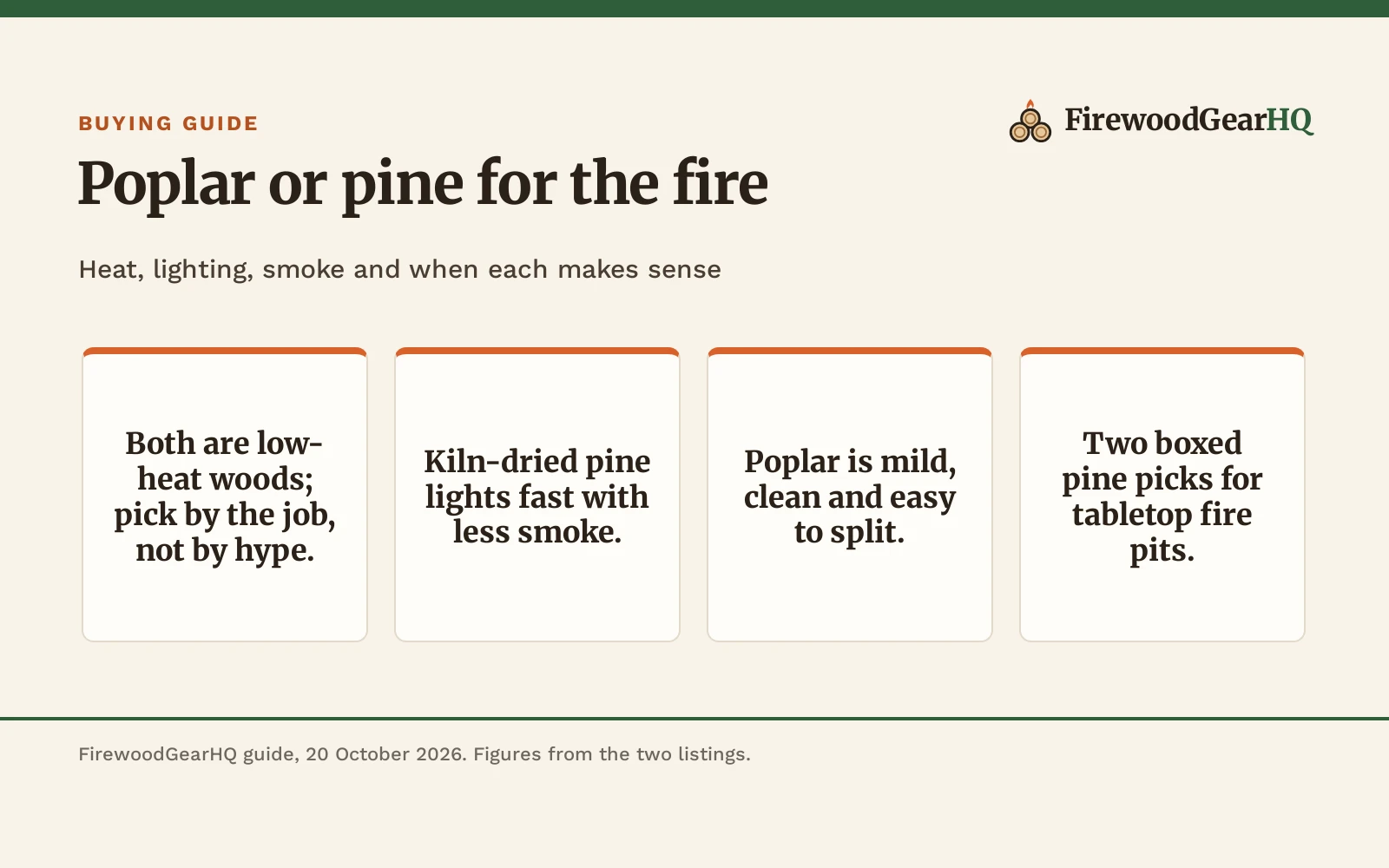
The poplar vs pine firewood choice is between two low-heat woods, and the honest answer is that neither one heats like a dense hardwood. Pine lights fast and throws quick, lively flames, but green pine is resinous and smoky. Poplar is milder: it splits easily, burns steady and clean for its weight, and suits mild weather when you do not need maximum heat. Kiln-dried pine closes much of the gap, since drying under 6 percent moisture tames the smoke that gives pine its bad name. Pick pine for easy lighting and a fast fire, poplar for a calm, easy-splitting shoulder-season wood.
FirewoodGearHQ may earn a small commission if you buy through links on this page. The price you pay stays the same. Read our affiliate disclosure.
The quick answer on poplar vs pine firewood
For a wood stove in deep winter, neither poplar nor pine is the first choice; both burn faster and cooler than oak, hickory or maple. Between the two, pine wins on lighting: its resin content catches fast, which is why pine makes good kindling even when it is not your main fuel. Poplar wins on manners: it is low in resin, splits with little effort, and burns without the popping and heavy smoke of green pine. If the pine is kiln-dried under 6 percent moisture, as both boxed picks below are, the smoke difference shrinks a lot. Buy whichever is dry, seasoned and cheap near you; dryness decides more than species here.
Pine firewood: what it is good for
Pine’s reputation comes in two halves. Green or wet pine is the smoky wood of campfire warnings, and the creosote worry in stoves is earned too: resin plus moisture makes smoke. Dry pine is a different fuel. It lights faster than almost any hardwood, which makes it excellent for starting fires, for short evening fires, and for tabletop fire pits where you want flames now, not in an hour. The kiln-dried pine listings here state moisture under 6 percent, bark-free sticks and minimal sap and resin content compared with traditional fat lighters, which is exactly the combination that burns cleaner and hotter than the pine most people complain about. Pine’s weakness is burn time: it goes through faster than dense hardwoods, so you feed the stove more often.
Poplar firewood: what it is good for
Poplar, usually tulip poplar in firewood country, is technically a hardwood but burns like a softwood: light, fast and mild. It splits easier than almost anything you will put a maul to, which matters if you process your own wood. It lights reasonably well, burns with little drama, and leaves modest coals. Its heat output per cord sits at the low end, so it suits fall and spring burning, daytime fires, and anyone who wants a fire without overheating the house. It is also a forgiving wood to learn splitting on. What it will not do is carry an overnight burn the way oak does; plan on reloading.
Moisture matters more than species
A dry softwood beats a wet hardwood in practice. Both listings here make the same point from the pine side: kiln-drying to under 6 percent moisture, bark-free, gives a clean-burning stick with less smoke and steadier heat than air-dried or green pine. The WIFER listing states extended burn times of 20 to 30 minutes per stick load in a tabletop setting, which is the right scale for these small fires. For full-size firewood, the rule of thumb from the species guides holds: split it, stack it off the ground, cover the top only, and burn it when it reads dry. If you buy pine, buy it dry or kiln-dried; the species debate is secondary.
Gear: kiln-dried pine for tabletop fire pits
1. WIFER 4-inch mini firewood box. Kiln-dried pine sticks, 4 inches long, in a 9.5 to 10 lb box at 730 cubic inches, with moisture stated under 6 percent. The box includes gloves, tongs and 8 fire starters made with wood chips and food-grade wax, and the listing claims 20 to 30 minutes of burn time. Stated compatibility covers the Solo Stove Mesa and Mesa XL, tabletop fire pits, pizza ovens from Bertello, Big Horn, Ooni, Roccbox and Pellethead, BBQ grills, indoor fireplaces and open pits. The extras make it the fuller kit of the two.
2. WFLUOLUO 3.5-inch mini firewood box. Kiln-dried pine at 3.5-inch lengths in a 7 to 8 lb box at 600 cubic inches, moisture stated under 6 percent, bark-free, with the maker noting minimal sap and resin against traditional fat lighters and a burn measured in hours per box. A 5-inch length is also stated as available. Stated uses include the Solo Stove Mesa, tabletop fire pits, pizza ovens, wood burning stoves and barbecues, with no chemicals stated in processing.
Install stoves and inserts to the manufacturer's instructions and your local code, usually by a certified installer with a permit and inspection. Keep the listed clearances to combustibles, run working smoke and carbon monoxide detectors, have the chimney inspected and cleaned every year to prevent creosote fires, burn only seasoned wood, and check local burn rules. See EPA Burn Wise, NFPA heating safety, CPSC carbon monoxide guidance and the Chimney Safety Institute of America (CSIA). Read our Safety Disclaimer.
Frequently Asked Questions
Which burns hotter, poplar or pine?
Both sit at the low end of firewood heat, and dryness matters more than the gap between them. Pine tends to give a faster, livelier flame from its resin content, while poplar gives a steadier, milder burn. For serious winter heating, a dense hardwood outheats both; for mild weather, either works.
Is pine safe to burn in a wood stove?
Yes, when it is dry. The creosote worry with pine comes from burning it green or wet. Kiln-dried pine under 6 percent moisture burns far cleaner, and any wood stove benefits from a yearly chimney sweep regardless of species. Never burn painted, stained or pressure-treated wood of any species.
Can I burn pine in a tabletop fire pit?
That is exactly what the two boxed picks are made for: 3.5 and 4-inch kiln-dried pine sticks sized for the Solo Stove Mesa and similar tabletop pits, plus pizza ovens and grills. Small, dry sticks light fast and suit a short evening fire.
Why does my pine firewood smoke so much?
Almost always moisture, often plus bark and resin. The kiln-dried listings here state under 6 percent moisture and bark-free sticks precisely because that combination burns cleaner. If your pine smokes, it is probably not dry; split a piece and check the fresh face before blaming the species.
How should I store firewood?
Split it small, stack it off the ground with airflow between rows, and cover the top only so the sides breathe. The boxed mini firewood here is indoor-friendly at 7 to 10 lb per box, but full-size cords belong outside under a top cover until you bring a load in.
Related guides
Also see our best firewood to burn species guide, the firewood BTU chart and how to tell if firewood is seasoned.