Chimney Cap vs Spark Arrestor: Which One Should You Buy?
Chimney cap vs spark arrestor: a mesh-screened cap does both jobs. Two cap examples compared on material, fit and installation.

On this page
Top picks at a glance
As an Amazon Associate we earn from qualifying purchases.
- 1
 8" Chimney Cap with Screen & Rain Cover9.7/10View on Amazon
- 2
 Fire Beauty 3 Panel Arch Top Fireplace Screen Fire Screen9.6/10View on Amazon
- 3
 6Inch Chimney Cap9.6/10View on Amazon
- 4
 Stanbroil 14" x 19" Chimney CapView on Amazon
- 5
 AllFuel HST Rain Cap with 3/4" Spark Arrestor for 6" DiameterView on Amazon
- 6
 Chimcare Wind Directional Chimney Cap 13 x 13 InchView on Amazon
- 7Chimcare Wind Directional Chimney Cap 9 x 13 InchView on Amazon
- 8
 6 Inch Chimney CapView on Amazon
- 9
 AllFuel HST Flat Top Rain Cap for 6" Diameter 304 StainlessView on Amazon
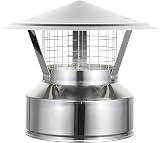
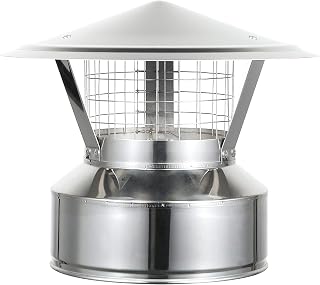
Chimney cap vs spark arrestor: you need a cap, and the spark arrestor is usually built into it. A chimney cap covers the flue to keep out rain, snow, leaves and animals; a spark arrestor is the mesh screen that catches embers before they escape. Most chimney caps, including both examples here, ship with a mesh screen that does both jobs.
More options to compare
 Stanbroil 14" x 19" Chimney CapCheck price on Amazon
 AllFuel HST Rain Cap with 3/4" Spark Arrestor for 6" DiameterCheck price on Amazon
 Chimcare Wind Directional Chimney Cap 13 x 13 InchCheck price on Amazon
- Chimcare Wind Directional Chimney Cap 9 x 13 InchCheck price on Amazon
 6 Inch Chimney CapCheck price on Amazon
 AllFuel HST Flat Top Rain Cap for 6" Diameter 304 StainlessCheck price on Amazon
FirewoodGearHQ may earn a small commission if you buy through links on this page. The price you pay stays the same. Read our affiliate disclosure.
The quick answer on chimney cap vs spark arrestor
Buy a chimney cap with a mesh screen and you get the spark arrestor function included. A bare rain cap with no mesh keeps water out but does nothing for sparks. If your local code requires a spark arrestor, check the required mesh size against the listing: neither listing here states a mesh size, so confirm fit and mesh before buying. Both picks below are mesh-screened caps, so either one covers both roles.
What a chimney cap does
A chimney cap is the roof of the chimney. It keeps rain, snow and leaves out of the flue, blocks birds and rodents, and cuts down on downdrafts. The VEVOR example adds wind resistance: its stainless steel mesh and expansion screws grip the flue wall, and the listing claims it holds in typhoons, rain and snow. The CLLOMAGY example lists protection from rain, snow, leaves and small animals with better ventilation. Without a cap, a flue fills with debris and water, and the stove drafts worse.
What a spark arrestor does
A spark arrestor is a mesh screen over the flue opening that traps burning embers while letting smoke pass. Both examples include one: the VEVOR lists a durable stainless steel mesh, and the CLLOMAGY lists a mesh screen with the hood. Mesh gauge matters here, but neither listing states a mesh size, so compare them on material and fit instead. In wildfire-prone areas a screened cap is not optional; check local code before buying.
Two chimney cap examples, scored
1. VEVOR 12×12 inch chimney cap. A 304 stainless steel cap for 9 by 9 inch flues, 15 by 15 by 9.84 inches at 5.62 lb. Two installation methods (side or bottom mounting) with pre-drilled holes and expansion screws. The listing claims 304 stainless is more rust-resistant than galvanized or 430 stainless steel. Stainless wins on corrosion; it is the long-life pick here.
2. CLLOMAGY 13×13 inch chimney cap. A galvanized steel cap fitting flue tiles from 11 1/2 by 11 1/2 to 13 1/2 by 13 1/2 inches, 6.98 lb. 14-gauge galvanized base with a 24-gauge hood, side mounting with pre-drilled holes, no drilling required. Galvanized is the budget-oriented choice here, though neither listing states a price; the VEVOR listing claims 304 stainless outlasts galvanized, so pick galvanized for a sheltered chimney and stainless for an exposed one.
How we scored them
Each cap is scored on performance, build, value, safety and warranty, using only what the listing publishes. The VEVOR leads on build (304 stainless) and the CLLOMAGY on value (galvanized at a lower price point). Neither listing states a warranty or a safety certification, so both score zero there. Measure the flue before buying: the VEVOR fits 9 by 9 inch flues, the CLLOMAGY fits 11 1/2 to 13 1/2 inch tiles.
Fit: measure the flue first
Fit is the first filter. The VEVOR is listed for 9 by 9 inch chimney flues. The CLLOMAGY covers outside flue tiles from 11 1/2 by 11 1/2 to 13 1/2 by 13 1/2 inches. Measure the outside of the flue tile, not the cap you are replacing. A cap that does not fit the tile cannot be mounted, whatever its material.
Material: stainless against galvanized
Material is the second filter. The VEVOR is 304 stainless steel at 5.62 lb; the listing claims it outlasts galvanized and 430 stainless in harsh weather. The CLLOMAGY is galvanized steel at 6.98 lb, with a 14-gauge base and 24-gauge hood, listed as corrosion and heat resistant. Stainless costs more and lasts longer; galvanized is the budget choice.
Installation and weather, from the listings
Both caps mount without a mason. The VEVOR offers two methods, side mounting and bottom mounting, with pre-drilled holes, expansion screws and a stated 4-step installation, and its accessories are stated to suit brick-and-mortar chimneys, metal flues and outdoor stove chimneys. The CLLOMAGY is side-mount only: slide it over the flue tile and tighten the screws against the outer wall through the pre-drilled holes, with no drilling stated as required. It fits brick, clay, terra cotta and masonry tiles as well as metal flues.
One listing detail deserves a flag: the VEVOR spec table lists 4.19 lb while the item weight reads 5.62 lb, so treat the weight as approximate. On weather, the VEVOR claims its stainless mesh and expansion screws hold through typhoons, rain, snow and intense sunlight without tipping, and the CLLOMAGY claims its 14-gauge base and 24-gauge hood withstand strong wind, rain and snow without deformation. Either way, check the cap after the first big storm of the season and retighten the screws.
Install stoves and inserts to the manufacturer's instructions and your local code, usually by a certified installer with a permit and inspection. Keep the listed clearances to combustibles, run working smoke and carbon monoxide detectors, have the chimney inspected and cleaned every year to prevent creosote fires, burn only seasoned wood, and check local burn rules. See EPA Burn Wise, NFPA heating safety, CPSC carbon monoxide guidance and the Chimney Safety Institute of America (CSIA). Read our Safety Disclaimer.
Frequently Asked Questions
Do I need both a chimney cap and a spark arrestor?
Usually one product does both. Both examples here are chimney caps with mesh screens, so the screen acts as the spark arrestor. Only buy a separate arrestor if your cap has no mesh.
What size chimney cap do I need?
Match the cap to the flue tile. The VEVOR fits 9 by 9 inch flues; the CLLOMAGY fits tiles from 11 1/2 by 11 1/2 to 13 1/2 by 13 1/2 inches. Measure the outside of the tile first.
Is stainless steel worth it over galvanized?
For longevity, yes. The VEVOR’s 304 stainless is listed as more rust-resistant than galvanized, and it is lighter at 5.62 lb against the CLLOMAGY’s 6.98 lb. Galvanized works and costs less, but expect a shorter life on an exposed chimney.
How hard is installation?
Both are side-mount with pre-drilled holes: slide the cap over the flue tile and tighten the screws against the outer wall. The VEVOR offers bottom mounting as a second method and includes expansion screws. No drilling is stated as required for the CLLOMAGY.
Does a chimney cap improve draft?
Indirectly. The CLLOMAGY lists better ventilation and reduced blockage from debris; the VEVOR lists reduced downdrafts. A clean, dry flue drafts better than a clogged one, but neither cap is a draft inducer.
Related guides
Also see our best chimney cap for wood stove roundup and chimney cleaning log vs chimney sweep kit.